

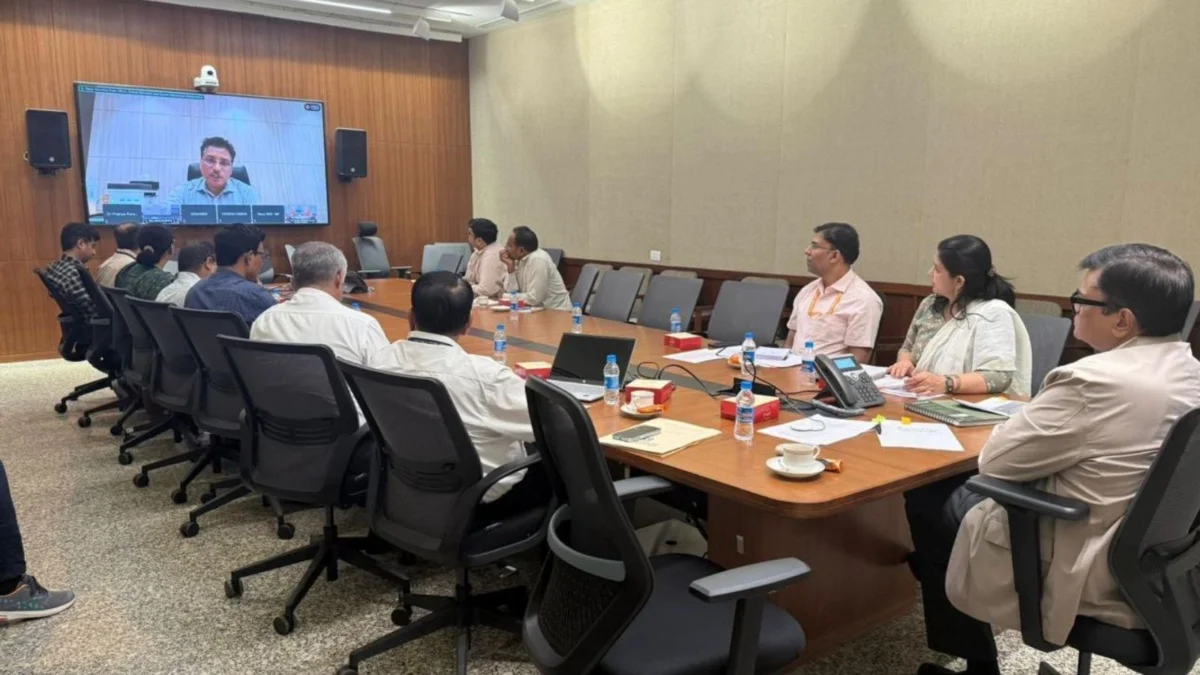
New Delhi, May 17, 2026 – In a significant move to address a critical national challenge, the Ministry of Education, in collaboration with the National Institute of Open Schooling (NIOS) and state governments, convened a high-level meeting on Saturday to strategize the reintegration of over two crore children currently out of the formal education system. The initiative, described as a "people’s movement for educational inclusion," aims to provide these adolescents, primarily between the ages of 14 and 18, with pathways back to learning and skill development, ensuring no child is left behind.
The meeting, chaired by Sanjay Kumar, Secretary of the Department of School Education & Literacy (DoSEL), underscored the urgency of the situation, highlighting that a substantial number of young Indians are missing out on education due to a confluence of socioeconomic factors. The overarching goal is not just to re-enroll these students but to equip them with the skills necessary for gainful employment, thereby breaking cycles of poverty and contributing to national development.
The Stark Reality: Millions Adrift from Education
The foundational impetus for this national mission stems from alarming statistics that paint a grim picture of educational attrition in India. Secretary Sanjay Kumar, in his opening remarks, presented a stark statistic: for every 100 children who initially enroll in Class I, a mere 62 manage to complete their Class 12 education. This alarming dropout rate points to systemic issues that need immediate and comprehensive intervention.
Further compounding this concern are the latest figures from the Periodic Labour Force Survey (PLFS). These surveys reveal that a staggering more than two crore children, falling within the crucial age bracket of 14 to 18 years, are currently not attending any educational institution. This demographic represents a significant segment of India’s youth population, whose potential remains untapped due to their absence from the learning environment.
Kumar elaborated on the multifaceted reasons behind this educational exodus. He emphasized that socioeconomic pressures are the primary drivers pushing children out of school. For many families, the immediate need for income generation outweighs the long-term benefits of education. Financial constraints often force adolescents to abandon their studies to contribute to household earnings, or to care for younger siblings, thereby taking on responsibilities far beyond their years. This reality is particularly acute in rural and economically disadvantaged areas, where opportunities for formal employment are scarce, and the immediate demands of survival take precedence.
The Secretary articulated a clear vision that transcends mere enrollment figures. The mission’s objective is to ensure that every child attains education up to the senior secondary level. Crucially, this education must be coupled with the acquisition of practical, employable skills that are directly relevant to the local economic landscape. This dual focus on academic completion and vocational readiness is designed to empower these young individuals with the tools they need to secure sustainable livelihoods and contribute meaningfully to their communities and the national economy.
A Phased Approach: Reaching the Unreached Through Flexible Pathways
Recognizing that a one-size-fits-all approach will not suffice, the Ministry of Education, in conjunction with NIOS and state education departments, is committed to providing flexible and accessible educational alternatives. For those children who cannot return to traditional brick-and-mortar schools due to their circumstances, the focus will be on leveraging the frameworks of Open and Distance Learning (ODL).
The National Institute of Open Schooling (NIOS) and the respective State Open Schools are poised to play a pivotal role in this endeavor. They will serve as vital conduits for delivering education to out-of-school adolescents through flexible curricula, modular learning, and self-paced study options. This approach aims to remove geographical, temporal, and financial barriers that often prevent children from accessing education.
Prachi Pandey, Joint Secretary at the Ministry of Education, reinforced the government’s commitment, stating that the issue is being addressed in a "mission mode." This implies a concerted, time-bound effort with clear objectives and measurable outcomes. The mission is underpinned by robust data analysis and a steadfast dedication to reaching the most marginalized and underserved communities across the nation. This data-driven approach ensures that interventions are targeted and effective, reaching those who need them the most.
NIOS Chairperson Akhilesh Mishra eloquently framed the initiative not merely as a policy intervention but as a "people’s movement for educational inclusion." This perspective highlights the need for broad societal participation and engagement. The movement is envisioned as a collective effort to re-establish the connection between young Indians and learning, offering pathways that are adaptable to their unique circumstances, rather than demanding that they conform to rigid educational structures. This human-centric approach acknowledges the diverse realities of students and aims to create an educational ecosystem that is inclusive and supportive.
Operationalizing the Mission: From Identification to Facilitation
The operational blueprint for this ambitious mission was detailed by Shakeel Ahmad, Secretary of NIOS. The strategy is multi-pronged and designed for systematic execution:
- Systematic Identification of Out-of-School Children: The first critical step involves a comprehensive and accurate mapping of children who are currently not attending school. This will likely involve collaboration with local community leaders, Anganwadi workers, Panchayat Raj Institutions, and NGOs to identify eligible children at the grassroots level.
- Deployment of Trained Facilitators: To support these students, especially those engaged in ODL, trained facilitators will be deployed. These individuals will act as mentors, counselors, and academic guides, providing personalized support and motivation to help students navigate their learning journey. Their role will be crucial in bridging the gap between students and the learning material, offering encouragement and addressing individual challenges.
- App-Based Monitoring Tools: The mission will leverage technology for efficient monitoring and tracking of student progress. App-based tools will be developed to keep a close watch on enrollment, attendance, academic performance, and overall engagement of the students. This will allow for timely interventions and adjustments to the program as needed.
- Phased Rollout Plan: To ensure effective implementation and learning from initial stages, the initiative will be rolled out in phases. The first phase will focus on piloting the program in 10 districts that have been identified as having a high concentration of out-of-school children.
The selected pilot districts are strategically chosen to represent diverse geographical and socioeconomic contexts. These include:
- Odisha
- Maharashtra
- Chhattisgarh
- Bihar
- Uttar Pradesh
- Gujarat
- Karnataka
- Madhya Pradesh
- Delhi
This pilot phase will serve as a crucial testing ground, allowing the authorities to refine the strategies, identify potential challenges, and gather valuable feedback before scaling up the program nationwide.
A Collective Commitment: Charting a Course for Educational Inclusion
The high-level meeting concluded with a resounding affirmation of collective resolve. Representatives from all participating states and district administrations pledged their full cooperation and commitment towards achieving the singular, overarching goal: ensuring that every child in India has a place in education. This collaborative spirit is vital for the success of such a large-scale national endeavor.
The implications of this mission are profound and far-reaching. By bringing millions of young individuals back into the fold of education, India stands to:
- Boost its Human Capital: A more educated populace translates to a more skilled and productive workforce, driving economic growth and innovation.
- Reduce Social Inequality: Education is a powerful tool for social mobility. Reintegrating out-of-school children can help break intergenerational cycles of poverty and disadvantage.
- Enhance Employability: The focus on vocational skills will equip adolescents with the competencies demanded by the modern job market, reducing unemployment and underemployment.
- Strengthen the Social Fabric: Empowered youth are more likely to participate constructively in society, contributing to a more stable and harmonious nation.
- Achieve Sustainable Development Goals: The mission directly aligns with several Sustainable Development Goals, particularly SDG 4 (Quality Education) and SDG 8 (Decent Work and Economic Growth).
This ambitious mission marks a critical juncture in India’s pursuit of universal education. The success of this initiative will depend on sustained political will, effective implementation at the grassroots, and the active participation of communities, parents, and educators alike. The coming years will be a testament to India’s commitment to ensuring that no child’s potential is lost due to circumstances beyond their control.
