

The global motorcycling landscape is witnessing a profound shift as heritage British marques find new life under the stewardship of Indian automotive giants. The most recent and perhaps most ambitious chapter of this story involves the revival of Norton Motorcycles by TVS Motor Company. Following the high-profile launch of the Norton Manx R superbike in the United Kingdom, attention has now shifted toward a more accessible, high-volume segment: the mid-capacity adventure-touring market.
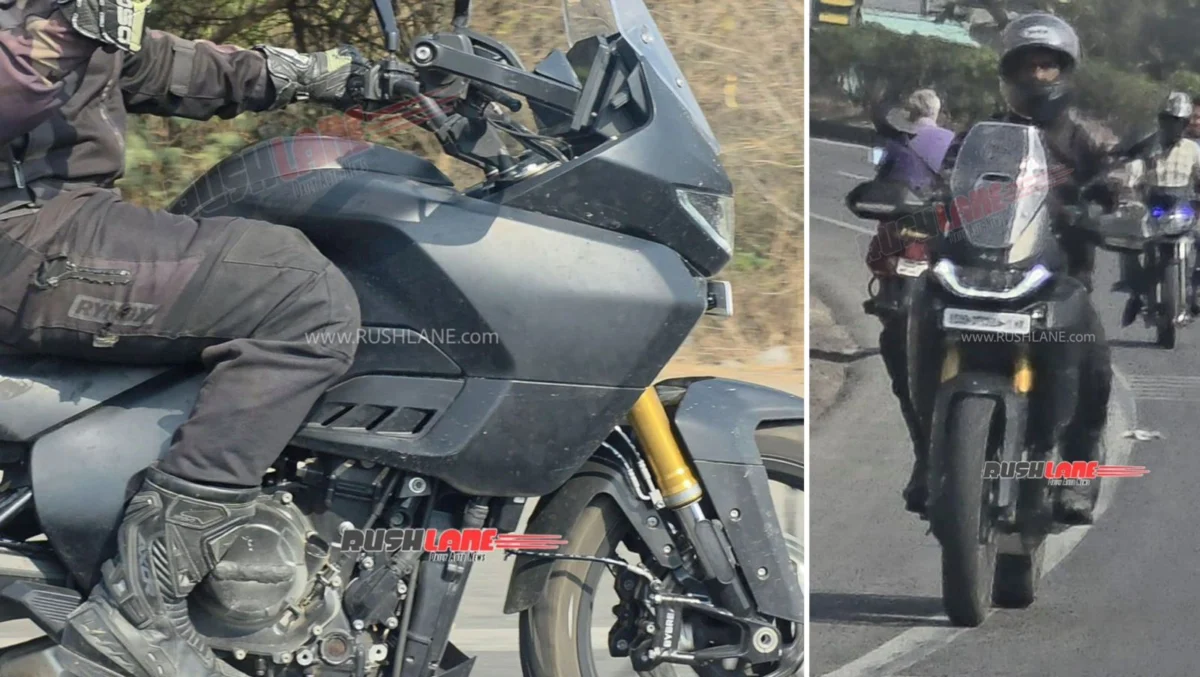
Recent spy images and industry intelligence have confirmed that the Norton Atlas and its road-biased sibling, the Atlas GT, are nearing the final stages of development. Positioned as a "premium mainstream" offering, the Atlas series represents TVS’s strategic pivot to leverage Norton’s prestigious lineage while utilizing the manufacturing prowess and cost efficiencies of its Indian production base. With a projected launch in the second half of 2026, the Norton Atlas is set to become a pivotal model in TVS’s quest for global premium dominance.
1. Main Facts: The New Era of Norton
The Norton Atlas project is not merely a product launch; it is a statement of intent. Unlike the hand-built, ultra-exclusive V4 models, the Atlas is designed to compete in the highly contested 500cc–700cc category.
The Product Profile
The Norton Atlas will be offered in two distinct flavors to cater to different riding styles:
- The Standard Atlas: A rugged, off-road capable adventure tourer featuring cross-spoke tubeless wheels (19-inch front, 17-inch rear).
- The Atlas GT: A touring-focused variant equipped with alloy wheels, designed for high-speed stability and asphalt-munching comfort.
Manufacturing Strategy
In a significant departure from Norton’s historical "Made in Solihull" exclusivity, the Atlas will be manufactured at TVS Motor’s state-of-the-art facility in Hosur, Tamil Nadu. This move allows for aggressive pricing and logistical efficiency, particularly for the Asian and European markets. However, the company has left the door open for assembly in Indonesia and the UK, depending on future business viability and regional demand.

Performance and Technology
At the heart of the Atlas lies a brand-new 585cc parallel-twin engine. This powerplant is engineered for a compact footprint and features a 270-degree crank offset—a configuration favored for its characterful exhaust note and V-twin-like torque delivery. Complementing the mechanical hardware is a sophisticated electronics suite, including a 6-axis Inertial Measurement Unit (IMU), which facilitates lean-sensitive ABS and traction control.
2. Chronology: From Acquisition to the Atlas
The journey of the Norton Atlas is inextricably linked to TVS Motor Company’s $20 million acquisition of the brand in April 2020. The timeline reflects a meticulous process of brand rehabilitation and engineering refinement.
- April 2020: TVS Motor Company acquires Norton Motorcycles in an all-cash deal, rescuing the brand from the brink of collapse following financial mismanagement under previous ownership.
- 2021–2022: TVS invests over £100 million into Norton, establishing a new global headquarters in Solihull, UK. The focus remains on fulfilling backorders and re-engineering the V4SV and Commando 961 to meet modern quality standards.
- 2023: Norton hints at a "new product offensive." Rumors of a mid-capacity parallel-twin platform begin to circulate, utilizing designs that were originally conceptualized before the TVS acquisition but never brought to fruition.
- Early 2024: Spy shots of the Norton Atlas begin appearing in India, specifically around Pune and Hosur. These test mules reveal a bike that is significantly more polished than earlier prototypes.
- April 2024: TVS launches the Norton Manx R, a 200 bhp limited-edition superbike, in the UK. This serves to re-establish Norton’s credentials as a high-performance manufacturer.
- Late 2024 (Projected): Official global unveiling of the production-ready Atlas and Atlas GT.
- H2 2026: Commercial launch and commencement of deliveries, starting with the Indian and European markets.
3. Supporting Data: Technical Specifications and Features
The Norton Atlas is designed to bridge the gap between "lifestyle" motorcycling and "hardcore" adventure touring. The following data points highlight its competitive edge:
Engine and Drivetrain
- Displacement: 585cc.
- Configuration: Parallel-twin, liquid-cooled.
- Crankshaft: 270-degree offset for improved traction and a distinct "thump."
- Frame: High-tensile steel trellis frame with the engine acting as a stressed member to reduce weight and increase rigidity.
- Exhaust: High-mounted, upswept design for improved water-wading depth and off-road clearance.
Chassis and Suspension
- Front Suspension: Long-stroke USD (Upside Down) forks, likely featuring adjustability for preload and rebound.
- Rear Suspension: Monoshock with progressive linkage.
- Braking: Twin discs at the front with radially mounted calipers; single disc at the rear. Cornering ABS is standard.
Electronics and Connectivity
- Display: An 8-inch TFT touchscreen, which is among the largest in its class.
- Connectivity: Full smartphone integration via a dedicated Norton app, supporting turn-by-turn navigation, music control, and telephony.
- Rider Aids:
- Multiple Ride Modes (Road, Rain, Off-road, Sport).
- Switchable Traction Control and Slide Control.
- Launch Control and Wheelie Control.
- Bi-directional Quickshifter.
- Hill Hold Assist and Cornering Cruise Control.
4. Official Responses and Corporate Vision
While TVS Motor Company has maintained a degree of "strategic silence" regarding specific pricing, the leadership’s vision for Norton is clear. Sudarshan Venu, Managing Director of TVS Motor Company, has frequently emphasized that Norton will remain a "global brand with British DNA," even as it leverages TVS’s manufacturing scale.
The "Hosur Strategy"
TVS officials have indicated that the decision to manufacture the Atlas in India is a pragmatic one. The Hosur plant already produces the BMW G 310 series for global markets, proving that Indian manufacturing can meet the stringent quality requirements of premium European brands. By using a separate, dedicated assembly line for Norton, TVS ensures that the brand’s premium identity is not diluted while benefiting from a robust local supply chain.

Global Aspirations
Norton’s leadership in the UK has confirmed that the Atlas is a "global product." While India will be the primary production hub, the engineering and design philosophy remains rooted in the UK. This dual-nationality approach is intended to appeal to both the emerging middle class in Asia and traditional enthusiasts in the West.
5. Implications: Market Impact and Competitive Landscape
The introduction of the Norton Atlas at an estimated price point of Rs 6 lakh to Rs 6.5 lakh (ex-showroom) will send shockwaves through the middleweight motorcycle segment.
Competition in India and Abroad
In the Indian market, the Atlas will find itself positioned between the Royal Enfield Himalayan 450/Interceptor 650 and the more expensive European imports like the Aprilia Tuareg 660 and the KTM 890 Adventure. However, its most direct rival may be the upcoming BMW F 450 GS, which is also being co-developed/manufactured in partnership with TVS.
The Price-to-Prestige Ratio
At Rs 6.5 lakh, the Norton Atlas offers a "boutique" brand experience at a "mainstream" price. For many riders, the Norton badge carries a level of historical weight and exclusivity that brands like Kawasaki or Yamaha cannot easily replicate in the mid-capacity segment. This "prestige-for-value" proposition is likely to be Norton’s strongest selling point.
Socio-Economic Impact
The success of the Atlas would further solidify India’s position as the world’s leading hub for mid-capacity premium motorcycles. Following the success of the Bajaj-KTM and Bajaj-Triumph partnerships, the TVS-Norton venture represents a new evolution where the Indian partner isn’t just a manufacturer, but the outright owner of the heritage brand.

6. Conclusion: A Calculated Gamble
The Norton Atlas 585cc is more than just a new motorcycle; it is the litmus test for TVS’s stewardship of one of the world’s most iconic brands. By blending Norton’s storied history with TVS’s industrial reliability, the Atlas seeks to democratize British motorcycling excellence.
If the Atlas succeeds, it will provide the financial engine necessary for Norton to continue developing its high-end V4 projects while establishing a sustainable, high-volume business model. As the test mules continue to rack up miles on Indian roads, the message is clear: the Norton roar is coming back, and this time, it’s intended for the masses. The world will be watching closely in 2026 to see if this Anglo-Indian alliance can truly redefine the adventure-touring landscape.
