

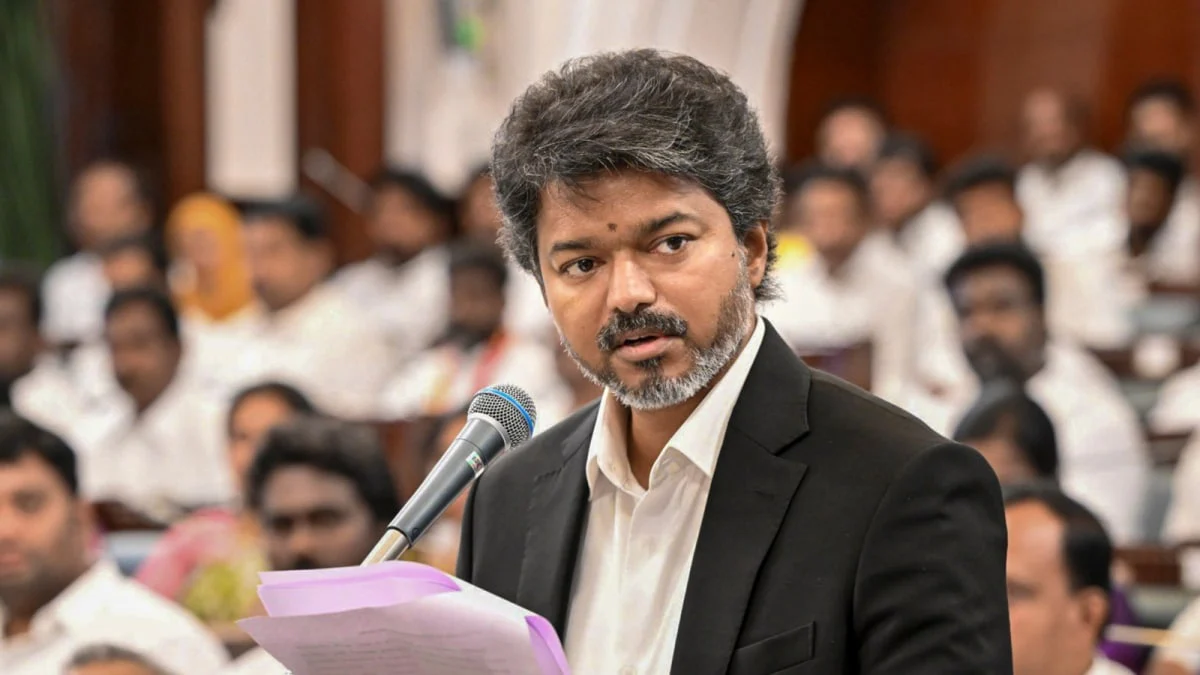
Wayanad, Kerala | May 17, 2026 – The political landscape of Southern India, still reverberating from the dramatic entry and subsequent triumph of actor-turned-politician C. Joseph Vijay’s Tamilaga Vettri Kazhagam (TVK) in Tamil Nadu, now watches with bated breath as unmistakable signals emerge of the party’s potential expansion into neighbouring Kerala. Back-to-back fan meetings and grassroots mobilisation in districts like Wayanad and Palakkad have ignited a fervent buzz, prompting political analysts and established parties alike to ponder the implications of ‘Thalapathy’ Vijay’s pan-southern ambitions.
The TVK, which shattered conventional political narratives by emerging as the single largest party in the 2026 Tamil Nadu Assembly elections – securing 108 seats and forming a government in alliance with the CPI, CPI(M), IUML, and VCK – has demonstrated a potent blend of star power and strategic political acumen. This unprecedented success has evidently emboldened Vijay’s supporters across state lines, particularly in Kerala, where his films command a substantial following. The recent surge in activity by his fan base suggests a calculated groundwork being laid for a formal political debut, potentially reshaping Kerala’s traditionally bipolar political arena.
The Genesis of a Movement: From Fan Clubs to Political Units
The current wave of speculation gained significant traction last week when a determined group of Vijay fans in Wayanad initiated concrete measures to establish a local TVK unit. This spontaneous, yet highly organised, effort quickly caught the attention of local media and political observers. Following closely on its heels, a larger, equally enthusiastic gathering of Vijay’s supporters convened in Palakkad on Sunday, further solidifying the perception that these are not isolated incidents but rather orchestrated steps towards a broader political objective.
For years, Vijay has enjoyed an almost cult-like following in Kerala, cultivated through his blockbuster films and the extensive network of fan associations operating under the banner of the Thalapathy Vijay Makkal Iyakkam. This organisation, now formally rechristened TVK in Tamil Nadu, has historically engaged in numerous welfare initiatives across Kerala, ranging from blood donation drives to educational support for underprivileged children. This long-standing engagement has fostered a deep sense of loyalty and community among his fans, many of whom have now seamlessly transitioned from ardent cinephiles to eager political activists.
However, despite this groundswell of enthusiasm, the TVK has not yet been officially registered as a political party in Kerala. Members of these nascent units across the state are reportedly awaiting formal directives and a strategic roadmap from the TVK leadership in Tamil Nadu. This period of anticipation, while hinting at cautious planning, also allows for organic growth and the assessment of public sentiment before a formal plunge.
TVK’s Tamil Nadu Blueprint: A Precedent for Kerala?
The remarkable political journey of the TVK in Tamil Nadu provides a crucial lens through which to understand its potential trajectory in Kerala. Vijay’s decision to shed his silver screen persona for the political stage was met with initial skepticism, yet his methodical approach, focusing on grassroots engagement and addressing critical public issues, resonated deeply with the electorate. His party’s alliance strategy, bringing together a diverse coalition, demonstrated a pragmatic understanding of coalition politics, a lesson that could prove invaluable in Kerala’s complex multi-party environment.
During the swearing-in ceremony of Vijay as the Chief Minister of Tamil Nadu, Kerala witnessed widespread celebrations. Fan associations organised massive gatherings, fireworks displays, and public feasts in various parts of the state, mirroring the festivities in Tamil Nadu. This enthusiastic reception underscored the depth of Vijay’s popularity beyond linguistic barriers and hinted at a cross-cultural appeal that transcends conventional political divides. The images of jubilant crowds, particularly the strong representation of youngsters and women at the TVK meetings in Palakkad and Wayanad, as reported by the Deccan Herald, further illustrate the demographic appeal of this burgeoning movement. These segments of the population, often seeking fresh leadership and an alternative to established political hegemonies, appear to be drawn to Vijay’s persona and the promise of a new political era.
The Unofficial Mobilization: Digital Waves and Groundswell
The absence of an official party registration has done little to dampen the spirits of Vijay’s supporters in Kerala. On the contrary, the digital realm has become a significant battleground for mobilisation. Within days of the Tamil Nadu election results and the subsequent buzz, numerous social media pages and groups purporting to be "TVK Kerala State Committee" and "TVK Kerala Women’s Committee" have sprung up across various platforms. While these are currently unofficial and not directly sanctioned by the party’s central leadership, their rapid proliferation and ability to garner thousands of followers over a single weekend, as highlighted by The Week, speak volumes about the potency of Vijay’s brand and the readiness of his fan base to embrace a political identity.
These digital platforms serve multiple purposes: they act as information dissemination hubs, rally points for online discussions, and a means to gauge public opinion. The speed at which these groups have formed and attracted followers indicates a pre-existing infrastructure of fan networks that can be quickly repurposed for political ends. This online activism, coupled with the physical meetings, creates a dual-pronged approach to mobilisation, reaching both digitally native youth and more traditional community groups. The narrative of a new, dynamic leader offering a departure from conventional politics resonates particularly strongly with a younger generation that is increasingly disillusioned with established political processes and often seeks immediate, tangible change.
Awaiting the Green Light: The Official Stance and Strategic Calculus
Despite the visible ground-level activity, the TVK’s central leadership has maintained a strategic silence regarding a formal entry into Kerala politics. This deliberate pause is likely part of a broader strategic calculus. Expanding into a new state, especially one with a distinct political culture and linguistic identity, presents significant logistical, financial, and organisational challenges. The TVK leadership, under Vijay, would need to meticulously plan its approach, considering factors such as:
- Language and Cultural Adaptation: While Vijay is popular, political communication and messaging in Kerala would require a nuanced understanding of Malayalam and local cultural sensitivities, distinct from Tamil Nadu.
- Organisational Structure: Building a robust party apparatus from scratch, beyond fan clubs, would necessitate identifying credible local leaders, establishing district-level committees, and setting up administrative frameworks.
- Resource Allocation: A political expansion requires substantial financial investment for campaigning, infrastructure, and cadre training.
- Timing: The timing of such an announcement would be crucial, potentially aligning with upcoming local body elections or state assembly polls to maximise impact.
The optimism among TVK cadres in Kerala, however, remains palpable. Many believe that the party’s clean image, focus on youth empowerment, and Vijay’s charismatic leadership could garner significant public support in a state often yearning for fresh political alternatives. The perceived "delay on the part of Congress in selecting a Chief Minister" – a reference from the original article, hinting at ongoing political dynamics within the UDF – might also inadvertently push some disaffected youth towards exploring alternative leadership, making a star-led movement like TVK an attractive proposition.
Kerala’s Political Landscape: A Tough Nut to Crack?
Kerala’s political landscape is historically dominated by two major fronts: the Left Democratic Front (LDF), led by the Communist Party of India (Marxist), and the United Democratic Front (UDF), led by the Indian National Congress. Both fronts have deeply entrenched organisational structures, decades of political experience, and loyal voter bases that are often ideologically driven. The Bharatiya Janata Party (BJP) has been attempting to make inroads, particularly in certain regions, but has yet to achieve significant electoral breakthroughs at the state level.
An entry by the TVK would undoubtedly introduce a new, unpredictable variable into this established bipolar system. Unlike Tamil Nadu, where celebrity-driven politics has a long and storied history, Kerala has historically been less receptive to film personalities transitioning into political leadership, preferring leaders with a background in social movements or established political activism. However, the sheer scale of Vijay’s popularity and the evident disillusionment among certain sections of the electorate could challenge this traditional resistance.
The established parties would likely view TVK’s potential entry with a mix of concern and opportunism. For the LDF and UDF, a new player could fragment their traditional vote banks, particularly among younger and first-time voters. Conversely, they might also see an opportunity for strategic alliances, particularly if TVK manages to establish a discernible vote share. The BJP, always on the lookout for new allies to break the LDF-UDF duopoly, might also assess the potential for collaboration.
Potential Alliances and Rivalries: The Chessboard of Southern Politics
The potential entry of TVK into Kerala also brings to the forefront the broader dynamics of southern Indian politics. The embedded article, "Vijay As Ally, Satheesan As CM: Congress’s Southern Gamble Shows Pragmatic Rahul Gandhi," provides a fascinating glimpse into the pre-existing political calculations surrounding Vijay. This suggests that even before TVK’s official Kerala expansion, the Congress leadership might have been exploring scenarios involving Vijay as a potential ally, perhaps in a larger pan-Indian context or to strengthen regional fronts.
Should TVK formally enter Kerala, it could disrupt existing alliance structures. If Vijay chooses to align with either the LDF or UDF, it could significantly alter the balance of power. His party’s secular stance, as demonstrated by its alliance with the IUML in Tamil Nadu, suggests a compatibility with the UDF, yet his populist appeal might also find resonance with sections of the LDF’s base. Conversely, TVK could opt to remain independent, positioning itself as a third alternative, a strategy that has proven difficult but not impossible in Kerala’s political history.
The rivalry would be intense. Existing parties would scrutinise TVK’s policies, leadership, and funding. They would likely attempt to highlight any perceived inexperience or lack of deep understanding of local issues. However, TVK’s strength lies in its charismatic leader and its potential to mobilise a segment of the population that feels unrepresented by traditional parties.
The Road Ahead: Challenges and Aspirations
The path for TVK in Kerala is fraught with challenges. Beyond the linguistic and cultural barriers, the party would need to articulate a clear political ideology that resonates with Kerala’s politically conscious electorate. It would have to move beyond the appeal of celebrity to demonstrate concrete policy proposals for issues pertinent to the state, such as unemployment, environmental concerns, and social welfare. Building a robust organisational structure, attracting experienced political figures, and securing sustainable funding will be critical for long-term viability.
Despite these hurdles, the aspirations are high. A successful foray into Kerala would solidify Vijay’s image as a pan-southern political force, potentially giving him greater leverage in national politics and fostering the idea of a cohesive "southern bloc." For Kerala, it could signify a profound shift, offering a new voice and potentially shaking up a political system that has largely remained static for decades.
As the political mercury rises in Kerala, all eyes remain fixed on Vijay and the TVK leadership in Tamil Nadu. The grassroots mobilisation, the digital surge, and the palpable optimism among his supporters indicate that the stage is set. Whether this translates into a formal political entry and a successful new chapter in Kerala’s political narrative remains to be seen, but one thing is certain: the buzz surrounding Thalapathy’s southern gambit is only growing louder.
