

Introduction: A New Era of Indian Infrastructure
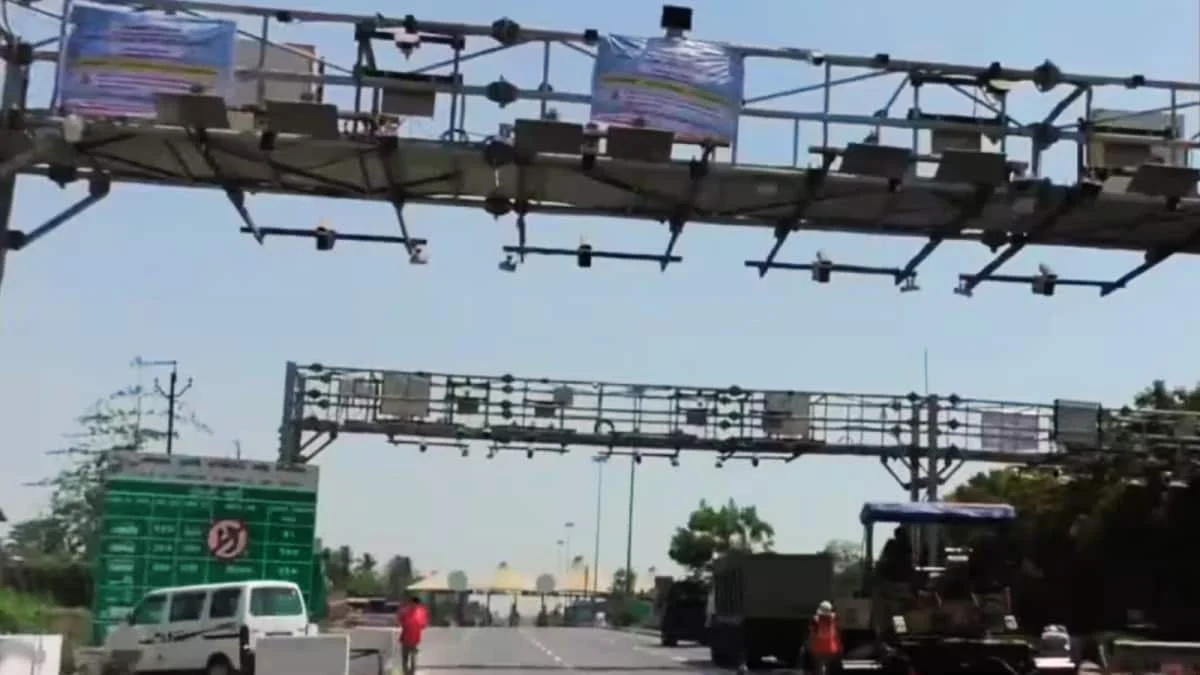
The landscape of Indian highways is undergoing a radical transformation, shifting from the era of manual cash collection and long queues to a future defined by seamless, high-speed travel. On May 19, 2026, the National Highways Authority of India (NHAI) marked a significant milestone in this journey by operationalizing Delhi’s first barrier-less toll plaza. Located on the Mundka-Bakkarwala stretch of the Urban Extension Road-II (UER-II), this Multi-Lane Free Flow (MLFF) system was designed to eliminate the friction of highway travel.
However, as with any technological leap, the transition has not been without its hurdles. While the system promises a "stop-free" experience, it has simultaneously birthed a new subculture of digital and mechanical evasion. Even as the AI-powered cameras and RFID readers work in millisecond intervals to process thousands of vehicles, a small but persistent segment of commuters is employing sophisticated—and often illegal—tactics to dodge the automated charges. This report explores the mechanics of the new system, the methods of evasion, and the broader implications for India’s infrastructure goals.
1. Main Facts: The Mechanics of Multi-Lane Free Flow (MLFF)
The UER-II project is more than just a road; it is a critical artery designed to decongest Delhi by providing a bypass for traffic moving between North and Southwest Delhi and neighboring states like Haryana and Punjab. The crown jewel of this stretch is the barrier-less tolling system.
How the System Operates:
Unlike traditional toll plazas, where vehicles must slow down or stop for a boom barrier to lift, the MLFF system uses overhead gantries. These gantries are equipped with a suite of high-tech sensors:
- High-Performance RFID Readers: These detect the FASTag mounted on a vehicle’s windshield from a distance, initiating the debit process from the linked bank account or wallet.
- AI-Enabled ANPR Cameras: Automatic Number Plate Recognition (ANPR) cameras capture high-resolution images of the front and rear license plates. This serves as a secondary verification method if the RFID tag is unreadable or missing.
- Vehicle Classifiers: Laser-based sensors determine the size and type of the vehicle (e.g., car, LCV, truck) to ensure the correct toll rate is applied.
The goal is to allow vehicles to maintain speeds of up to 80–100 km/h while the system processes the payment in the background. In theory, this reduces fuel consumption, lowers carbon emissions from idling, and eliminates the bottleneck of physical gates.
2. Chronology: The Evolution of Toll Collection in India
To understand the significance of the Mundka-Bakkarwala plaza, one must look at the timeline of India’s tolling evolution:
- Pre-2016: The Manual Era. Toll collection was almost entirely manual. Drivers handed over cash, received a paper receipt, and waited for physical barriers to lift. This resulted in massive congestion, with wait times often exceeding 20–30 minutes during peak hours.
- 2016–2021: The Introduction of FASTag. NHAI introduced RFID-based FASTags to digitize payments. While it improved efficiency, it still relied on physical barriers and dedicated "FASTag lanes," which were often clogged by vehicles without tags.
- February 2021: Mandatory FASTag. The Government of India made FASTag mandatory for all four-wheelers. This significantly increased digital penetration but did not remove the physical barrier infrastructure.
- 2024–2026: The Leap to Barrier-Less (MLFF). Following a successful pilot on the Delhi-Meerut Expressway and at various points in Southern India, the NHAI began implementing MLFF on high-traffic corridors like the UER-II. This represents the "barrier-less" phase, where the physical boom barrier is removed entirely.
3. Supporting Data: The Rising Challenge of Toll Evasion
Despite the sophistication of the MLFF system, NHAI officials have flagged early signs of revenue leakage. While the majority of commuters (over 99%) comply with the system, the remaining 1% represents a significant challenge due to the sheer volume of traffic.
The Anatomy of Evasion:
Data from the first few weeks of operation suggests several primary methods of evasion:
| Method of Evasion | Description | Technical Impact |
|---|---|---|
| HSRP Tampering | Scratched or bent High-Security Registration Plates. | Prevents ANPR cameras from reading the alphanumeric characters accurately. |
| Mechanical Flippers | "James Bond-style" devices that flip the plate 90 degrees. | Completely hides the plate from overhead cameras during the gantry pass. |
| Reflective Coatings | Sprays or films that reflect camera flash. | Causes "white-out" in images, making the plate unreadable to AI software. |
| Missing FASTags | Intentionally removing or hiding the tag. | Forces the system to rely solely on ANPR, which can be bypassed if the plate is also obscured. |
| Tailgating | Driving extremely close to a larger vehicle. | Can occasionally "shield" a smaller vehicle from the overhead sensors. |
Economic and Operational Impact:
Initial reports indicate that while the evasion rate is low, it complicates the "reconciliation" process. When a vehicle passes without a readable FASTag and an obscured number plate, the NHAI is forced to log it as a "non-billable event." If this trend scales as more MLFF plazas are built, the cumulative revenue loss could reach hundreds of crores annually across the national highway network.
4. Official Responses: The Push for Stricter Enforcement
The NHAI and the Ministry of Road Transport and Highways (MoRTH) have reacted swiftly to these reports of evasion. The official stance is one of "zero tolerance" for intentional tampering with registration systems.
NHAI’s Strategic Countermeasures:
- Vahan Database Integration: The NHAI is working to more deeply integrate its AI systems with the ‘Vahan’ national vehicle registry. This allows the system to cross-reference partial plate reads with vehicle make, model, and color to identify offenders.
- Blacklisting Protocols: Vehicles identified as frequent "dodgers" are being blacklisted. Once blacklisted, these vehicles can be flagged at traditional toll plazas or by highway patrol units equipped with mobile scanners.
- Legal Ramifications: Officials have clarified that tampering with HSRP (High-Security Registration Plates) is a criminal offense under the Central Motor Vehicles Rules. NHAI is collaborating with the Delhi Police and Haryana Police to conduct "spot checks" near the UER-II stretch.
Official Statement (Paraphrased):
“The barrier-less system is a trust-based technological advancement designed for the convenience of the public. However, those using mechanical devices or reflective films to evade charges are not just committing toll fraud; they are compromising national security by obscuring their vehicle identity. We are enhancing our AI algorithms to detect ‘ghost plates’ and will ensure that the law catches up with these violators.” — Senior NHAI Official.
5. Implications: The Future of Free-Flow Tolling in India
The success or failure of the Mundka-Bakkarwala plaza will serve as a bellwether for the future of Indian highways. There are several deep-seated implications to consider:
A. The Technological "Arms Race"
As AI gets better at reading obscured plates, evaders will likely turn to even more sophisticated methods, such as electronic "e-ink" plates that can change characters or infrared-emitting LEDs that blind cameras without being visible to the human eye. The NHAI will need to continuously update its hardware to stay ahead.
B. Privacy vs. Enforcement
To catch evaders, the system may eventually require 360-degree high-definition imaging of every vehicle, including the driver’s face. This raises significant concerns regarding data privacy and the potential for surveillance. Striking a balance between revenue protection and citizen privacy will be a key challenge for policymakers.
C. The Need for Global Standards
India is looking at international models, such as the E-ZPass system in the US or the ERP system in Singapore. These systems rely heavily on a "pay-by-mail" or "pay-by-app" backup. If a FASTag fails, the owner is sent a digital invoice based on their plate. For this to work in India, the address database in the Vahan portal must be 100% accurate—a task that is still a work in progress.
D. Infrastructure Maturity
The UER-II project proves that India has the engineering capability to build world-class roads. However, the "soft infrastructure"—the legal framework, the digital literacy of the population, and the efficiency of the judicial system in handling small-scale fraud—must catch up to the "hard infrastructure" of the roads themselves.
Conclusion: A Path Forward
The introduction of barrier-less tolls in Delhi is a bold step toward a more efficient India. While the "dodging" tactics currently making headlines are a nuisance, they are a predictable side effect of any major technological shift. The solution lies not in returning to the physical barriers of the past, but in refining the digital ecosystem of the future. Through a combination of better AI, stricter legal enforcement, and public awareness, the NHAI aims to ensure that the UER-II remains a model for seamless travel, proving that in the race between technology and evasion, the law eventually wins.
