

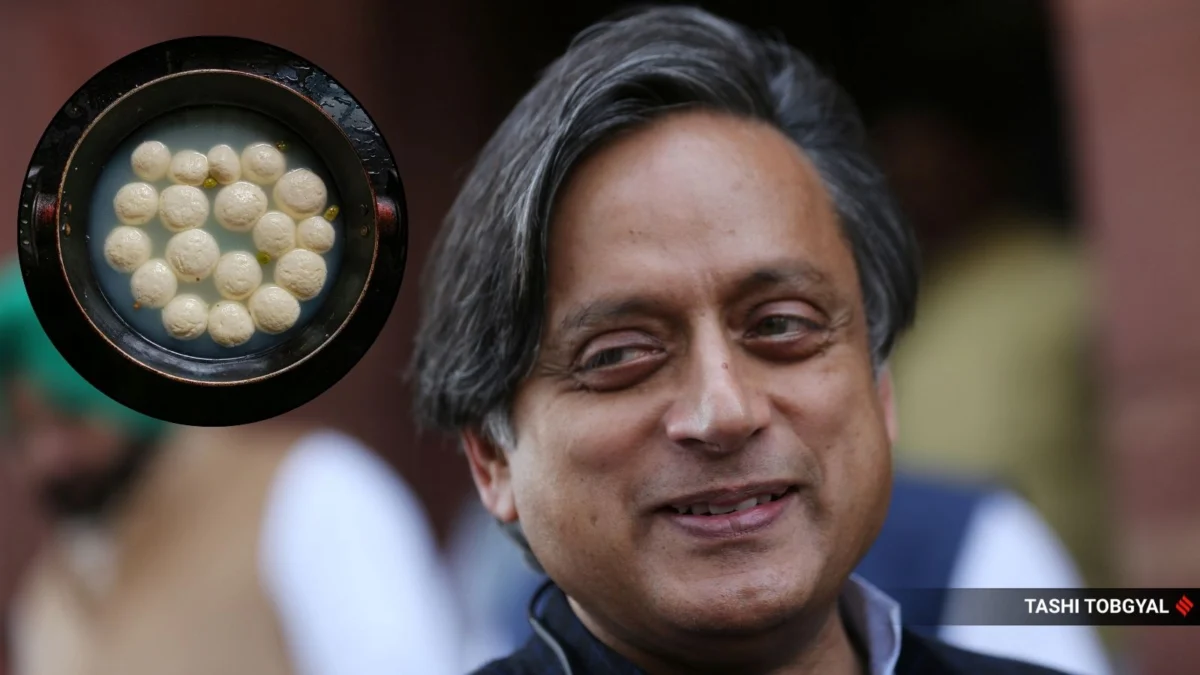
Main Facts: A Digital Firestorm Over Regional Staples
What began as a routine exchange of culinary preferences on social media platform X (formerly Twitter) has escalated into a sophisticated national discourse involving Members of Parliament, celebrity chefs, and food historians. The debate, which pits the iconic Bengali Rasgulla against the South Indian Idli, has transcended simple taste preferences to explore deeper themes of regional identity, the science of fermentation, and the "cosmological" significance of Indian staples.
The controversy was ignited when a user, @crazyxedi, dismissed the Rasgulla—a syrupy, cheese-based dessert synonymous with Bengal and Odisha—as nothing more than "an idli dipped in sugar syrup," labeling it "the most overrated dessert." This provocative comparison touched a nerve across the Indian digital landscape, prompting a viral intervention by Congress MP Shashi Tharoor. Tharoor, known for his sesquipedalian vocabulary and South Indian heritage, stepped in not merely to defend the Idli, but to elevate it to the status of a "biotechnological masterclass."
The ensuing conversation has highlighted a fundamental truth about Indian society: food is never just sustenance. It is a repository of history, a symbol of regional pride, and a complex scientific achievement. By contrasting the "squeaky" curd of the Rasgulla with the "fermented matrix" of the Idli, participants in this debate have inadvertently provided a public education on the technical labor and cultural history that define the Indian palate.
Chronology: From a Casual Tweet to a National Debate
The timeline of this culinary clash reflects the rapid, viral nature of modern social media discourse:
- The Catalyst: The conversation began innocently when a user named Sayantika posted about the ethereal qualities of Bengali sweets, specifically Misti Doi and Nolen Gurer Rosogolla. Her post sought to articulate the unique sensory experience of these delicacies to those unfamiliar with the nuances of Bengali cuisine.
- The Provocation: In response, user @crazyxedi posted the now-infamous comparison, suggesting that the Rasgulla was essentially a sugary version of the Idli. By calling the dessert "overrated," the user challenged the culinary prestige of a dish that holds a Geographical Indication (GI) tag and centuries of tradition.
- The Tharoorian Intervention: On May 17, Shashi Tharoor entered the fray. His response was characteristically elaborate, framing the comparison as a "profound cosmological misunderstanding." Tharoor’s defense of the Idli was not just a rebuttal but a poetic exaltation of South Indian breakfast culture.
- Expert Mobilization: Following Tharoor’s viral post, food authors, celebrity chefs, and scientists began weighing in. Figures like Chef Sadaf Hussain, Chef Ananya Banerjee, and food science expert Alok Singh provided technical context to explain why the two dishes belong to "entirely different kingdoms."
- The Public Reaction: The internet responded with a mixture of humor and hunger. The debate triggered a surge in "idli-sambhar" orders and sparked thousands of memes, proving that while the technicalities of the debate were serious, the public’s engagement was driven by a shared love for diverse Indian flavors.
Supporting Data: The Technical and Scientific Divide
To understand why the comparison between a Rasgulla and an Idli is, as Tharoor stated, "a biological impossibility," one must look at the distinct compositions and preparation methods of the two dishes.
The Anatomy of a Rasgulla
The Rasgulla is a triumph of dairy chemistry. It is made from chhena—fresh curd cheese produced by curdling milk with an acidic agent and then draining the whey.
- Composition: 100% milk solids (protein and fat).
- Structure: An airy, spongy lattice created by kneading the chhena to a specific consistency.
- Cooking Method: Boiling. The chhena balls are simmered in a light sugar syrup. The heat causes the protein structure to expand and trap the syrup, creating its signature "juiciness."
- Mouthfeel: Squeaky, soft, and liquid-releasing.
The Anatomy of an Idli
The Idli is a product of grain-based fermentation and steam.
- Composition: A blend of parboiled rice (carbohydrates) and urad dal (black gram/protein).
- Structure: A dense yet porous matrix formed through the action of wild yeast and bacteria.
- Cooking Method: Steaming. This preserves the nutrients and creates a "cloud-like" texture without the addition of fats or oils.
- Mouthfeel: Grainy, soft, and absorbent, designed specifically to hold savory accompaniments like sambar or chutney.
Nutritional Profiles
The two dishes serve entirely different dietary functions. The Idli is a complete protein-carb meal, enriched by the fermentation process which increases bioavailability of nutrients. The Rasgulla is a high-energy, protein-rich dessert. To conflate them is to ignore the fundamental difference between a fermented legume-cereal staple and a boiled dairy confection.
Official Responses: Expert Insights into Culinary Identity
Professional chefs and food historians have been quick to point out that the "Idli in syrup" analogy is not only technically flawed but culturally reductive.
Chef Sadaf Hussain, a noted food author, emphasized the situational difference between the two. "The comparison is technically inaccurate," Hussain noted. He argued that while the Idli is a "basic necessity" and a daily staple for millions, the Rasgulla is a "celebration." The emotional weight of a morning comfort food like Idli cannot be compared to the festive indulgence of a Rasgulla.
Celebrity Chef Ananya Banerjee focused on the "structural integrity" of the dishes. She explained that the ingredients and preparation methods—boiling vs. steaming—create fundamentally distinct mouthfeels. "Rasgulla involves boiling in syrup while idli relies on steaming… the analogy is misleading," she stated, pointing out that the "grainy, porous structure" of the Idli is designed for savory absorption, a purpose entirely at odds with the Rasgulla’s sugar-trapping lattice.
Alok Singh, a food science expert and founder of Diga Organics, highlighted the "technical and cultural labor" involved. He noted that such comparisons strip away the centuries of perfection required to master these dishes. "The idli is the soul of the South—a symbol of patience," Singh remarked, contrasting it with the 19th-century "chhena" revolution in Bengal which broke traditional Vedic aversions to "spoiled" or split milk to create the modern Rasgulla.
Implications: Biotechnology, Regional Pride, and Cultural Shorthand
The debate has opened a window into the sophisticated "biotechnology" inherent in traditional Indian kitchens. Shashi Tharoor’s description of the Idli as a "masterclass in biotechnology" is backed by scientific reality.
The Science of "Controlled Spoilage"
As Alok Singh explained, the process of making Idli batter is a sophisticated manipulation of microflora. By soaking urad dal and rice, home cooks encourage the growth of Leuconostoc mesenteroides and Lactobacillus. These microbes perform three critical functions:
- Leavening: They produce carbon dioxide, which gives the Idli its fluffiness without the need for chemical agents.
- Neutralization: They break down phytic acid, an "anti-nutrient" that prevents the body from absorbing minerals like iron and zinc.
- Enrichment: The fermentation process synthesizes B-vitamins, making the Idli significantly more nutritious than its raw ingredients.
Food as Cultural Shorthand
Beyond the science, this debate underscores the role of food as "cultural shorthand." In a country as diverse as India, regional dishes serve as anchors of identity. For a Bengali, the Rasgulla represents a historical breakthrough in confectionery and a rejection of ancient taboos against split milk. For a South Indian, the Idli represents a daily ritual of patience and gut-health consciousness.
When these dishes are trivialized or inaccurately compared, it is often perceived as an attack on the collective memory and "terroir" of a community. As Singh aptly noted, "Food is often the first thing people take with them when they migrate and the last thing they give up as they assimilate."
Conclusion: The Dignity of the Dish
The "Idli vs. Rasgulla" debate, while humorous on the surface, serves as a reminder of the depth and complexity of Indian culinary traditions. Shashi Tharoor’s firm defense—stating that an Idli would never "consent to being drowned in sugar syrup"—reaffirms the "dignity" of these regional staples.
In an era of globalized, fast-food culture, such debates celebrate the "noble, perfectly fermented, steamed majesty" of traditional foods. They remind us that a dish is not just a collection of ingredients, but a triumph of history, science, and regional soul. Whether one prefers the "savoury monolith" of the South or the "airy lattice" of the East, the consensus remains: both deserve to be judged on their own merits, within their own "cosmological" frameworks.
