

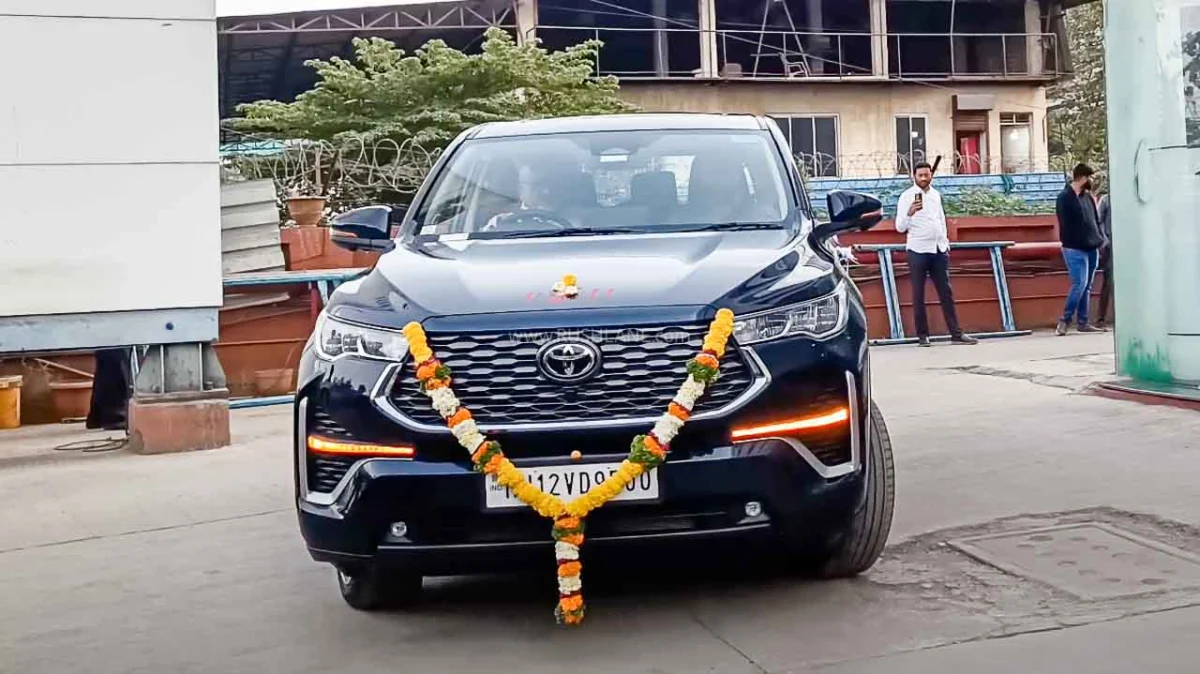
Bengaluru, India – Toyota Kirloskar Motor (TKM) has officially announced a historic achievement in the Indian automotive landscape, crossing the cumulative sales milestone of 300,000 strong-hybrid electric vehicles (SHEVs). This milestone underscores a pivotal shift in Indian consumer preferences toward greener mobility and cements Toyota’s position as the undisputed leader in the nation’s hybrid revolution.
Commanding a staggering 80% market share in the strong-hybrid segment, Toyota’s success is a testament to its long-term strategic vision, localized manufacturing, and a product portfolio that resonates with both luxury seekers and value-conscious families. This achievement comes at a time when the global automotive industry is navigating the complexities of the transition from internal combustion engines (ICE) to full electrification, with hybrids emerging as the most viable "bridge" technology for the Indian subcontinent.
The Main Achievement: Dominating the Strong-Hybrid Narrative
The 3-lakh milestone is not merely a number; it represents a significant cultural shift in a market traditionally dominated by diesel and petrol powertrains. Toyota’s "Self-Charging Hybrid Electric Vehicle" technology has successfully addressed the two primary concerns of Indian car buyers: fuel efficiency and range anxiety.
Unlike Plug-in Hybrids (PHEVs) or Battery Electric Vehicles (BEVs), Toyota’s SHEVs do not require external charging infrastructure—a critical advantage in a country where public charging networks are still in their nascent stages. By utilizing regenerative braking and an internal combustion engine to charge the battery, these vehicles offer the smoothness of an electric drive with the convenience of a traditional car.
According to the latest data, Toyota now holds 80% of the strong-hybrid market share. The remaining 20% is largely held by Maruti Suzuki, which utilizes Toyota’s licensed hybrid powertrain technology in models like the Grand Vitara and Invicto, further highlighting Toyota’s technological influence over the entire Indian automotive ecosystem.
Chronology: The Journey to 300,000 Units
Toyota’s journey toward hybrid leadership in India was not an overnight success but a calculated, multi-decade effort.
The Early Adopters (2010–2020)
Toyota’s hybrid journey in India began with the introduction of the Prius and later the Camry Hybrid. While these were niche products—primarily due to high import duties and a lack of local manufacturing—they served as "technological flagships." They introduced the Indian elite to the concepts of silent starts, electric-only low-speed crawling, and exceptional fuel economy in the luxury sedan segment.
The Localization Pivot (2022–Present)
The real momentum began with the launch of the Urban Cruiser Hyryder and the Innova HyCross. These models marked a departure from Toyota’s previous strategy of importing expensive kits. By localizing the production of hybrid powertrains at its Bidadi plant in Karnataka, Toyota was able to bring prices down to a level that appealed to the mass-market mid-size SUV and MPV segments.
The launch of the Innova HyCross in late 2022 was the ultimate "tipping point." By offering a hybrid alternative to the legendary Innova Crysta diesel, Toyota proved that hybrid technology could handle the rigors of Indian roads, heavy loads, and long-distance travel.
Supporting Data: The Drivers of Growth
The surge to 3 lakh units has been fueled by specific models that have become household names in the Indian automotive market. Analysis of recent fiscal performance (FY2026 data) reveals a clear hierarchy of contribution:
1. Toyota Innova HyCross: The Volume King
The Innova HyCross has emerged as the primary driver of this milestone. In the most recent fiscal year, Toyota sold 62,586 units of the HyCross. Its appeal lies in its "monocoque" construction, which offers car-like handling, combined with a hybrid system that delivers fuel efficiency figures (approx. 23.24 km/l) that were previously unthinkable for a large 7-seater MPV.
2. Urban Cruiser Hyryder: The Mid-Size Disruptor
The Hyryder accounted for 35,745 units in the same period. As the first strong-hybrid in the highly competitive mid-size SUV segment, it attracted buyers who wanted SUV styling without the high running costs of a petrol engine or the environmental stigma of a diesel.
3. Luxury Contributors: Camry and Vellfire
While lower in volume, the Camry Hybrid and the Vellfire luxury MPV have been essential in maintaining Toyota’s premium brand image. The Vellfire, in particular, has seen unprecedented demand among India’s ultra-high-net-worth individuals (UHNWIs), proving that hybrid technology is now synonymous with modern luxury.
Global Context and Environmental Impact
Toyota’s success in India is backed by its global stature. Globally, Toyota’s electrified vehicle sales (including hybrids, PHEVs, and EVs) have surpassed 38 million units. This massive scale has contributed to a reduction of over 197 million tons of CO2 emissions worldwide. In India, the adoption of 3 lakh hybrids is estimated to have saved millions of liters of fuel, directly contributing to the nation’s energy security and carbon reduction goals.

Official Responses: The Philosophy of "Mass Electrification"
The milestone was celebrated by the leadership at Toyota Kirloskar Motor, who emphasized that hybrids are not just a temporary solution but a core pillar of their future strategy.
Mr. Sabari Manohar, Executive Vice President of Sales-Service-Used Car Business at TKM, remarked on the achievement:
"We are immensely proud to achieve the milestone of 3 lakh hybrid vehicle sales in India, reflecting the strong and growing customer trust in Toyota’s Self-charging Hybrid Electric technology. At Toyota, our philosophy of ‘Mass Electrification’ is rooted in offering practical, scalable, and inclusive mobility solutions."
Manohar further elaborated on the strategic importance of the technology:
"Hybrid technology serves as a critical bridge towards a cleaner future, enabling customers to embrace electrification seamlessly without compromising on performance, convenience, or reliability. This achievement not only reinforces our commitment to environmentally responsible mobility but also strengthens our resolve to contribute meaningfully to India’s transition towards carbon neutrality."
Implications: What This Means for the Indian Auto Industry
The success of Toyota’s hybrids carries profound implications for the future of the Indian automotive sector, influencing competitors, policymakers, and consumers alike.
1. The Hybrid vs. EV Debate
Toyota’s 300,000-unit milestone provides a strong counter-argument to the "EV-only" narrative. While the Indian government has pushed heavily for pure battery electric vehicles, Toyota has successfully demonstrated that consumers are willing to pay a premium for "electrified" vehicles that do not require a change in lifestyle or charging habits. This may lead to a more balanced policy approach where hybrids receive similar tax incentives to EVs.
2. The Decline of Diesel
For decades, the Innova and Fortuner were synonymous with diesel power. The shift of the Innova buyer base toward the HyCross hybrid suggests that the "diesel era" in the passenger vehicle segment is reaching its twilight. Toyota’s ability to transition its most loyal customers from diesel to hybrid is a blueprint that other manufacturers (like Mahindra and Tata) are watching closely.
3. Strengthening the Toyota-Suzuki Alliance
The success of these hybrid models reinforces the global partnership between Toyota and Suzuki. By sharing platforms and powertrain technology, both companies have achieved economies of scale that would have been impossible individually. This alliance is likely to deepen, with more hybrid models expected in the sub-4-meter and compact SUV segments.
4. Technological Democratization
As Toyota reaches higher production volumes, the cost of hybrid components—such as electric motors and battery packs—is expected to decrease. This "democratization" of technology will likely see hybrid systems trickling down to more affordable vehicle segments, making green mobility accessible to a broader section of the Indian population.
Future Outlook: Beyond the 3 Lakh Mark
Looking ahead, Toyota Kirloskar Motor shows no signs of slowing down. With a third manufacturing plant currently under development in India, the company is preparing for a future where hybrid and electric vehicles comprise the majority of its sales.
Industry rumors suggest that Toyota is considering hybridizing its more rugged "IMV" platform, which could potentially lead to hybrid versions of the Fortuner and the Hilux. Furthermore, as the Indian government moves toward stricter CAFE (Corporate Average Fuel Efficiency) norms and BS7 emission standards, Toyota’s hybrid-heavy portfolio puts it in an advantageous position compared to rivals who are still heavily reliant on pure ICE engines.
In conclusion, Toyota’s 3-lakh hybrid sales milestone is more than a commercial victory; it is a validation of a technology that fits the unique socio-economic and infrastructural realities of India. As the company continues to champion "Mass Electrification," the hybrid engine is no longer a futuristic concept—it is the current heartbeat of the Indian premium automotive market.
