

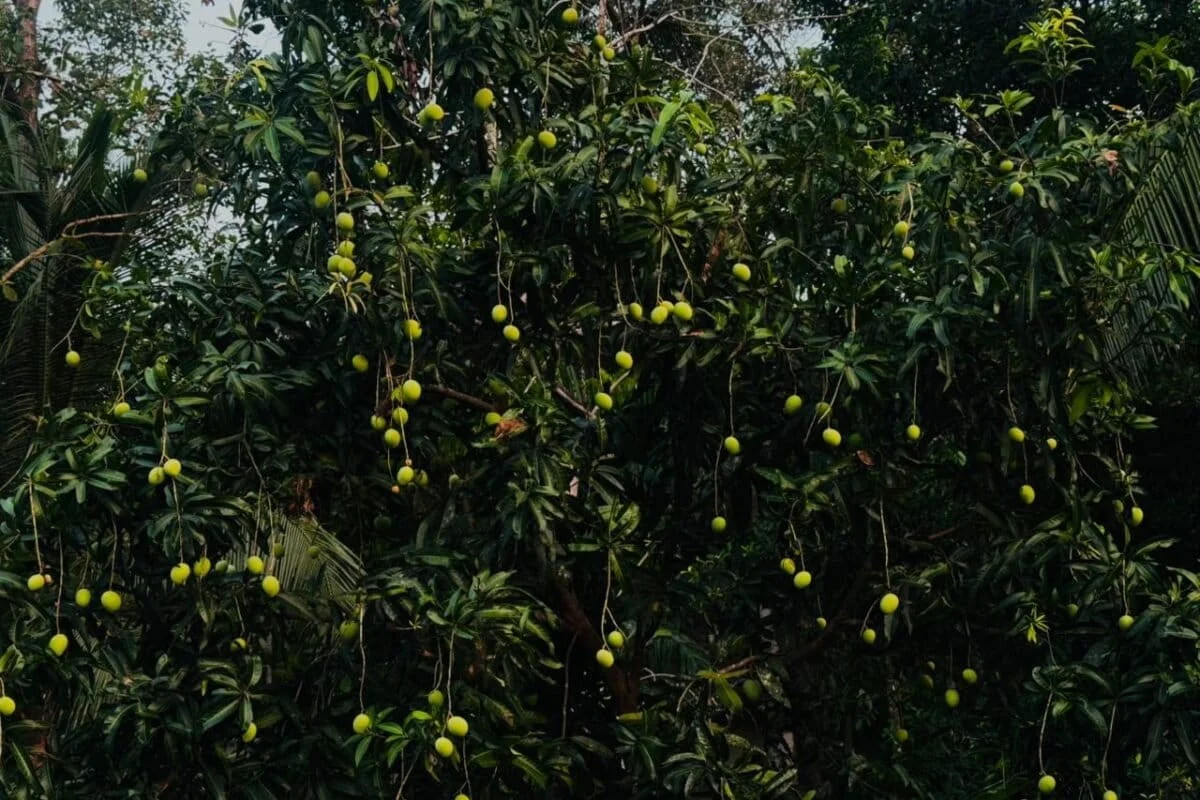
In the lush, rain-drenched landscapes of Kerala, the mango tree has historically been more than a source of fruit; it was a cornerstone of the social fabric. Known collectively as naattu manga (country mangoes), these indigenous landraces once defined the geography of the village. They stood as sentinels along roadsides, shaded schoolyards, and flourished in the corners of sprawling homesteads. However, as the state transitions toward modernized landholding patterns and urban fragmentation, these genetic archives are quietly disappearing.
The crisis facing Kerala’s indigenous mangoes is a dual tragedy: the loss of biological diversity and the erosion of a "moral commons." When a centuries-old mango tree is felled for a road expansion or a real estate development, the loss encompasses a lineage of local adaptation, a seasonal meeting point for the community, and a unique flavor profile that may never have been scientifically documented.
Main Facts: The Identity of the ‘Naattu Manga’
The term naattu manga does not refer to a single botanical variety but serves as an umbrella term for local mango landraces—trees that have emerged, adapted, and persisted within specific village micro-climates over generations. Unlike commercial varieties such as the Alphonso or Banganapalli, which are grown in monoculture orchards, these indigenous trees are part of the "traditional agroecosystem" of Kerala.
A Keystone Species
A 2015 biodiversity appraisal identified the mango (Mangifera indica) as a keystone species of Kerala’s homestead gardens. These gardens, known for their high density of diverse flora, rely on the mango tree to support various forms of life, from epiphytic orchids to specialized pollinators.
The Concept of Moral Ownership
Historically, the ownership of a naattu manga tree was a complex social arrangement. While a tree might technically stand on a specific family’s property, its fruits often belonged to the village in a "moral sense." This meant that neighbors, travelers, and children were permitted to gather fallen fruit or share in the harvest. This culture of abundance is currently being replaced by the "enclosure" of land, marked by compound walls and the strict privatization of resources.
The Chandrakaran Variety
One of the most prominent examples of this fading heritage is the Chandrakaran mango. Found predominantly in districts like Kannur and Pathanamthitta, the Chandrakaran is a bite-sized, highly flavorful fruit. It is characterized by its deep orange pulp, intense sweetness, and a fibrous texture that is highly prized in traditional Kerala cuisine, particularly for making tender mango pickles (kadumanga).
Chronology: From Village Commons to Enclosed Estates
The decline of indigenous mangoes has followed the broader socio-economic transformation of Kerala over the last several decades.
![Vanishing mango landraces reflect the loss of shared landscapes [Commentary]](https://imgs.mongabay.com/wp-content/uploads/sites/30/2026/05/20155047/18a5ec0f-6c7f-4af7-a416-aabc9536c200-1200x800.jpg)
The Era of the Mixed Homestead (Pre-1990s):
During this period, Kerala’s landscape was dominated by open, mixed-species homesteads. Naattu manga trees were ubiquitous. Propagation was largely informal, occurring through the "hand-to-hand" exchange of seeds rather than through commercial nurseries. This allowed for the natural selection of varieties that were resistant to local pests and suited to the high humidity of the Western Ghats.
The Rise of Land Fragmentation (1990s–2010s):
As the population grew and the "Gulf Boom" brought significant remittances into the state, the demand for residential real estate surged. Large ancestral properties were divided into smaller plots. The traditional "open" homestead gave way to enclosed villas. During this transition, large indigenous mango trees were often the first to be cleared to make room for construction or because their sprawling canopies interfered with power lines and new structures.
The Recognition of Vulnerability (2015–Present):
By 2015, environmentalists and researchers began sounding the alarm. A preliminary appraisal of mango biodiversity highlighted that many landraces existed only as scattered, individual trees. In 2021, the successful GI (Geographical Indication) tagging of the Kuttiattoor mango provided a glimmer of hope, proving that local varieties could achieve market recognition and legal protection.
The Present Day (2024–2026):
As of 2026, the focus has shifted toward individual conservation efforts. In villages like Edathutty, families are attempting to re-propagate lost varieties. However, these efforts are often hindered by the loss of traditional knowledge regarding which seedlings will yield the desired fruit quality.
Supporting Data: The Science and Economics of Landraces
The survival of varieties like the Chandrakaran is not merely a matter of nostalgia; it is backed by significant biological and economic value.
Biological Significance: Polyembryony
The Chandrakaran is classified as a polyembryonic mango. This is a critical biological trait where a single seed can produce multiple seedlings. One of these is usually a "nucellar" seedling, which is genetically identical to the mother tree. This trait historically allowed farmers to propagate the tree from seed with a high degree of consistency, bypassing the need for complex grafting techniques. This genetic stability is what allowed the Chandrakaran to persist across generations without formal intervention.
Nutritional and Culinary Value
According to Kerala Agricultural University (KAU), indigenous varieties like Chandrakaran and Moovandan are superior in several nutritional metrics:
![Vanishing mango landraces reflect the loss of shared landscapes [Commentary]](https://imgs.mongabay.com/wp-content/uploads/sites/30/2026/05/20155417/865e3046-a4db-4fb3-931d-5debd4af5674-2-768x512.jpg)
- Vitamin C: Significantly higher than many commercial hybrids.
- Fiber Content: Provides the necessary "body" for traditional fermented pickles.
- Anthocyanins: Local varieties often contain higher levels of antioxidants in their skin.
Market Dynamics
Data from Kochi markets in 2019 indicated that despite being "wild" or "local," Chandrakaran mangoes fetched a premium price of approximately ₹80 per kilogram. This was nearly double the price of other generic local varieties at the time. The high price reflects both the scarcity of the fruit and its irreplaceable role in Kerala’s culinary heritage.
Regional Diversity
Beyond the Chandrakaran, Kerala is home to a vast "taste archive" including:
- Moovandan: Known for its rapid growth and consistent fruiting.
- Kilichundan: Named for its beak-like shape, popular for fresh consumption.
- Kuttiattoor: Now protected by GI status, known for its speckle-free skin and orange-yellow flesh.
Official Responses: Documentation and Legal Protection
The state government and academic institutions have taken varied approaches to address the loss of mango biodiversity.
Kerala Agricultural University (KAU)
The KAU has been instrumental in listing and describing the morphological traits of indigenous mangoes. Their documentation provides the scientific basis required for any future legal protection or commercial scaling. KAU experts emphasize that because these trees are dispersed across homesteads rather than concentrated in orchards, conservation requires a "community-led" approach rather than a traditional top-down botanical garden model.
The GI Tagging Success
The 2021 GI recognition of the Kuttiattoor mango (Kannur district) serves as the primary case study for successful intervention. This effort was a collaboration between local farmers, the state agriculture department, and KAU. The GI tag provides:
- Legal Identity: Prevents other regions from misusing the name.
- Market Premium: Motivates younger generations of farmers to maintain existing trees.
- Public Visibility: Raises awareness about the unique nature of the fruit.
Research Gaps
Despite these successes, researchers like Femi Ezhuthupallickal Benny, a doctoral researcher at University College London, point out a glaring lack of peer-reviewed literature specifically focused on the genetic mapping of varieties like Chandrakaran. Much of the information remains "lived knowledge"—stored in the memories of elderly farmers rather than in accessible digital databases.
Implications: The Future of Kerala’s Agro-Biodiversity
The disappearance of the naattu manga carries profound implications for the future of food security and cultural identity in Kerala.
![Vanishing mango landraces reflect the loss of shared landscapes [Commentary]](https://imgs.mongabay.com/wp-content/uploads/sites/30/2026/05/20160005/Kerala_Mango_Diversity_DSCN0642.jpg)
The Loss of Genetic Resilience
As climate change introduces more volatile weather patterns to the Western Ghats, the genetic resilience of indigenous landraces becomes invaluable. These trees have survived centuries of monsoons and local pests without chemical intervention. Losing them means losing a genetic toolkit that could be vital for breeding future climate-resilient mango varieties.
The "Extinction of Experience"
A landrace does not disappear only when the last tree dies; it begins to vanish when people stop naming it and sharing it. When a child no longer knows the difference between a Gomanga and a Mallissery, the cultural value of the tree evaporates. This "extinction of experience" makes it easier for landowners to justify cutting down trees for non-ecological uses.
Ethics of the New Landscape
The shift from a "village commons" to "private property" presents an ethical challenge. As shown in the case of the Chandrakaran seedling in Edathutty, the decision to keep a tree "open in spirit" (allowing neighbors to share the fruit) is an act of resistance against the increasing enclosure of the Kerala landscape.
Conclusion: Conservation Through Recognition
The survival of Kerala’s indigenous mangoes depends on a fundamental shift in perspective. Documentation is the first step toward memory, and recognition is the first step toward conservation. Whether through formal GI tags or informal community "seedling registries," the goal must be to ensure that the naattu manga remains a living part of the village landscape rather than a footnote in a botanical textbook. The taste of a Chandrakaran is not just a culinary experience; it is a link to a lineage of local adaptation that, once lost, can never be fully recovered.
