

TVS Motor Company, a cornerstone of India’s automotive manufacturing sector and a global player in the two-wheeler (2W) and three-wheeler (3W) markets, has officially released its sales figures for April 2026. The data paints a picture of a company successfully navigating a complex market landscape, characterized by a robust year-on-year (YoY) expansion but tempered by a month-on-month (MoM) correction following the traditional end-of-fiscal-year surge in March.
With a total of 3,48,545 units sold in April 2026, TVS recorded a 7.69% YoY growth compared to the 3,23,647 units sold in the same month of the previous year. However, reflecting the cyclical nature of the Indian automotive industry, sales saw a 6.40% decline from the high-water mark of 3,72,383 units recorded in March 2026. This performance underscores the brand’s resilience in its core segments—scooters and performance motorcycles—while highlighting emerging trends in the premium and electric vehicle (EV) spaces.
The Core Pillars: Jupiter and Apache Dominate the Portfolio
The backbone of TVS Motor’s domestic success remains its diverse portfolio, which spans from entry-level mopeds to high-performance racing machines. In April 2026, the sales hierarchy was led once again by the Jupiter scooter range and the Apache motorcycle series.
TVS Jupiter: The Undisputed Leader
The TVS Jupiter continues to be the primary volume driver for the Hosur-based manufacturer. In April 2026, the Jupiter range clocked 1,17,383 units, accounting for a staggering 33.68% of the company’s total sales. This represents a 14.42% YoY growth, an increase of 14,795 units over April 2025. While the model saw a 5.92% MoM decline (losing 7,388 units compared to March), its dominance in the family scooter segment remains unchallenged. Analysts attribute the Jupiter’s sustained popularity to its reputation for fuel efficiency, reliability, and the periodic introduction of "SmartXonnect" features that appeal to tech-savvy urban commuters.
The Apache Series: Performance and Growth
Securing the second spot is the Apache lineup, which includes everything from the 160cc commuters to the more aggressive 200cc and 310cc variants. The Apache series sold 49,390 units in April 2026, contributing 14.17% to the total sales volume. Notably, the Apache was one of the few brands to show growth on both the YoY (8.23%) and MoM (4.90%) fronts. This dual growth suggests that the performance-oriented youth segment is less affected by seasonal market fluctuations than the mass-market commuter segment.
The Electric Revolution: iQube Maintains its Stature
As India transitions toward sustainable mobility, the TVS iQube has emerged as a frontrunner in the electric two-wheeler space. Despite the intensifying competition from both legacy manufacturers and EV startups, the iQube maintained its status as one of India’s best-selling electric 2W vehicles in April 2026.
TVS sold 37,193 units of the iQube last month. While this was a slight 4.04% decline from March 2026, the YoY growth was a massive 34.74%. The iQube now accounts for 10.67% of TVS’s total sales, a clear indicator that the brand’s "EV-first" strategy is yielding tangible results. The expansion of the iQube lineup into different battery capacities and price points has allowed TVS to capture a wider demographic of the EV market, ranging from budget-conscious buyers to those seeking premium features.

Chronology of Market Dynamics: From March Peak to April Stability
To understand the April 2026 performance, one must look at the preceding months. The Indian automotive market typically experiences a "March Madness" effect, where manufacturers and dealers push for high volumes to meet annual targets, often aided by year-end depreciation benefits for corporate buyers and aggressive festive-season-like discounting.
- March 2026: TVS achieved a peak of 3,72,383 units. This was driven by a strong rural recovery and a push for the newly updated Raider and Ronin models.
- Early April 2026: The market entered a cooling-off period. Inventory levels at dealerships were recalibrated.
- Late April 2026: Steady demand returned, particularly in the premium segment (Ronin and Apache), as the wedding season and regional New Year celebrations (such as Baisakhi and Puthandu) spurred retail activity.
The 6.40% MoM decline is viewed by industry experts not as a sign of weakness, but as a standard market correction. The 7.69% YoY growth is the more critical metric, indicating that the baseline demand for TVS products has risen significantly over the past twelve months.
Supporting Data: Detailed Model-Wise Performance
The April 2026 sales breakup reveals a divergence between the "Premium/Lifestyle" segments and the "Budget Commuter" segments.
| Model/Range | April 2026 Sales | YoY Growth (%) | MoM Growth (%) | Market Share (Internal) |
|---|---|---|---|---|
| Jupiter | 1,17,383 | +14.42% | -5.92% | 33.68% |
| Apache | 49,390 | +8.23% | +4.90% | 14.17% |
| XL Moped | 42,246 | +9.03% | -8.54% | 12.12% |
| iQube (EV) | 37,193 | +34.74% | -4.04% | 10.67% |
| Ntorq | 33,994 | +33.92% | +4.28% | 9.75% |
| Raider | 29,064 | Negative | Negative | 8.34% |
| Ronin | 8,981 | +64.07% | +10.77% | 2.58% |
| Zest | 8,822 | +11.61% | -9.28% | 2.53% |
| RTX 300 | 1,576 | N/A | N/A | 0.45% |
The Rise of the Ronin
A standout performer in the April report is the TVS Ronin. Selling 8,981 units, the Ronin saw a 64.07% YoY surge and a 10.77% MoM increase. This suggests that TVS’s foray into the "modern-retro" lifestyle segment is finally gaining significant traction. While initially met with a lukewarm response at launch, the Ronin has found its niche among urban riders who value versatility and unique styling over pure specifications.
The Commuter Struggle
Conversely, the budget commuter segment—comprising the Raider, Radeon, and Sport—faced headwinds. These models saw declines in both YoY and MoM metrics. This trend reflects a broader shift in the Indian market where "aspirational" buyers are skipping the 100-110cc segment in favor of 125cc+ motorcycles like the Raider (which, despite a dip, remains a key player) or moving directly into the premium 160cc+ categories.
Official Outlook and Production Constraints
While TVS Motor Company has not issued a formal press release for these specific internal breakup numbers, company spokespeople have previously hinted at a strategy focused on "premiumization" and "digital-first" engineering.
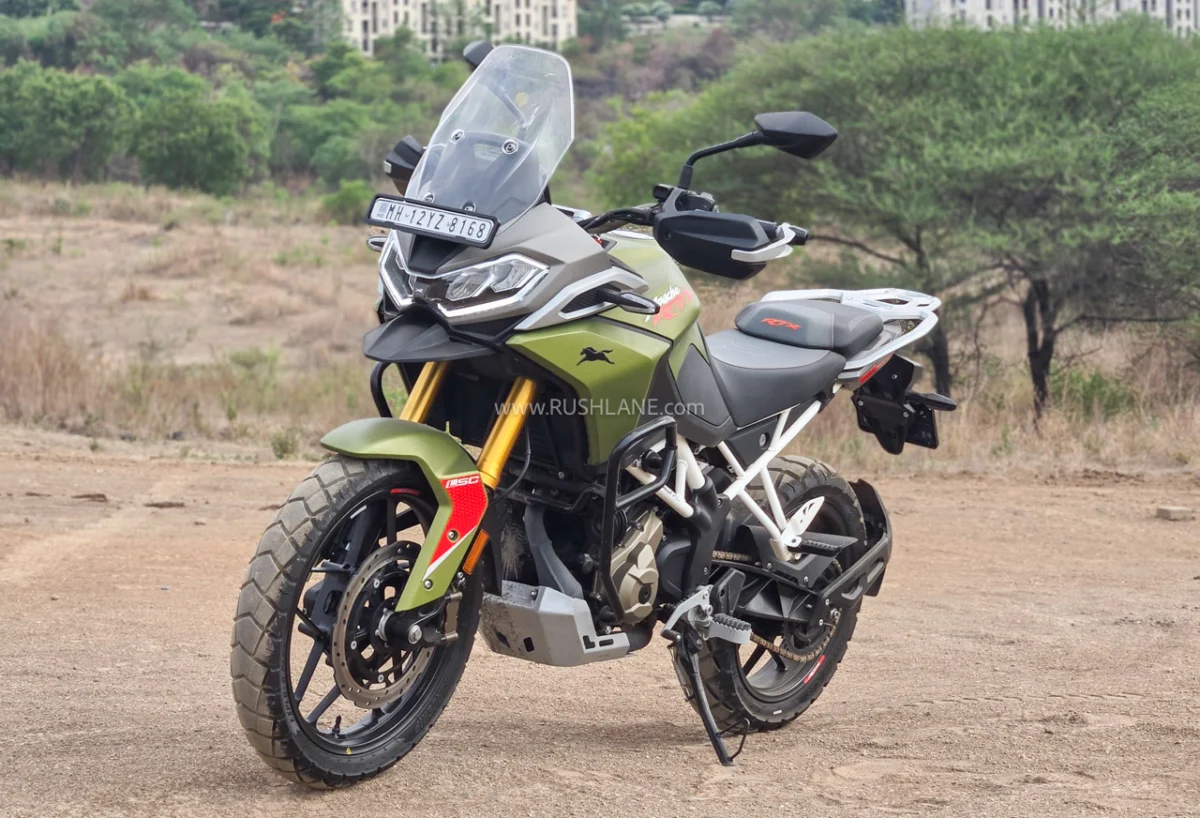
The most discussed model in enthusiast circles currently is the Apache RTX 300. With only 1,576 units sold in April, the low volume is not a reflection of low demand. On the contrary, reports suggest that the RTX 300 is facing a production bottleneck. The high-performance components and specialized assembly required for this flagship model have been impacted by global supply chain nuances in the precision electronics and specialized alloy sectors. TVS is reportedly working to ramp up production at its Hosur facility to meet the burgeoning waiting list for the RTX 300.

Implications for the Future: A Multi-Pronged Strategy
The April 2026 sales data suggests several key implications for TVS Motor and the wider two-wheeler industry:
1. The Premiumization Wave
The growth of the Apache and Ronin brands, contrasted with the struggle of the Radeon and Sport, indicates that the Indian consumer is willing to pay a premium for better technology, branding, and performance. TVS’s partnership with BMW Motorrad and its internal R&D are likely to continue focusing on the 300cc+ segment.
2. EV Maturity
The iQube’s 34% YoY growth shows that electric scooters are no longer a "niche" experiment. They are now a core part of the urban transport fabric. For TVS, the next step will likely involve launching electric three-wheelers and high-performance electric motorcycles to mirror their internal combustion engine (ICE) success.
3. Scooter Dominance vs. Moped Resilience
While the Jupiter and Ntorq are thriving, the XL moped remains a vital tool for the rural economy and "last-mile" delivery services. Despite an MoM dip, its 9% YoY growth proves that there is still a massive market for affordable, utilitarian workhorses in India’s hinterlands.
4. Supply Chain Agility
The situation with the Apache RTX 300 highlights that demand is currently outstripping supply for high-end machinery. TVS’s ability to resolve these bottlenecks will determine whether it can dominate the sub-500cc performance segment against rivals like KTM, Bajaj-Triumph, and Hero-Harley.
Conclusion
TVS Motor Company’s performance in April 2026 is a testament to its balanced portfolio. By maintaining leadership in the scooter segment with the Jupiter, spearheading the EV transition with the iQube, and capturing the hearts of enthusiasts with the Apache and Ronin, the company has insulated itself against volatility in any single sub-sector. As the fiscal year progresses, the industry will be watching closely to see if the premium surge can compensate for the cooling mass-market commuter sales, and how quickly TVS can unlock the production potential of the highly-anticipated RTX 300.
