

Introduction
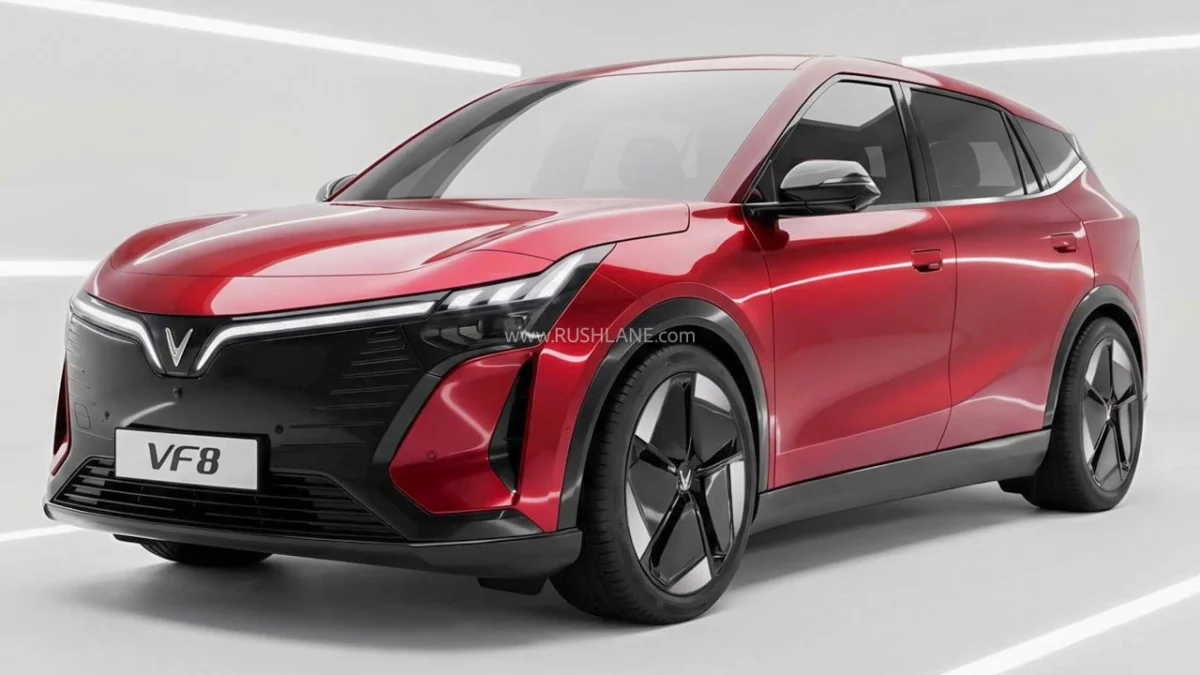
In the rapidly evolving landscape of global electromobility, few names have generated as much conversation—both celebratory and critical—as Vinfast. The Vietnamese automotive disruptor, a subsidiary of the massive Vingroup conglomerate, has officially pulled the wraps off its most significant update to date: the Second-Generation (2nd Gen) Vinfast VF 8.
As the company’s first-ever model to receive a full generational overhaul, the 2026 VF 8 represents more than just a mid-cycle refresh; it is a strategic recalibration. In a move that defies current industry trends where vehicles typically grow larger, heavier, and more battery-intensive with every iteration, Vinfast has taken a counter-intuitive approach. The 2nd Gen VF 8 is more compact, features a smaller battery, and offers a slightly reduced range, signaling a pivot toward efficiency, urban maneuverability, and perhaps most importantly, a resolution of the technical "teething" issues that haunted its predecessor.

Main Facts: A Refined Identity for the 2026 VF 8
The 2026 Vinfast VF 8 arrives at a critical juncture for the brand. Having established a presence in North America, Europe, and Southeast Asia, Vinfast is now focused on maturing its product lineup. The 2nd Gen SUV introduces a revamped design language, a completely overhauled interior, and a revised powertrain philosophy.
Key Highlights of the 2nd Gen VF 8:
- Design Evolution: A modernized exterior featuring full-width "wing-shape" LED daytime running lights (DRLs) and a more aggressive, gloss-black front fascia.
- Dimensional Downsizing: The vehicle is shorter in length, narrower in width, and features a reduced wheelbase compared to the first generation.
- Interior Overhaul: A redesigned cabin that replaces the previous massive infotainment setup with a 12.9-inch unit, while crucially adding a dedicated TFT driver’s instrument cluster.
- Powertrain Realignment: Transitioning from an 87.7 kWh battery to a more efficient 60.13 kWh pack, prioritizing weight reduction and charging speed over sheer capacity.
- Performance: Despite the smaller battery, the front-wheel-drive (FWD) motor sees an increase in output to 228 bhp and 330 Nm of torque.
- Pricing: Debuting in the Vietnamese market at a starting price of VND 999 Million (approximately Rs 36.28 lakh / $40,000 USD).
Chronology: From Rapid Launch to Generational Maturation
To understand the significance of the 2nd Gen VF 8, one must look at the timeline of Vinfast’s meteoric—and occasionally turbulent—rise.
2017–2021: The Genesis
Vinfast was founded with the ambitious goal of becoming a global EV powerhouse within five years. After initially producing internal combustion engine (ICE) vehicles for the local market, the company announced a total shift to electric vehicles in late 2021.

2022–2023: The Global Push and the First-Gen VF 8
The first-generation VF 8 was the spearhead of Vinfast’s entry into the United States. However, the initial rollout was met with mixed reviews. While praised for its bold styling and generous warranty, early adopters and automotive journalists reported significant software glitches, inconsistent ride quality, and "teething" issues regarding the ADAS (Advanced Driver Assistance Systems) and powertrain calibration.
2024: The Year of Feedback and OTA Updates
Throughout 2024, Vinfast’s engineering teams worked aggressively to rectify these issues. Over-the-air (OTA) updates were deployed to address concerns such as the "creep mode" torque application and battery management in cold climates.
2025–2026: The Arrival of the 2nd Gen
The debut of the 2026 VF 8 marks the end of the first chapter. This model is the culmination of three years of global real-world data. It represents a company that has moved from "moving fast and breaking things" to a more measured, engineering-led approach to product development.

Supporting Data: The Surprising Shift in Dimensions and Power
The most striking aspect of the 2nd Gen VF 8 is the data regarding its physical and technical footprint. In an era where the Tesla Model Y and Hyundai Ioniq 5 continue to push the boundaries of "mid-size" dimensions, Vinfast has intentionally shrunk the VF 8.
Dimensional Comparison
| Metric | 1st Gen VF 8 | 2nd Gen VF 8 | Change |
|---|---|---|---|
| Length | 4,750 mm | 4,701 mm | -49 mm |
| Width | 1,934 mm | 1,872 mm | -62 mm |
| Wheelbase | 2,950 mm | 2,840 mm | -110 mm |
| Height | 1,667 mm | 1,670 mm | +3 mm |
| Ground Clearance | 162 mm | 170 mm | +8 mm |
The reduction in wheelbase by 110 mm is particularly significant, as it suggests a more agile turning radius and better suitability for congested urban environments. Conversely, the slight increase in height and ground clearance hints at a more "SUV-centric" stance, likely aimed at improving visibility and ingress/egress.
Battery and Range Dynamics
The transition in battery technology is equally notable. The previous model utilized a massive 87.7 kWh battery pack to achieve a range of 562 km (NEDC). The 2nd Gen model utilizes a 60.13 kWh pack, providing a range of 500 km.

While the headline range figure has dropped by 62 km, the efficiency gains are evident. The new model achieves nearly 90% of the previous range with only 68% of the battery capacity. This reduction in battery weight (likely several hundred kilograms) is expected to drastically improve braking performance, handling dynamics, and overall energy consumption (Wh/km).
Addressing Past Criticisms: Software and Reliability
The first-generation VF 8 was a victim of its own ambitious timeline. Owners reported a variety of software-related frustrations that Vinfast has sought to eliminate in the 2nd Gen model.
Key Issues Addressed:
- Cold Weather Performance: Previous models were known to limit speeds to 60 mph in freezing temperatures to protect the battery. The 2nd Gen features a more robust thermal management system designed to maintain performance across a wider temperature envelope.
- Creep Mode Calibration: Early units had an "overpowered" creep mode that applied excessive torque to reach 4 mph, making parking maneuvers jerky. The new drivetrain tuning promises a smoother, more linear low-speed response.
- Braking and Traction Control: The calibration of the ABS and Traction Control systems has been reworked to provide a more natural pedal feel and more predictable intervention on slippery surfaces.
- The "Driver Display" Dilemma: One of the most frequent complaints about the 1st Gen was the lack of a traditional instrument cluster, forcing drivers to look at the central screen or HUD. The 2nd Gen introduces a dedicated TFT driver’s display, significantly improving ergonomics.
Official Context and Company Strategy
While Vinfast has not officially released a detailed "white paper" on why they chose to downsize the VF 8, industry analysts point toward several strategic motivations.

First, Cost Efficiency. By utilizing a smaller battery pack and a more compact chassis, Vinfast can lower the Bill of Materials (BOM). This allows the company to price the vehicle more competitively against Chinese incumbents like BYD and legacy manufacturers like Volkswagen.
Second, Weight Management. Heavy EVs suffer from accelerated tire wear and suspension stress. By shedding weight, the 2nd Gen VF 8 becomes a more sustainable vehicle over its lifecycle, requiring less maintenance and offering a more "car-like" driving experience rather than the "heavy SUV" feel of the first generation.
Third, Market Positioning. With the VF 9 serving as the flagship large SUV and the VF 6 and VF 7 filling the compact segments, the 2nd Gen VF 8 now sits more comfortably in the mid-size "Goldilocks" zone—large enough for families but small enough for the city.

Implications: What This Means for the Global EV Market
The debut of the 2nd Gen VF 8 has several implications for the broader automotive industry and specific regional markets.
1. The End of the "Battery Arms Race"?
Vinfast’s decision to go smaller might be a bellwether for the industry. As charging infrastructure improves, the need for 90+ kWh batteries diminishes. If Vinfast can prove that a 60 kWh SUV is sufficient for 90% of users, other manufacturers may follow suit, leading to more affordable and environmentally friendly EVs.
2. The Indian Market Perspective
While the current report suggests an India launch is unlikely for the VF 8, Vinfast is currently investing heavily in a manufacturing plant in Tamil Nadu. The strategy seen in the 2nd Gen VF 8—efficiency, smaller footprint, and competitive pricing—is exactly what is required for success in the Indian market. If Vinfast eventually brings a "Gen 2" philosophy to its smaller models like the VF 6, they could become a formidable rival to Tata Motors and Mahindra.

3. Brand Reputation and Resale Value
The 2nd Gen VF 8 is a "reputation repair" vehicle. For Vinfast to survive as a public company (listed on the NASDAQ), it must prove it can build a reliable, high-quality product that does not require constant "bug fixing." If the 2026 model delivers on its promises of stability and refinement, it will go a long way in stabilizing the brand’s resale value, which has been a point of concern for early adopters.
4. Design Leadership
The move to a more modern, cohesive design language shows that Vinfast is finding its own aesthetic voice. Moving away from the somewhat generic styling of the early prototypes, the 2nd Gen VF 8 uses lighting signatures (the wing-shape LED) to create a brand identity that is recognizable from a distance—a crucial factor in a crowded market.
Conclusion
The 2026 Vinfast VF 8 is a bold statement of maturity. It is a rare example of an automaker admitting that "more" isn’t always "better." By focusing on a smaller, more efficient, and more technologically stable platform, Vinfast is attempting to transition from a startup with potential to an established manufacturer with a refined product.

While the reduction in battery size and wheelbase might seem like a step backward on paper, in the real world of urban driving and economic efficiency, it may be exactly the leap forward the company needs. As the 2nd Gen VF 8 begins its rollout, all eyes will be on the "software reliability" and "build quality" metrics to see if this Vietnamese phoenix has truly learned from its first flight.
