


LONDON — In a historic evening for global literature, the International Booker Prize committee announced on May 19, 2026, that the prestigious award has been conferred upon Taiwan Travelogue, written by Yang Shuang-zi and translated from Mandarin by Lin King. The win marks a seismic shift in the literary landscape, representing the first time a novel originally written in Mandarin Chinese, and the first by a Taiwanese author, has claimed the top honor.
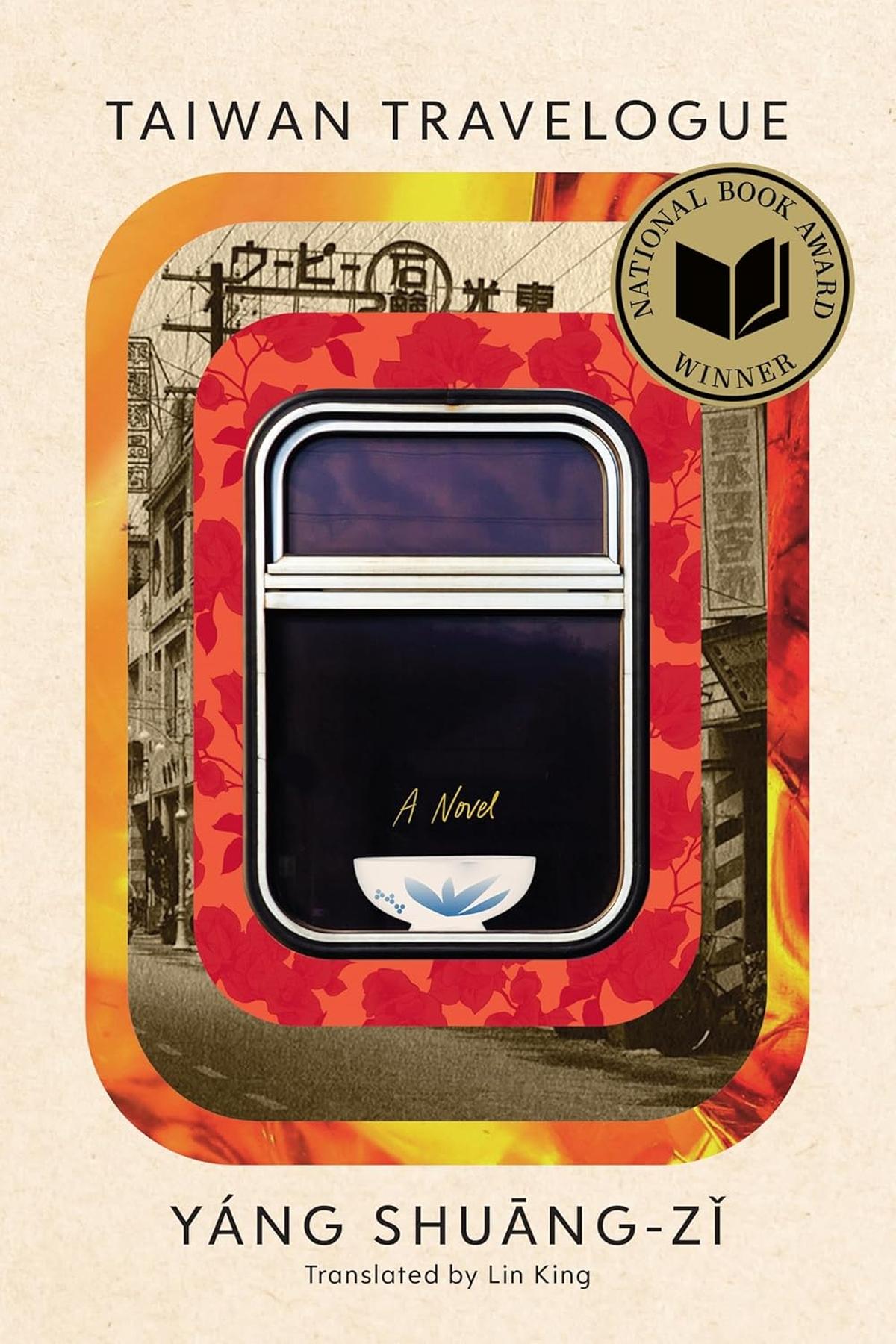
Published by Graywolf Press, Taiwan Travelogue has been hailed by judges as a "revelatory masterpiece" that dissects the complexities of colonialism through the intimate, often uncomfortable lens of food, travel, and a fraught female friendship. Set against the backdrop of 1938 Taiwan under Japanese rule, the novel serves as both a lush sensory experience and a biting critique of the "colonial gaze."
Main Facts: A Meta-Fictional Journey Through Occupied History
Taiwan Travelogue is far more than a straightforward historical novel. It is presented as a rediscovered manuscript—a travel diary written by a fictional Japanese novelist named Aoyama Chizuko during her tour of the island of Taiwan in the late 1930s. The text is layered with meta-fictional elements, including footnotes from fictional translators, scholars, and the real-life translator Lin King, creating a dialogue between the past and the present.

The story follows Chizuko, an assertive and food-obsessed writer invited by the Japanese colonial government to document the "local color" of the island. To assist her, the government assigns an interpreter, Oh Chizuru, a local Taiwanese woman of impeccable poise and linguistic skill. As the two women travel across the island by rail, indulging in the local cuisine and visiting scenic landmarks, the novel explores the power dynamics inherent in their relationship.
The International Booker judges praised the book for its "extraordinary chemistry" and its ability to capture "inexplicable feelings that deserve to exist and be documented." The win comes with a £50,000 prize, shared equally between the author and the translator, underscoring the vital role of translation in bringing diverse voices to the English-speaking world.
Chronology: From the 1938 Colony to the 2026 Podium
The timeline of Taiwan Travelogue is essential to understanding its weight. The narrative is set in 1938, a pivotal moment when Taiwan had been under Japanese administration for over four decades. It was a period of "Kōminka" (Japanization), where the colonial subjects were encouraged—and often forced—to adopt Japanese names, language, and customs.
- 1895–1945: Taiwan exists as a colony of the Empire of Japan.
- 1938: The fictional Chizuko arrives in Taiwan, viewing the island through the lens of a "mainlander" (Japanese) visiting an "islander" (Taiwanese) territory.
- Post-1945: Taiwan is returned to Chinese administrative control, leading to a complex layering of identities that Yang Shuang-zi explores through her fictionalized history.
- 2020s: Yang Shuang-zi emerges as a leading voice in Taiwanese "Yuri" (girls’ love) literature and historical fiction, blending queer themes with rigorous archival research.
- April 2026: The English translation by Lin King is released to critical acclaim.
- May 19, 2026: The novel is announced as the winner of the International Booker Prize.
By placing the story just years before the end of World War II and the subsequent transition of power, Yang captures a culture in "cultural osmosis," where Japanese and Taiwanese identities were inextricably, and often painfully, blurred.

Supporting Data: The Colonial Gaze and the Politics of the Palate
Central to the novel’s success is its use of food as a narrative device. Chizuko’s passion for Taiwanese cuisine is documented in breathtaking detail, from the preparation of local delicacies to the atmosphere of the tea rooms they frequent. However, as the prose reveals, this appreciation is often superficial.
The novel introduces the concept of Chizuko’s "blind spot." While she believes her love for the island’s culture is a sign of her own generosity and openness, she remains oblivious to the "brutish" nature of the colonial project. A poignant example occurs when Chizuko admires the transplanted Japanese sakura (cherry blossoms) on the island, failing to realize that forcing "Mainland" flora onto "Island" soil is an act of ecological and cultural imposition.
The relationship between the two "Chizukos" (the Japanese writer and the Taiwanese interpreter) serves as a microcosm of the colonial hierarchy:
- The Speaker vs. The Listener: Chizuko monologues about her observations, while Chizuru listens, adapts, and facilitates.
- The Employer vs. The Employee: Despite their shared first names and apparent intimacy, their bond is governed by a contract of service.
- The Tourist vs. The Local: Chizuko seeks "authentic" experiences, asking where "the Taiwanese go," while remaining insulated by her Japanese privilege.
Literary critics have noted that the novel’s footnotes are a stroke of genius. They challenge the authority of the "travelogue," reminding the reader that the history we consume is often filtered through the biases of those who hold the pen.

Official Responses: A Victory for Taiwanese Soft Power
The announcement was met with jubilant celebrations in Taipei. Taiwan’s Ministry of Culture issued a statement shortly after the ceremony, calling the win "a historic milestone for our nation’s literature."
"Yang Shuang-zi has shown the world the depth, complexity, and beauty of Taiwanese history," the statement read. "This award proves that stories from our island have a universal resonance. We also extend our deepest gratitude to Lin King, whose translation captured the nuances of our linguistic heritage for a global audience."
In London, Fiammetta Rocco, the administrator of the International Booker Prize, remarked on the "rare chemistry" found in the book. "It is a novel that stays with you, forcing you to question the nature of friendship and the ethics of observation. It is a delectably written but sharp-edged critique of how we see the ‘Other’."
Graywolf Press, the book’s publisher, announced an immediate second printing of 50,000 copies to meet the surging global demand.

Implications: A New Era for Mandarin Translation
The victory of Taiwan Travelogue carries profound implications for the publishing industry and the representation of East Asian literature.
1. The "Mandarin Breakthrough":
Despite the vastness of the Mandarin-speaking world, the International Booker Prize had historically skewed toward European languages. This win is expected to open doors for more translations of contemporary and historical fiction from Taiwan, Hong Kong, and Mainland China.
2. Redefining Taiwanese Identity:
For decades, Taiwanese literature was often subsumed under the broader category of "Chinese literature." This win helps distinguish the unique historical trajectory of Taiwan—marked by Japanese, Chinese, and indigenous influences—as a distinct and vital literary tradition.
3. The Rise of Meta-Fiction and Queer Narratives:
Yang Shuang-zi’s background in "Yuri" literature brings a queer sensibility to historical fiction that is rarely seen in mainstream award-winners. The "romantic tension" between Chizuko and Chizuru, though stifled by the social norms of 1938, provides a subversive layer to the narrative that resonates with modern readers.
4. The Translator as Co-Creator:
The inclusion of Lin King’s own voice within the text of the novel (through the meta-fictional footnotes) highlights the evolving role of the translator. No longer a "transparent" medium, the translator is recognized as an active participant in the creation of the work’s meaning.
As Taiwan Travelogue begins its journey onto best-seller lists worldwide, it leaves readers with a haunting question that echoes throughout its pages: Can two people truly be friends when their stature and upbringing forbid them from viewing each other as equals?
The novel does not provide easy answers. Instead, like the "flower whose name I didn’t know" mentioned in the opening pages, it allows the complexity of the human experience to exist, bloom, and finally, be documented for the world to see.
Book Details:
- Taiwan Travelogue
- Author: Yang Shuang-zi
- Translator: Lin King
- Publisher: Graywolf Press
- Price: ₹599 / $18.00
- Pages: 320
- Release Date: April 10, 2026
