

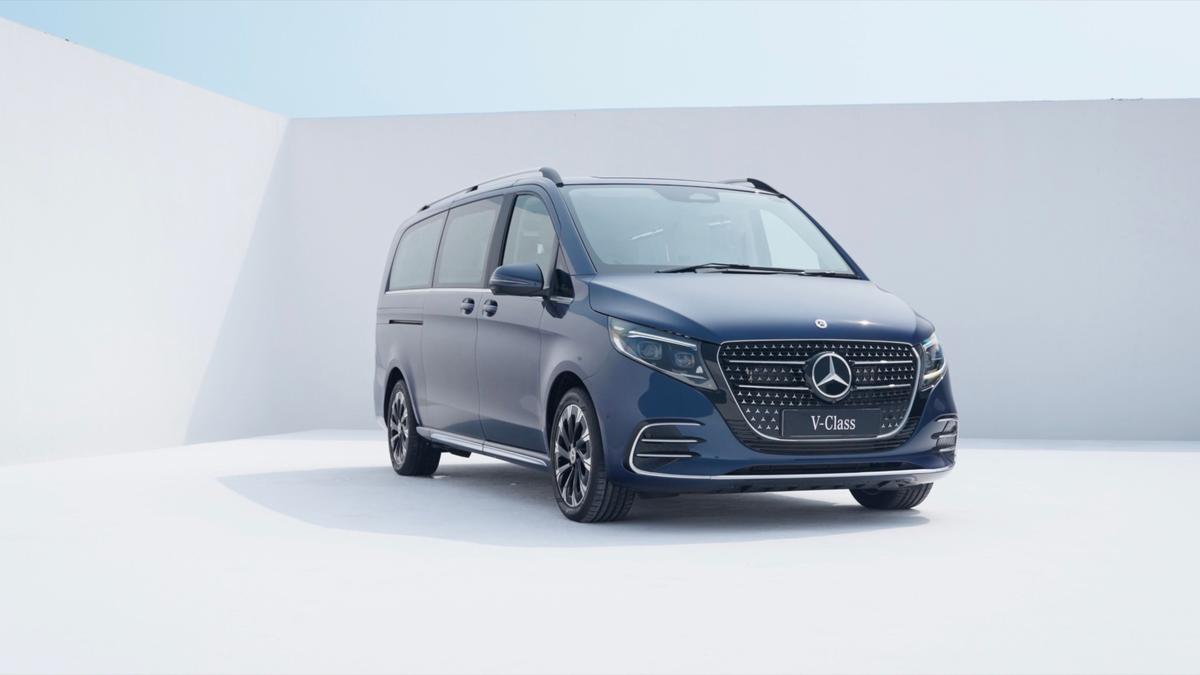
The landscape of luxury mobility in India has undergone a seismic shift over the last decade. While the traditional "three-box" sedan and the towering luxury SUV have long been the benchmarks of status, a third contender has quietly but firmly established its presence: the ultra-luxury Multi-Purpose Vehicle (MPV). At the forefront of this movement is the 2026 Mercedes-Benz V-Class, a vehicle that transcends its utilitarian roots to emerge as a bespoke sanctuary on wheels.
When Mercedes-Benz first introduced the V-Class to the Indian market in 2019, it was a bold experiment. It aimed to convince the elite that a van-based silhouette could carry the same prestige as an S-Class. While successful, the original iteration was often critiqued for its "van-like" interior finishes. The 2026 model, however, is a comprehensive reimagining. With local production now a reality and a focus on "First-Class" travel, the V-Class has been repositioned not just as a transport solution, but as a mobile executive suite.
Main Facts: Redefining the Luxury MPV Template
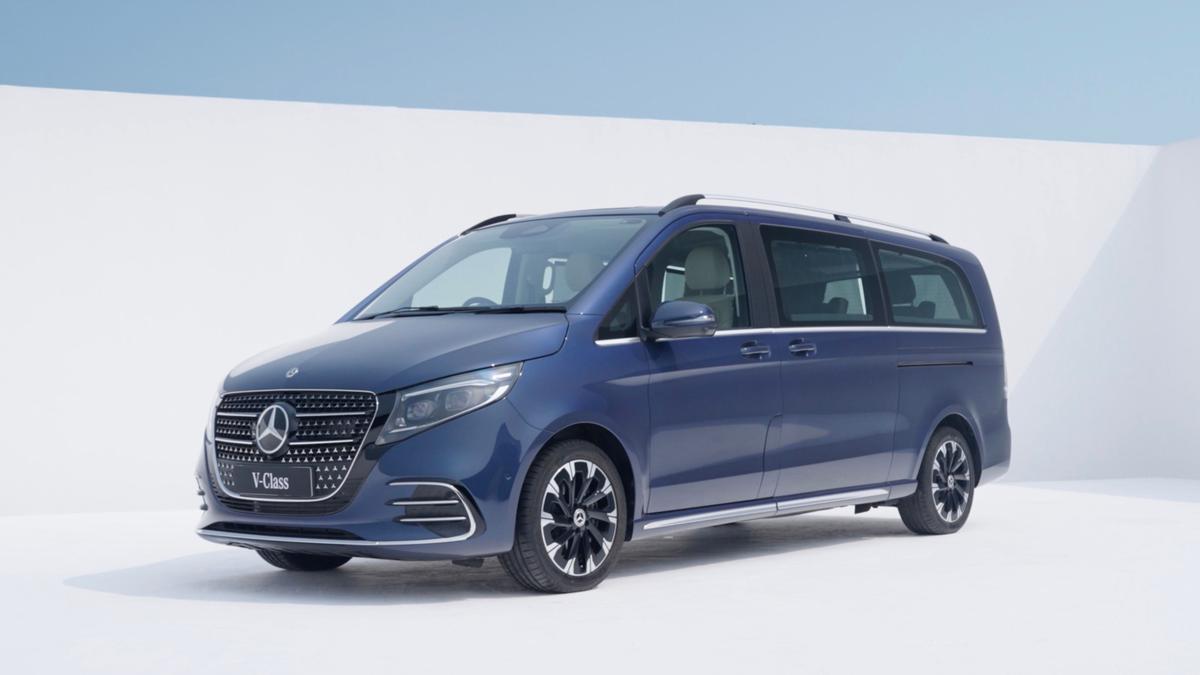
The 2026 Mercedes-Benz V-Class arrives in India with a clear objective: to dominate the luxury MPV segment by offering a blend of space, technology, and price-to-value ratio that its competitors struggle to match.
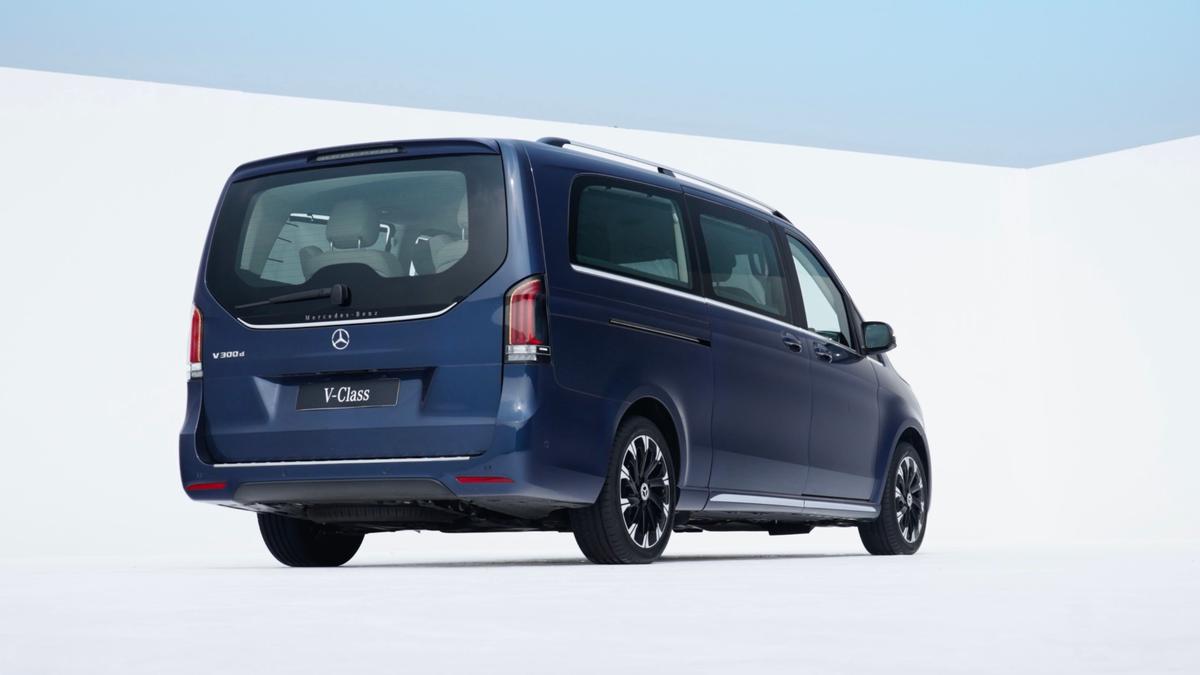
The vehicle is offered exclusively in its Extra Long Wheelbase (ELWB) form. This is a strategic move by Mercedes-Benz India, recognizing that the primary use case for this vehicle involves chauffeur-driven executives and large families who prioritize legroom and luggage capacity above all else. Measuring 5,370 mm in length with a massive 3,430 mm wheelbase, the V-Class provides a physical footprint that few other passenger vehicles can rival.
Key highlights of the 2026 launch include:
- Pricing: An introductory price of INR 1.40 crore (ex-showroom).
- Powertrains: For the first time, both petrol (V300) and diesel (V300d) engines are available.
- Suspension: The debut of AIRMATIC air suspension, specifically tuned for Indian road conditions.
- Local Production: Assembled at the Mercedes-Benz plant in Chakan, Pune, allowing for competitive pricing.
Chronology: The Journey from Utility to Opulence
To understand the significance of the 2026 V-Class, one must look at the evolution of the model line in the Indian context.
2019: The Pioneer Phase
Mercedes-Benz launched the V-Class in India in early 2019, initially as a Completely Built Unit (CBU). It was the first time a luxury manufacturer had attempted to sell a premium MPV at scale in the country. It found immediate favor with high-end hotel chains, travel boutiques, and a handful of celebrities. However, the interior materials—while durable—lacked the "sensual purity" design language found in the brand’s contemporary sedans.
2021-2023: The Market Expansion
During this period, the demand for high-end MPVs surged. The Toyota Vellfire entered the fray, proving that there was a massive appetite for luxury vans. Mercedes responded by introducing the ‘Marco Polo’ and ‘Elite’ variants, gradually increasing the luxury quotient and testing the limits of what Indian buyers would pay for a "van."
2024-2026: The Bespoke Era
The 2026 model marks the third major chapter. Mercedes-Benz has moved away from the "one-size-fits-all" approach. By initiating local production and integrating the AMG Line as standard, the brand has successfully shed the commercial connotations of the V-Class, aligning it aesthetically and technologically with its flagship passenger cars.
Supporting Data: Engineering and Interior Specifications
The 2026 V-Class is not merely a facelift; it is an engineering overhaul designed to cater to the specific demands of the Indian elite.
Performance and Drivetrain
Under the hood, Mercedes-Benz provides two distinct flavors of power:
- The V300 (Petrol): This variant features a 2.0-litre four-cylinder turbocharged engine. It produces 170 kW (228 bhp) and is supported by a 48V mild-hybrid system that adds an additional 15 kW (20 bhp). This setup is designed for smoothness and silent operation in urban environments.
- The V300d (Diesel): A staple for long-distance cruisers, the 2.0-litre diesel unit delivers 174 kW (233 bhp) and substantial torque.
Both engines are mated to the 9G-TRONIC automatic transmission, which is renowned for its ability to keep the engine in the optimal power band while maximizing fuel efficiency during highway stints.
The AIRMATIC Advantage
Perhaps the most significant technical update is the inclusion of AIRMATIC air suspension. India is the first global market to receive this specific configuration for the V-Class. The system uses sensors to continuously adjust the damping at each wheel. On the highway, the vehicle lowers itself to improve aerodynamics and stability. On broken city roads, it maintains a constant ride height regardless of the load, ensuring that passengers in the third row do not experience the "bouncing" effect common in large vans.
Interior Versatility
The cabin is where the V-Class justifies its price tag. The standard six-seat layout features:
- Second Row: Luxury captain seats with heating, three-stage ventilation, and a massage function. They also include calf supports and fold-out tables.
- Third Row: In a segment-first, the third-row seats are also ventilated, ensuring that no passenger feels "relegated" to the back.
- Seating Modes: Customers can choose from three layouts:
- Standard: Three rows facing forward.
- Executive Lounge: Removal of the third row to allow the second row to slide back for limousine-like legroom.
- Business Lounge: Second-row seats rotated 180 degrees to face the third row, facilitating face-to-face meetings.
Technology and Safety
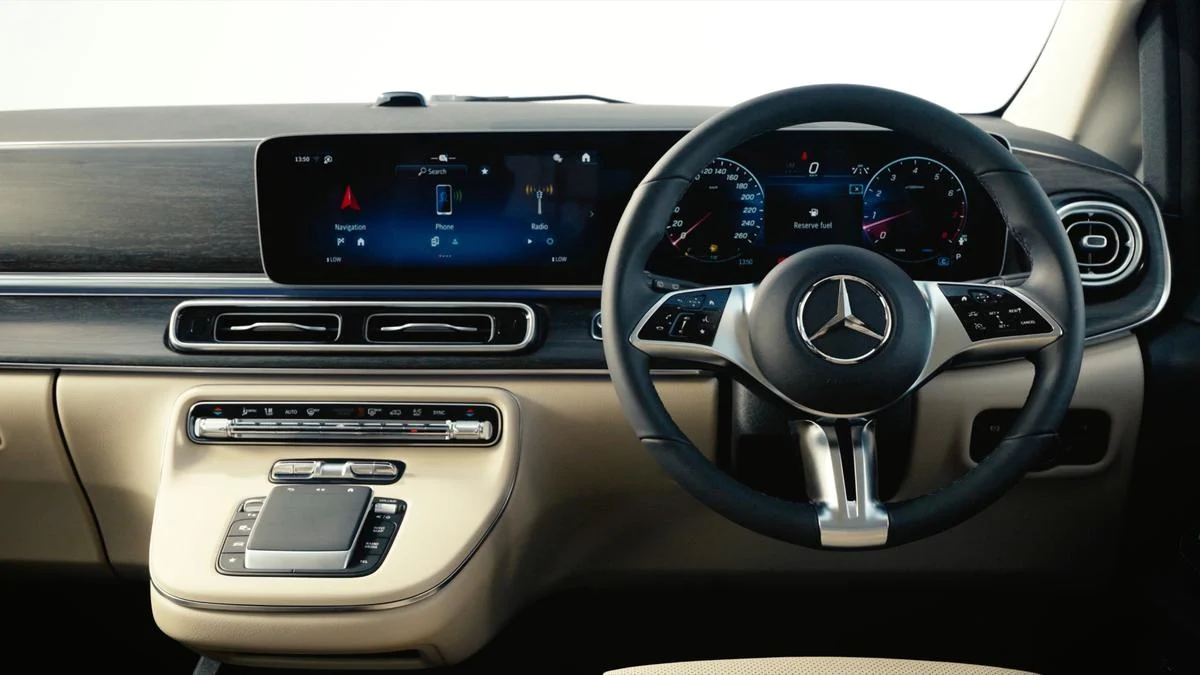
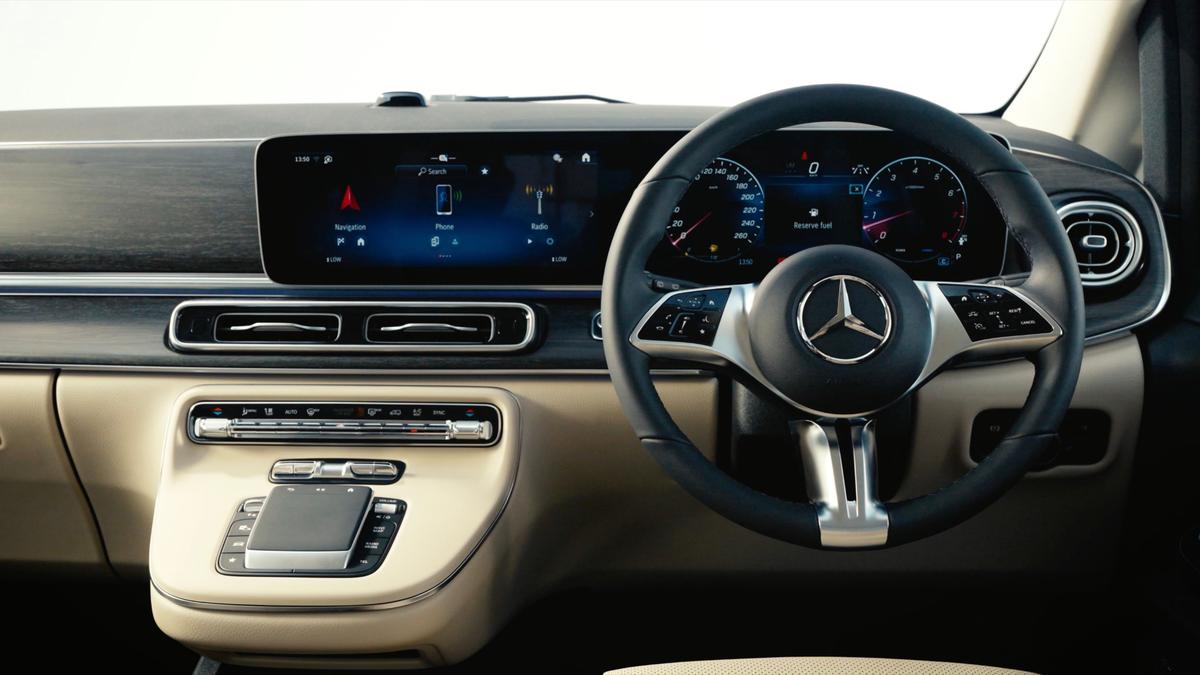
The dashboard is dominated by the latest MBUX (Mercedes-Benz User Experience) infotainment system. For the audiophiles, a 640-watt Burmester surround sound system with 15 speakers and Dolby Atmos provides an immersive experience.
Safety is managed by a comprehensive suite of ADAS (Advanced Driver Assistance Systems), including:
- Active Distance Assist DISTRONIC: Maintains a set distance from the car ahead.
- Active Lane Keeping Assist: Prevents unintended lane departures.
- 360-degree Camera: Essential for maneuvering a 5.3-meter vehicle in tight Indian parking spots.
Official Responses and Market Positioning
Mercedes-Benz India’s leadership has been vocal about the "Luxury MPV" strategy. By pricing the V-Class at INR 1.40 crore, the company is positioning it as a high-value alternative to its own GLS SUV and the rival Lexus LM 350h.
Industry analysts suggest that the local production of the V-Class is a masterstroke. The Lexus LM, which is a CBU (Completely Built Unit), carries a price tag nearing INR 2.5 crore due to heavy import duties. By assembling the V-Class in Chakan, Mercedes-Benz offers a similar—if not superior—level of interior volume and brand prestige for nearly INR 1.1 crore less.
"The V-Class is no longer just a vehicle; it is a statement of lifestyle flexibility," says a senior marketing executive associated with the brand’s Indian operations. "We are seeing a trend where the V-Class is the second or third vehicle in a high-net-worth household—used for family vacations, airport runs with heavy luggage, or as a mobile office for the patriarch or matriarch of the family."
Implications: The Future of the Indian Luxury Market
The launch of the 2026 V-Class has several long-term implications for the Indian automotive industry:
1. The Death of the "Van" Stigma
For decades, large one-box vehicles were associated with commercial transport or school buses. The V-Class, with its AMG Line styling and Lugano leather interiors, has successfully rebranded the MPV as a "Luxury Coach." This opens the door for other manufacturers to bring in high-end MPVs, potentially diversifying a market currently obsessed with SUVs.
2. The Rise of the "Chauffeur-Plus" Experience
Indian luxury buyers are increasingly prioritizing the "back-seat experience." While SUVs offer ground clearance, they often lack the ease of ingress and egress provided by the V-Class’s electric sliding doors and low floor height. The V-Class sets a new benchmark for how much "living space" a car should provide, likely forcing SUV manufacturers to rethink their interior packaging.
3. Sustainability through Localization
By committing to local production, Mercedes-Benz is insulating itself from global supply chain shocks and fluctuating import duties. This move also suggests that the brand sees a sustainable, long-term volume for the V-Class in India, rather than it being a niche, low-volume product.
4. Competitive Pressure
The pricing of the V-Class puts immense pressure on Toyota and Lexus. While the Toyota Vellfire has a cult following, the V-Class offers the "Three-Pointed Star" badge value, which remains the ultimate symbol of success in the Indian consciousness. We can expect rivals to reconsider their pricing strategies or introduce more localized content to stay competitive.
Conclusion
The 2026 Mercedes-Benz V-Class is a testament to the maturing Indian car buyer. It acknowledges that true luxury is not just about speed or off-road capability, but about the luxury of space, the quality of air, and the ability to remain productive or relaxed while stuck in the inevitable traffic of Mumbai or Delhi. At INR 1.40 crore, it is a formidable package that bridges the gap between a high-end office and a first-class airline cabin, firmly establishing itself as the gold standard of the Indian luxury MPV segment.
