

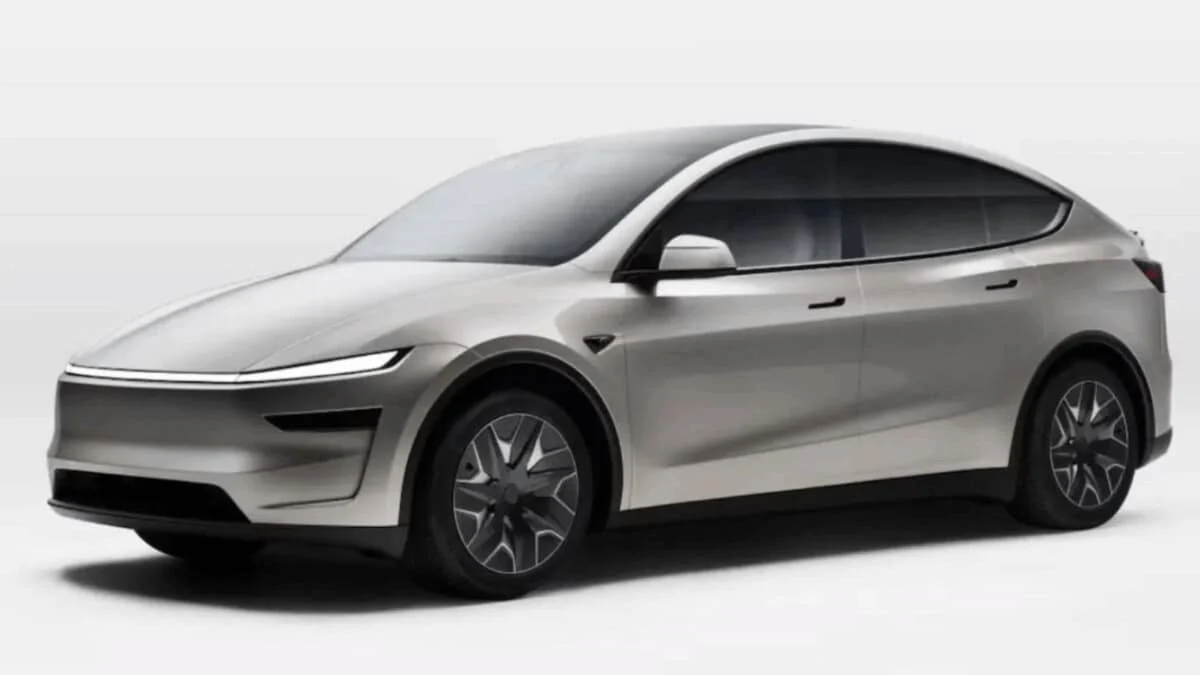
The move marks the culmination of years of negotiations, policy adjustments, and intense speculation, positioning Karnataka as a central hub for Tesla’s burgeoning Indian operations. With a starting price of ₹61.99 lakh, the Model YL is poised to disrupt the premium SUV segment, challenging established European luxury automakers and domestic high-end EV offerings.
Main Facts: A New Era of Electric Mobility in Karnataka
The Bengaluru Experience Centre, located at the prestigious VR Bengaluru Mall on Whitefield Main Road, is more than a mere showroom; it is a flagship retail environment designed to immerse consumers in the Tesla ecosystem. Unlike traditional dealerships, the Experience Centre focuses on consumer education, digital customization, and a seamless "direct-to-consumer" sales model.
The Model YL SUV: Key Specifications
The star of the launch, the Model YL, is a three-row, six-seater configuration of Tesla’s globally best-selling platform. Recognizing the Indian preference for chauffeur-driven comfort and multi-generational family travel, the "YL" variant offers enhanced cabin dimensions.
- Range: An industry-leading 681 km on a single charge (based on optimized driving conditions).
- Performance: Acceleration from 0 to 100 km/h in just 5.0 seconds, offering sports-car-like agility in an SUV frame.
- Storage: A massive 2,539 liters of cargo space with seats folded, catering to long-distance touring.
- Charging: Leveraging Tesla’s V4 Supercharging technology, the vehicle can recover 288 km of range in a mere 15 minutes.
The vehicle enters the market with a five-star safety rating from global agencies, including the Euro NCAP and the NHTSA, featuring a reinforced chassis and a suite of active Autopilot safety features tailored for complex road environments.
Chronology: The Road to Bengaluru
Tesla’s entry into India has been a decade-long saga characterized by regulatory hurdles and strategic pivots.
- 2021: The Foundation: Tesla Motors India and Energy Private Limited was officially incorporated in Bengaluru. Initial plans for a 2022 launch were stalled due to high import duties on Completely Built Units (CBUs).
- 2022–2023: The Policy Deadlock: CEO Elon Musk maintained that Tesla would not establish a manufacturing plant in India until it was allowed to sell and service imported cars first. The Indian government, conversely, pushed for "Make in India" commitments before granting tax concessions.
- 2024: The Breakthrough: Following high-level meetings between Musk and Indian leadership, the Ministry of Heavy Industries announced a new EV policy. This policy allowed for reduced import duties (15%) for manufacturers who committed to investing at least $500 million and setting up local manufacturing within three years.
- 2025: Infrastructure Layout: Tesla began scouting locations for its Supercharger network across the "Golden Quadrilateral" highways and finalized retail spaces in Delhi, Mumbai, and Gurugram.
- May 2026: The Bengaluru Launch: The opening of the Whitefield Experience Centre and the debut of the Model YL marks the operational phase of Tesla’s India strategy, prioritizing the "Silicon Valley of India" as its primary service and technology base.
Supporting Data: Market Dynamics and the EV Transition
The launch comes at a time when India’s luxury EV market is witnessing exponential growth. According to data from the Federation of Automobile Dealers Associations (FADA), the premium EV segment (vehicles priced above ₹50 lakh) grew by 45% year-on-year in 2025.
Competitive Landscape:
The Model YL at ₹61.99 lakh sits in a "sweet spot" of pricing. It undercuts several European rivals:
- Audi Q8 e-tron: ₹1.07 Cr – ₹1.26 Cr
- BMW iX: ₹1.20 Cr+
- Mercedes-Benz EQE: ₹90 Lakh+
By pricing the Model YL closer to the ₹60-70 lakh bracket, Tesla is targeting not only existing luxury car owners but also upwardly mobile tech professionals in cities like Bengaluru, Hyderabad, and Pune.
Infrastructure Readiness:
Tesla’s "plug in, charge and go" philosophy is supported by its proprietary Supercharger network. In Karnataka alone, the company plans to install 50 Supercharging stations by the end of 2026, focusing on the Bengaluru-Mysuru Expressway, the Bengaluru-Chennai corridor, and the NH-48 towards Pune.
Official Responses: Government and Corporate Synergy
The Karnataka state government has been a vocal proponent of Tesla’s entry. Speaking at the launch event, officials from the Department of Commerce and Industries highlighted the state’s "EV Policy 2023-28," which offers incentives for charging infrastructure and manufacturing components.
"Bengaluru is the R&D capital of the world. It is only fitting that the world’s most advanced electric vehicle company chooses this city as its primary home in India," stated a senior representative from the Karnataka Industries Ministry. "We are committed to providing Tesla with the necessary ecosystem, including a dedicated service hub in Whitefield, to ensure that the transition to green mobility is seamless for our citizens."
Tesla’s internal communications emphasize a long-term commitment to the Indian consumer. A company spokesperson noted: "The Model YL is a testament to our adaptability. We listened to the Indian consumer who requested more space, more seats, and uncompromising range. With our first Experience Centre in Bengaluru, we are not just selling cars; we are inviting India to join the global transition to sustainable energy."
Implications: The "Tesla Effect" on India’s Future
The establishment of Tesla’s presence in Bengaluru carries profound implications for the Indian economy, the automotive industry, and urban infrastructure.
1. Industrial and Economic Impact:
Tesla’s presence is expected to trigger a "cluster effect." Local component manufacturers in the Hosur and Bidadi industrial belts are already reportedly in talks to supply non-core components to Tesla’s global supply chain. This could lead to thousands of high-tech jobs in precision engineering and software integration.
2. Pressure on Charging Infrastructure:
Tesla’s arrival will likely accelerate the standardization of charging protocols in India. While Tesla uses its proprietary North American Charging Standard (NACS) or CCS2 in different markets, its push for ultra-fast charging will force local players and DISCOMs (Distribution Companies) to upgrade the power grid to handle high-kilowatt loads.
3. Consumer Shift and Brand Aspiration:
For the Indian middle and upper-middle class, Tesla remains the "gold standard" of tech-aspirational brands. The Model YL’s 681 km range effectively kills "range anxiety"—the primary psychological barrier to EV adoption in India. This could lead to a faster-than-expected decline in the market share of internal combustion engine (ICE) luxury SUVs.
4. Urban Planning and Sustainability:
Bengaluru, often criticized for its traffic congestion and air quality, stands to benefit significantly from a shift toward zero-emission transport. The state government’s plan to integrate Tesla’s energy storage solutions (Powerwalls) with local charging hubs could serve as a blueprint for "Smart City" initiatives across the country.
Conclusion
The opening of the VR Bengaluru Experience Centre and the launch of the Model YL SUV represent a coming-of-age moment for the Indian EV sector. By combining high-performance technology with a localized six-seater configuration, Tesla has signaled that it understands the nuances of the Indian market. As the Whitefield service center nears completion, the "Silicon Valley of India" is set to become the epicenter of a quiet, electric revolution that will eventually resonate across the entire subcontinent. For Karnataka’s car lovers, the wait is over; the future has officially been delivered.
