

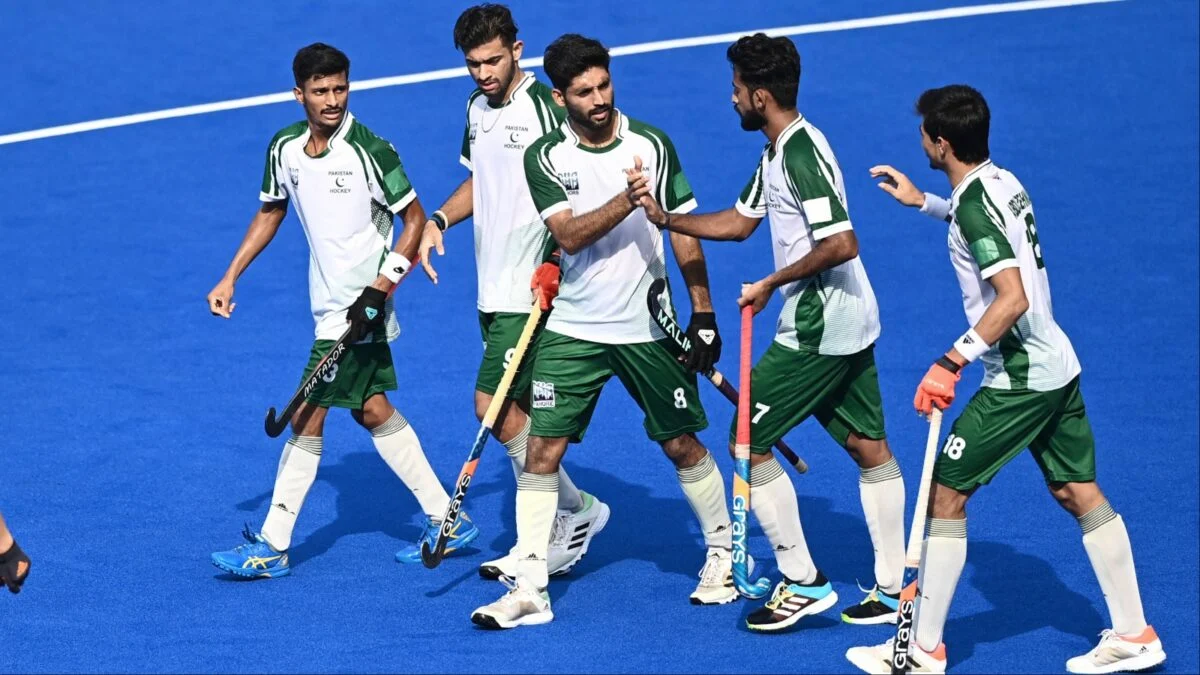
NEW DELHI, India – May 22, 2026 – A deep-seated financial crisis threatens to overshadow Pakistan’s preparations for two critical international hockey tournaments: the FIH Pro League and the prestigious FIH World Cup. National team players have publicly voiced their profound frustration and anger over drastically reduced daily training camp allowances and a persistent backlog of unpaid dues from the Pakistan Hockey Federation (PHF). The situation, described by one anonymous player as "an insult to national players," has cast a long shadow over the squad as they gear up for high-stakes competition on the global stage.
The core of the players’ discontent stems from a recent decision by the PHF’s interim leadership to slash their daily training camp allowance from an already modest PKR 3,000 (approximately $11 USD) to a paltry PKR 1,000 (approximately $3.5 USD). This significant reduction, coupled with historical issues of delayed payments, has fueled a palpable sense of betrayal and demotivation within the team. While the federation has announced a seemingly generous daily allowance of $110 for foreign tours, players remain deeply skeptical, citing a pattern of unfulfilled promises that has eroded their trust. The timing of this financial turmoil, just weeks before their crucial FIH Pro League matches in Europe and months ahead of the FIH World Cup in the Netherlands and Belgium, raises serious concerns about the team’s morale and ability to perform at their peak.
A Deep Dive into the Players’ Grievances
The players’ grievances are multi-faceted, painting a grim picture of neglect and financial instability within a sport that once brought immense glory to Pakistan. At the forefront is the shocking reduction in their daily allowance for domestic training camps. For professional athletes representing their nation, a daily stipend of PKR 1,000 is not only insufficient to cover basic expenses but is also perceived as a profound disrespect for their dedication and sacrifice. This amount barely covers the cost of a single decent meal in many Pakistani cities, let alone sundry personal expenses over an extended training period. The abrupt change has left players struggling to manage their daily needs, forcing them to rely on personal savings or family support, which contradicts the very essence of professional sports.
Adding to the immediate financial strain are the long-standing pending dues. Players assert that the PHF has consistently failed to disburse promised payments, creating a cumulative burden of debt that weighs heavily on their minds. This recurrent issue of unpaid wages is not new to Pakistani sports, but its persistence, particularly at a time when the team is preparing for major international commitments, is particularly disheartening. These outstanding payments often include match fees, prize money, and other allowances that players rely on for their livelihoods. The uncertainty surrounding these dues creates a climate of anxiety, making it difficult for athletes to focus solely on their training and performance.
Further compounding the team’s unease is the PHF’s decision to announce the 20-member squad for the upcoming FIH Pro League matches without naming a captain. Shakeel Ammad Butt has been leading the national side since early last year, and the omission of a clear leadership designation has fueled speculation and internal discomfort among the players. While seemingly a minor administrative detail, in a high-pressure environment, a clear leadership structure is vital for team cohesion and strategic direction. This oversight has been interpreted by some as another sign of administrative disarray within the federation, adding to the prevailing sense of instability. The players’ collective sentiment is one of frustration, a feeling that their dedication is being undervalued and their financial security jeopardized by the very institution meant to support them.
A Troubling Chronology of Financial Instability
The current crisis is not an isolated incident but rather the latest chapter in a troubling chronology of financial instability that has plagued Pakistan hockey for years. The PHF’s interim setup, tasked with bringing stability, recently announced that players and officials would receive a daily allowance of $110 for foreign tours, including the forthcoming World Cup. On paper, this figure appears a significant improvement, potentially alleviating concerns about international travel expenses. However, the players’ immediate reaction to this announcement was one of deep skepticism, rooted in past experiences. "They have announced we will get $110 daily allowance for foreign tours… but we will only believe it unless we are paid that amount," one player stated, reflecting a widespread lack of faith in the federation’s promises. This sentiment underscores a history where such pledges have often gone unfulfilled, leaving players disillusioned.
The reduction in the domestic training camp allowance from PKR 3,000 to PKR 1,000 appears to be a more recent development, communicated to the players ahead of their preparation camp for the European engagements. A reliable source close to the PHF confirmed that senior players had specifically sought clarification from the federation regarding the exact allowance for the training camp duration, indicating prior uncertainty and a proactive attempt by the athletes to secure their financial standing. The subsequent confirmation of the drastically reduced amount was met with dismay, marking a significant downturn in player welfare for domestic duties.
The broader history of pending dues stretches back further, a recurring problem that has seen players frequently appealing for their rightful payments. This cycle of delayed and unfulfilled financial obligations has been a consistent feature, leading to a climate of distrust between the players and the various PHF administrations over time. It reflects a systemic issue within the federation’s financial management and its ability to secure consistent funding.
The naming of the 20-member squad for the FIH Pro League on Thursday, May 22, 2026, without a designated captain, served as another point of contention. While Shakeel Ammad Butt has been the de facto leader, the official omission stirred further unease. This decision, or rather the lack thereof, in the midst of financial grievances, highlighted what players perceive as administrative oversight or indecision at a crucial juncture.
Looking ahead, the team’s immediate schedule is demanding. The third leg of the FIH Pro League is slated from June 13 to 27, where Pakistan will face formidable opponents including Belgium, Spain, England, and arch-rivals India. These matches are not only critical for their Pro League standing but also serve as vital preparation for the ultimate challenge: the FIH World Cup in August, hosted jointly by the Netherlands and Belgium. This packed international calendar, juxtaposed with the ongoing financial woes, places immense pressure on a team already struggling with morale. The timing of this crisis could not be worse, as it directly impacts their ability to prepare mentally and physically for the rigorous demands of international hockey.
The Numbers Game: Supporting Data and Financial Realities
The stark figures surrounding the players’ allowances reveal a grim financial reality that significantly undermines the professionalism expected of national athletes. The reduction of the daily training camp allowance from PKR 3,000 ($11) to PKR 1,000 ($3.5) represents a staggering 66.7% cut. To put this into perspective, $3.5 a day is far below any reasonable standard for an athlete’s sustenance, let alone compensation for their time and effort. In major cities across Pakistan, PKR 1,000 would barely cover two basic meals, leaving nothing for personal care, transport (if not provided), or any other incidental expenses an individual might incur during an intensive training camp. This amount forces players to dip into their personal savings or rely on family support, effectively turning their national duty into a financial burden rather than a source of income or pride.
While the promised $110 daily allowance for foreign tours might appear substantial in comparison, the players’ skepticism is well-founded. A significant allowance on paper means little if it is not disbursed reliably or promptly. Historically, other national hockey teams, particularly those from financially robust federations in Europe, Australia, or even India, receive significantly higher daily allowances and comprehensive support packages that cover accommodation, nutrition, medical care, and performance bonuses. For instance, players from top-tier nations might receive allowances upwards of $50-$100 even for domestic camps, alongside their regular salaries. The disparity in financial support is not just about the numbers; it reflects a fundamental difference in how player welfare and professional development are prioritized.
The economic context of Pakistan further exacerbates the situation. While the country faces its own financial challenges, the sports sector often bears the brunt of budgetary constraints. However, the responsibility of a national federation is to secure and manage funds to ensure the well-being of its athletes. The PHF, like many sports bodies in Pakistan, often struggles with securing adequate sponsorship and government grants, leading to a perpetual cycle of financial shortfalls. This, in turn, directly impacts the players, who are the most vital asset of the sport. The argument that the PHF itself is under financial duress might be true, but it does not diminish the players’ right to fair compensation and timely payments, especially when they are dedicating their lives to representing the nation.
The implications of such low allowances and unpaid dues extend beyond mere financial discomfort. They directly impact a player’s ability to focus, their mental well-being, and ultimately, their on-field performance. An athlete constantly worried about their financial situation cannot fully dedicate themselves to training or competition. This environment also discourages aspiring young talent from pursuing hockey as a viable career, further jeopardizing the future of the sport in Pakistan. The numbers, therefore, are not just abstract figures; they represent a tangible measure of the struggle faced by Pakistan’s national hockey heroes.
The Federation’s Stance and the Silence That Follows
The official response from the Pakistan Hockey Federation (PHF) regarding these pressing concerns has been largely characterized by silence on the specific complaints, coupled with vague promises. The federation’s interim setup has indeed announced a $110 daily allowance for foreign tours, an initiative that, on the surface, aims to improve player welfare during international engagements. This announcement, however, stands in stark contrast to the drastic cut in domestic training camp allowances and the unresolved issue of pending dues. The PHF has yet to issue a direct, comprehensive statement addressing the players’ profound dissatisfaction with the PKR 1,000 daily allowance or providing a clear timeline for the clearance of outstanding payments.
The absence of a direct response to the specific complaints of reduced domestic allowances and unpaid dues is particularly striking, especially given the severity of the players’ public outcry. This silence only deepens the mistrust among the players, who perceive it as an avoidance of accountability. While a "reliable source close to the PHF" acknowledged that senior players had inquired about their training camp allowance, this unofficial confirmation does not constitute a formal explanation or justification from the federation itself. Such an approach suggests either an inability to resolve the financial crunch or a reluctance to engage transparently with the athletes on critical monetary matters.
The players’ skepticism regarding the $110 foreign tour allowance is also a direct consequence of the PHF’s historical track record. As one anonymous player highlighted, "in the past also the PHF officials had made similar promises but never fulfilled that." This sentiment underscores a long-standing pattern of unkept pledges, which has eroded player confidence over time. Without concrete action and a transparent payment mechanism, any new promise, regardless of its apparent generosity, is viewed with suspicion rather than relief.
This lack of clear, proactive communication and resolution from the PHF’s interim leadership is detrimental on multiple fronts. It not only alienates the current crop of national players but also sends a negative signal to potential sponsors and the general public about the administrative health of the sport. Effective governance demands transparency, accountability, and a genuine commitment to player welfare, especially when the national team is on the cusp of major international competitions. The PHF’s current posture suggests a significant gap in these areas, leaving the players feeling unheard and undervalued. The burden now lies squarely with the federation to break its silence, address the grievances head-on, and restore faith in its ability to lead Pakistan hockey forward.
Broader Implications for Pakistan Hockey and National Pride
The ongoing financial turmoil within Pakistan hockey carries far-reaching implications that extend beyond the immediate distress of the players, threatening the very fabric and future of the sport in a nation that once dominated it. Pakistan’s illustrious hockey history boasts four World Cup titles and three Olympic gold medals, a legacy that evokes immense national pride. However, the current crisis stands in stark contrast to that glorious past, highlighting a steady decline exacerbated by administrative failings and chronic financial mismanagement.
Firstly, the most immediate and tangible implication is the severe impact on player morale and performance. Athletes burdened by financial worries and a sense of disrespect cannot be expected to perform at their peak. Mental stress, anxiety over family support, and the constant struggle for basic necessities during training camps divert focus from their sport. This directly jeopardizes their chances in the upcoming FIH Pro League and, more critically, the FIH World Cup. A team under such duress is unlikely to achieve the cohesion and mental fortitude required to compete against the world’s best, potentially leading to disappointing results that further damage the sport’s reputation.
Secondly, this crisis acts as a significant deterrent for young talent. When aspiring hockey players witness their national heroes struggling for basic allowances and fighting for unpaid dues, the appeal of pursuing hockey as a viable career path diminishes drastically. Why would a promising athlete choose a sport plagued by financial insecurity when other sports or professions offer greater stability? This brain drain of talent could lead to a shallower talent pool in the future, making it even harder for Pakistan to reclaim its former glory. The sustainability of hockey in Pakistan is directly threatened if the pipeline of dedicated and skilled players dries up.
Thirdly, the international image of Pakistan as a sporting nation suffers. News of national athletes protesting unpaid dues and "insulting" allowances circulates globally, reflecting poorly on the country’s commitment to its sportsmen and women. This perception can deter international collaborations, sponsorships, and even the willingness of other national teams to engage in bilateral series, isolating Pakistan hockey further on the global stage. It also undermines the efforts of those within the country striving to promote a positive image of Pakistani sports.
Moreover, the current situation underscores deeper systemic problems within the Pakistan Hockey Federation itself. The recurring nature of financial crises, leadership ambiguities (like the unnamed captain), and the apparent lack of transparent communication point to significant governance issues. Without robust financial planning, accountability mechanisms, and a player-centric approach, the PHF will continue to flounder, unable to provide the necessary support structure for its national team. This suggests a need for fundamental reforms, potentially involving external oversight or a complete overhaul of the administrative structure.
Finally, this crisis represents a call for broader intervention. The government, particularly the Ministry of Inter-Provincial Coordination (which oversees sports), and the Pakistan Sports Board, have a crucial role to play in ensuring the welfare of national athletes and the proper functioning of sports federations. International bodies like the FIH might also need to observe the situation closely, as such conditions can affect fair play and the integrity of international competitions. The decline of Pakistan hockey from a global powerhouse to a team struggling with basic financial provisions is a tragedy that impacts national pride and demands urgent, decisive action from all stakeholders to prevent further erosion of its legacy.
Looking Ahead: A Tense Road to the World Cup
As Pakistan’s national hockey team stands on the precipice of major international tournaments, the prevailing atmosphere is one of profound uncertainty and simmering resentment. The upcoming FIH Pro League matches in Belgium and England, where they will face formidable opponents including Belgium, Spain, England, and arch-rivals India, represent not just crucial competitive engagements but also a litmus test for the team’s resilience amidst adversity. These games are vital preparation for the ultimate challenge: the FIH World Cup in August, hosted in the Netherlands and Belgium, a tournament where Pakistan once reigned supreme.
The players, despite their grievances, are expected to don the national colours with their customary pride and fighting spirit. However, the shadow of unpaid dues and insultingly low allowances will undoubtedly loom large over their performances. For a nation that cherishes its sporting heroes, the current situation presents a disheartening spectacle, questioning the priorities of sports administration and the value placed on the sacrifices of its athletes. The road ahead for Pakistan hockey is fraught with challenges, not just on the field against top international teams, but also off it, where the battle for financial stability and respect continues. The hope remains that a swift and equitable resolution will be found, allowing the players to focus solely on bringing glory back to Pakistan, untainted by monetary woes.
Pakistan Squad for FIH Pro League
- [Squad list would typically be inserted here, as per original article’s intention, but was omitted in provided text. Example names would be listed if available.]
(With inputs from PTI)
