

May 23, 2026, 01:34 PM IST
Introduction: A Glittering Gambit for Android Home Screens
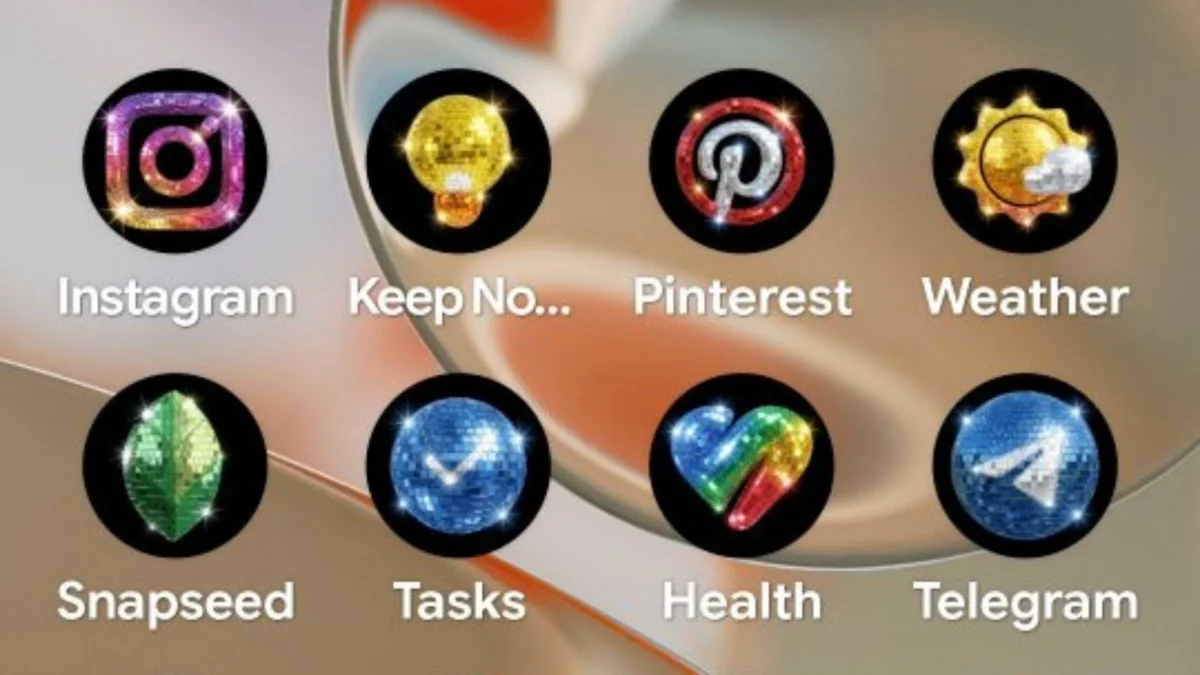
In a move that has simultaneously delighted and divided the tech world, Google has injected a potent dose of 1970s nostalgia and unapologetic sparkle into its Pixel smartphone ecosystem. As of May 23, 2026, Pixel users can transform their familiar app icons into shimmering, disco-ball-inspired silver visuals, a bold aesthetic choice that marks a significant departure from the minimalist design trends dominating the digital landscape. This playful yet provocative update, dubbed "Disco Icons," is rolling out across Pixel devices, inviting users to give their home screens a vibrant, retro makeover.
The immediate reaction has been a whirlwind of social media commentary, ranging from effusive praise for Google’s willingness to embrace whimsy to outright bewilderment and even comedic disdain. This isn’t just a minor visual tweak; it’s a statement, a testament to the evolving philosophy of digital personalization, and perhaps, a subtle nod to the cyclical nature of cultural trends. By offering an icon pack that looks "straight out of a 1970s dance floor," Google has not only provided a new customization option but has also ignited a spirited debate about taste, functionality, and the very identity of our personal tech.
The Sparkle of Controversy: Immediate Reactions Unpacked
The rollout of the Disco Icons was met with an instant, visceral reaction online. Almost immediately after the feature went live, social media platforms, particularly X (formerly Twitter), became a vibrant forum for users to share their opinions, screenshots, and humorous takes on the glittery new aesthetic. The sentiment was starkly polarized, mirroring the dramatic flair of the disco era itself.
On one side, a contingent of users embraced the audacious design with open arms, hailing it as a refreshing break from the often-staid world of app interfaces. Comments like "Omg it’s awful. I’ll take it!" captured a prevalent sentiment of ironic enjoyment, where the very audacity of the design made it appealing. Others lauded it as "hilariously fun," appreciating the lightheartedness and the sheer unorthodoxy of turning a smartphone into a miniature, portable party. One X user imaginatively quipped that their new home screen resembled "bottle service" for smartphones, perfectly encapsulating the opulent and celebratory vibe the icons evoke. For these users, the Disco Icons represent a delightful, unexpected dose of joy and personality in an otherwise functional device. It’s an embrace of maximalism in an era often defined by sleek, understated design.
Conversely, a significant segment of the user base found the glittery icons jarring, distracting, and even "awful." Critics argued that the shimmering silver might impede app recognition, detract from the overall user experience, or simply clash with their personal aesthetic preferences. The departure from clean lines and muted palettes was too drastic for some, who prefer their digital tools to be unobtrusive and purely functional. This divergence in opinion underscores a fundamental tension in product design: the balance between universal appeal and niche expression. While Google has clearly aimed for the latter with Disco Icons, the strong reactions highlight the diverse expectations users have for their devices.
This immediate and divided feedback loop is precisely what makes such experimental features newsworthy. It’s a real-time cultural temperature check, revealing how quickly users adapt (or don’t adapt) to visual changes and how deeply personal their relationship with their digital interfaces has become.
A Chronology of Customization: Pixel’s Evolving Aesthetic Journey
The introduction of Disco Icons is not an isolated incident but rather the latest chapter in Google’s ongoing commitment to robust customization within the Android ecosystem, particularly for its flagship Pixel devices. This journey reflects a broader industry trend towards empowering users with greater control over their digital environments.
The Precedent: Spotify’s Fleeting Disco Moment
Just days before Google’s official rollout, the popular music streaming service Spotify briefly introduced a temporary disco-ball app icon, igniting a similar wave of strong reactions online. While Spotify’s icon was a fleeting promotional stunt, it served as an unexpected litmus test for public appetite for such a bold aesthetic. The mixed reception it received, with many users mocking the flashy design while others found it amusing, likely provided Google with valuable, real-time feedback. It demonstrated that while minimalism has its champions, there’s also a significant demographic yearning for fun, nostalgic, and even "tacky" breaks from the norm. This brief pop-cultural moment arguably paved the way, or at least confirmed the potential impact, for Google’s more permanent offering.
The March Pixel Drop: Expanding the Canvas
Earlier this year, Google laid significant groundwork for advanced personalization through its March Pixel Drop update. This substantial update introduced expanded AI-generated icon styles, marking a pivotal shift in how users could customize their app interfaces. Prior to this, customization options for icons were largely limited to changing their colors to match wallpapers and broader system themes, primarily through the Material You design language. While Material You offered a cohesive and elegant approach to personalization, it remained within a relatively constrained aesthetic framework.
The March update, however, broke new ground by offering genuinely distinct visual styles. Users gained access to creative options like the hand-drawn "Scribbles," offering a whimsical, sketch-like appearance; the artistic "Easel," which gave icons a painterly, textured look; and the luxurious, gold-themed "Treasure," providing a touch of digital opulence. These styles demonstrated Google’s growing confidence in leveraging AI to generate diverse and unique icon sets automatically. Unlike traditional icon packs, which often require users to download third-party applications and manually apply themes, these AI-generated styles seamlessly integrate into the system, applying across supported apps with just a few taps. This makes advanced customization far more accessible and user-friendly.
From Utility to Whimsy: A Historical Shift
The evolution of Android customization, culminating in features like Disco Icons, represents a broader shift from purely functional design to a more expressive and identity-driven approach. In its earlier iterations, Android’s customization prowess was primarily lauded for its technical flexibility – allowing users to swap launchers, widgets, and notification settings. Over time, as smartphone interfaces matured and user expectations grew, the focus broadened to encompass visual aesthetics as a key component of personalization.
The journey from simple color adjustments to AI-generated thematic icon packs, and now to a polarizing retro aesthetic like disco, illustrates a strategic evolution. Google is not just offering utility; it’s offering identity. It’s acknowledging that a smartphone is more than a tool; it’s an extension of one’s personality, a canvas for self-expression in the digital age. This ongoing expansion of customization tools ensures that Pixel users can continually refresh their device’s visual personality, aligning it with their mood, style, or a fleeting nostalgic whim.
Beyond the Bling: Diving into the Design and User Experience
The Disco Icons, while visually striking, also raise important considerations regarding design philosophy, user experience, and the underlying cultural currents that make such a feature relevant.
The Mechanics of Modern Customization
At its core, the Disco Icons feature is a testament to Google’s advanced capabilities in AI-driven design. Unlike static icon packs, which are pre-designed and merely swapped in, these styles are automatically generated and applied across a wide array of supported applications. This means that whether it’s a Google app, a popular social media platform, or a third-party utility, the system attempts to render its icon in the chosen style, maintaining a cohesive visual theme. This automatic application is crucial for user convenience, eliminating the need for manual adjustments and ensuring a uniform look. The process is designed to be seamless: users can give their phones a completely different visual personality with just a few taps within the system settings. This ease of use is a significant factor in the feature’s accessibility and potential widespread adoption, even among those who might typically shy away from complex customization.
The Allure of Nostalgia: Why Retro Resonates
The choice of a disco aesthetic is far from arbitrary. It taps into a powerful psychological phenomenon: nostalgia. In an increasingly fast-paced and often uncertain world, cultural artifacts from past eras, particularly those associated with joy and carefree abandon, hold immense appeal. The 1970s disco era, with its vibrant music, flamboyant fashion, and iconic imagery, represents a period of uninhibited expression and celebration. For younger generations, who may not have experienced disco firsthand, it offers a romanticized vision of the past, often discovered through media and internet trends. For older users, it can evoke genuine memories and a sense of longing for simpler times.
This nostalgic pull is a significant driver behind many current digital trends, from retro-filtered photos to vintage aesthetics in fashion and art. Google’s Disco Icons leverage this cultural resonance, offering not just a visual change but an emotional connection to a bygone era. It’s an opportunity to inject a sense of fun, playfulness, and even rebellion against the often-serious tone of modern technology.
Social Media as a Barometer: Echoes of Opinion
The immediate and often humorous reactions on social media platforms like X are not merely fleeting comments; they serve as a critical barometer for current digital tastes and trends. The split opinion — between those who find the icons "awful" and those who "love them" precisely because they are "awful" — speaks volumes about contemporary aesthetics. It highlights a growing appreciation for the quirky, the unconventional, and the "ironically bad" in a world saturated with perfectly polished digital experiences.
The viral nature of these reactions, with users actively sharing screenshots and joking about their "bottle service" home screens, demonstrates the power of user-generated content in shaping the narrative around new tech features. Google’s own playful tone in announcing the icons, particularly Sameer Samat’s slightly sarcastic query, "Are y’all sure you still want this?", suggests an acute awareness of this social media dynamic. It’s a brand engaging directly and humorously with its community, fostering a sense of shared experience and cultural commentary around a product feature. This level of engagement transcends mere functionality, positioning the Disco Icons as a cultural talking point.
Google’s Playful Provocation: Official Stance and Underlying Strategy
While the Disco Icons might appear to be a purely whimsical addition, Google’s approach to their announcement and the broader context of Pixel customization suggest a more nuanced strategy at play.
Sameer Samat’s Candid Announcement
The feature was notably announced not through a formal press release or a polished blog post, but directly on X by Sameer Samat, Android ecosystem president. His post, "Your wish is our command. Disco icons available on Pixel as of today… Are y’all sure you still want this?", accompanied by a screenshot of a Pixel phone entirely covered in shimmering disco-style app icons, was imbued with a distinct sense of humor and self-awareness. This informal, almost jocular tone is a deliberate choice. It frames the feature as a direct response to perceived (or perhaps imagined) user demand, acknowledging its potentially polarizing nature with a wink and a nod.
Samat’s question, "Are y’all sure you still want this?", is particularly telling. It signals that Google understands the icons might not be for everyone, and that their appeal lies precisely in their unconventionality. This candidness helps to disarm potential criticism, turning what might otherwise be seen as a design misstep into a playful experiment. It positions Google not as a monolithic tech giant dictating aesthetics, but as a responsive, even mischievous, developer willing to try new things and engage directly with user sentiment.
Strategic Play or Pure Panache?
For Google, the update may not be about practicality at all, at least not in the traditional sense of enhancing productivity or streamlining workflows. Instead, it appears to be a lighthearted yet strategic way to convey a powerful message: that Android customization can still be weird, experimental, and entertaining. In an era where many digital interfaces strive for sleek uniformity, Google is showcasing Android’s inherent flexibility and willingness to push boundaries.
This move could be interpreted as a subtle differentiation strategy for Pixel phones. While other Android manufacturers offer varying degrees of customization, Google, as the steward of Android, can integrate deeply at the system level. By offering such unique, AI-generated icon styles, Google reinforces the idea that Pixel devices offer a distinct, premium Android experience, rich in unique features and personality. It’s a way to foster loyalty and excitement around the Pixel brand, appealing to users who value individuality and a sense of fun in their tech.
Differentiating the Pixel Experience
In a highly competitive smartphone market, differentiation is key. While hardware specifications often dominate the conversation, software experience and customization capabilities are increasingly important battlegrounds. By continually rolling out unique and engaging customization options like the Disco Icons, Google elevates the perceived value of the Pixel ecosystem. It’s a testament to the idea that a phone can be more than just a tool; it can be a personal canvas.
Furthermore, this focus on playful, expressive design aligns with broader trends among younger users, particularly Gen Z and Zillennials, who have increasingly embraced quirky aesthetics, nostalgia, and whimsical customization online as a form of self-expression. By catering to these preferences, Google ensures its Pixel line remains relevant and appealing to a demographic that values authenticity and personality in their digital interactions. It’s about building a brand that feels current, responsive, and genuinely fun.
Implications and the Future of Digital Aesthetics
The introduction of Disco Icons, while seemingly a minor visual update, carries significant implications for the future of smartphone customization, brand identity, and the broader landscape of digital aesthetics.
The Customization Arms Race: What’s Next?
Google’s bold move could ignite a new phase in the "customization arms race" among smartphone manufacturers. With Apple’s iOS slowly but surely expanding its own personalization features (e.g., Lock Screen widgets, focus modes), and other Android OEMs offering their proprietary skins, the pressure is on to provide users with unique ways to make their devices their own. We might see an acceleration in the development of AI-generated themes, more niche aesthetic options, and even dynamically changing interfaces that respond to user mood or context. The Disco Icons serve as a proof-of-concept for how far a platform can push aesthetic boundaries while maintaining system-level integration. Could we see more retro themes, avant-garde styles, or even user-generated AI themes becoming commonplace? The potential for greater integration of AI in design customization is vast, hinting at a future where our phones adapt not just to our needs, but to our ever-evolving sense of style.
Brand Identity in a Playful Era
For Google and its Pixel brand, this update helps solidify an image of innovation, responsiveness, and a willingness to embrace the unconventional. While some might view the disco icons as frivolous, they project a brand identity that is unafraid to experiment and engage with culture in a lighthearted way. In a world often dominated by serious tech news and security concerns, a dose of playful design can foster a more human connection with the brand. It tells users that Google doesn’t take itself too seriously all the time, and that there’s room for joy and personality in technology. This could be particularly important in distinguishing Pixel in a crowded market, making it appealing to users who seek a more expressive and less sterile digital experience.
The Enduring Power of Self-Expression
Ultimately, the Disco Icons underscore the enduring human desire for self-expression. Our personal devices are no longer just tools; they are extensions of our identity, canvases upon which we project our tastes, moods, and allegiances. Whether through practical utility or whimsical aesthetics, customization empowers users to shape their digital world to reflect their individuality. The strong reactions to the Disco Icons, both positive and negative, only amplify this point: people care deeply about how their digital spaces look and feel. This feature, therefore, is not just about glittery icons; it’s about validating the user’s desire for a personalized digital existence, one where their phone can be as unique and expressive as they are. It reinforces the idea that technology, at its best, should serve not just our practical needs but also our deeper psychological and cultural inclinations.
Conclusion: A Glimmering Glimpse into Tomorrow’s Tech
Google’s introduction of Disco Icons for Pixel phones is more than just a fleeting aesthetic trend; it’s a significant marker in the ongoing evolution of smartphone personalization. Rolled out on May 23, 2026, this glittery, 1970s-inspired icon pack has sparked a vibrant debate, revealing a clear division between those who champion digital minimalism and those who crave expressive, nostalgic, and even playfully "awful" design.
From the immediate, polarized reactions on social media to its strategic placement within Pixel’s expanding AI-generated customization tools, the Disco Icons highlight Google’s willingness to experiment and engage with cultural whims. Android ecosystem president Sameer Samat’s candid announcement, tinged with self-aware humor, further underscores a brand identity that values fun, individuality, and direct community interaction.
Looking ahead, this playful provocation could herald a new era of highly personalized digital aesthetics, driven by AI and influenced by ever-shifting cultural trends. It reinforces the notion that our smartphones are increasingly canvases for self-expression, not just tools for utility. Whether you embrace the shimmering silver or recoil from its retro brilliance, the Disco Icons are a glittering testament to a future where our tech is as unique, experimental, and entertaining as we choose it to be, proving that sometimes, a little bit of sparkle is exactly what the digital world needs.
