

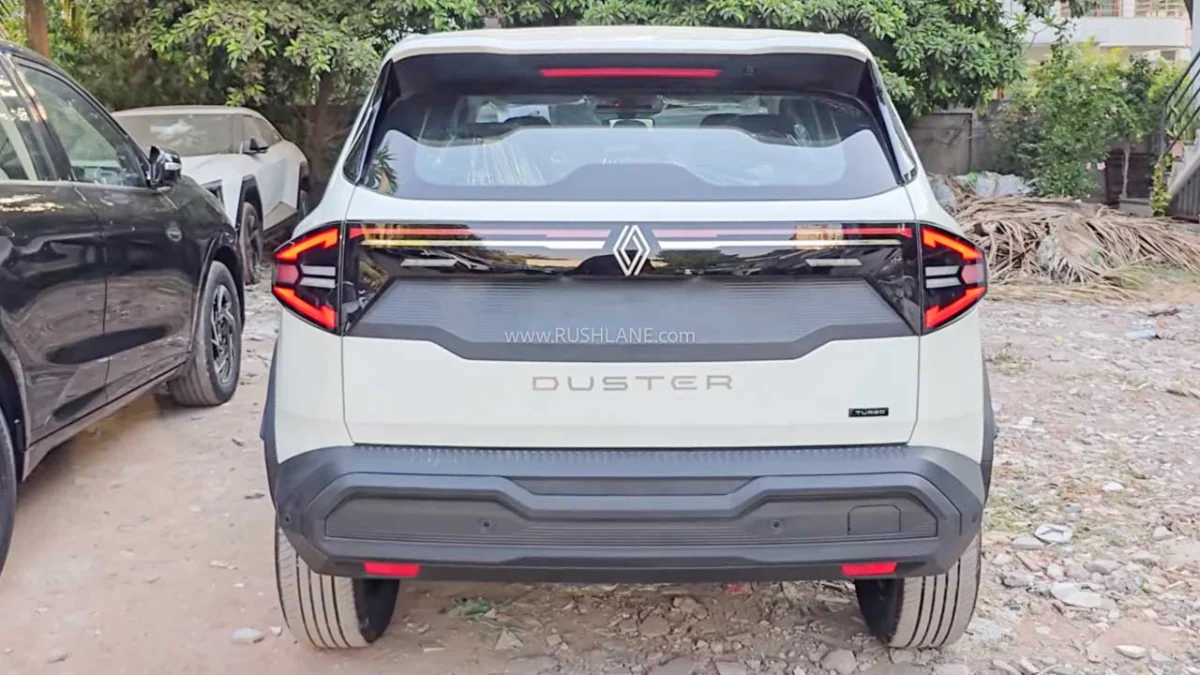
The Indian automotive landscape in 2026 has witnessed a significant shift in momentum for the Renault-Nissan Alliance. After a period of consolidation and strategic recalibration, the French-Japanese partnership has emerged as a formidable force in the domestic market. Driven by the highly anticipated return of the Renault Duster and the introduction of new nameplates like the Nissan Gravite, the Alliance has reported a staggering year-on-year (YoY) growth, signaling a robust recovery and a renewed commitment to the Indian consumer.
In April 2026, the combined domestic sales for Renault and Nissan reached 8,616 units, nearly doubling the 4,351 units sold during the same month in 2025. This resurgence is anchored by Renault’s explosive 108% YoY growth, a feat largely attributed to the successful relaunch of the Duster brand. As the industry moves toward a more SUV-centric demand cycle, the Alliance appears to have finally aligned its product portfolio with the evolving preferences of Indian car buyers.
Main Facts: A Dual-Brand Resurgence
The performance of Renault and Nissan in April 2026 highlights a successful execution of their "India 2.0" strategy. Renault India, securing the ninth position among the country’s best-selling Original Equipment Manufacturers (OEMs), captured a 1.2% market share. Nissan, while smaller in volume, maintained a steady 0.7% share.
Together, the brands moved 8,616 units. While this represents a slight dip from the 9,454 units recorded in March 2026—a month characterized by high initial dispatch volumes for new models—the YoY trajectory remains overwhelmingly positive.
Renault’s Performance Highlights:
- Total Sales: 5,413 units (108% YoY growth).
- Top Performer: The new Duster, accounting for 43.58% of the brand’s total sales.
- Growth Drivers: Strong demand for the Triber MPV and the stabilization of the Kiger compact SUV.
Nissan’s Performance Highlights:
- Total Sales: 3,203 units (83.13% YoY growth).
- Top Performer: The Magnite, which remains the cornerstone of Nissan’s Indian operations.
- New Entry: The Nissan Gravite, contributing nearly 45% of total sales within its first few months of launch.
Chronology: From Stagnation to Acceleration
To understand the significance of the April 2026 figures, one must look at the timeline of the Alliance’s journey over the past twelve months.
April 2025: The Low Point
In April 2025, the Alliance was struggling with an aging portfolio. Renault relied heavily on the Kwid and Triber, while Nissan was essentially a single-product brand with the Magnite. Total sales hovered at a modest 4,351 units, and market relevance was under threat from aggressive moves by domestic giants like Tata Motors and Mahindra.

Late 2025 – Early 2026: The Strategic Pivot
The Alliance announced a fresh investment cycle focused on localized production of global platforms. This period saw the preparation for the re-introduction of the Duster—a nameplate that originally defined the compact SUV segment in India.
March 2026: The Re-Launch Phase
March 2026 marked the official return of the Renault Duster. The market response was immediate, with high booking numbers and a surge in showroom footfalls. Simultaneously, Nissan launched the Gravite, a vehicle designed to complement the Magnite and offer a more premium SUV experience. March saw peak "pipeline filling" with 9,454 units shipped to dealers.
April 2026: Market Stabilization
April 2026 represents the first full month of "steady-state" sales for the new models. While month-on-month (MoM) figures showed a slight correction—common after a major launch month—the YoY growth of over 100% for Renault confirmed that the new products were not just a "one-month wonder" but a genuine shift in brand trajectory.
Supporting Data: A Detailed Sales Breakdown
Renault India: The Duster Effect
Renault’s total volume of 5,413 units in April 2026 is a testament to the power of a strong brand name.
- Renault Duster: The SUV sold 2,359 units in April. Having been absent from the lineup in April 2025, every unit sold represented incremental growth. More impressively, Duster sales grew 68.26% MoM from the 1,402 units sold during its launch month in March, indicating that production is ramping up to meet a growing backlog of orders.
- Renault Triber: The versatile MPV continues to be a silent warrior for Renault. Selling ,1917 units, it saw a 36.83% YoY increase. Although it dipped slightly (4.67%) from March 2026, it remains a critical volume driver, holding a 35.41% share of Renault’s internal sales mix.
- Renault Kiger: The Kiger saw 727 units sold, a 19.97% YoY increase. However, it suffered a sharp MoM decline of 38.60%. This suggests that some internal cannibalization may be occurring as buyers opt for the base variants of the more prestigious Duster.
- Renault Kwid: Once the flagship volume earner, the Kwid is showing signs of age. With 410 units sold, it declined 31.09% YoY and 8.69% MoM.
Nissan Motor India: The Two-Pillar Strategy
Nissan’s growth to 3,203 units (up from 1,749 in April 2025) was driven by its two-SUV strategy.
- Nissan Magnite: The Magnite remains the brand’s bestseller with 1,775 units. It showed a marginal YoY growth of 1.49%, proving its resilience in a hyper-competitive segment. However, MoM sales fell by 12.69%, likely due to increased competition from newer entrants.
- Nissan Gravite: The Gravite secured the second spot for Nissan with 1,428 units. While this was a 39.87% decline from its March 2026 debut (2,375 units), it still accounted for a healthy 44.58% of Nissan’s total volume. The MoM drop is largely attributed to the initial high-volume "dealer loading" that occurred in March.
Official Responses and Strategic Outlook
While formal statements from the Alliance leadership emphasize "cautious optimism," internal sources suggest that the focus has now shifted from "survival" to "expansion."
Renault India executives have indicated that the priority for the second quarter of 2026 is the stabilization of the Duster’s supply chain. The "Authentic Base Variant" of the Duster has seen particularly high demand in Tier-2 and Tier-3 cities, where the Duster’s legacy for ruggedness remains strong. Dealerships are reportedly being instructed to focus on reducing waiting periods, which currently stretch to three months for certain variants.
Nissan, on the other hand, is pivoting toward its next big reveal. A company spokesperson noted that while the Magnite and Gravite provide a solid foundation, the brand’s "true premium play" will begin in the second half of the year. The focus is currently on the Chennai manufacturing facility, which is being optimized to handle the increased complexity of producing multiple SUV platforms simultaneously.

Implications for the Indian Automotive Market
The 108% growth of Renault and the 83% growth of Nissan carry several broader implications for the Indian auto sector:
1. The Power of Brand Equity
The Duster’s success proves that iconic nameplates have a long shelf life in India. Despite being away from the market for years, the Duster name alone was enough to drive thousands of customers back to Renault showrooms. This may prompt other manufacturers to consider reviving discontinued but well-loved brands.
2. The SUV-Only Mandate
The Alliance’s growth is almost entirely SUV-driven. The decline of the Kwid (a hatchback) and the rise of the Duster, Magnite, and Gravite underscore the fact that the Indian market has decisively moved away from small cars. For OEMs to survive, a multi-tier SUV strategy is no longer optional; it is mandatory.
3. Increased Competition in the Mid-Size Segment
The mid-size SUV segment, currently dominated by the Hyundai Creta and Maruti Suzuki Grand Vitara, is facing a new challenger. The Duster’s entry-level pricing (highlighted by the Authentic Base Variant) is designed to undercut the leaders, forcing a potential price war or a feature-set arms race.
4. Alliance Synergy
The shared platforms between Renault and Nissan are finally paying dividends. By sharing the costs of development and production for models like the Duster/Gravite and Kiger/Magnite, the Alliance can offer competitive pricing that would be impossible if they operated entirely independently in India.
The Road Ahead: Upcoming Launches
The momentum generated in April 2026 is expected to be fueled further by a series of high-profile launches scheduled through 2027.
- Nissan Tekton (July 9, 2026): Nissan is set to unveil the Tekton, a mid-size SUV positioned above the Gravite. This model is expected to feature advanced ADAS (Advanced Driver Assistance Systems) and a more premium interior to take on the top-end variants of the competition.
- Nissan 7-Seater C-SUV (Late 2026): To compete with the Mahindra XUV700 and Tata Safari, Nissan will introduce a 7-seater SUV based on the global CMF-B platform.
- Renault Duster 7-Seater (Early 2027): Renault will follow suit with a three-row version of the Duster, aiming to provide a rugged alternative in the family SUV space.
- Renault Bridger (2027): This new compact SUV is rumored to feature a 1.2L turbo-petrol engine with hybrid options, targeting the premium sub-4-meter segment.
In conclusion, the April 2026 sales figures mark a turning point for Renault and Nissan in India. By leveraging the Duster’s legacy and expanding their SUV portfolios, the Alliance has successfully transitioned from the periphery of the market back into the spotlight. As they ramp up production and introduce more localized models, the 108% growth seen this month may just be the beginning of a long-term upward trend.
