

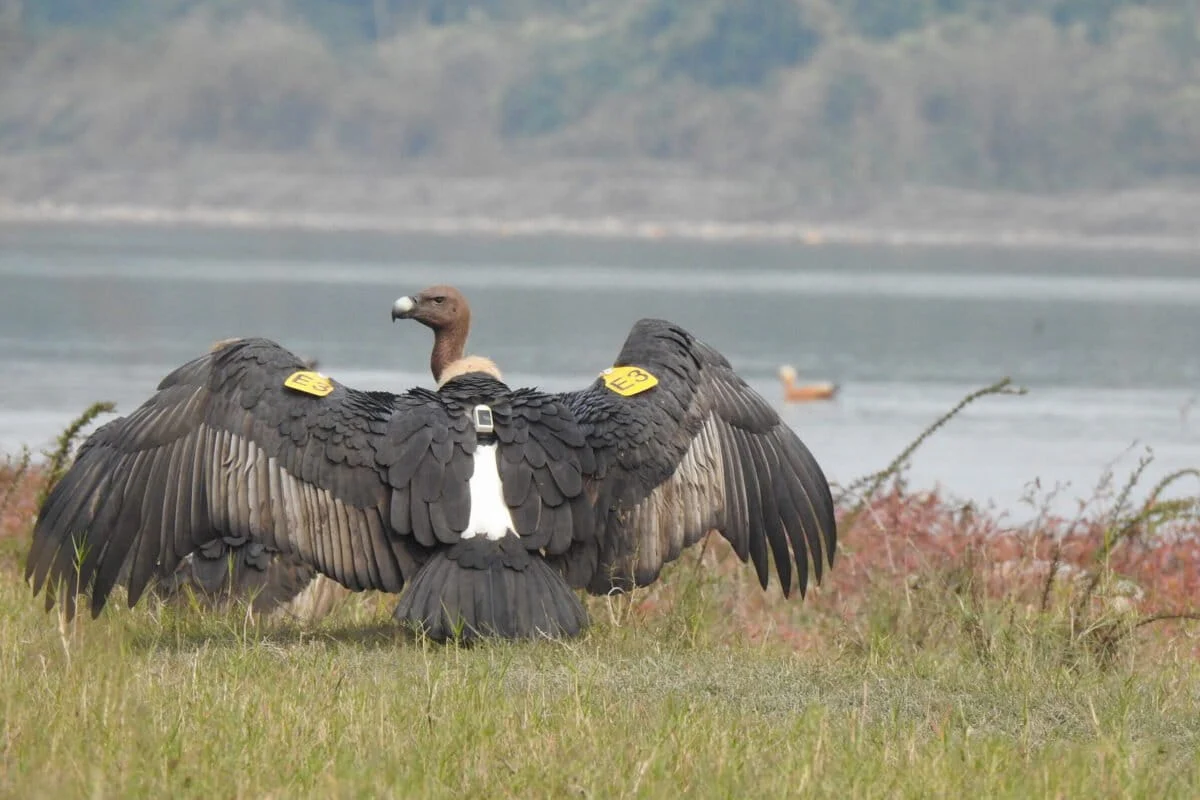
Introduction: A Winged Envoy Without Borders
In the realm of wildlife conservation, animals frequently demonstrate a profound disregard for the geopolitical boundaries established by humans. This reality was recently underscored by the remarkable journey of a juvenile female cinereous vulture (Aegypius monachus). Rescued from the brink of death in the heart of India’s Madhya Pradesh, the bird underwent months of intensive rehabilitation before being released back into the wild. Equipped with a sophisticated tracking device, her subsequent 600-kilometer flight across the international border into Pakistan has provided researchers with invaluable data on the migratory corridors and persistent threats facing this "Near Threatened" species.
This case serves as a poignant reminder of the interconnectedness of South Asian ecosystems and the critical necessity for transboundary cooperation in avian conservation. As the vulture now recovers in a Pakistani rehabilitation facility, her story highlights the success of Indian conservation efforts and the unpredictable challenges of managing migratory species that traverse some of the world’s most sensitive borders.
I. Main Facts: The Cross-Border Odyssey
The core of this narrative involves a two-year-old female cinereous vulture, a species often referred to as the "monk vulture" or "black vulture" due to its dark plumage and ruff of feathers. The bird’s journey from a village in Madhya Pradesh to the Khanewal district in Pakistan’s Punjab province has captivated the ornithological community.
Key Highlights:

- Species: Cinereous Vulture (Aegypius monachus), listed as "Near Threatened" by the IUCN.
- Origin: Rescued in Shajapur, Madhya Pradesh, India, in January 2026.
- Rehabilitation: Treated at Van Vihar National Park and the Vulture Conservation Breeding Centre (VCBC), Bhopal.
- Technology: Fitted with a GPS-GSM telemetry device provided by WWF-India and the Bombay Natural History Society (BNHS).
- The Journey: Released on March 25, 2026; crossed into Pakistan by April 6, 2026.
- Current Status: Recovering from a secondary injury in Pakistan after being found by local residents.
The event is not merely a rescue story but a data-rich case study in telemetry-based monitoring, revealing how rehabilitated raptors reintegrate into their natural migratory cycles.
II. Chronology: From Rescue to International Recovery
The timeline of this vulture’s journey reflects the meticulous care and scientific rigor employed by Indian wildlife authorities and conservation NGOs.
The Initial Rescue (January 22, 2026)
The saga began in Parsulia village, located in the Shajapur district of Madhya Pradesh. Local villagers discovered the young vulture grounded and unable to fly. Upon arrival, wildlife officials noted a significant leg injury that prevented the bird from taking off or foraging. It was immediately transported to Van Vihar National Park in Bhopal, a facility renowned for its wildlife rescue and rehabilitation programs.
Rehabilitation and Stabilization (January – March 2026)
For two months, the vulture remained under the constant supervision of veterinarians at the park’s Vulture Conservation Breeding Centre. The rehabilitation process involved:
- Surgical Intervention: Addressing the leg injury to ensure full mobility.
- Conditioning: Allowing the bird to regain muscle mass in large flight aviaries.
- Identification: The bird was microchipped and fitted with a unique identification ring.
- Tagging: On March 25, 2026, experts from WWF-India and BNHS fitted the bird with a GPS-GSM telemetry device. This backpack-style unit allows researchers to track the bird’s altitude, speed, and location in real-time via cellular networks.
Release and Migration (March 25 – April 6, 2026)
The vulture was released near the Halali Dam in the Raisen district. This location was chosen for its favorable thermals and proximity to existing vulture habitats. Almost immediately, the bird’s natural instincts took over. As a wintering migrant, she began her northward journey back toward the breeding grounds of Central Asia. Within 12 days, she had traversed the Indian states of Rajasthan and Punjab, crossing the border into Pakistan.
The Signal Loss and Recovery (April 2026)
Shortly after crossing the border, the telemetry signal became intermittent and eventually stopped. Such "blackouts" often signal either a technical failure, the bird entering a region without cellular coverage, or a "mortality signal" where the bird remains stationary for too long.

The mystery was resolved when residents in Pakistan’s Khanewal district discovered the bird in a weakened and injured state. Demonstrating the local community’s awareness, they alerted Pakistani wildlife officials. The vulture was subsequently moved to a rehabilitation center in Pakistan, where she is currently receiving treatment.
III. Supporting Data: The Science of Vulture Migration
The movement of this cinereous vulture is part of a larger, documented pattern of avian migration that links the Indian subcontinent with the steppes of Central Asia.
The 2025 Madhya Pradesh Vulture Census
The success of rehabilitation efforts in Madhya Pradesh is mirrored by the state’s rising vulture population. According to the census conducted between February 17 and 19, 2025, the state recorded 12,981 vultures. This represents a staggering 19% increase in just one year. Madhya Pradesh has emerged as a stronghold for several species, including the resident White-rumped and Long-billed vultures, as well as migratory species like the Cinereous and Eurasian Griffon.
Comparative Migration Data
The 2026 cross-border event is not an anomaly. In 2025, a rehabilitated Eurasian Griffon vulture released from the same Halali Dam site traveled over 4,300 kilometers, reaching Kazakhstan before eventually returning to India.
Furthermore, a 2024 regional study conducted in Kazakhstan and Uzbekistan tracked nine cinereous vultures using GPS-GSM tags. The results were illuminating:
- Six vultures migrated directly to India for the winter.
- Two wintered along the Pakistan-India border.
- One remained in Tajikistan.
- The study confirmed high site fidelity, meaning the birds returned to the exact same wintering grounds year after year, emphasizing the importance of specific "vulture restaurants" and carcass dump sites.
IV. Official Responses and Expert Insights
The scientific community views this incident as a success of the "rescue-to-release" protocol, despite the bird’s subsequent injury in Pakistan.

The Biological Instinct
Vibhu Prakash, a renowned vulture biologist and former deputy director of the BNHS, noted that the bird’s movement was entirely consistent with the species’ natural history. "The cinereous or black vulture is largely a wintering bird and it migrates to India from North Pakistan, Baluchistan, and Central Asia," Prakash explained. "It usually arrives by October and returns by March-April. The bird must have been migrating back to its breeding grounds in the Himalayas and Central Asia."
Prakash emphasized that the time spent in captivity did not dull the bird’s migratory drive. The rehabilitation at Van Vihar provided the physical strength necessary for the bird to follow its internal compass.
The Importance of Food Security
Ornithologist Alyona Kaptyonkina, from the Biodiversity Research and Conservation Center in Astana, highlights why the India-Pakistan corridor is so vital. "India and Pakistan are absolutely critical to the survival of the Central Asian population," she stated. She pointed to locations like Bikaner in Rajasthan, which provide a "predictable and abundant food supply" in the form of livestock carcasses. These sites are essential for young, inexperienced birds who might otherwise struggle to find food during their first few years of life.
The Nepal Connection
Krishna Prasad Bhusal, a conservation biologist affiliated with the IUCN SSC Vulture Specialist Group, noted that telemetry data from Nepal shows similar transboundary patterns. Tagged White-rumped and Slender-billed vultures from Nepal’s Chitwan region frequently move into India’s Uttar Pradesh. "Telemetry has shown that vultures routinely cross borders as part of their normal ecology rather than occasional dispersal," Bhusal said.
V. Implications: Threats and the Future of Conservation
While the tracking of this cinereous vulture provided scientific data, it also highlighted the gauntlet of threats these birds face regardless of which side of the border they are on.
Identified Threats
Telemetry studies across South Asia have identified several recurring dangers to vultures:

- NSAID Contamination: The use of Diclofenac and other non-steroidal anti-inflammatory drugs in livestock remains the primary threat. Vultures scavenging on carcasses of animals treated with these drugs suffer from rapid kidney failure.
- Electrocution: As vultures are large birds with significant wingspans, they are highly susceptible to electrocution from poorly insulated power lines and pylons.
- Poisoned Carcasses: In some regions, farmers lace carcasses with poison to kill predators like feral dogs or leopards; vultures often become the unintended secondary victims.
- Direct Persecution: Though rarer now, hunting and nest disturbance still occur in certain migratory corridors.
The Need for "Diplomatic" Conservation
The fact that a bird rescued in India is being treated in Pakistan underscores the need for a unified conservation framework. Vultures do not recognize the Line of Control or international boundaries. Therefore, the survival of the species depends on:
- Data Sharing: Real-time sharing of telemetry data between Indian, Pakistani, and Central Asian scientists.
- Harmonized Policy: Synchronizing the ban on toxic veterinary drugs across all South Asian nations.
- Coordinated Monitoring: Establishing a network of protected "vulture safe zones" that span across borders.
Conclusion
The story of the young cinereous vulture is a testament to the resilience of nature and the dedication of the conservationists who work to protect it. While her journey was interrupted by a second injury, the data she provided during her 600-kilometer flight is a "gift" to science. It confirms that the flyways are active and that the rehabilitation efforts at Van Vihar are producing birds capable of attempting the arduous journey back to their ancestral breeding grounds. As she recovers in Pakistan, she remains a silent ambassador for a region that must look past political differences to save one of its most vital ecological scavengers.
