

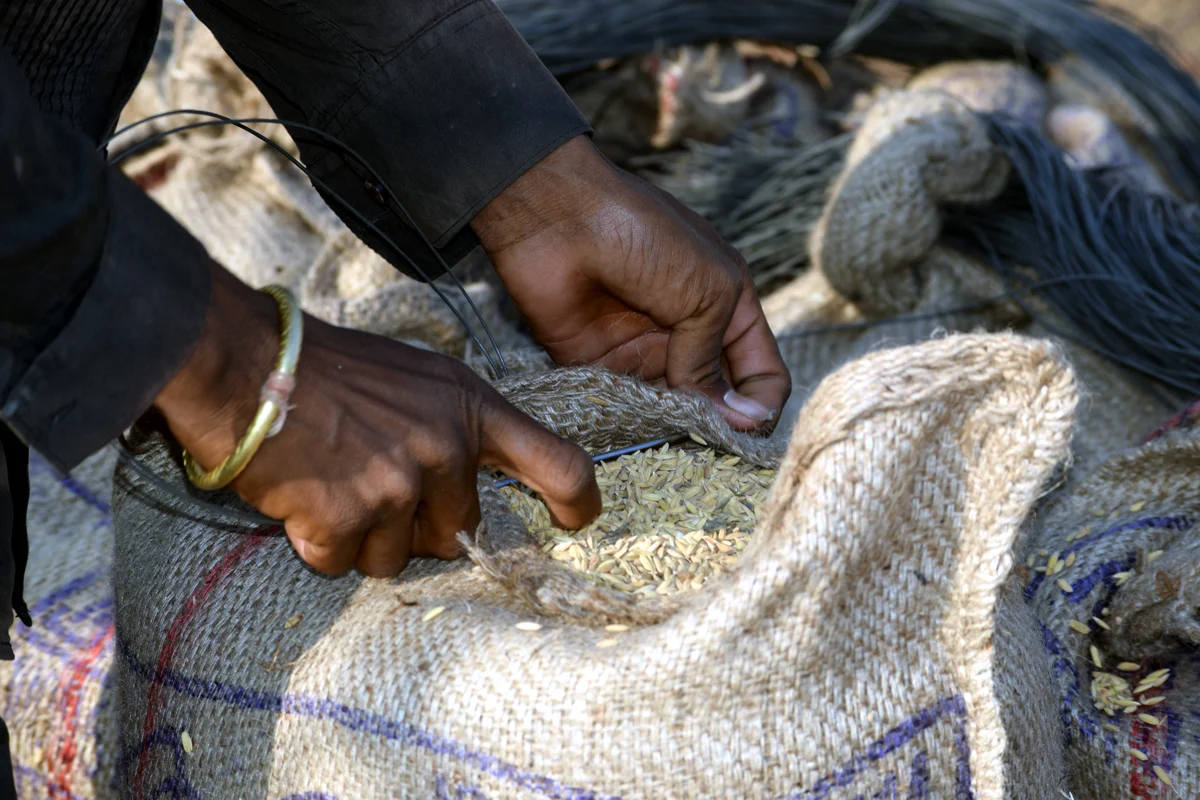
Dhamtari, Chhattisgarh — Standing at the edge of his eleven-acre farm in Kurud block, sixty-year-old Sukhdev Sahu looks out over a landscape that has become increasingly monochromatic. Where there was once a vibrant mosaic of kodo millet, kutki, ragi, pulses, and oilseeds, there is now only a relentless sea of paddy. Sahu, a veteran farmer who embraced organic methods in the early 2000s, remembers a time when his land was self-sustaining, fueled by the manure of twenty cattle and the preservation of ancestral seeds.
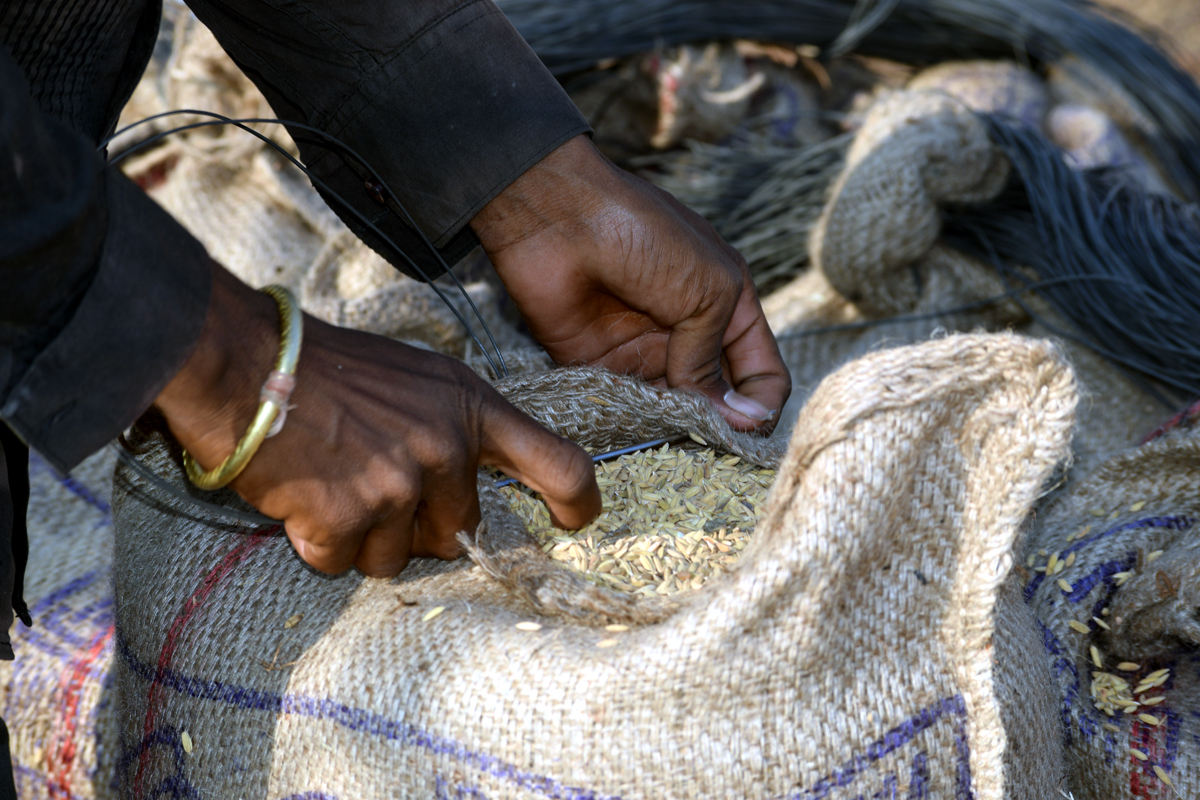
Today, those cattle are gone, and the organic manure has been replaced by sacks of synthetic urea. The reason for this transition is not a lack of environmental consciousness, but a stark economic reality. "It is because of the price of paddy," Sahu explains, his voice reflecting a mix of pragmatism and regret. "No matter the variety, the government buys it at ₹3,100 per quintal. In this market, ecology cannot compete with a guaranteed cheque."
Sahu’s story is the micro-narrative of a macro-economic shift transforming Chhattisgarh, once celebrated as the "Rice Bowl of Central India." While the state government touts its commitment to sustainable agriculture, recent data reveals a troubling paradox: as paddy procurement prices soar, the actual footprint of certified organic farming is shrinking at an alarming rate.
I. The Core Paradox: Economic Gain vs. Ecological Loss
The primary driver of Chhattisgarh’s agricultural landscape is the state’s aggressive procurement policy. By offering ₹3,100 per quintal for paddy—one of the highest rates in the country—the government has created an irresistible incentive for monoculture. For a farmer struggling with debt and the rising costs of education and healthcare, the choice between the labor-intensive, lower-yield uncertainty of organic millets and the high-yield, high-price guarantee of chemical-laden paddy is no choice at all.
This economic gravity has pulled thousands of hectares away from organic certification. According to recent data, the area under the National Programme for Organic Production (NPOP)—the gold standard for organic certification required for exports—has plummeted in Chhattisgarh. In the 2020–21 cycle, the state boasted 23,209 hectares of NPOP-certified land. By 2024–25, that figure had withered to just 6,822 hectares, representing a staggering 70% decline.
While the government points to the growth of the Paramparagat Krishi Vikas Yojana (PKVY)—a scheme aimed at promoting chemical-free farming—as a success, experts remain skeptical. The PKVY area in Chhattisgarh has reportedly grown from 25,000 to over one lakh hectares, but this growth often exists only on paper or in the "conversion phase," where the rigorous standards of true organic farming are yet to be fully met or verified.
II. A Chronology of Transition: From Diversity to Monoculture
The shift in Chhattisgarh’s agricultural identity did not happen overnight. It is the result of two decades of evolving policy and market pressures.
- The Early 2000s (The Organic Hope): Following the formation of the state in 2000, there was a grassroots push toward organic farming. Farmers like Sahu utilized traditional knowledge, maintaining livestock for manure and practicing crop rotation that naturally replenished soil nitrogen.
- 2005–2015 (The Chemical Creep): As the "Green Revolution" models took deeper root in the region, the usage of chemical fertilizers began to climb. Records show that fertilizer consumption in the state rose from 374,000 tonnes in 2005–06 to over 737,000 tonnes by 2019–20.
- 2015–2020 (The Policy Tug-of-War): The Union government launched PKVY in 2015 to incentivize organic clusters. However, simultaneously, the state government began increasing the Minimum Support Price (MSP) and procurement quotas for paddy, effectively neutralizing the organic incentives.
- 2021–Present (The Paddy Hegemony): With the procurement price reaching ₹3,100 per quintal and the procurement limit raised to 21 quintals per acre, the transition to paddy monoculture reached its zenith, leading to the 70% collapse in certified organic acreage.
III. Supporting Data: The Hidden Cost of the "Rice Bowl"
The environmental and systemic costs of this transition are documented in several recent studies that paint a grim picture of the state’s agricultural health.
1. The Soil Health Crisis
A 2024 policy brief by the Indian Council for Research on International Economic Relations (ICRIER), utilizing Soil Health Card data, identified Chhattisgarh as a state with critically low levels of Soil Organic Carbon (SOC). SOC is the primary indicator of soil fertility and its ability to sequester carbon. The report directly linked this depletion to the "excessive and imbalanced application of nitrogenous fertilizers" required to sustain high paddy yields.
2. The Certification Gap
Sanket Thakur, a former agricultural scientist at JN Agricultural University, emphasizes the difference between "government-declared" organic land and "certified" organic land. "NPOP data is genuine because it involves rigorous inspections and traceability," Thakur notes. "The decline in NPOP area suggests that farmers are letting their certifications lapse because the domestic and export markets for organic produce are not as lucrative or as stable as the government’s paddy procurement window."

3. National vs. State Trends
While the national NPOP-certified area saw a peak of 5.39 million hectares in 2022–23 before settling at 3.96 million in 2024–25, Chhattisgarh’s decline has been far more precipitous. Compared to neighboring states like Jharkhand or Goa, Chhattisgarh’s abandonment of certified organic practices is among the sharpest in the country, highlighting the specific impact of its local procurement policies.
IV. Official Responses and Expert Critique
The government’s stance remains one of statistical optimism, focusing on the expanded reach of the PKVY scheme. Between 2020 and 2025, Chhattisgarh received approximately ₹11.24 billion in funding for organic farming initiatives. However, critics argue that this investment is being liquidated by a lack of infrastructure.
Prem Singh, Secretary of the Organic Farming Association of India, is blunt in his assessment of the PKVY growth. "The increase in acreage under PKVY is often manipulated to show success," Singh asserts. "Organic farming requires intensive labor and a shift in mindset, but the government continues to allocate the lion’s share of its budget to chemical farming through massive fertilizer and pesticide subsidies. You cannot promote organic farming with one hand while subsidizing its destruction with the other."
Digambar Prasad, a farmer from Bilaspur district, tried to bridge the gap but failed. Between 2013 and 2015, he attempted organic paddy cultivation. His yield was 12 quintals per acre—insufficient to cover production costs. Today, using chemical inputs, he produces 21 quintals per acre. "Organic farming represents the future, but paddy is the present reality," Prasad says. "I have debts to pay and children to educate. I cannot afford to be a martyr for the soil."
V. Implications: The Future of Food Security and Climate
The long-term implications of Chhattisgarh’s policy-driven transition are multifaceted and potentially devastating.

1. Ecological Vulnerability
By incentivizing a single crop, the state is creating a biological desert. The Food and Agriculture Organization (FAO) has long warned that diversified farming is essential for pest resistance and water conservation. Paddy is a water-intensive crop; its expansion in a changing climate—where rainfall patterns are becoming increasingly erratic—puts the state’s groundwater reserves at risk.
2. Climate Change and Emissions
Agriculture contributes approximately 34% of global greenhouse gas emissions, with flooded paddy fields being a significant source of methane. By moving away from organic practices that sequester carbon and toward intensive paddy cultivation, Chhattisgarh is inadvertently increasing its carbon footprint.
3. Economic Fragility
Policy expert Devinder Sharma describes this as a "policy-driven transition" that creates a dangerous dependency. "When a single crop enjoys such heavy support, other options become unviable," Sharma says. "But what happens if global prices shift, or if the soil becomes so degraded that even chemicals cannot coax a yield out of it? The farmers are being led into a trap of monoculture."
4. The Mindset Gap
Sanket Thakur points out that during the Green Revolution, the government used every tool at its disposal—subsidies, radio broadcasts, and local demonstrations—to convince farmers to use chemicals. "A similar, massive effort is needed today to move them back toward organic," he argues. "We need local markets, dedicated processing units, and, most importantly, assured procurement for organic crops that matches the price of paddy."
Conclusion: The Edge of the Field
Back in Dhamtari, Sukhdev Sahu looks at his robust paddy crop. On the surface, it is a picture of agricultural success. But beneath the surface, the soil is hardening, the birds that used to follow the plough are fewer, and the traditional seeds that survived for generations are disappearing from the local memory.

"The government says they are helping us by buying our rice at high prices," Sahu says, kicking at a clod of dry, grey earth. "And they are. We have more money in our pockets today. But I worry about my grandson. When he stands on this edge of the field thirty years from now, will there be anything left in this soil to grow, or will we have sold the future of the land for ₹3,100 a quintal?"
The decline of organic farming in Chhattisgarh is not a failure of the farmers’ will, but a failure of a policy ecosystem that forces a choice between economic survival and environmental stewardship. As the "Rice Bowl" grows heavier, the foundation upon which it rests—the soil itself—is quietly cracking.
