

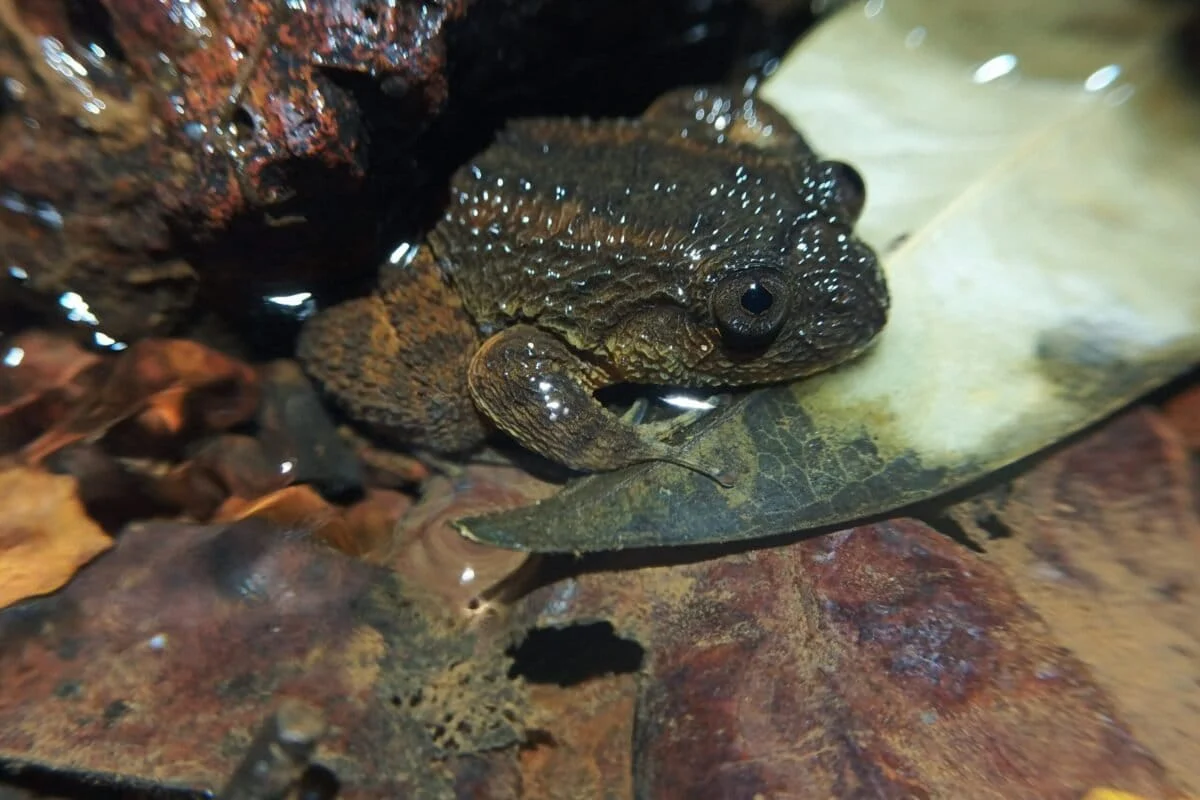
UTTARA KANNADA, KARNATAKA – In the dense, rain-drenched evergreen forests of the central Western Ghats, a new voice has been added to the nocturnal chorus. Scientists and citizen researchers have officially identified a new-to-science species of night frog, Nyctibatrachus kali, commonly referred to as the Kali night frog.
The discovery, centered in the Kali river basin of Karnataka, underscores the staggering, yet fragile, biodiversity of the Western Ghats—a mountain range older than the Himalayas and recognized globally as a biological treasure trove. The identification of N. kali was not merely a matter of visual observation; it required a sophisticated "integrative taxonomic" approach, combining genetic sequencing, bioacoustic analysis, and minute morphological measurements to distinguish it from its near-identical relatives.
Main Facts: A Distinct Evolutionary Lineage
The Kali night frog (Nyctibatrachus kali) belongs to a genus of frogs that is entirely endemic to the Western Ghats. The genus Nyctibatrachus, known as night frogs, represents an ancient lineage of amphibians that has evolved in isolation within these hills for millions of years.
The species was discovered in the Castlerock region of the Uttara Kannada district, a landscape characterized by heavy rainfall, steep valleys, and perennial streams. While it may appear similar to other frogs to the untrained eye, N. kali is a "cryptic species." In biological terms, this refers to organisms that are morphologically almost indistinguishable but are genetically distinct and do not interbreed.
Key Characteristics of Nyctibatrachus kali:
- Habitat: Found exclusively in the vicinity of fast-flowing perennial streams within the Kali river catchment.
- Identification: Differentiated through "integrative taxonomy," which utilizes DNA barcoding and acoustic signatures.
- Endemism: Like most members of its genus, it has a highly restricted geographic range, making it vulnerable to localized environmental changes.
- Physical Appearance: Small-bodied with skin textures and color patterns that provide camouflage against the mossy rocks and leaf litter of the forest floor.
The discovery brings the total number of amphibian species known in the Western Ghats to 253. Remarkably, nearly 94% of these species are endemic to the region, meaning they are found nowhere else on Earth.
Chronology of the Discovery: From Field to Lab
The journey to identifying Nyctibatrachus kali began three years ago and involved a collaborative effort between professional scientists, forest department officials, and local citizens.
2021: Initial Encounter
During routine field surveys in the monsoon of 2021, researchers and citizen scientists trekking through the Castlerock region encountered a small night frog. At first glance, the team believed they were looking at the Nyctibatrachus kumbara (the Kumbara night frog), a species discovered in 2014 known for its unique mud-covering behavior during egg-laying.
2022-2023: The Investigation
Suspecting subtle differences in the frog’s behavior and call, the research team, including scientist K.V. Gururaja and co-author Preeti Hebbar, began a deeper investigation. They collected DNA samples and, perhaps most importantly, recorded the frog’s nocturnal calls.
In the laboratory, the genetic data revealed a significant divergence from N. kumbara. The DNA sequences showed that the Kali river population had been evolutionarily separated from its cousins for a sufficient period to be classified as a unique species.
2024: Official Recognition
Following rigorous peer review, the findings were published in the scientific journal PeerJ. The species was named Nyctibatrachus kali, honoring the river basin that serves as its only known home. The study confirmed that the frog possessed a distinct evolutionary lineage, officially adding it to the global tree of life.
Supporting Data: The Science of Cryptic Diversity
The discovery of N. kali highlights a shift in how modern biology approaches the natural world. Historically, species were identified based on morphology—how they looked, their size, and their color. However, in the Western Ghats, this method has proven insufficient.
The Role of Bioacoustics
Frogs are among the most vocal animals on the planet, and their calls serve as a reproductive barrier. Two species might look identical, but if their "songs" differ, they will not mate. By recording the Kali night frog, researchers were able to visualize the sound waves (spectrograms). The pulse rate, frequency, and duration of the N. kali call were found to be statistically different from N. kumbara, providing "acoustic evidence" of its status as a separate species.

Genetic Divergence
Molecular biology has revolutionized taxonomy. By analyzing specific gene sequences, scientists can calculate the "genetic distance" between populations. The study found that N. kali exhibited enough genetic variation to be considered a distinct branch of the Nyctibatrachus genus. This genus is particularly prone to "restricted distribution," with nearly 70% of its species confined to very small, specific micro-habitats.
Western Ghats: A Biodiversity Powerhouse
The data supporting the importance of this region is overwhelming:
- Species Count: 253 amphibian species currently identified.
- Endemism Rate: 94% (one of the highest in the world).
- Threat Level: Despite its richness, the Western Ghats is under immense pressure from infrastructure, agriculture, and climate change.
Official Responses: A Victory for Citizen Science
The discovery has been hailed not just as a scientific success, but as a model for community involvement in conservation.
Scientist K.V. Gururaja, a key member of the study, emphasized the collaborative nature of the project. “The discovery of the Kali night frog was a citizen-led effort in which forest department members also played a role,” Gururaja stated. He noted that the initial confusion with the Kumbara night frog was a necessary step in the process, as it prompted the more detailed genetic and acoustic work that eventually revealed the truth.
Co-author Preeti Hebbar highlighted the technological evolution in their field. “Frog discoveries in the past were largely based on morphology alone, but that approach is no longer sufficient,” she explained. Hebbar pointed out that molecular and acoustic studies are essential for "bringing out cryptic diversity" that has remained hidden for centuries under the canopy of the Western Ghats.
Forest department officials in the Uttara Kannada district have also welcomed the news, noting that the presence of an endemic species provides a stronger legal and ecological framework for protecting the Castlerock area.
Implications: Development vs. Conservation
The identification of Nyctibatrachus kali comes at a critical juncture for the Kali river basin. The region is currently at the center of a debate regarding large-scale infrastructure projects, most notably the proposed expansion of railway lines through the heart of the Western Ghats.
The Shield of Biodiversity
One of the major takeaways from the study is that "hidden biodiversity" exists even in areas already impacted by human activity. Researchers argue that if N. kali had remained undiscovered, its habitat might have been dismissed as ecologically insignificant during environmental impact assessments for development projects.
“Now, the forest department can intervene with a better understanding of the biodiversity present there,” Hebbar said. “Development and conservation should go hand in hand.”
The Threat of Habitat Fragmentation
Night frogs are highly sensitive to changes in water quality and forest cover. The expansion of railways or roads often leads to:
- Siltation of Streams: Construction runoff can choke the fast-flowing streams where these frogs breed.
- Noise Pollution: Increased industrial or transport noise can interfere with the acoustic communication frogs rely on for mating.
- Micro-climate Shifts: Removing even a small patch of canopy can change the humidity and temperature of the forest floor, which is fatal for amphibians with permeable skin.
Future Outlook
The discovery of the Kali night frog serves as a reminder that we are still in an "Age of Discovery" within our own borders. However, it also presents a challenge to policymakers. As India seeks to modernize its infrastructure, the survival of species like N. kali depends on the implementation of "science-based conservation."
By recognizing the Kali river basin as the home of a unique evolutionary lineage, conservationists hope to ensure that future development in the region is tempered by the need to protect one of the world’s most ancient and specialized groups of amphibians. The Kali night frog, once hidden by its resemblance to others, now stands as a distinct symbol of the Western Ghats’ enduring mystery and the urgent need to preserve it.
