

By [Your Publication Name] Research Desk
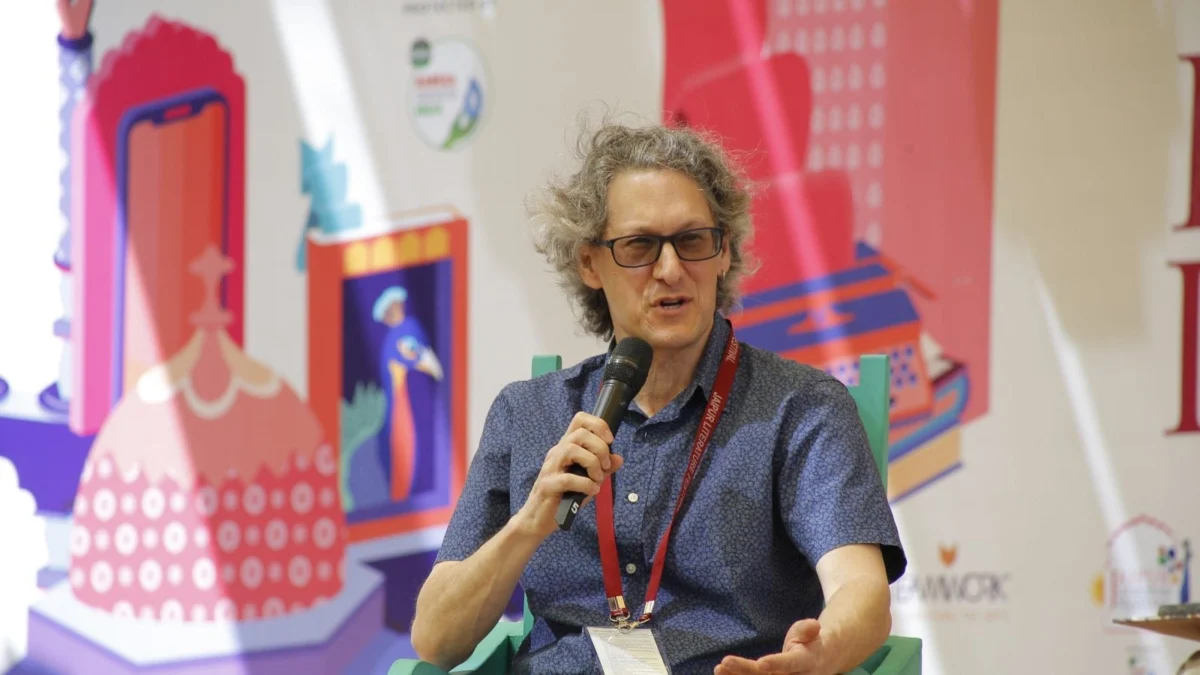
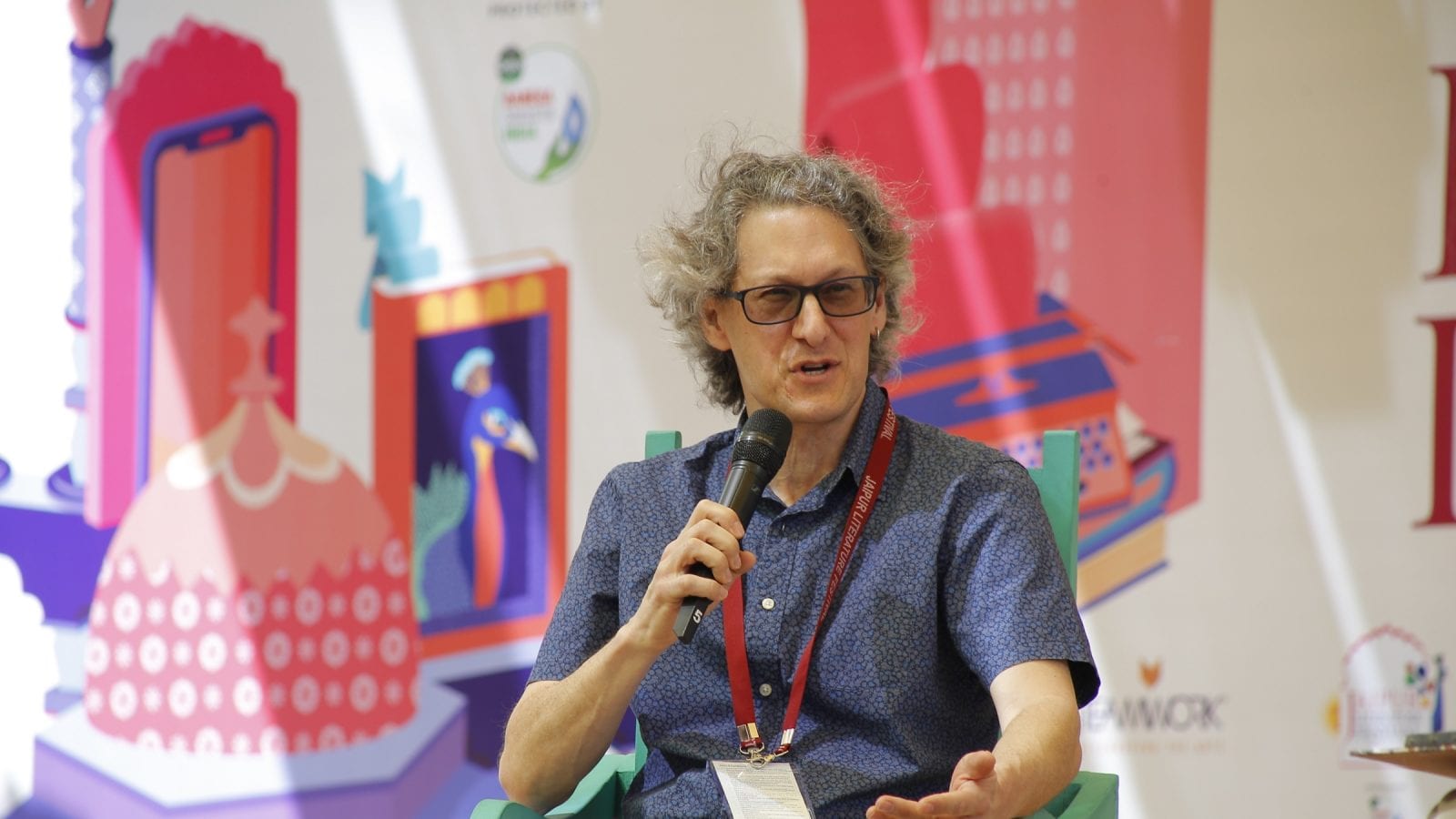
In an era defined by polarized "culture wars" and the resurgence of nationalist sentiment across the globe, the study of history has moved from the quiet halls of academia to the front lines of political warfare. During a session at the Jaipur Literature Festival, Marc David Baer, a renowned historian and Professor of International History at the London School of Economics, offered a provocative analysis of how modern states—ranging from the United Kingdom to Pakistan—manipulate the imperial past to navigate their current anxieties.
Baer, the author of the critically acclaimed The Ottomans: Khans, Caesars and Caliphs, argues that the way we remember (or choose to forget) the complexities of empires like the Ottoman and Mughal states says more about our present political desires than it does about the historical figures themselves.
Main Facts: Redefining the Ottoman Narrative
Marc David Baer’s work challenges the Eurocentric "Decline Thesis," a long-held historical narrative suggesting that the Ottoman Empire began a slow, inevitable decay following the death of Suleiman the Magnificent in the late 16th century. In his latest research, Baer posits that the 16th century was not a point of departure into obsolescence, but rather a period of transformation.
The "European" Caliphate
One of Baer’s central arguments is that the Ottomans were not merely an "Eastern" or "Islamic" power, but a quintessential European empire. By claiming the title of "Caesar" after the conquest of Constantinople in 1453, the Ottoman Sultans saw themselves as the legitimate heirs to the Roman Empire. This perspective fundamentally shifts the understanding of European history, integrating the Ottomans into the continent’s political and cultural fabric rather than treating them as an external threat.
The Culture War Paradox
Baer highlights a fundamental disadvantage faced by liberal and left-leaning thinkers in modern cultural debates: the commitment to critical history. While nationalist movements use the past to build unassailable myths of greatness, critical historians seek to expose the flaws, prejudices, and complexities of national heroes. According to Baer, this makes the "left" inherently less effective at winning culture wars, as they prioritize nuance over the emotive power of nostalgia.
Chronology: The Evolution of Historical Manipulation
The use of history as a political tool is not a modern invention; it was a strategy employed by the monarchs themselves. Baer traces a timeline of how the Ottoman image was curated over centuries.
1. The 13th to 16th Centuries: Consolidation and Identity
The early Ottomans built an empire on the borders of the Byzantine world, blending Turkic, Islamic, and Byzantine traditions. During this phase, history was written to legitimize the transition from nomadic ghazis to settled emperors.
2. The 19th Century: The Sultan as "Civilizer"
A pivotal moment in the weaponization of history occurred during the reign of Abdul Hamid II (1876–1909), the last strong Ottoman Sultan. Facing internal dissent and European colonial pressure, Abdul Hamid II engaged in a deliberate rebranding exercise:
- Tomb Restoration: He refurbished the tombs of the empire’s founders, Osman and Orhan, to create a physical and symbolic link between the early conquerors and his own embattled administration.
- Media and Photography: He utilized the then-new medium of photography to project an image of a "civilized" and "modern" Muslim state to Western powers, attempting to counter the "Sick Man of Europe" trope.
3. The 21st Century: Neo-Ottomanism and Popular Culture
The timeline extends to the modern day, where the Turkish state and its allies use television and digital media to revive imperial sentiment. The popularity of shows like Diriliş: Ertuğrul (Resurrection: Ertuğrul) represents the latest stage in this chronology, where history is dramatized to serve contemporary geopolitical alliances.
Supporting Data: Imperial Nostalgia in the UK and Pakistan
Baer identifies a striking parallel between the United Kingdom and Pakistan: both nations, though vastly different in their socio-political landscapes, are currently obsessed with "imperial dreaming."
The Case of the United Kingdom
In England, the debate often centers on Winston Churchill. Baer notes that while Churchill is undeniably a war hero who saved Europe from Nazism, critical historians point to his documented racism and his role in the Bengal Famine of 1943.
- The Data of Discontent: Nationalist rhetoric in the UK often seeks to bypass these "uncomfortable" facts to maintain a sense of British exceptionalism. As the UK’s global influence has shifted post-Empire and post-Brexit, the reliance on a sanitized version of the 20th century has intensified.
The Case of Pakistan and Turkey
Pakistan’s fascination with Ottoman history, particularly through Turkish television dramas, reflects what Baer calls a "middle-power anxiety."
- Psychological Compensation: Pakistan and Turkey are currently significant regional players but do not hold the global hegemony their ancestors once did.
- The "Ertuğrul" Phenomenon: By celebrating a period when Muslims "ruled East and West," these populations find a sense of pride and identity that compensates for current economic or political instability. In Pakistan, the show was famously promoted by the state as a means of providing "Islamic values," further blurring the line between historical education and ideological propaganda.
Official Responses and Scholarly Perspectives: Mughals vs. Ottomans
A significant portion of Baer’s analysis involves a comparative study of the Ottoman and Mughal Empires. This comparison is particularly relevant in the Indian context, where the Mughal legacy is a subject of intense political debate.
Eclecticism vs. Conversion
Baer argues that the Mughal Empire was, in many ways, more "eclectic" and pluralistic than the Ottoman Empire.
- Demographics: The Mughals ruled over a vast Hindu majority, whereas the Ottomans, for a significant portion of their history, ruled over a Christian majority in the Balkans and Anatolia.
- Integration: The Mughals integrated Rajputs, Shias, and various Hindu sects into the very highest echelons of power (the mansabdari system). While the Ottomans also utilized a diverse bureaucracy (often through the devshirme system), Baer notes that the Ottomans were more successful at—or perhaps more focused on—converting their subjects to Islam over time.
The "Invader" Label
Responding to modern political rhetoric that labels the Mughals as "foreign invaders," Baer suggests that such terms are historically reductive. Once established, both the Mughals and Ottomans functioned as indigenous entities that shaped the culture, language, and legal systems of the lands they ruled. The distinction between "invader" and "influencer" is often a matter of modern political utility rather than historical fact.
Implications: The Risks of Uncritical History
The insights shared by Marc David Baer have profound implications for the future of global democracy and education.
1. The Erosion of Objective Truth
When history is used primarily as a "political tool," the objective truth becomes a secondary concern. If the public is trained to view history only through the lens of national pride, they lose the ability to learn from the mistakes of the past. This creates a cycle where populist leaders can manipulate historical grievances to justify current policies.
2. The Polarization of Identity
By focusing on "imperialist ideals," modern states risk alienating minority groups who were often the victims of those very empires. In England, this affects the integration of Commonwealth citizens; in Turkey and Pakistan, it can lead to the marginalization of non-Sunni or non-Muslim communities who do not fit into the "Neo-Ottoman" or "Pan-Islamic" narrative.
3. The Challenge for Educators
Baer’s observations suggest that historians and educators face an uphill battle. To combat the "popularity of imperialist ideals," the academic community must find ways to make critical history as engaging and emotionally resonant as the myths promoted by popular culture.
Conclusion: A Mirror to the Present
Marc David Baer’s analysis at the Jaipur Literature Festival serves as a reminder that history is never truly "past." Whether it is the restoration of 19th-century tombs or the broadcasting of high-budget historical dramas, the way we frame the Ottomans and the Mughals is a reflection of our current struggles with power, identity, and the loss of global status. As Baer suggests, the "culture war" may be unwinnable for those who look at the past critically, but the pursuit of that critical truth remains the only safeguard against the dangerous allure of imperial nostalgia.
