

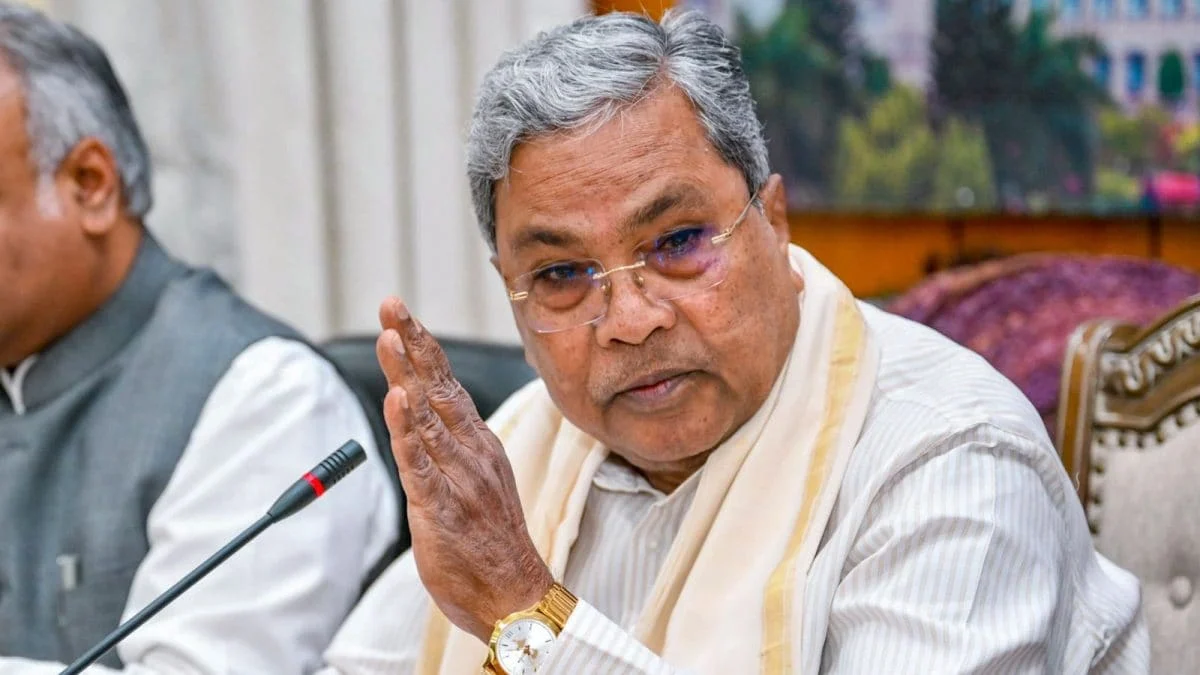
BENGALURU, May 27, 2026 – Karnataka is on the cusp of a significant political transition, with highly credible sources indicating that Deputy Chief Minister D.K. Shivakumar is set to assume the mantle of Chief Minister, succeeding the incumbent Siddaramaiah. The widely anticipated change, expected to formalize with Siddaramaiah’s resignation on May 28, marks a decisive intervention by the Congress high command to resolve months of simmering internal power struggles that have gripped the state unit since the party’s emphatic victory in the 2023 Assembly elections.
The decision is being hailed as a major breakthrough for the Congress central leadership, which has reportedly struggled to reconcile the ambitions of its two most prominent state leaders. As part of a meticulously crafted political balancing exercise, Siddaramaiah is likely to be transitioned to a national role, potentially securing a seat in the Rajya Sabha. Furthermore, to ensure continuity and appease various factions, a new cabinet structure is under discussion, which may include multiple Deputy Chief Ministers representing diverse caste and regional equations, alongside a probable cabinet position for Siddaramaiah’s son, Yathindra, a member of the state legislative council.
The Genesis of a Power Tussle: A Look Back at the 2023 Mandate
The roots of the current leadership shuffle trace back to May 2023, when the Congress party secured a resounding victory in the Karnataka Assembly elections, crossing the majority mark with ease. However, the euphoria of triumph was quickly overshadowed by an intense and very public tussle for the Chief Minister’s post between veteran leader Siddaramaiah and the party’s dynamic state president, D.K. Shivakumar. Both leaders, with their distinct political strengths and formidable support bases, laid strong claims to the top job.
Siddaramaiah, a seasoned administrator and a prominent OBC (Other Backward Classes) face, had previously served a full term as CM and enjoyed significant popularity among various communities, particularly the backward classes and minorities. His experience and established track record were often highlighted by his supporters. On the other hand, D.K. Shivakumar, widely recognized as the party’s "troubleshooter" and a powerful Vokkaliga community leader, was credited with the meticulous organizational efforts and financial management that were crucial to the Congress’s electoral success. His loyalists argued that his dedication and leadership during challenging times merited the Chief Ministership.
For days following the election results, the state was gripped by uncertainty as both factions engaged in intense lobbying in Bengaluru and New Delhi. The Congress high command, including party president Mallikarjun Kharge and former president Rahul Gandhi, found itself in a delicate situation, attempting to broker a truce that would satisfy both stalwarts and prevent an open revolt. Eventually, a power-sharing arrangement was reportedly brokered, though its exact terms were never officially disclosed. It was widely speculated that Siddaramaiah would serve as Chief Minister for the first half of the term, with Shivakumar taking over for the latter half. This unspoken agreement, often a source of underlying tension, now appears to be reaching its pre-determined conclusion.
Chronology of Events Leading to the Impending Change
The current developments have unfolded rapidly over the past few days, culminating in a series of high-stakes meetings and public pronouncements:
May 26, 2026 – High-Level Deliberations in Delhi: A crucial meeting was convened at the Congress headquarters in New Delhi. In attendance were Congress President Mallikarjun Kharge, Leader of Opposition in Lok Sabha Rahul Gandhi, Karnataka in-charge Randeep Singh Surjewala, AICC general secretary K.C. Venugopal, Chief Minister Siddaramaiah, and Deputy Chief Minister D.K. Shivakumar. While initially, K.C. Venugopal publicly downplayed reports of a leadership change, stating discussions were limited to organizational matters, including upcoming Rajya Sabha and Legislative Council elections, sources within the party painted a different picture. It is understood that during this meeting, Rahul Gandhi strongly emphasized the need for unity between Siddaramaiah and Shivakumar, but also reportedly conveyed to Siddaramaiah that the perception around him had been affected by the months-long power tussle and that the "word" given earlier needed to be honored. Siddaramaiah was reportedly assured of a respectable transition to a national role, likely a Rajya Sabha seat.
May 27, 2026 – Buzz Intensifies, Supporters React:
- Morning: Speculation reaches a fever pitch across Karnataka and national media outlets. Reports begin to surface, citing CMO sources, that Siddaramaiah is indeed likely to step down on May 28, paving the way for D.K. Shivakumar.
- Late Morning: Chief Minister Siddaramaiah, while paying floral tribute to India’s first Prime Minister Jawaharlal Nehru on his 62nd death anniversary, maintains a stoic silence on the leadership change reports, only stating he would speak on the issue "tomorrow." He also takes to his X (formerly Twitter) account to highlight his government’s achievements over the past three years, dedicating them to "every Kannadiga," a subtle nod to his legacy.
- Noon: Congress MLA R.V. Deshpande openly confirms the Chief Minister’s decision, stating, "The Chief Minister has already decided to resign and he may resign tomorrow. MLAs wanted him to continue, but he said that I have given my word to the high command."
- Early Afternoon: Celebrations erupt spontaneously among D.K. Shivakumar’s supporters. Firecrackers are burst and sweets distributed outside his residence in Sadashivanagar, Bengaluru, and in Ramanagara, his home turf in Bengaluru South district. Slogans hailing DKS are heard, with supporters describing him as a "strong and decisive leader."
- Afternoon: Reports emerge that Siddaramaiah has sought an appointment with Governor Thaawarchand Gehlot for May 28, further solidifying the resignation rumors.
- Late Afternoon: Minister G. Parameshwara states that the "confusion" regarding the leadership would be cleared by Thursday, while Home Minister G. Parameshwara and state minister Dinesh Gundu Rao reiterate that all leaders would abide by the high command’s decision. Minister Satish Jarkiholi admits ignorance about specific instructions but affirms party loyalty.
- Evening: Deputy CM D.K. Shivakumar revises his travel plans, cutting short his Delhi stay to attend a crucial breakfast meeting called by CM Siddaramaiah for his cabinet colleagues on Thursday morning, underscoring the urgency of the situation. Congress sources tell CNN-News18 that the oath-taking ceremony for the new Chief Minister is likely to take place on Saturday, May 30.
Supporting Data and Strategic Calculus
The Congress high command’s decision is not merely about fulfilling a power-sharing agreement; it’s a multi-faceted strategic intervention aimed at long-term stability and electoral success.
1. Managing Competing Power Centres: The most immediate and critical factor has been the persistent tension between the Siddaramaiah and Shivakumar camps. While the party managed to present a united front for the initial period, the underlying friction often manifested in administrative delays, perceived policy paralysis, and public spats between supporters. Resolving this duality of power is paramount for efficient governance and to project a cohesive image ahead of future elections.
2. Caste and Regional Balancing: The proposed formula of appointing multiple Deputy Chief Ministers from diverse communities – Dalit, Minority, Lingayat, and OBC – is a shrewd move to appease various powerful vote banks. Karnataka’s political landscape is heavily influenced by caste dynamics, and ensuring representation at the top levels is crucial for maintaining broad-based support.
- Dalits: A significant community that has historically been a strong Congress base.
- Minorities: Another key pillar of Congress support, especially Muslims and Christians.
- Lingayats: A dominant and influential community, crucial for electoral success in north Karnataka.
- OBCs: Siddaramaiah’s own community, whose representation remains vital.
This strategy aims to dilute potential dissent from any single community while showcasing Congress’s commitment to inclusive governance.
3. Rahul Gandhi’s New Assertiveness: Political observers note that this decision aligns with a new, more assertive approach by Rahul Gandhi within the Congress. This is seen as the third major strategic intervention personally backed by him within a month, signaling a shift towards decisive leadership:
- Tamil Nadu: Gandhi reportedly explored an understanding with actor-politician Vijay before assembly polls, aiming to reduce over-reliance on the DMK-led alliance.
- Kerala: The leadership tilted decisively towards senior Congress leader V.D. Satheesan as the party’s future chief ministerial face, over veteran K.C. Venugopal, indicating a willingness to back new leadership.
- Karnataka: The planned transition from Siddaramaiah to Shivakumar demonstrates a firm hand in managing internal dynamics and honoring previous commitments, even if it means tough decisions regarding seasoned leaders. This assertiveness is crucial for the party to project strength and resolve.
4. Strategic National Role for Siddaramaiah: Moving Siddaramaiah to the Rajya Sabha and potentially making him the Leader of Opposition there serves multiple purposes. It provides a respectable exit from state politics, utilizes his vast parliamentary experience at the national level, and strategically positions a key OBC face within the national leadership ahead of the 2029 Lok Sabha elections. This aims to counter the BJP’s narrative of Congress sidelining OBC leaders.
5. Preparing for 2028 Assembly Elections: While the immediate focus is on the transition, the Congress is keenly aware of the 2028 state assembly elections. Ensuring a stable government, a unified party, and visible progress under new leadership is critical to retain power. D.K. Shivakumar’s strong organizational skills and fundraising prowess are expected to be assets in this regard.
Official Responses and Political Reactions
The impending leadership change has naturally elicited a range of responses from within the Congress and the opposition:
Congress Voices:
- Congress MP Syed Naseer Hussain: Acknowledged the high-level discussions, stating, "Yesterday our party president Kharge ji, LoP Rahul Gandhi ji, CM Siddaramaiah and DCM D.K. Shivakumar all sat together. They had a very detailed discussion… We need to take regional representation into consideration, district representation, caste, and community. All this was discussed there. Maybe in a day or two, the decisions will be intimated to you." This statement subtly confirmed that significant changes were indeed discussed.
- Congress MLA R.V. Deshpande: Was forthright in confirming Siddaramaiah’s decision to resign, stating the CM had given his "word to the high command."
- Congress MLA H.C. Balakrishna (Siddaramaiah camp): While acknowledging Siddaramaiah’s crucial role, "Without Siddaramaiah, there is no Congress. He is very important for the 2028 polls. We can’t fight Assembly polls without him," he also hinted at accepting the transition, suggesting Siddaramaiah should "step down in a happy way" and support Shivakumar.
- State Minister G. Parameshwara: Reiterated that all leaders would abide by the high command’s decision and awaited official announcements from AICC in-charge Randeep Surjewala and K.C. Venugopal, who are expected in Bengaluru.
- State Minister Dinesh Gundu Rao: Confirmed that Siddaramaiah had made it clear he would abide by the Congress high command’s decision.
- State Minister Satish Jarkiholi: Admitted to being in the dark about the specifics of the high command’s instructions but pledged allegiance to the party’s decisions.
Opposition Criticism:
The Bharatiya Janata Party (BJP), the principal opposition in Karnataka, has been quick to seize upon the internal dynamics of the Congress, portraying it as a sign of governmental failure and internal strife.
- Leader of Opposition R. Ashoka (BJP): Launched a scathing attack, claiming the ongoing power struggle had pushed the Karnataka government into a "coma stage." He alleged that the administration had "completely collapsed" and criticized the Congress high command as "too weak" to resolve the tussle.
- Karnataka BJP President B.Y. Vijayendra: Declared that the Congress was "seeing its last days in the country" and accused the Siddaramaiah government of incurring hefty debt, labeling it an "anti-people government." He further claimed that the Congress high command’s decision to change CM proved the government’s failure over the last three years and predicted "mid-term Assembly elections" regardless of who takes over, calling any new CM "temporary."
- BJP MP & former CM Basavaraj S. Bommai: Expressed skepticism about a "smooth transfer of power" and accused Siddaramaiah of having "manipulated his way up." He also attempted to play the OBC card, stating, "If Rahul Gandhi removes OBC leader (CM Siddaramaiah), it will prove that he is not for the OBCs. His decision will impact the INDI alliance; the OBC leaders in the alliance will not take this decision kindly."
Implications and the Road Ahead
The impending leadership change carries profound implications for Karnataka politics and the broader national landscape of the Congress party.
For Karnataka:
- A New Era Under DK Shivakumar: D.K. Shivakumar, known for his administrative acumen, strong organizational grip, and fierce loyalty to the party, will face the immediate challenge of uniting the often-fissiparous state unit. His ability to deliver on the Congress’s five "guarantees" and accelerate development projects will be under intense scrutiny.
- Cabinet Reshuffle and Stability: The formation of a new cabinet with multiple Deputy CMs, while intended to bring stability through broad representation, could also present its own set of challenges in terms of coordination and potential power struggles if not managed carefully.
- Governance Focus: With the internal leadership issue seemingly resolved, at least for now, the new government will be expected to shift its full attention to governance, addressing public grievances, and implementing its electoral promises.
- Opposition Scrutiny: The BJP will undoubtedly continue to exploit any perceived cracks in the Congress’s unity and will intensify its criticism, especially given the allegations of governmental "failure" and "instability."
For the Congress Party:
- High Command’s Authority: This decision reaffirms the authority of the Congress high command to intervene decisively in state leadership matters, even when dealing with powerful regional satraps. This could set a precedent for managing similar situations in other states.
- Balancing Act Continues: While the immediate crisis is averted, the art of balancing regional ambitions with national strategy remains a constant challenge for the Congress. The success of this transition will be a litmus test for the party’s ability to maintain unity.
- National Projection: Siddaramaiah’s potential move to the Rajya Sabha and a national role underscores the Congress’s strategy to utilize its experienced leaders on a larger stage, especially those with strong community bases like the OBCs, to bolster its national appeal ahead of the 2029 general elections.
- Rahul Gandhi’s Stature: The assertive interventions in various states could enhance Rahul Gandhi’s image as a leader capable of making tough decisions and steering the party towards a clearer strategic direction.
As Karnataka awaits the official announcements and the swearing-in of its new Chief Minister, the political chessboard in the state and at the national level is witnessing a dynamic repositioning. The coming days will reveal the full extent of this carefully orchestrated transition and its long-term impact on the fortunes of the Congress party and the political landscape of Karnataka.
