

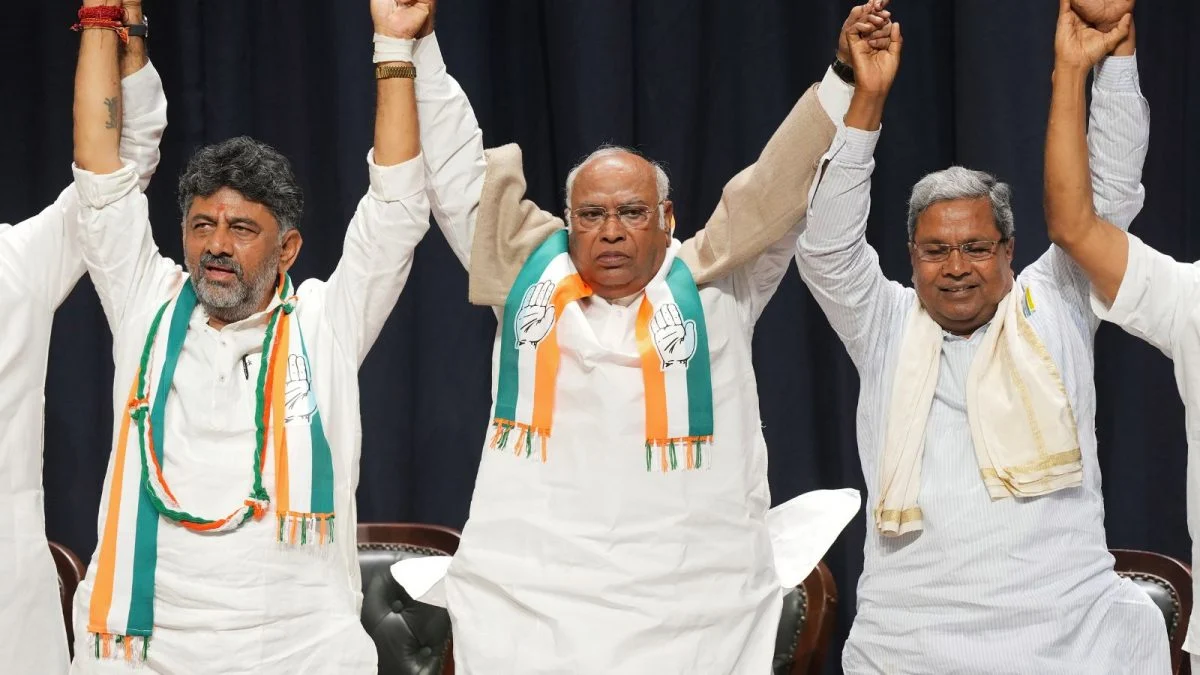
NEW DELHI, India – May 27, 2026 – After months of intense speculation and a meticulously managed internal balancing act spanning years, the Indian National Congress is reportedly on the cusp of executing a pivotal leadership transition in Karnataka. Reliable sources within the party indicate that Chief Minister Siddaramaiah is poised to step down from his coveted position on Thursday, clearing the path for his long-time political rival and current deputy, D.K. Shivakumar, to assume the state’s top executive role. This highly anticipated change, almost three years after the Congress swept to power in the 2023 Assembly elections, marks the culmination of a delicate power-sharing arrangement and a testament to the high command’s strategic efforts to ensure party unity and future electoral success.
The anticipated shift is not merely a change of guard but a calculated manoeuvre by the Congress high command to address internal dynamics, consolidate power, and strategically position its leaders for upcoming electoral challenges, both at the state and national levels. Siddaramaiah’s graceful exit has reportedly been secured through a series of high-stakes negotiations, where the veteran leader has been assured of a significant national role, potentially as a prominent Other Backward Classes (OBC) face for the party leading up to the 2029 Lok Sabha elections. This strategic recalibration aims to leverage Siddaramaiah’s extensive political experience and appeal beyond Karnataka, while empowering Shivakumar, whose organizational prowess was instrumental in the party’s 2023 victory, to lead the state.
The Imminent Leadership Transition
The political landscape of Karnataka is abuzz with activity as the state prepares for this monumental leadership change. Sources close to the developments confirmed to CNN-News18 that the formal announcement is expected imminently, possibly coinciding with Siddaramaiah’s scheduled breakfast meeting with all state ministers on Thursday. This gathering is widely interpreted as a farewell gesture and a briefing session for his cabinet colleagues regarding the impending transition. Congress General Secretary in-charge of Karnataka, Randeep Singh Surjewala, is also expected to arrive in Bengaluru later in the day, further underscoring the finality and gravity of the situation.
D.K. Shivakumar, who has patiently served as Deputy Chief Minister, has long been seen as the heir apparent, having played a crucial role in revitalizing the state unit of the Congress and spearheading its triumphant return to power in 2023. His elevation to Chief Minister is viewed by many as a rightful acknowledgment of his contributions and an adherence to the purported power-sharing formula that was reportedly brokered by the high command following the last assembly elections. This transition aims to bring an end to the protracted internal power tussle that has, at times, cast a shadow over the stability of the Congress government in Karnataka.
A Carefully Orchestrated Power Shift: A Chronology of Events
The current power shift is not an impulsive decision but the outcome of a prolonged and intricate process, meticulously managed by the Congress high command. Its roots can be traced back to the exhilarating victory of the party in the 2023 Karnataka Assembly elections, which saw Congress secure a decisive majority, winning 135 out of 224 seats.
The Genesis of the Tussle (Post-2023 Assembly Victory)
Following the 2023 electoral triumph, the choice for Chief Minister quickly became a flashpoint. Siddaramaiah, with his extensive administrative experience as a former Chief Minister and a strong appeal among the AHINDA (minorities, backward classes, and Dalits) communities, was the popular choice among a significant section of MLAs. However, D.K. Shivakumar, as the Karnataka Congress President, was widely credited for his relentless organizational efforts, astute strategizing, and financial acumen that pulled the party from the brink and delivered a resounding victory. His supporters argued that his dedication and leadership during challenging times merited the top post.
The high command, acutely aware of the potential for debilitating internal strife, intervened to broker a delicate compromise. While Siddaramaiah was ultimately chosen as Chief Minister, Shivakumar was appointed as his deputy, reportedly with an understanding of a power-sharing arrangement or a rotational chief ministership after a specified period. This arrangement, though never officially confirmed, has been a constant undercurrent in Karnataka politics, fueling speculation about the timing of Shivakumar’s ascent.
Months of Deliberation and Speculation
For nearly three years, the political corridors of Karnataka and Delhi buzzed with rumors and analyses regarding the impending leadership change. Media reports frequently highlighted the subtle power dynamics between Siddaramaiah and Shivakumar, even as both leaders publicly maintained a facade of unity and cooperation. Party insiders, however, were aware of the continuous dialogue and negotiations taking place behind closed doors, with the high command closely monitoring the situation, weighing the pros and cons of an early or delayed transition. The party’s performance in local elections and the evolving national political landscape also played a role in these ongoing deliberations.
The Decisive Delhi Meeting
The final impetus for the transition appears to have come from a high-stakes meeting held in New Delhi on Tuesday. The crucial conclave saw the participation of Congress President Mallikarjun Kharge, senior leader Rahul Gandhi, Karnataka in-charge Randeep Singh Surjewala, Congress general secretary K.C. Venugopal, along with the two key protagonists, Siddaramaiah and Shivakumar. Sources describe the meeting as intense, involving frank discussions and strategic deliberations aimed at securing a smooth and mutually beneficial transition. It was in this meeting that the contours of Siddaramaiah’s future role and Shivakumar’s elevation were finalized, with the party leadership working to ensure that both leaders felt valued and instrumental to the Congress’s broader vision.
The Final Preparations
The announcement of Siddaramaiah’s breakfast meeting with his cabinet ministers on Thursday has significantly intensified the belief that the transition is now irreversible and imminent. Such a gathering, typically used for significant policy announcements or crucial discussions, is seen as the Chief Minister’s way of informing his team and preparing them for the upcoming change. Surjewala’s expected arrival in Bengaluru further confirms the high command’s direct involvement in overseeing the final stages of this significant political maneuver, ensuring a seamless handover and preventing any last-minute discord.
The Art of Persuasion: How Congress Secured Siddaramaiah’s Concession
Convincing a seasoned political heavyweight like Siddaramaiah, who has twice held the Chief Minister’s office and commands a formidable base, to relinquish power voluntarily is no small feat. The Congress high command’s strategy involved a multi-pronged approach, carefully crafted to offer him a respectable exit while simultaneously strengthening the party’s national and state apparatus.
The National Stage Beckons
A pivotal element of the persuasion strategy was the assurance of a "larger national role" for Siddaramaiah, particularly ahead of the crucial 2029 Lok Sabha elections. Congress leadership reportedly positioned him as a key OBC face for the party at the national level. This move is strategically significant, as the Congress aims to broaden its appeal beyond its traditional vote banks and counter the BJP’s dominance, particularly among backward classes. Siddaramaiah, with his strong OBC credentials and track record of championing social justice issues through initiatives like the AHINDA policy, is seen as an ideal candidate to articulate the party’s vision for these communities on a national platform. This proposition offers Siddaramaiah an opportunity to influence national discourse and play a central role in the party’s strategic planning for future general elections.
Rajya Sabha and Continued Influence
Further sweetening the deal, sources indicate that Siddaramaiah could be moved to the Rajya Sabha, the upper house of India’s Parliament, as part of this broader political recalibration. A seat in the Rajya Sabha would not only provide him with a prominent national platform but also maintain his status as a key legislative voice for the party. Concurrently, party leaders assured him that he would continue to exert significant influence in shaping Karnataka politics. This includes having a substantial say in the selection of key ministers in the new cabinet and future political appointments within the state, ensuring his legacy and control over party affairs do not diminish despite stepping down from the Chief Minister’s office. This arrangement allows him to transition from an executive role to a powerful advisory and strategic one, both at the state and national levels.
Unity for Future Electoral Battles
A core tenet of the high command’s argument was the paramount importance of party unity, especially with an eye on the 2028 Karnataka Assembly elections. The prolonged rivalry between Siddaramaiah and Shivakumar, while managed, was always a potential vulnerability that the opposition could exploit. Rahul Gandhi, in particular, is reported to have played a direct and crucial role in mediating between the two leaders, emphasizing the need for a cohesive front to ensure the party’s continued dominance in Karnataka. The message was clear: a unified Congress, with both leaders playing their respective roles, is essential to counter the formidable challenge posed by the Bharatiya Janata Party and to deliver on the promises made to the people of Karnataka. This emphasis on collective responsibility and future electoral success proved instrumental in convincing Siddaramaiah to embrace the transition.
Supporting Data and Political Context
The impending leadership change is deeply embedded in the political histories and trajectories of both Siddaramaiah and D.K. Shivakumar, reflecting broader caste dynamics and strategic considerations within Karnataka and the Congress party.
D.K. Shivakumar’s Rise
D.K. Shivakumar, often referred to as the Congress’s "troubleshooter" or "resource manager," has had a meteoric rise in Karnataka politics. Hailing from the influential Vokkaliga community, he has meticulously built his political empire through a combination of grassroots work, strong organizational skills, and shrewd political maneuvering. His instrumental role in holding the Congress-JD(S) coalition together during challenging times, protecting MLAs from poaching attempts, and, most significantly, leading the party to a decisive victory in 2023, has cemented his position as an indispensable leader. His elevation is a recognition of his unwavering loyalty to the party, his ability to mobilize resources, and his firm grip on the state unit. Shivakumar’s leadership is expected to bring a more assertive and results-oriented approach to governance, leveraging his strong network and administrative capabilities.
Siddaramaiah’s Legacy
Siddaramaiah’s tenure as Chief Minister, both previously from 2013-2018 and currently since 2023, has been marked by his focus on social welfare schemes and his distinctive AHINDA politics. He has consistently positioned himself as a champion of the marginalized, earning him a significant following among OBCs, Dalits, and minorities. His departure from the Chief Minister’s office will undoubtedly be seen by many as the end of an era in state politics. However, the Congress high command’s strategy to elevate him to a national OBC face indicates a desire to harness his proven appeal beyond Karnataka’s borders, preventing him from becoming a sidelined figure and instead transforming him into a national asset for the party. This strategic move aims to ensure his extensive experience and political acumen continue to benefit the Congress at a larger scale.
The High Command’s Balancing Act
The Congress’s history is replete with examples of powerful regional leaders and the high command’s often-strained relationship with them. Managing two ambitious and popular leaders like Siddaramaiah and Shivakumar without alienating either has been a tightrope walk. This orchestrated transition demonstrates the current leadership’s enhanced strategic foresight and ability to broker compromises that serve the party’s larger interests. By offering Siddaramaiah a respectable and influential national role, the high command has avoided a potentially messy internal rebellion, projecting an image of unity and strong leadership, which is crucial for party morale and public perception, especially with national elections on the horizon.
Implications and Future Outlook
The leadership change in Karnataka carries significant implications, not just for the state but also for the Congress party’s national ambitions and its broader political strategy.
Immediate Impact on Karnataka Governance
With D.K. Shivakumar at the helm, Karnataka can expect a renewed focus on governance, potentially with fresh policy initiatives and a more aggressive implementation of existing welfare schemes. A cabinet reshuffle is almost certainly on the cards, allowing Shivakumar to stamp his authority and bring in ministers aligned with his vision. The immediate challenge for the new Chief Minister will be to ensure administrative continuity, maintain stability, and effectively address the developmental needs and aspirations of the state’s populace. He will also need to demonstrate his ability to unite various factions within the party and present a cohesive front to the opposition.
Congress’s National Strategy
The elevation of Shivakumar and the proposed national role for Siddaramaiah are integral to the Congress’s long-term national strategy. By positioning Siddaramaiah as a prominent OBC face, the party aims to project a strong narrative of social justice and inclusive politics, hoping to attract crucial vote banks ahead of the 2029 Lok Sabha elections. This move could also serve as a template for resolving leadership impasses in other states where the party faces similar dilemmas, showcasing a pragmatic and forward-looking approach to internal management. The ability to manage such a high-profile transition smoothly will bolster the Congress’s image as a disciplined and strategically sound political entity.
The Rajya Sabha Conundrum
Even as the Chief Ministerial change dominates headlines, the Congress is also navigating the complexities of the upcoming June 18 Rajya Sabha elections from Karnataka. Of the four seats falling vacant, the Congress is comfortably positioned to secure three, while the Bharatiya Janata Party is expected to win one. Party President Mallikarjun Kharge’s Rajya Sabha term concludes in June, and his re-election from Karnataka is widely anticipated, ensuring his continued presence in the upper house and his leadership role.
The party is also considering fielding D.K. Suresh, Shivakumar’s brother and a prominent figure in his own right, for one of the remaining seats. This would further consolidate the Shivakumar family’s influence and reward Suresh for his contributions. For the third seat, the Congress is weighing options between a woman candidate or another prominent OBC nominee, reflecting its broader caste and gender balancing strategy. This decision will be crucial in projecting the party’s commitment to diverse representation and further integrating Siddaramaiah into the national framework if he is indeed considered for a Rajya Sabha berth as part of his "larger national role."
Challenges Ahead
While the transition is being hailed as a strategic success, challenges remain. Ensuring that Siddaramaiah’s supporters seamlessly align with the new leadership will be paramount. Any lingering resentment or perceived marginalization could lead to internal dissent, which the opposition BJP would be quick to exploit. Shivakumar will also face the immediate task of consolidating his power base, delivering on electoral promises, and preparing the party for the 2028 Assembly elections, all while countering the aggressive opposition tactics. The success of this power shift will ultimately be measured by the Congress’s ability to maintain unity, deliver effective governance, and secure future electoral victories in Karnataka.
In conclusion, the impending leadership transition in Karnataka is a meticulously planned and high-stakes political manoeuvre by the Indian National Congress. It signifies not just a change of Chief Ministers but a strategic recalibration aimed at strengthening the party’s state unit, rewarding key leaders, and positioning itself for greater success on the national stage. As Siddaramaiah prepares to pass the baton, and D.K. Shivakumar steps into the Chief Minister’s office, all eyes will be on Karnataka, watching how this carefully orchestrated power shift unfolds and shapes the future of Congress in India.
