

The Indian automotive landscape has undergone a seismic shift over the last decade, transitioning from a preference for humble hatchbacks to an insatiable demand for SUVs. However, a persistent challenge remains for the large Indian family: finding a vehicle that offers the rugged aesthetic of an SUV with the utilitarian versatility of a Multi-Purpose Vehicle (MPV), all while remaining within a budget-friendly price bracket.
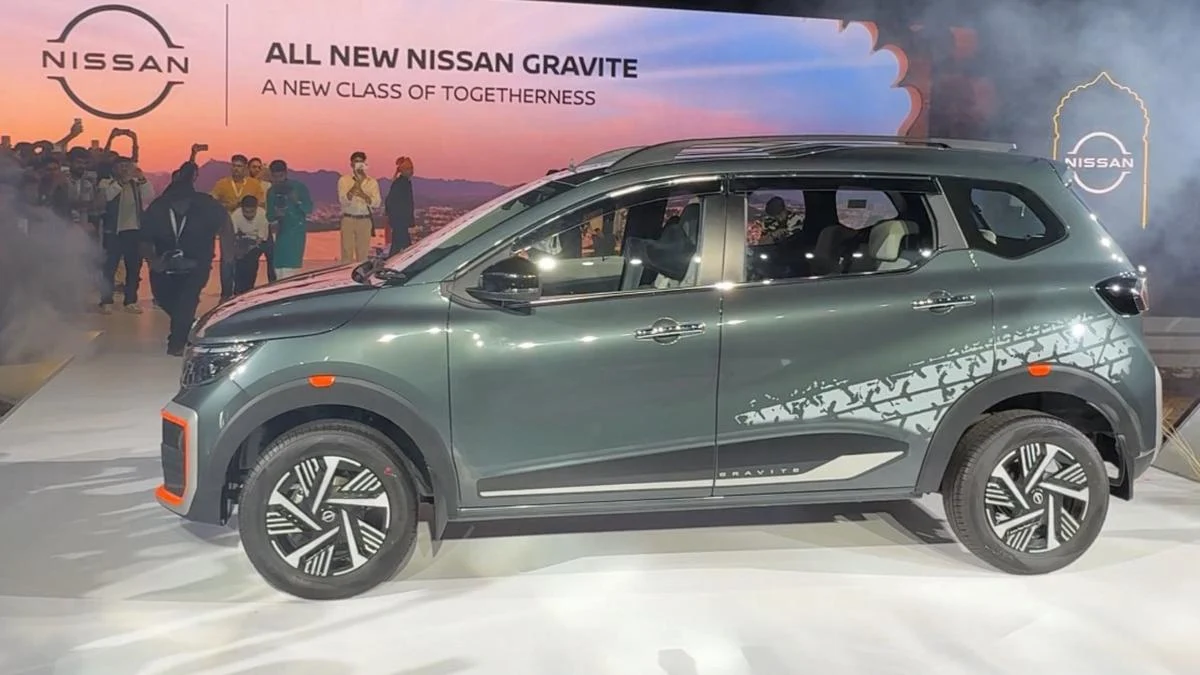
Nissan Motor Co. has officially entered this high-stakes arena with the launch of the Nissan Gravite. Positioned as a direct challenger in the entry-level seven-seater segment, the Gravite seeks to bridge the gap between form and function. By blending a "raised-up" stance with modular seating, Nissan aims to capture the hearts of first-time buyers and growing families who refuse to compromise on style or space.
I. Main Facts: The Gravite’s Value Proposition
The Nissan Gravite arrives as a strategically engineered product designed to maximize utility within a compact footprint. Priced competitively between ₹5.65 lakh and ₹8.49 lakh (ex-showroom), it positions itself as one of the most affordable three-row vehicles in the country.
Variant Breakdown and Pricing:
- Visia (Base): ₹5.65 Lakh
- Acenta: ₹6.59 Lakh
- N-Connecta: ₹7.20 Lakh
- Tekna (Top-spec Manual): ₹7.91 Lakh
- N-Connecta AMT: ₹7.80 Lakh
- Tekna AMT: ₹8.49 Lakh
The vehicle is powered by a 1.0-litre three-cylinder naturally aspirated petrol engine, delivering a modest but efficient 72 PS of power and 96 Nm of torque. Buyers can choose between a five-speed manual transmission or a five-speed automated manual transmission (AMT). With a claimed fuel efficiency of approximately 19 km/l, the Gravite is clearly targeted at the value-conscious consumer who prioritizes low running costs over high-performance metrics.
II. Chronology: From Concept to the Indian Road
The development of the Nissan Gravite is rooted in the long-standing Renault-Nissan Alliance. To understand the Gravite’s arrival, one must look at the success of its platform sibling, the Renault Triber, which proved that there is a massive market for sub-four-meter seven-seaters in India.
Nissan’s journey in India has recently been focused on "The Arc" strategy—a global plan to renew its product lineup with a heavy emphasis on localized manufacturing and exports. Following the success of the Nissan Magnite, which single-handedly kept the brand’s momentum alive in India, the Gravite represents the second pillar of Nissan’s volume-driven recovery.
The Gravite was developed using the CMF-A+ platform, a modular architecture specifically designed to offer maximum interior volume within restricted exterior dimensions. While the platform is shared, Nissan spent significant time in the design and tuning phase to ensure the Gravite possessed a distinct "Nissan" DNA, focusing on a more aggressive exterior and a feature-rich interior to differentiate it from its Renault cousin.
III. Design and Aesthetic: The SUV-MPV Hybrid
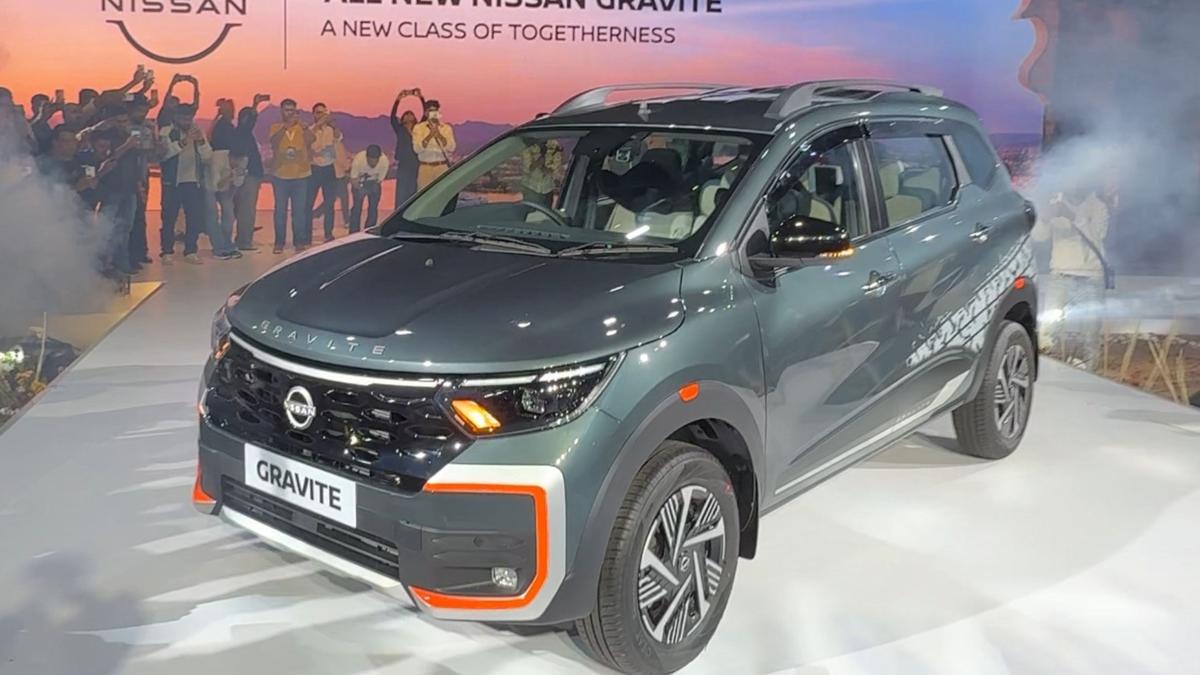
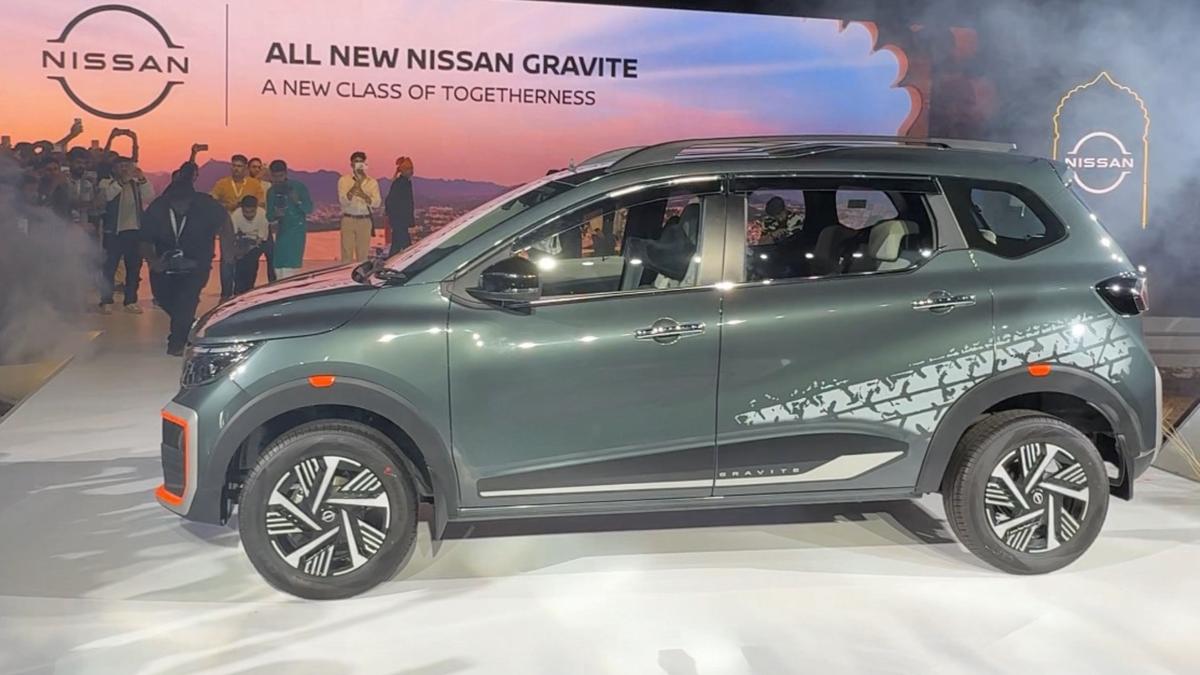
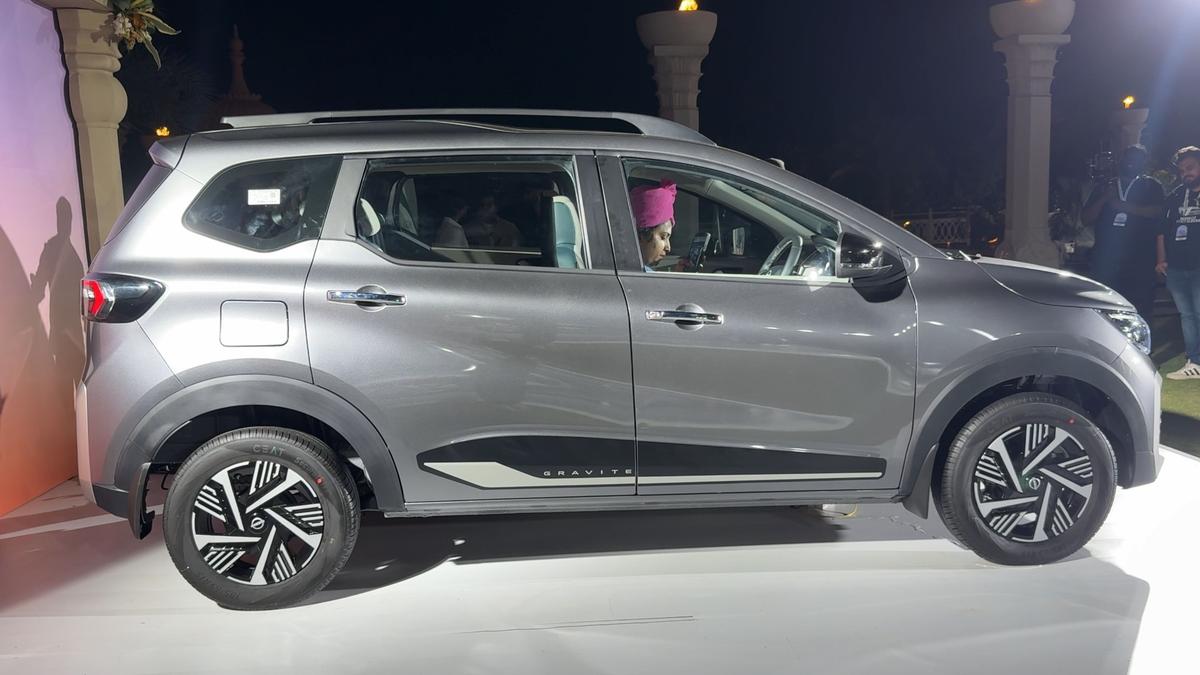
At first glance, the Gravite manages to hide its MPV roots behind a mask of SUV ruggedness. The designers have utilized several visual "tricks" to give the vehicle a more commanding road presence than its dimensions might suggest.
Exterior Highlights:
- Upright Stance: The tall bonnet line and vertical front fascia provide a confident look.
- Nissan Design Language: The signature C-shaped lighting elements and the bold, V-motion-inspired front grille align the Gravite with Nissan’s global SUV portfolio, such as the X-Trail and Patrol.
- Functional Ruggedness: Pronounced wheel arches and integrated roof rails are not just for show; the roof rails are functional, capable of carrying additional luggage, while the black cladding helps protect the bodywork from the rigors of Indian city traffic.
The Gravite’s design is a calculated response to the Indian consumer’s psyche, where a vehicle’s "status" is often tied to its height and muscularity. By adopting an SUV-like silhouette, Nissan ensures that the Gravite doesn’t look like a traditional "van," a stigma that has often plagued the MPV segment.
IV. Interior Versatility and Technology
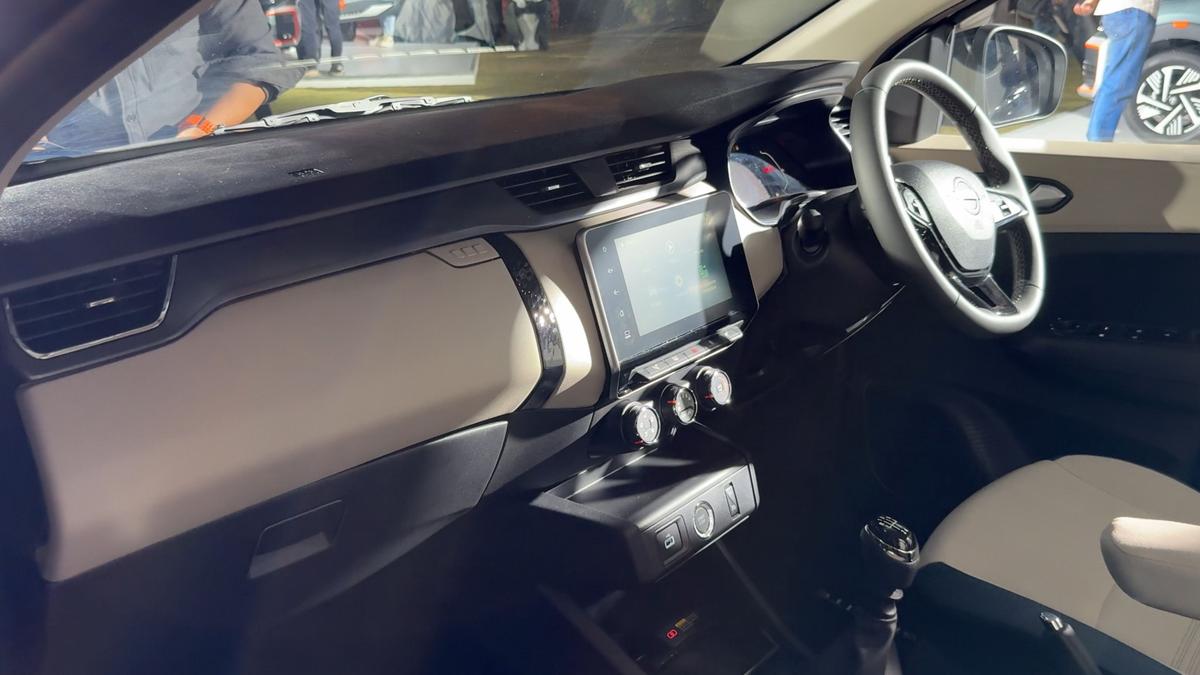
Step inside the Gravite, and the focus shifts entirely to ergonomics and modularity. The cabin is designed to be a "living space" that adapts to the user’s daily needs.

Seating and Space Management
The standout feature of the Gravite is its flexible seating configuration. The vehicle can be transformed from a two-seater cargo hauler to a seven-seater family carrier in minutes. The third row is completely removable, a feature Nissan calls out as a game-changer for those who only occasionally need the extra seats. In a five-seat configuration, the boot space expands significantly, making it one of the most capable luggage-carriers in its price class.
Modern Amenities
Despite its budget-friendly positioning, the Gravite does not feel like a "bare-bones" vehicle. The interior features:
- Infotainment: A floating 8-inch touchscreen with wireless Android Auto and Apple CarPlay.
- Driver Display: A fully digital instrument cluster that provides clear, concise information.
- Comfort Features: Quilted upholstery adds a touch of premium feel, while a cooled center console ensures beverages stay chilled during long summer drives.
- Convenience: Proximity-based locking (walk-away lock) and wireless charging bring a level of tech-savviness usually reserved for higher-priced segments.
V. Engineering and Performance: Tuned for the City
Under the hood, the Gravite utilizes the proven 1.0-litre "Energy" engine. While some enthusiasts might find the 72 PS output lean, Nissan has tuned the gearbox ratios to provide adequate low-end torque. This makes the Gravite particularly adept at navigating stop-and-go urban traffic.
The Automated Manual Transmission (AMT) variant is expected to be a popular choice among urban dwellers. It offers the convenience of clutchless driving without the high cost and fuel penalty associated with traditional torque converters or CVT gearboxes. The suspension setup has been optimized for Indian road conditions, featuring a slightly softer tune to soak up potholes and undulations, ensuring a comfortable ride for all seven occupants.
VI. Safety Standards: A Non-Negotiable Priority
In an era where Indian car buyers are increasingly prioritizing safety ratings, Nissan has equipped the Gravite with a robust safety suite from the base variant upward.
Standard safety features across the range include:
- Six Airbags: A significant inclusion for the budget segment.
- Electronic Stability Control (ESC) and Traction Control: Helping the driver maintain command during emergency maneuvers.
- Hill-Start Assist: Preventing the car from rolling back on inclines—a vital feature for a fully-loaded seven-seater.
- Brake Assist: Enhancing stopping power during panic braking.
While official Global NCAP or Bharat NCAP ratings are pending, the inclusion of these active and passive safety features suggests that Nissan is aiming for a competitive safety score, further distancing the Gravite from older, less-equipped budget MPVs.
VII. Official Strategy: The "Launch Edition" and Personalization
To mark the arrival of the Gravite, Nissan Motor Co. has introduced a limited Launch Edition. This package is designed for customers who want their vehicle to stand out from the standard models. It includes:
- Upgraded premium audio systems.
- Factory-fitted dash cams (an increasingly popular accessory in India).
- Ambient mood lighting.
- Enhanced exterior chrome garnishes.
By offering these as a "package," Nissan is catering to the "Personalization Trend" where buyers want their vehicles to reflect their individual tastes without voiding warranties through aftermarket modifications.
VIII. Implications for the Indian Automotive Sector
The launch of the Nissan Gravite has several far-reaching implications for the Indian market:
1. The Democratization of the 7-Seater
For years, the seven-seater market was bifurcated: the affordable but basic Maruti Suzuki Eeco on one end, and the more premium Maruti Suzuki Ertiga or Kia Carens on the other. The Gravite, along with its platform sibling, occupies the "sweet spot" in the middle, offering modern features and SUV styling at a price point that challenges premium hatchbacks.
2. Nissan’s Brand Resurgence
Nissan has historically struggled with a thin product pipeline in India. The Gravite is a crucial volume-driver that will help utilize Nissan’s manufacturing capacity at the Oragadam plant near Chennai. Success here will provide the financial cushion needed for Nissan to bring its more premium global models to India.
3. Pressure on Competitors
The Gravite’s aggressive pricing and standard safety features will likely force other manufacturers to re-evaluate their entry-level offerings. We may see competitors adding more standard safety tech or refreshing their designs to counter the "SUV-look" that Nissan has successfully executed.
4. Transition from Hatchbacks
As the Gravite is priced similarly to mid-to-high-spec hatchbacks (like the Maruti Swift or Hyundai Grand i10 Nios), it presents a compelling "upgrade" path. For a similar monthly EMI, a buyer can now opt for a vehicle that offers more seats, more ground clearance, and more "presence."
IX. Conclusion: A Sensible Evolution
The Nissan Gravite does not claim to be a luxury cruiser or a high-performance machine. Instead, it embraces its identity as a sensible, mass-market people mover. Its strength lies in its honesty: it provides the space a family needs, the safety the modern era demands, and the SUV styling the market craves, all at a price that remains accessible.
In a market where car prices are spiraling upward, the Gravite’s entry-level price of ₹5.65 lakh is a refreshing return to value-driven engineering. If Nissan can back this product with a robust after-sales experience and maintain its competitive service costs, the Gravite may well become the new benchmark for the Indian middle-class family car.
Motorscribes, in association with The Hindu, brings you the latest in cars and bikes. For more updates on the Indian automotive industry, follow @motorscribes on Instagram.
