

The gates of Maranello have, for nearly eight decades, served as the sanctuary of the internal combustion engine. The scream of a V12 and the mechanical theater of a high-revving V8 are not merely features of a Ferrari; they are the brand’s very soul. However, the unveiling of the Ferrari Luce in Rome has signaled a seismic shift that transcends mere product evolution. As the first fully electric vehicle (EV) in the Prancing Horse’s history, the Luce is a five-seat, four-door grand tourer that challenges every preconceived notion of what a Ferrari should be.
While Ferrari has navigated technological pivots before—moving from naturally aspirated engines to turbocharging and embracing hybridization with the SF90—the Luce represents a complete departure from the "petrol-blooded" heritage that defined the 20th-century supercar. It is a gamble of historic proportions, blending high-concept industrial design with a bespoke electric architecture that aims to redefine performance luxury for a new, digitally native generation of buyers.
Main Facts: The Luce at a Glance
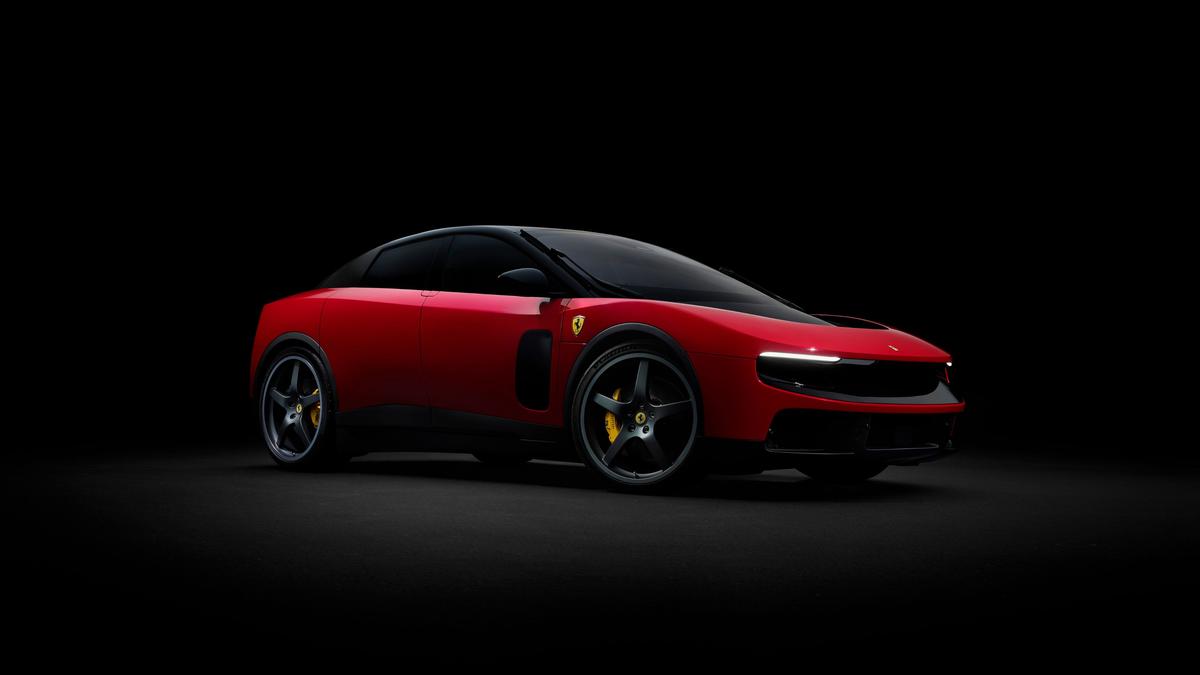
The Ferrari Luce is not an electric conversion of an existing platform but a ground-up reimagining of the grand tourer. Built on a bespoke EV architecture, it utilizes a quad-motor setup—one for each wheel—producing a combined output of 1,050 horsepower. This propulsion system allows the 2,260-kilogram vehicle to achieve 0-100 km/h in a blistering 2.5 seconds, placing it firmly in the upper echelons of hyper-EV performance.
Key technical specifications include:
- Powertrain: Four electric motors (All-Wheel Drive).
- Performance: 1,050 hp; 0-200 km/h in 6.8 seconds; Top speed >310 km/h.
- Battery & Range: 122 kWh battery pack; >530 km (WLTP) range.
- Charging: 350 kW DC fast-charging capability (70 kWh added in 20 minutes).
- Design Partnership: Collaborative effort between Ferrari Styling Centre and LoveFrom (Jony Ive and Marc Newson).
- Market Positioning: High-end luxury GT with an estimated starting price of €500,000 (approx. ₹5 crore+ in India).
Chronology: The Road to Electrification
Ferrari’s journey to the Luce has been a calculated, multi-year progression designed to acclimate its "Tifosi" (loyal fans) to the inevitability of the energy transition.
- The Hybrid Foundation (2013–2019): The journey began with the LaFerrari, which introduced the HY-KERS system, proving that electric assistance could enhance performance. This was followed by the SF90 Stradale in 2019, Ferrari’s first plug-in hybrid, which demonstrated that a Ferrari could operate in silent, electric-only mode without losing its edge.
- The LoveFrom Alliance (2021): Ferrari announced a long-term creative partnership with LoveFrom, the collective led by Sir Jony Ive and Marc Newson. This was the first hint that the electric Ferrari would not look like its predecessors; it would be influenced by the minimalist philosophy of the team that designed the iPhone.
- The Strategic Plan (2022): During its Capital Markets Day, Ferrari CEO Benedetto Vigna confirmed that the first fully electric Ferrari would arrive in 2025. He emphasized that the car would be "unique" and would maintain the "driving thrills" associated with the brand.
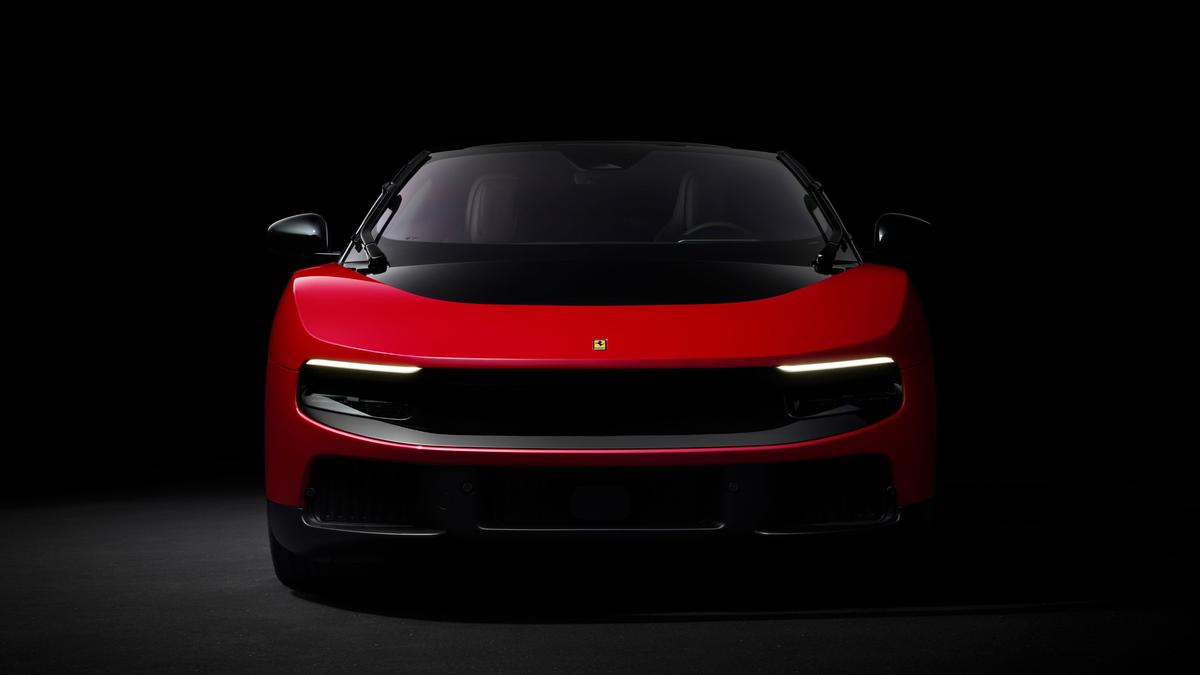
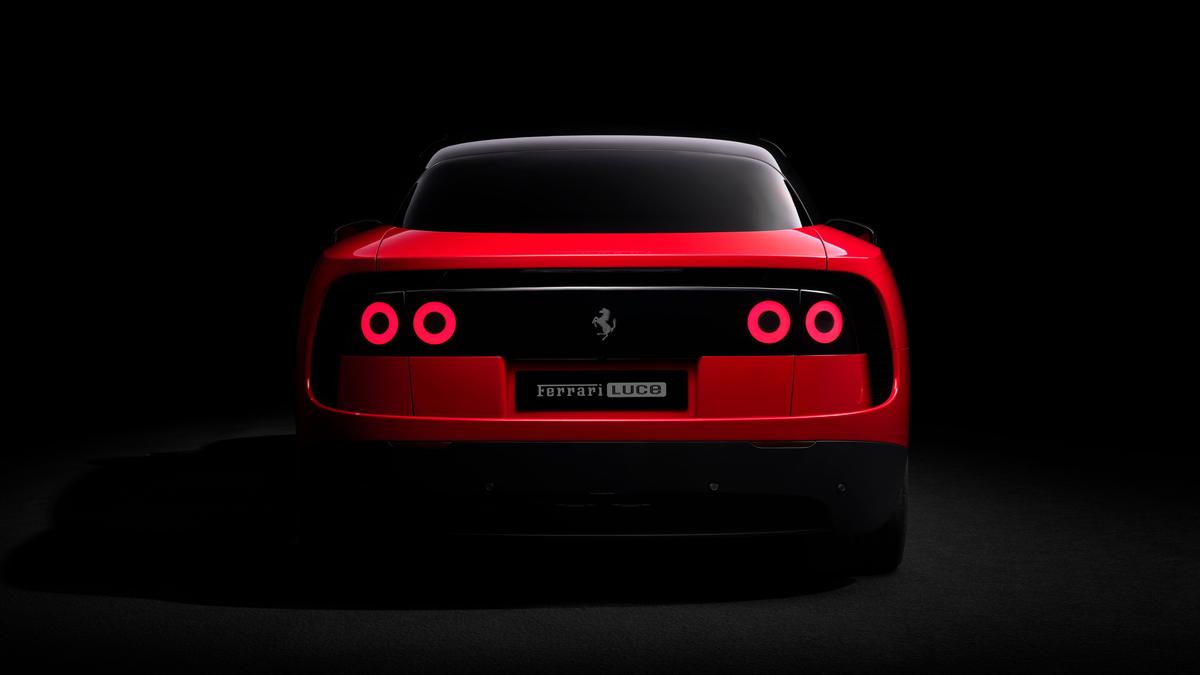
- The Rome Unveiling (2024): The Luce was officially revealed, showcasing a design language described as "pure" and "shell-like." The reaction was immediate—a 7% dip in stock prices and a firestorm of debate across social media platforms, highlighting the friction between tradition and innovation.
Supporting Data: Engineering the "Emotional" EV
The primary criticism of electric performance cars is their "soullessness"—the lack of mechanical feedback and auditory drama. Ferrari has attempted to solve this through a suite of proprietary technologies.

The Sound of Science
Unlike competitors who use synthetic, "spaceship-like" digital noises, Ferrari has patented an "authentic sound philosophy." The Luce features sensors that capture the natural vibrations of the electric motors and the drivetrain. These vibrations are amplified and transmitted into the cabin, creating a soundscape that scales with speed and torque. This is not a recording; it is a live acoustic representation of the car’s mechanical state.
Dynamic Management
To combat the Luce’s substantial 2,260 kg weight, Maranello has deployed its most advanced chassis control systems to date. This includes:
- Side Slip Control (SSC) 8.0: Adapted for instant electric torque.
- Active Suspension: Using high-frequency actuators to keep the body flat through corners.
- Torque Management: Drivers can use steering-wheel-mounted paddles to adjust the level of regenerative braking and torque delivery on the fly, mimicking the feel of downshifting in an internal combustion engine.
The Interior Revolution
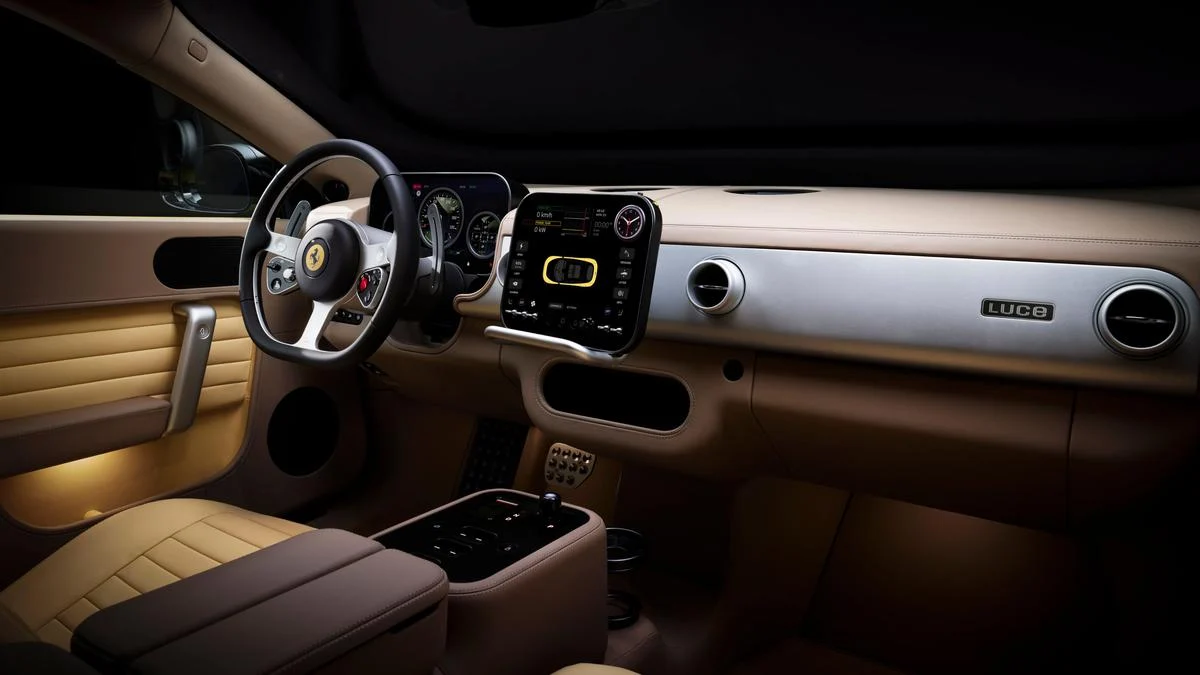
The cabin represents a partnership with Samsung (OLED displays) and Corning (Gorilla Glass). The interior is a 2+3 configuration, making it the most practical Ferrari ever built. It features an E-Ink key that changes appearance when docked and a 21-speaker, 3000-watt audio system. Despite the tech-heavy approach, Ferrari has retained physical tactile switches for critical driving functions, resisting the industry trend of "all-screen" interfaces.
Official Responses: Defining the "New Chapter"
Ferrari leadership has been proactive in defending the Luce against purist backlash. CEO Benedetto Vigna has consistently framed electrification not as a limitation, but as a "new tool" in Ferrari’s engineering arsenal.
"Electrification is a way for us to explore new territories of performance," Vigna stated during the launch. "The Luce was never intended to replace the V12. It is an expansion. It is for the customer who wants the Ferrari experience but in a package that reflects the future of technology and design."
The involvement of Jony Ive also signals a shift in official rhetoric. The brand is moving away from purely "motorsport-inspired" language toward "performance luxury." By partnering with LoveFrom, Ferrari is signaling that the Luce is a piece of industrial art as much as it is a car. This "multi-energy strategy" allows Ferrari to keep its internal combustion engines alive in limited-run icons while using the Luce to capture a younger, tech-wealthy demographic.
Implications: A High-Stakes Gamble
The Luce’s introduction has profound implications for Ferrari’s brand equity and the wider luxury automotive market.
Market and Financial Impact
The nearly 7% drop in stock price following the reveal suggests that investors are wary of the "Identity Shift." There is a fear that by moving too far away from its aggressive, aero-sculpted design language, Ferrari might lose its "scarcity value" and start looking like a high-end consumer electronics product. However, analysts suggest this may be a short-term correction. If the Luce attracts a new segment of buyers who previously found Ferraris too "aggressive" or "loud," it could significantly increase Ferrari’s market share in the growing luxury EV sector.
The Purist vs. The Pioneer
The Luce has created a schism within the Ferrari community.
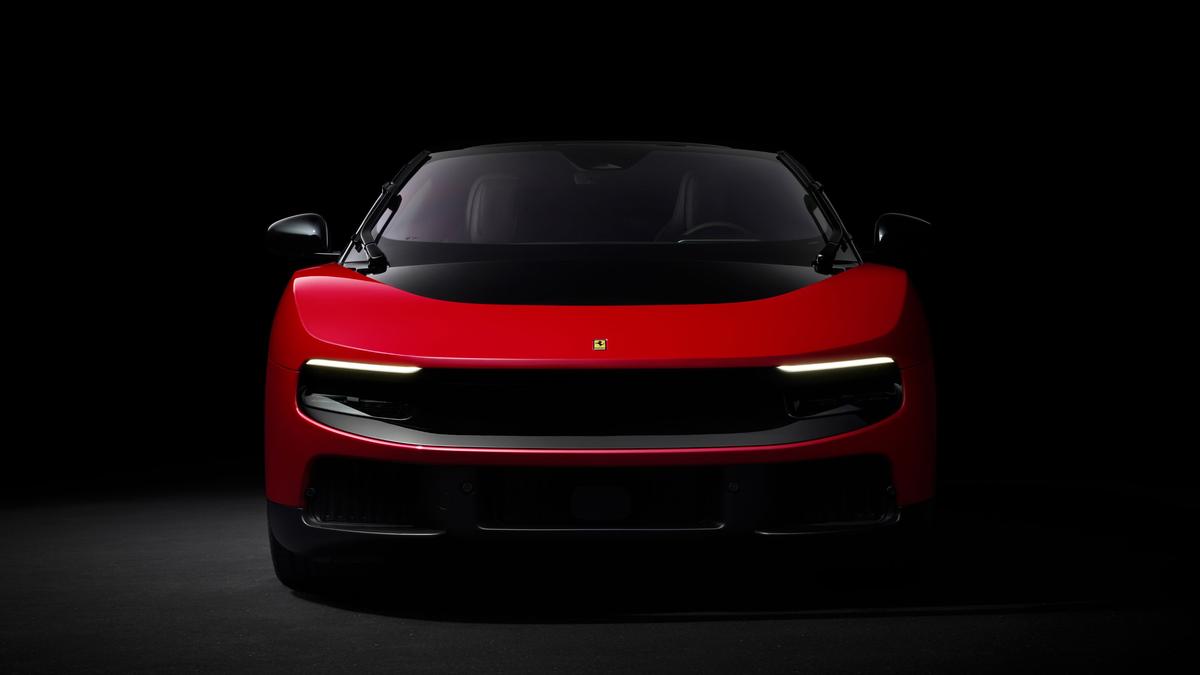
- The Purists: Argue that the minimalist design and lack of a combustion engine dilute the brand to the point of being unrecognizable. They see the Luce as "The Apple Car" with a Ferrari badge.
- The Pioneers: View the Luce as a necessary evolution. They argue that Ferrari must lead the EV transition rather than be forced into it by regulation. For this group, the Luce is a bold, sophisticated statement that moves the brand beyond the "boy racer" aesthetic.
Industry Influence
Just as the Purosangue redefined the luxury SUV, the Luce is poised to set a new benchmark for the "Electric Grand Tourer." Its success or failure will dictate how other legacy brands—such as Lamborghini and Aston Martin—approach their own EV transitions. If the Luce becomes a status symbol among the Silicon Valley and Shanghai elite, it will prove that "Ferrari-ness" is about the feeling of the drive and the prestige of the badge, not just the sound of the exhaust.
Conclusion: A Landmark or a Misstep?
The Ferrari Luce is a car of contradictions. It is the fastest, most technologically advanced vehicle Maranello has ever produced, yet it is also the most criticized. It offers the most luxurious and practical cabin in the brand’s history, yet it distances itself from the raw, visceral drama that made the brand famous.
At €500,000, the Luce is not just a car; it is a manifesto. It represents Ferrari’s bet that the future of luxury is defined by minimalism, seamless technology, and sustainable power. Whether the Luce will be remembered as the car that saved Ferrari for the 21st century or the car that forgot what a Ferrari was, remains to be seen. One thing is certain: Maranello has stopped looking in the rearview mirror. The Luce is a leap into the unknown, and in typical Ferrari fashion, it has been taken at full throttle.
