

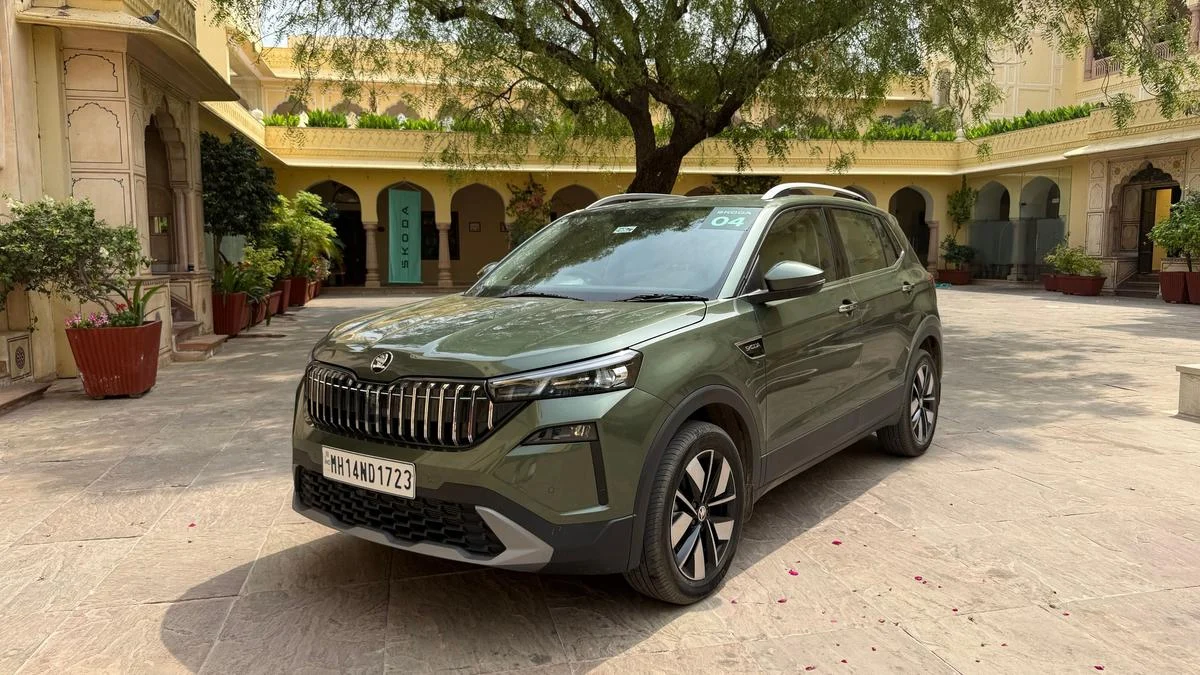
The pink-hued streets of Jaipur, Rajasthan, offer a unique crucible for any modern automobile. It is a city defined by its contradictions: the sweeping, high-speed arterial roads that skirt the periphery quickly give way to the claustrophobic, frenetic energy of the inner city. Here, a vehicle is judged not just by its brochure specifications, but by its ability to transition from a high-speed cruiser to a nimble urban navigator. It is within this demanding environment that the updated Skoda Kushaq 1.0 TSI Automatic makes its case—not through flamboyant marketing, but through a series of surgical, intelligent refinements.
Skoda’s approach to the Kushaq’s mid-life update eschews the industry trend of "feature-loading" for the sake of headlines. Instead, the Czech automaker has focused on the "India 2.0" philosophy, addressing the granular feedback of owners to polish a fundamentally robust platform. The result is a vehicle that feels less like a product and more like a matured companion.
1. Main Facts: The Core Updates at a Glance
The updated Skoda Kushaq 1.0 TSI is defined by several pivotal changes that collectively elevate its standing in the highly competitive mid-size SUV segment.
- Mechanical Heart: While the 1.0-litre, three-cylinder TSI engine remains, it is now paired with a sophisticated 8-speed torque converter automatic transmission. This replaces the previous 6-speed unit, aiming to provide a more linear power delivery and better fuel efficiency across varied driving cycles.
- Safety Credentials: The Kushaq maintains its gold standard in safety, boasting a 5-star Global NCAP rating for both adult and child occupants. This is underpinned by the high-strength steel used in the MQB-A0-IN platform.
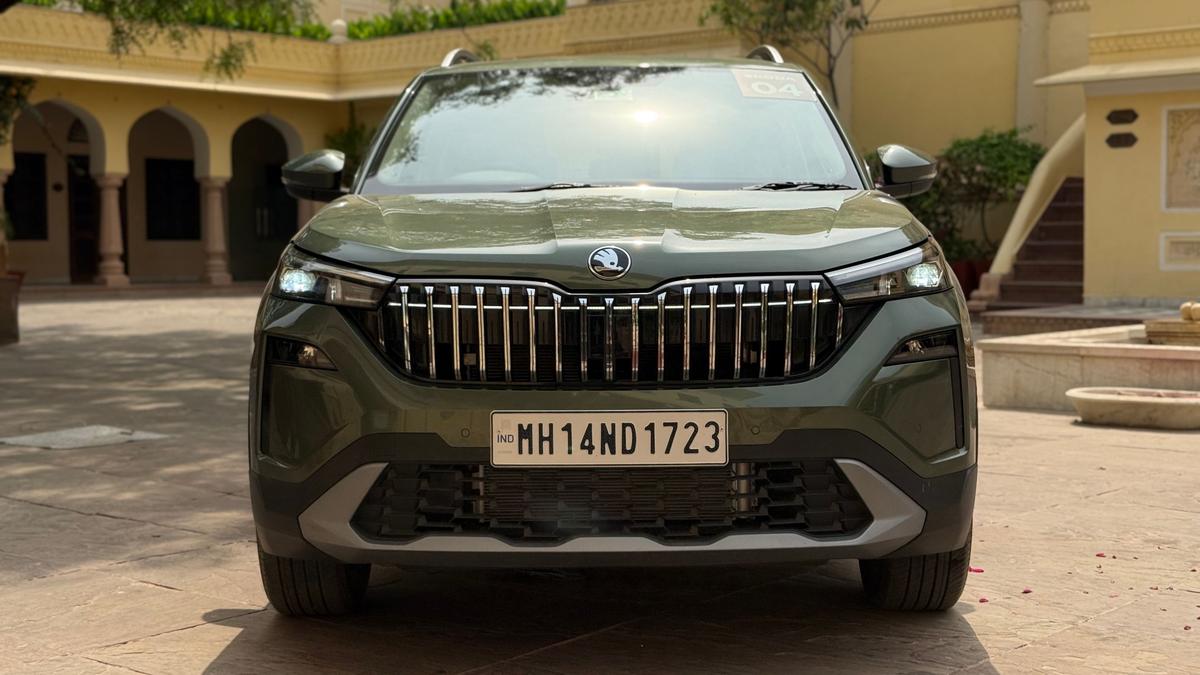
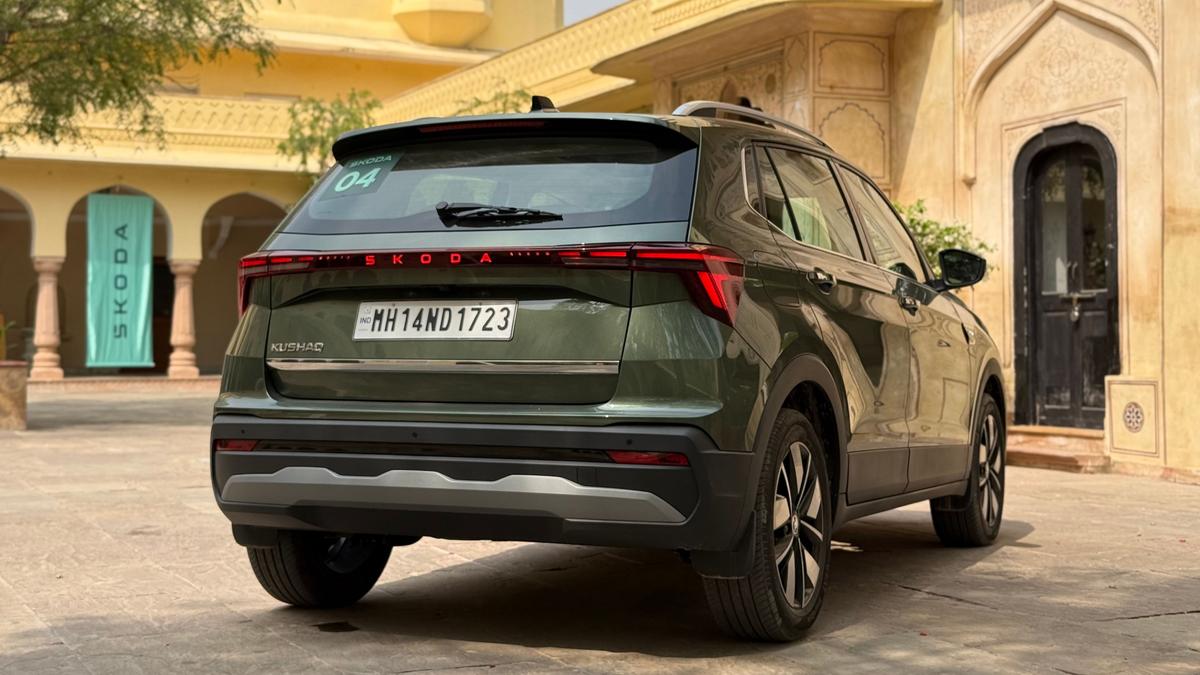
- Visual Standardization: In a move to democratize premium aesthetics, alloy wheels are now standard across the entire Kushaq range. While designs vary by trim, the entry-level "Active" variants no longer look like "base" models.
- Enhanced Comfort: The interior receives a tactile upgrade with improved materials and the introduction of a rear-seat massage function, a feature typically reserved for luxury segments.
- Pricing Strategy: Skoda has positioned the range between INR 10.69 lakh and INR 18.99 lakh (ex-showroom), placing it directly in the crosshairs of the Hyundai Creta, Kia Seltos, and Maruti Suzuki Grand Vitara.
2. Chronology: The Journey of the Kushaq
The Kushaq’s journey began in 2021 as the vanguard of the Volkswagen Group’s ambitious "India 2.0" project. Developed specifically for the Indian subcontinent, it was tasked with proving that European engineering could be localized without losing its soul.
- 2021 – The Launch: The Kushaq debuted with two TSI engines (1.0L and 1.5L) and two automatic options (Torque Converter and DSG). While praised for its driving dynamics, early feedback suggested the 1.0L automatic could be smoother in stop-go traffic.
- 2022-2023 – Iterative Improvements: Skoda introduced special editions like the ‘Monte Carlo’ and ‘Matte Edition’ to keep the visual appeal fresh, while also updating the infotainment systems to 10-inch units and introducing wireless connectivity.
- 2024 – The Refinement Phase: The current update represents the most significant mechanical shift since launch. By introducing the 8-speed automatic, Skoda is addressing the evolving needs of the urban Indian driver who seeks a balance between the efficiency of a small-displacement engine and the smoothness of a multi-ratio gearbox.
3. Supporting Data: Engineering and Performance
To understand why the updated Kushaq feels different, one must look at the technical synergy between the engine and the new transmission.
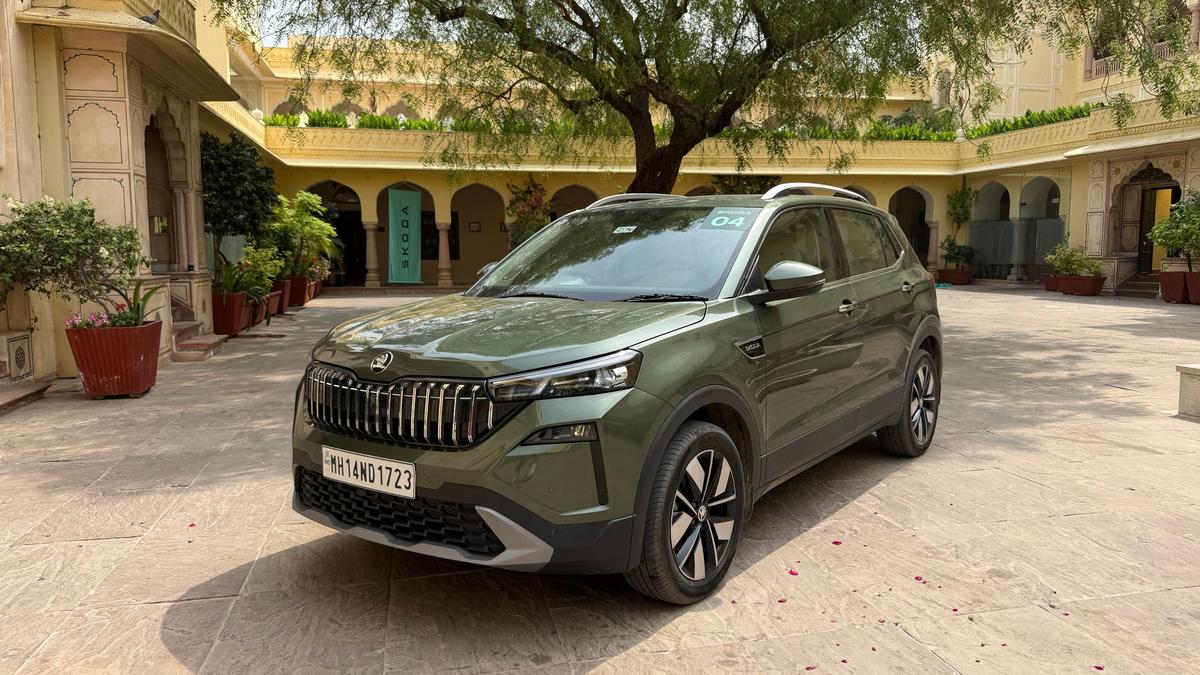
The 1.0 TSI Engine
The 1.0-litre, three-cylinder turbocharged stratified injection (TSI) engine continues to produce 115 horsepower and 178 Nm of torque. On paper, these figures might seem modest, but the TSI technology ensures that the peak torque is available from as low as 1,750 RPM. This "bottom-end punch" is critical for overtaking in city traffic.
The 8-Speed Advantage
The headline change is the 8-speed torque converter. By increasing the number of gear ratios, Skoda has achieved two things:
- Reduced Ratio Gaps: The transition between gears is nearly imperceptible. This eliminates the "head-nod" effect often associated with smaller engines under hard acceleration.
- Highway Efficiency: The eighth gear acts as a tall overdrive. At 100 km/h, the engine sits at lower RPMs than it did with the 6-speed unit, reducing cabin noise (NVH levels) and improving long-distance fuel economy.
Ride and Suspension Tuning
Skoda engineers have recalibrated the dampers for the 2024 model. The previous iteration was criticized by some for being "European-firm"—great for corners, but slightly harsh over sharp potholes. The new setup features a more progressive damping curve. It absorbs the initial impact of a road imperfection with more "give," while maintaining the lateral stiffness required to prevent body roll during high-speed lane changes.
4. Interior Ergonomics and "Simply Clever" Features
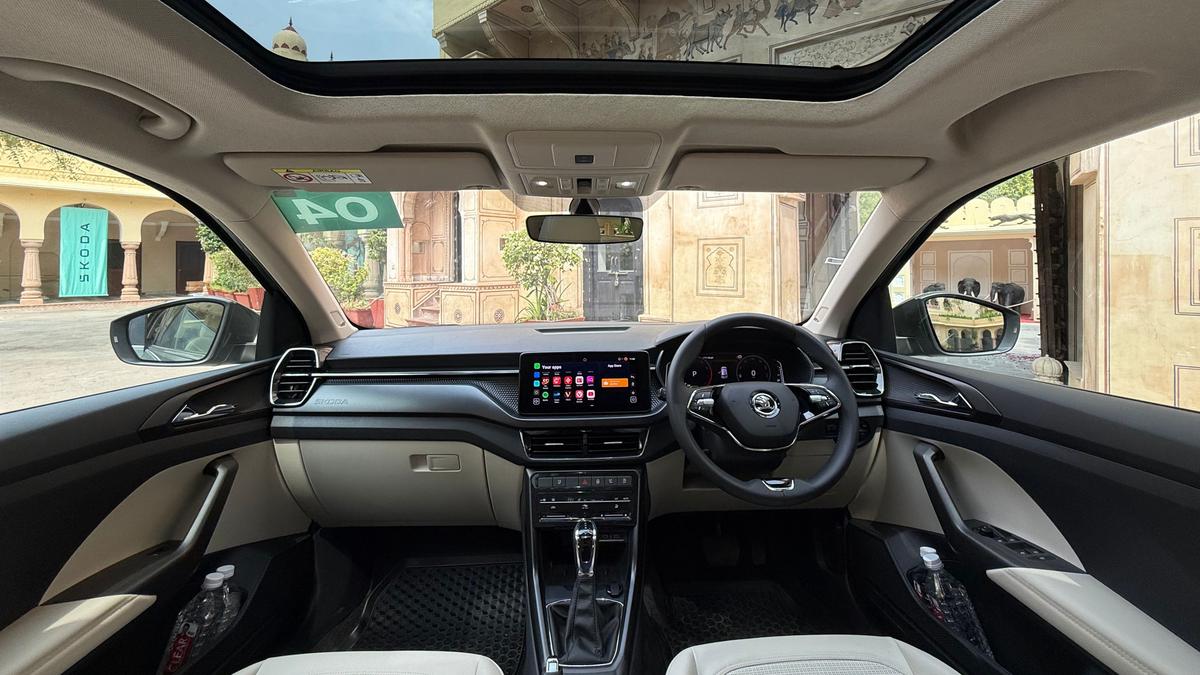
The cabin of the Kushaq remains a masterclass in functional design. Unlike some competitors that favor large, distracting screens and touch-sensitive panels for everything, Skoda retains physical knobs for the climate control—a nod to safety and ease of use while driving.
Material Quality
There is a noticeable shift in the cabin’s tactile feel. The plastics on the dashboard and door cards have a more premium grain, and the fit and finish appear tighter. The steering wheel, a two-spoke design inherited from the Octavia, remains one of the best in the business, offering excellent grip and intuitive button placement.
The Massage Functionality
Perhaps the most surprising addition is the rear-seat massage function. In the Indian market, where many SUV owners are chauffeur-driven during the week, this feature adds significant value. It isn’t a gimmick; the pneumatic bladders provide genuine relief during long commutes in heavy traffic, making the Kushaq a more viable "executive" choice than its dimensions might suggest.
5. Official Responses and Brand Strategy
Skoda Auto India’s leadership has consistently emphasized that the Kushaq is not just a car, but a statement of the brand’s commitment to the Indian market. In recent briefings, the company has pivoted away from a "volumes-at-all-costs" strategy to one focused on "Value Luxury."
By standardizing alloy wheels and prioritizing a 5-star safety rating, Skoda is responding to a growing segment of the Indian populace that is willing to pay a slight premium for structural integrity and brand prestige. Petr Janeba, Brand Director of Skoda Auto India, has often highlighted that "Safety is not an option; it is a core DNA of our products." This update reinforces that stance, ensuring that the Kushaq remains the benchmark for crashworthiness in its class.
6. Implications for the Indian Automotive Market
The arrival of the refined Kushaq 1.0 TSI 8-speed Automatic has several implications for the mid-size SUV landscape:
A New Benchmark for Small Engines
For years, the 1.0-litre engine was viewed as an "entry-level" compromise. Skoda’s pairing of this engine with a sophisticated 8-speed gearbox challenges that perception. It proves that displacement is less important than the efficiency of the powertrain as a whole. This may prompt other manufacturers to invest more in gearbox technology rather than just increasing engine size.
The "Safety First" Shift
As Bharat NCAP begins to gain traction, the Kushaq’s established 5-star rating gives it a significant head start. Consumers are increasingly ignoring cars with high feature counts if they lack a proven safety record. Skoda’s success with the Kushaq is forcing rivals to upgrade their structural designs and safety kits.
Democratization of Premium Features
By making alloy wheels standard, Skoda is challenging the traditional "trim ladder." This move forces competitors to reconsider their base-model offerings, which often look significantly "cheaper" than their top-end counterparts. This trend benefits the consumer, who now gets a better-looking vehicle regardless of the budget.
7. Conclusion: The Verdict from Jaipur
Driving the updated Kushaq through the transition from Jaipur’s chaotic walled city to the serene highways leading toward the Delhi-Mumbai Expressway reveals the car’s true character. It is a vehicle of immense composure.
The 1.0 TSI engine, once considered the "junior" sibling to the 1.5 TSI, has come into its own. With the 8-speed automatic, it no longer feels like it’s working hard; it feels like it’s working smart. The smoothness of the transmission, combined with the softened ride quality and the reassuring weight of the steering, makes it arguably the most balanced SUV in its price bracket.
The Skoda Kushaq does not try to be the biggest SUV on the road, nor does it try to have the longest list of electronic gadgets. Instead, it focuses on the fundamentals: how it protects its occupants, how it handles a corner, and how it reduces the stress of a daily commute. In an era of automotive excess, the Kushaq’s quiet, calculated refinement is its greatest strength. It is an SUV for the discerning driver—one who values the "feel" of a car as much as the "look" of it.
Price Range: INR 10.69 – 18.99 lakh (Ex-showroom)
Engine: 1.0L TSI Petrol | 115hp | 178Nm
Transmission: 8-Speed Torque Converter Automatic
Safety: 5-Star Global NCAP (Adult & Child)
Reported by Motorscribes, in association with The Hindu. For more updates on the latest in the automotive world, follow @motorscribes on Instagram.
