

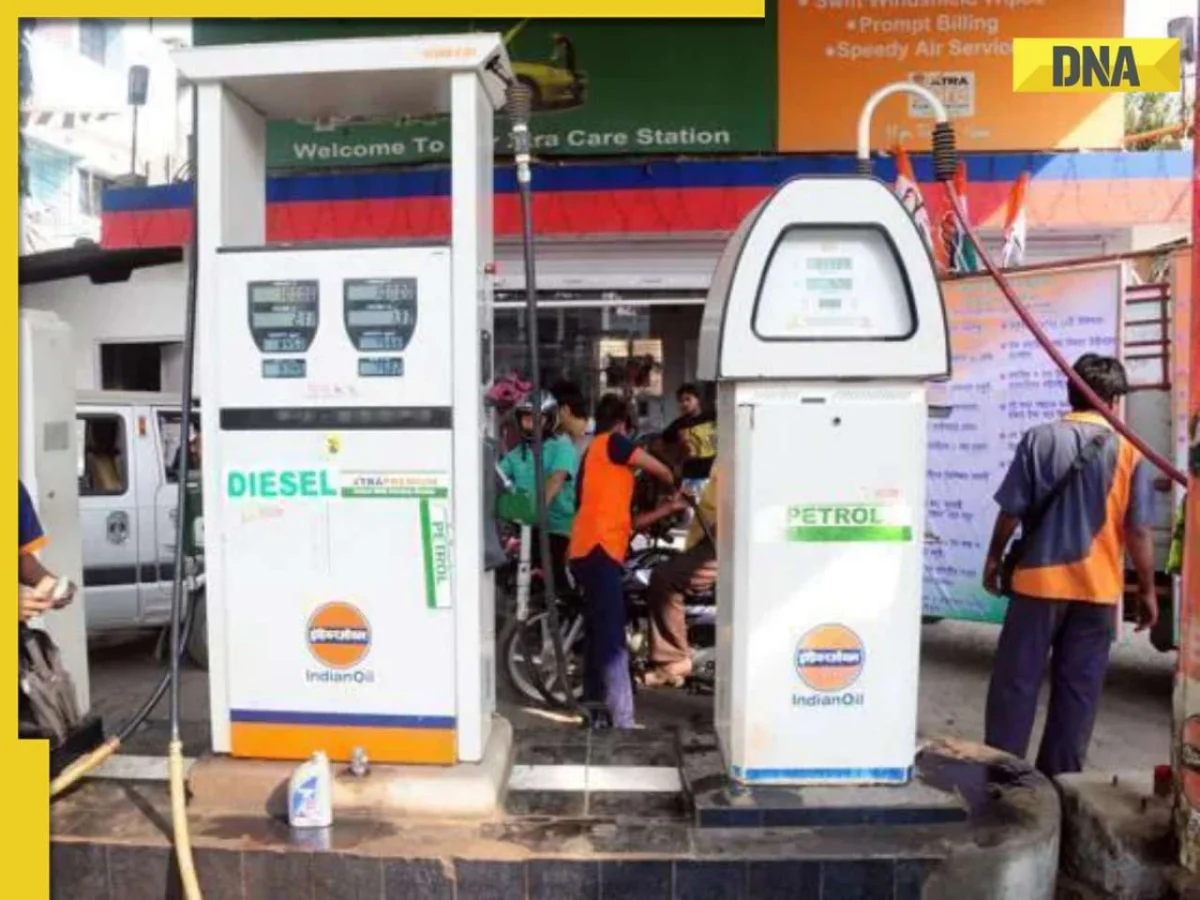
NEW DELHI, INDIA – May 27, 2026 – India’s vital fuel market demonstrated a significant degree of stability today, May 27, 2026, with petrol and diesel prices remaining unchanged across major cities. This consistent pricing, particularly noteworthy in the often-volatile global energy landscape, offers a brief respite for consumers and businesses alike. In the financial capital, Mumbai, petrol was retailing at a steady Rs 111.21 per litre, while diesel maintained its price at Rs 97.83 per litre. This pause in price fluctuations underscores a complex interplay of international crude oil rates, domestic taxation policies, and the intricate dynamics of currency exchange, all of which coalesce to determine the final cost at the pump.
The daily review of fuel prices, a mechanism put in place to ensure transparency and responsiveness to global market shifts, has for this particular day, yielded a static outcome. While the immediate stability is welcomed, analysts continue to monitor the underlying factors that dictate India’s energy economy, acknowledging the inherent sensitivity of fuel costs to a myriad of external and internal pressures. The nation, a significant importer of crude oil, remains acutely susceptible to geopolitical developments, supply-demand imbalances, and economic shifts on the global stage, making periods of price stability particularly valuable.
A Historical Perspective: Chronology of India’s Fuel Pricing Mechanism
Understanding today’s stable prices requires a look back at the evolution of India’s fuel pricing regime, a journey marked by significant policy shifts aimed at aligning domestic prices with international realities and reducing the government’s subsidy burden.
The Era of Deregulation: A Shift Towards Market Dynamics
For decades, India operated under an Administered Price Mechanism (APM) where the government dictated fuel prices, often subsidizing them to shield consumers from global price volatility. This system, however, proved unsustainable, leading to massive financial losses for state-owned oil marketing companies (OMCs) and significant fiscal deficits for the government.
)
The first major reform came in June 2010, when petrol pricing was fully deregulated. This landmark decision meant that the retail price of petrol would henceforth be determined by market forces, primarily international crude oil prices and the rupee-dollar exchange rate, with OMCs having the autonomy to adjust prices. This move was lauded as a step towards greater economic liberalization and fiscal prudence.
The deregulation process extended to diesel in October 2014, completing the transition from government-controlled pricing to market-linked pricing for both key transportation fuels. The rationale behind this move was multifaceted: it aimed to reflect the true cost of fuel, reduce the government’s subsidy bill, improve the financial health of OMCs, and promote energy efficiency by discouraging artificial demand created by subsidized prices. While initially met with some public apprehension, the deregulation was seen as a necessary structural reform for India’s growing economy.

The Daily Revision System: Enhancing Transparency and Responsiveness
Building on the foundation of deregulation, a significant operational change was implemented nationwide on June 16, 2017: the daily revision of petrol and diesel prices. Prior to this, prices were revised fortnightly, leading to large, sudden price changes that could shock consumers and distort market signals. The shift to daily revisions was introduced with several key objectives:
- Immediate Reflection of Global Prices: To pass on even minor fluctuations in international crude oil prices and the rupee-dollar exchange rate to consumers more swiftly, reducing the "lag effect" of fortnightly revisions.
- Reduced Volatility: By making smaller, more frequent adjustments, the system aimed to smooth out price changes, making them less abrupt and easier for consumers to adapt to.
- Enhanced Transparency: The daily updates, often published online and via SMS by OMCs, were intended to make the pricing mechanism more transparent and understandable to the public.
- Reduced Inventory Losses/Gains: For OMCs, daily revisions meant their inventory valuations were more closely aligned with market rates, minimizing large losses or gains that could occur during periods of sharp price movements under the fortnightly system.
- Alignment with Global Best Practices: Many developed economies already employed daily or even hourly price adjustments, and India’s move was seen as bringing its fuel market practices in line with international norms.
This daily dynamic has since become the norm, making days of complete price stability, like May 27, 2026, noteworthy as they often indicate a period of relative calm in the underlying global and domestic factors.
)
Key Milestones in Price Movements
Since deregulation, India’s fuel prices have witnessed several periods of significant movement. For instance, the collapse in global crude oil prices during 2014-2016 provided a major windfall, allowing the government to increase excise duties without significantly raising retail prices, bolstering its revenues. Conversely, periods of elevated crude oil prices, coupled with a depreciating rupee, have led to sustained price hikes, often prompting public outcry and calls for government intervention through tax cuts. The period leading up to and during the COVID-19 pandemic also saw unprecedented volatility, with crude prices first plummeting and then recovering sharply, impacting domestic retail prices despite government efforts to cushion the blow. These historical fluctuations underscore the importance of the current stability, even if temporary, as a period of predictability.
Underlying Dynamics: Supporting Data and Economic Indicators
The stability observed on May 27, 2026, is not a random occurrence but a result of several critical economic indicators aligning in a particular way. These include the state of the global crude oil market, the stability of the Indian Rupee against the US Dollar, and the intricate structure of domestic taxation.
)
Global Crude Oil Market: The Primary Driver
India imports over 85% of its crude oil requirements, making global crude prices the single most influential factor in domestic fuel costs. The international market is typically benchmarked by two major crude oil types: Brent Crude (a blend from the North Sea) and West Texas Intermediate (WTI), a US-based crude. Indian OMCs primarily procure a basket of crude oils, the pricing of which is closely linked to Brent.
Around May 2026, the global crude oil market likely experienced a period of relative equilibrium. This equilibrium could be attributed to:
)
- Balanced Supply-Demand: A situation where global oil production, influenced by OPEC+ decisions and non-OPEC output (e.g., US shale), closely matched global demand, which is primarily driven by economic growth in major consuming nations like China, India, and the US.
- Absence of Major Geopolitical Shocks: A calm period without significant disruptions to oil supply routes, major conflicts in oil-producing regions, or large-scale natural disasters affecting production infrastructure.
- Stable Inventory Levels: Global crude oil inventories, monitored by agencies like the IEA and EIA, might have been at comfortable levels, neither too high (indicating oversupply) nor too low (indicating scarcity).
- Moderate Global Economic Growth: A scenario where the global economy is growing steadily but not overheating, thus keeping oil demand consistent without sharp spikes. Any major slowdown or recession fears would typically suppress demand and prices, while robust growth would push them up.
A scenario where Brent crude was trading within a narrow range, perhaps between $80-$85 per barrel, with limited intra-day volatility, would be highly conducive to stable retail prices in India.
Rupee-Dollar Exchange Rate: The Import Cost Multiplier
Since crude oil is primarily traded in US Dollars, the exchange rate between the Indian Rupee (INR) and the US Dollar (USD) plays a crucial role. A stronger Rupee makes crude oil imports cheaper in local currency terms, while a depreciating Rupee makes them more expensive.
)
On May 27, 2026, the INR likely exhibited a period of relative stability against the USD. Factors contributing to this stability could include:
- Robust Foreign Inflows: Continued foreign direct investment (FDI) and foreign portfolio investment (FPI) into the Indian economy.
- Positive Trade Balance: A manageable current account deficit, possibly aided by strong exports or stable import bills.
- Prudent Monetary Policy: The Reserve Bank of India’s (RBI) effective management of inflation and interest rates, which supports investor confidence in the Rupee.
- Favourable Global Dollar Index: A stable or weakening US Dollar against a basket of major currencies, reducing pressure on emerging market currencies like the Rupee.
A Rupee trading consistently within a tight band, for instance, Rs 82.50 to Rs 83.00 against the USD, would significantly contribute to predictable import costs for OMCs.
)
Taxation Structure in India: The Lion’s Share
Even with stable crude oil prices and a steady Rupee, the final retail price of petrol and diesel in India is heavily influenced by central and state government taxes. These taxes typically constitute a significant portion – often more than 40-50% – of the final pump price. The structure is broadly as follows:
- Base Price: This is the price at which OMCs procure crude, refine it, and add their marketing and distribution costs.
- Central Excise Duty: Levied by the Union government, this is a fixed component per litre and is a major source of revenue for the central exchequer. Unlike VAT, excise duty does not change with the base price.
- State Value Added Tax (VAT): Levied by individual state governments, VAT is an ad valorem tax, meaning it is calculated as a percentage of the base price plus the central excise duty and dealer commission. This is why fuel prices vary from state to state and can change if a state revises its VAT rates.
- Dealer Commission: A fixed amount paid to petrol pump owners for their services.
The fact that prices remained stable on May 27, 2026, suggests that neither the Central government nor the State government in Mumbai (and by extension, other states with stable prices) had altered their respective excise duties or VAT rates in the immediate preceding period. Any cut or increase in these duties would immediately reflect in the retail price, regardless of crude oil movements. The revenue implications are substantial; fuel taxes are a critical component of government finances, funding various developmental projects and public services. The long-standing debate about bringing petrol and diesel under the Goods and Services Tax (GST) regime, which would potentially standardize prices nationwide and reduce the overall tax burden, continues to be a complex political and economic challenge.
)
Oil Marketing Companies (OMCs) Role
India’s major OMCs – Indian Oil Corporation (IOC), Bharat Petroleum Corporation Limited (BPCL), and Hindustan Petroleum Corporation Limited (HPCL) – play a pivotal role. They are responsible for crude oil procurement, refining, and the extensive distribution network across the country. Their pricing strategies, while largely market-determined, also involve managing their refining margins and absorbing minor short-term fluctuations to ensure price stability when possible. On a day of stable prices, it implies that their procurement costs, combined with their operational margins, allowed them to maintain the previous day’s retail rates.
Government and Industry Responses: Navigating the Energy Landscape
The stability in fuel prices, while primarily market-driven, also reflects a broader policy environment and industry operational strategies.
)
Official Stance on Pricing
The Indian government has consistently reiterated its commitment to the market-linked pricing mechanism for petrol and diesel. This stance is rooted in the belief that market forces provide the most efficient allocation of resources and reduce the fiscal burden on the state. However, the government is also keenly aware of the socio-economic implications of fuel prices, especially their direct impact on inflation and the common person’s budget.
Periods of sustained price hikes often lead to calls for government intervention. In the past, the central government has responded by cutting excise duties, and has also urged state governments to reduce their VAT rates to provide relief to consumers. The stability on May 27, 2026, suggests that either the market conditions were benign enough not to warrant intervention, or previous interventions (if any) had successfully stabilized prices at the prevailing levels. Official statements often emphasize balancing consumer interests with the need for OMCs to remain financially healthy and the government to maintain its revenue streams for developmental expenditures. The government’s long-term vision includes strengthening India’s energy security through diversification of crude oil sources and strategic crude oil reserves, aiming to insulate the country from extreme global shocks.
)
Industry Perspectives
From the perspective of OMCs and the broader energy industry, price stability offers a degree of predictability that is beneficial for business planning. Volatile prices can impact refinery margins, inventory management, and overall profitability. A stable environment allows OMCs to:
- Optimize Procurement: Plan crude oil purchases more effectively without the pressure of rapidly fluctuating international prices.
- Manage Inventory: Reduce risks associated with holding large inventories when prices are highly volatile.
- Predictable Revenue Streams: Contribute to more stable financial forecasts for the companies.
Industry experts might comment that such stability, while welcomed, is always precarious given the inherent volatility of global energy markets. They would likely highlight their efforts in hedging strategies to mitigate currency and crude price risks, and their continuous investment in refining and distribution infrastructure to meet India’s growing energy demand efficiently. Furthermore, stable fuel prices indirectly benefit other energy sectors, such as petrochemicals, by providing a predictable input cost for their operations.
)
Broader Ramifications: Implications of Fuel Price Stability
The steady fuel prices observed on May 27, 2026, carry significant implications across various facets of the Indian economy and society.
Economic Impact
- Inflation Control: Fuel prices have a direct and indirect impact on inflation. Directly, they contribute to the transport component of the Consumer Price Index (CPI). Indirectly, they affect the cost of transporting goods, manufacturing inputs, and agricultural produce, influencing prices across the board. Stability in fuel prices is a powerful tool in keeping headline inflation in check, providing relief to households and helping the Reserve Bank of India manage its monetary policy more effectively.
- Consumer Spending and Confidence: Predictable fuel costs mean consumers can better plan their budgets. Reduced uncertainty around transportation expenses can boost consumer confidence, potentially leading to higher discretionary spending on other goods and services, thereby stimulating economic activity.
- Business Predictability: For businesses, especially those in logistics, manufacturing, and agriculture, stable fuel prices translate into predictable operating costs. This allows for better financial planning, more accurate budgeting, and potentially more competitive pricing of their products and services. It removes a significant variable cost uncertainty, fostering a more stable business environment.
- Government Finances: For the government, stable fuel prices, particularly if they are not artificially suppressed, ensure a steady flow of tax revenues without the political pressure to cut duties, which can impact fiscal targets. It also reduces the likelihood of needing to reintroduce subsidies, thereby maintaining fiscal discipline.
Sectoral Effects
- Logistics and Transport: The transport sector, heavily reliant on diesel, directly benefits from stable prices. Trucking companies, cab services, and public transport operators face fewer fluctuations in their primary operating cost, allowing them to maintain stable fares and freight charges. This efficiency can cascade through the supply chain, benefiting all sectors that rely on transportation.
- Agriculture: Diesel is crucial for agricultural activities, powering tractors, irrigation pumps, and other farm machinery. Stable diesel prices help farmers manage their input costs, potentially leading to more stable food prices and higher profitability for agricultural producers.
- Manufacturing: Energy and transportation costs are significant components of manufacturing. Stable fuel prices contribute to lower and more predictable production costs, enhancing the competitiveness of Indian manufactured goods both domestically and internationally.
- Tourism: Predictable fuel costs can also benefit the tourism sector, as travel expenses (road trips, taxi fares) become more certain for domestic and international tourists, potentially encouraging more travel.
Future Outlook and Challenges
While stability is welcome, the long-term outlook for fuel prices in India remains subject to several overarching trends and challenges:
)
- Global Energy Transition: The accelerating global shift towards renewable energy sources (solar, wind) and electric vehicles (EVs) will gradually impact fossil fuel demand. India is aggressively pursuing EV adoption and ethanol blending in petrol, which could alter the dynamics of traditional fuel consumption and pricing in the coming decades.
- Geopolitical Risks: The Middle East, a major source of India’s crude oil, remains a region prone to geopolitical tensions. Any escalation could quickly disrupt supplies and send crude prices soaring.
- Global Economic Health: Future global recessions or boom periods will continue to dictate demand for oil, impacting prices.
- Domestic Policy Decisions: Future decisions regarding fuel taxation (e.g., bringing fuel under GST, revising excise duties or VAT) will remain critical determinants of retail prices.
- Alternative Fuels: The development and widespread adoption of alternative fuels like green hydrogen and advanced biofuels could introduce new variables into the energy pricing matrix.
The stable fuel prices on May 27, 2026, offer a snapshot of a moment when complex global and domestic forces aligned to provide a period of calm. However, India’s energy narrative is one of continuous adaptation and vigilance, as it navigates the path towards sustainable economic growth while ensuring energy security for its vast population. The intricate dance between global markets, government policy, and consumer welfare will continue to shape the journey of petrol and diesel prices in the years to come.
