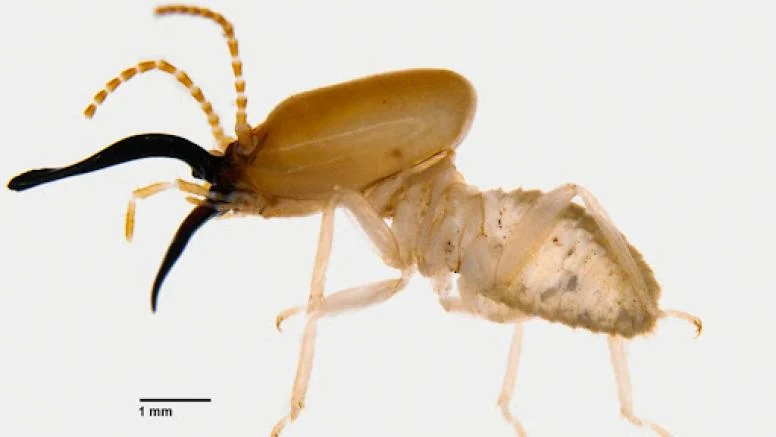
CHAPRAMARI, WEST BENGAL – In the dense, humid undergrowth of the Dooars region, where the shadows of ancient Sal trees stretch across the forest floor, a team of Indian researchers has unearthed a tiny but significant secret. A new species of soil-dwelling termite, characterized by its extraordinary "snapping" defensive mechanism and unique anatomical structure, has been officially identified and added to the annals of Indian biodiversity.
The discovery of Pseudocapritermes novus—the name derived from the Latin word for "new"—was the result of a collaborative effort between the Zoological Survey of India (ZSI), the University of Calcutta, and the Church Missionary Society (CMS) College. The findings, recently published in a peer-reviewed journal, highlight the hidden complexities of the subterranean world and underscore the importance of the Chapramari Wildlife Sanctuary as a critical pocket of ecological richness.
Main Facts: The Identification of Pseudocapritermes novus
The discovery of Pseudocapritermes novus brings the total number of known species within the Pseudocapritermes genus in India to five. While termites are often unfairly maligned as mere household pests, this soil-feeding group represents a vital component of the forest’s "clean-up crew," responsible for the decomposition of organic matter and the aeration of tropical soils.
The species was first encountered during a routine biodiversity survey in the Chapramari Wildlife Sanctuary, located in the Jalpaiguri district of West Bengal. The sanctuary, which covers roughly 9.6 square kilometers, is part of the Gorumara National Park ecosystem and is renowned for its megafauna, including Indian elephants and rhinoceroses. However, it was the micro-fauna beneath a fallen Sal (Shorea robusta) log that captured the researchers’ attention.
Key characteristics that distinguish P. novus from its relatives include:

- Asymmetrical Mandibles: The species possesses a highly specialized left jaw that is strongly bent with a slightly incurved tip, designed for a high-velocity "snapping" action.
- Unique Head Morphology: A wider head compared to its closest relative, P. tikadari, and a more rounded, swollen section below its beak-like frontal projection.
- Enhanced Armor: The presence of prominent, strong spurs on its front legs, which likely aid in movement through dense soil or defense.
- Social Complexity: The discovery of the species living in close proximity to other termite species suggests a potential "inquiline" lifestyle, where different species cohabitate within the same nesting structure.
Chronology: From Forest Floor to Laboratory
The journey to identifying Pseudocapritermes novus began with a field expedition aimed at documenting the invertebrate diversity of the North Bengal floodplains.
The Field Collection
During the survey, researchers targeted the humus-rich soil and decaying wood of the Chapramari forest. It was beneath a large, decaying Sal log that the team located a colony of termites that appeared morphologically distinct from the common species usually found in the region. Using fine brushes and forceps, the scientists carefully collected specimens of the soldier and worker castes, preserving them in ethanol for transport to the laboratory.
Morphological Analysis
Upon returning to the lab, the specimens underwent rigorous physical examination. Using high-resolution microscopy, taxonomists measured the minute dimensions of the termite’s head, mandibles, and thorax. It was during this phase that the unique curvature of the left mandible was first noted. In the Pseudocapritermes genus, the mandibles do not bite in the traditional sense; instead, they are pressed together until they "snap" past one another with incredible force, a mechanism used to ward off predators like ants.
Genetic Validation
To ensure the discovery was indeed a new species and not a regional variant of an existing one, the team employed an "integrative taxonomic approach." This involved extracting DNA from the specimens and sequencing the 16S rRNA mitochondrial gene. This specific gene acts as a molecular barcode, allowing scientists to compare the genetic distance between the new specimens and known species stored in global databases like GenBank. The genetic data confirmed that P. novus was a distinct evolutionary lineage, separate from its closest known cousin, P. bhutanensis.
Supporting Data: Comparative Taxonomy
The scientific validity of a new species relies heavily on its "diagnosis"—the specific list of traits that make it different from all other known species. The research team provided extensive comparative data to justify the naming of P. novus.

| Feature | Pseudocapritermes novus | P. bhutanensis | P. tikadari |
|---|---|---|---|
| Left Mandible | Strongly bent, incurved tip | Gently curved | Moderately bent |
| Head Width | Noticeably wider | Narrower | Narrow |
| Postmentum | Longer and wider | Shorter/Narrower | Intermediate |
| Front Leg Spurs | Prominent/Strong | Small/Absent | Moderate |
| Habitat | Soil/Sal logs (India) | Soil (Bhutan/NE India) | Soil (India) |
The study also highlighted the "inquiline" nature of the find. P. novus was found sharing a micro-habitat with another termite species. In the world of entomology, inquilines are organisms that live as "guests" in the homes of others. While the exact nature of this relationship—whether it is symbiotic, parasitic, or merely accidental—remains to be fully understood, it suggests a high level of niche partitioning within the West Bengal soil ecosystem.
Official Responses and Researcher Insights
While formal statements from government ministries are pending, the lead researchers from the Zoological Survey of India and the participating universities have emphasized the broader implications of the find.
"This discovery is a testament to the fact that we have only scratched the surface of India’s soil biodiversity," noted one of the study’s contributors. "In the era of the ‘insect apocalypse,’ where we are seeing global declines in insect populations, identifying and documenting these species is the first step toward their conservation. Pseudocapritermes novus may be small, but it plays a giant role in the health of the Chapramari forest."
Experts at the University of Calcutta pointed out that the use of integrative taxonomy—combining physical traits with DNA sequencing—is becoming the gold standard for Indian entomology. They argued that this methodology reduces the likelihood of "cryptic species" (species that look identical but are genetically different) being overlooked.
The Church Missionary Society College researchers added that the naming of the species—using the Latin novus—was a deliberate choice to highlight the ongoing "New Age" of discovery in the Eastern Himalayas and the surrounding foothills, a region recognized globally as a biodiversity hotspot.

Implications: Why a New Termite Matters
The discovery of Pseudocapritermes novus carries weight far beyond the niche world of termite enthusiasts. It has significant implications for ecology, conservation, and soil science.
1. Indicators of Soil Health
Soil-feeding termites are often referred to as "ecosystem engineers." By consuming soil and humus, they break down complex organic polymers and return essential nutrients like nitrogen and phosphorus to the earth. The presence of a healthy population of diverse termite species is generally a sign of a robust, fertile forest floor. If P. novus is sensitive to chemical changes or soil compaction, it could serve as a "canary in the coal mine" for the health of the West Bengal forests.
2. The Physics of Defense
The "snapping" jaw of the Pseudocapritermes genus is a marvel of biological engineering. These insects can store elastic energy in their mandibles, releasing it in a strike that is among the fastest movements recorded in the animal kingdom. Studying the specific jaw structure of P. novus could provide insights into biomechanics and the evolution of specialized defensive traits in social insects.
3. Conservation of the Dooars Region
The Chapramari Wildlife Sanctuary faces ongoing pressures from human encroachment, illegal logging, and climate-induced changes in rainfall patterns. The discovery of a new endemic species adds scientific weight to the argument for increased protection and expanded research funding for the region. It reinforces the idea that every acre of the sanctuary holds biological value that may not be visible to the naked eye.
4. Expanding the National Inventory
For the Zoological Survey of India, this discovery is another milestone in the "Fauna of India" project. Every new species documented helps refine the map of India’s natural heritage, providing a baseline against which the impacts of climate change and habitat loss can be measured.

Conclusion
The discovery of Pseudocapritermes novus in the heart of West Bengal is a reminder of the mysteries that still lie beneath our feet. As the scientific community continues to explore the intersections of traditional taxonomy and modern genetics, the humble termite stands as a symbol of the intricate, invisible webs that sustain our planet’s life. For the Chapramari Wildlife Sanctuary, the "new" snapping termite is more than just a scientific entry; it is a vital part of the forest’s enduring legacy, a tiny architect working silently in the dark to keep the Sal forests green for generations to come.