

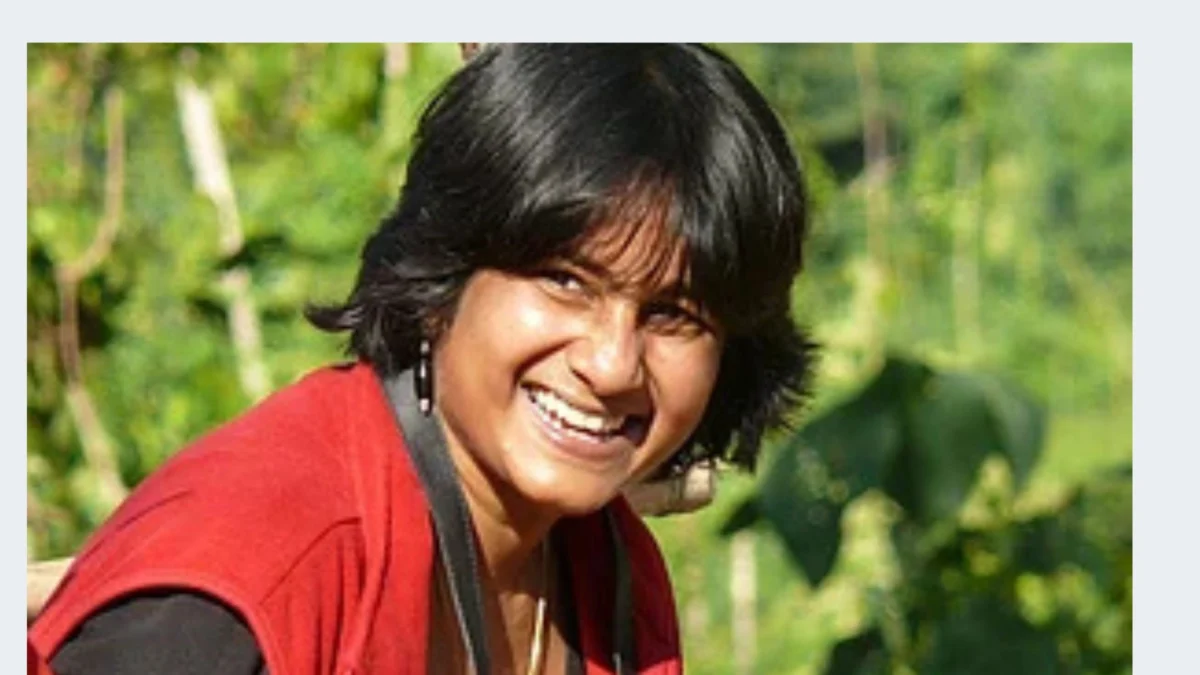
BENGALURU — As the global community grapples with the accelerating pace of the "Sixth Mass Extinction," the dialogue surrounding environmental protection has shifted from distant, high-level policy to the boots-on-the-ground reality of local communities. To commemorate World Biodiversity Day on May 22nd, the United Nations established the theme “Acting locally for global impact,” a clarion call to recognize that the fate of the planet’s megadiverse regions rests in the hands of those who live within them.
In an exclusive long-form interview, Dr. Aparajita Datta, Director of the Nature Conservation Foundation (NCF) and a veteran ecologist with three decades of experience in the Eastern Himalayas, discusses the intricate dance between scientific rigor and community-led stewardship. Her work, primarily centered in the rugged landscapes of Arunachal Pradesh, offers a blueprint for how ethical conservation can bridge the gap between indigenous knowledge and global environmental goals.
Main Facts: A Life Dedicated to the Eastern Himalayas
Dr. Aparajita Datta is not merely a researcher; she is a bridge-builder. For thirty years, she has navigated the dense, mist-shrouded forests of the Eastern Himalayas, a region recognized globally as a biodiversity hotspot. As the Director of the NCF, her work focuses on the intersection of avian ecology—specifically hornbills—and the socio-economic realities of the tribes that inhabit these regions.

The Eastern Himalayas host a staggering array of life, from the subterranean fungal networks that maintain forest soil health to the charismatic megafauna that capture the public imagination. However, as Dr. Datta notes, human intervention has historically been a double-edged sword. While our activities have driven species to the brink, our traditional "top-down" conservation models have often failed by excluding the very people who share the land with endangered wildlife.
The core of Dr. Datta’s philosophy, and the focus of her recent work, is the "Ethical Conservation Alliance." This approach moves away from "fortress conservation"—where forests are fenced off from people—and toward a model where local communities, such as the Nyishi and Lisu tribes of Arunachal Pradesh, are recognized as the primary guardians of the ecosystem.
Chronology: From Academic Inquiry to Community Partnership
The evolution of Dr. Datta’s work reflects a broader shift in the field of global conservation over the last thirty years.
- The Early 1990s: Exploration and Discovery: Dr. Datta began her journey in the Eastern Himalayas focusing on the ecology of hornbills. At the time, the primary goal was to understand the biological requirements of these "farmers of the forest." It soon became clear that scientific data alone could not save a species if the local social context was ignored.
- The 2000s: Building the NCF Presence: Under Dr. Datta’s leadership, the Nature Conservation Foundation established a permanent presence in Arunachal Pradesh. This decade was defined by "mutual learning." The NCF team spent years building trust with the Nyishi community, moving beyond the role of outside observers to become collaborative partners.
- 2012: The Launch of HNAP: A pivotal moment occurred in 2012 with the conception of the Hornbill Nest Adoption Program (HNAP). Designed to protect hornbills and their habitats outside the formal boundaries of the Pakke Tiger Reserve, the program turned local villagers into "nest protectors." Instead of hunting hornbills for their casques (which are used in traditional headgear), community members were incentivized to monitor and protect nests.
- 2015–Present: Ecological Restoration and Climate Resilience: Recognizing that species protection is impossible without habitat integrity, the team expanded into ecological restoration. They initiated native species nurseries and scientific forest restoration projects to repair degraded landscapes in the Pakke region, an effort that continues to scale today in response to the looming threat of climate change.
Supporting Data: The Ecological and Social Metrics of Success
The success of Dr. Datta’s initiatives is backed by significant ecological data. The Pakke landscape is a megadiverse corridor where hornbills serve as "umbrella species." Because hornbills require large tracts of healthy forest and disperse the seeds of many tropical trees, protecting them effectively protects the entire ecosystem.

The Hornbill Nest Adoption Program (HNAP) serves as a primary case study. Since its inception, the program has:
- Protected hundreds of nests across various species, including the Great Hornbill, Wreathed Hornbill, and Oriental Pied Hornbill.
- Facilitated the fledging of hundreds of chicks in areas where populations were previously declining due to hunting and habitat loss.
- Direct Employment: The program provides direct economic benefits to local "protectors," creating a conservation-based economy that rivals the income formerly derived from extractive practices.
Furthermore, the forest restoration projects utilize a "scientific approach" to nursery management. By identifying and cultivating native tree species that are most resilient to local climatic shifts, NCF ensures that the reforestation efforts are not just "green cover" but functional, biodiverse forests capable of supporting wildlife.
Official Responses: The PARTNERS Framework and Ethical Conservation
In her dialogue with researchers, Dr. Datta emphasizes that conservation is as much about sociology as it is about biology. She highlights the PARTNERS principles, a practical framework designed to ensure that community engagement is not superficial but transformative.
"The multi-layered approach in which local community members are not simply beneficiaries, but active conservation partners, allows for context-specific guidance," Dr. Datta explains. This framework relies on:

- Presence: Being consistently on the ground.
- Aptitude: Recognizing local skills.
- Respect: Valuing indigenous knowledge as equal to scientific data.
- Transparency: Being honest about conservation goals and funding.
- Negotiation: Finding middle ground between development and protection.
- Empathy: Understanding the economic pressures faced by local families.
- Responsiveness: Adapting to the evolving needs of the community.
- Strategic Action: Ensuring local efforts link to global biodiversity targets.
Dr. Datta is a member of the Ethical Conservation Alliance, which advocates for these inclusive practices globally. She argues that the traditional model of "educating the locals" is outdated. "I think it’s not so much about educating or a one-way thing, as much as understanding and learning together," she emphasizes. This shift in rhetoric—from "education" to "mutual learning"—is fundamental to the NCF’s success.
Implications: Local Stewardship in a Warming World
The implications of Dr. Datta’s work extend far beyond the borders of Arunachal Pradesh. As the world faces the dual crises of biodiversity loss and climate change, the Eastern Himalayas serve as a "canary in the coal mine."
1. Economic Resilience through Conservation:
One of the most profound implications of the NCF’s work is the proof that conservation can be a viable livelihood. By providing training, capacity-building workshops, and direct employment, the NCF has demonstrated that local communities do not have to choose between their economic survival and the survival of their forests. This is a critical lesson for the Global South, where poverty often drives environmental degradation.
2. Climate Adaptation:
The ongoing forest restoration projects are designed with future climate scenarios in mind. As temperatures rise, the phenology (timing of biological events) of the Eastern Himalayas is changing. By restoring degraded forests with a scientific eye toward native resilience, Dr. Datta’s team is creating "climate corridors" that may allow species to migrate and survive as their habitats shift.

3. A Model for Global Policy:
The theme of World Biodiversity Day 2026—Acting locally for global impact—is personified in the relationship between the NCF and the Nyishi people. Their collaborative model ensures that conservation initiatives remain culturally appropriate and socially accepted. When local communities own the conservation process, the "policing" of forests becomes unnecessary because the residents themselves become the primary stakeholders in the forest’s health.
Conclusion
As Dr. Aparajita Datta enters her fourth decade of work in the Eastern Himalayas, the challenges remain daunting. Varying economic pressures, complex land governance systems, and the accelerating impacts of climate change continue to threaten this pristine landscape. However, the "hornbill guardians" of Arunachal Pradesh offer a glimmer of hope.
Through the lens of the PARTNERS framework and the principles of the Ethical Conservation Alliance, Dr. Datta has shown that when we stop viewing humans as separate from nature—and start viewing local communities as the heart of the solution—global biodiversity goals become achievable. The story of the Eastern Himalayas is a reminder that while the crisis is global, the solution is, and must always be, local.
This article is Part One of a two-part series exploring the work of Dr. Aparajita Datta. Part Two will delve into the specific impacts of climate change on the Eastern Himalayas and the complex ecological requirements of the region’s hornbill species.
