

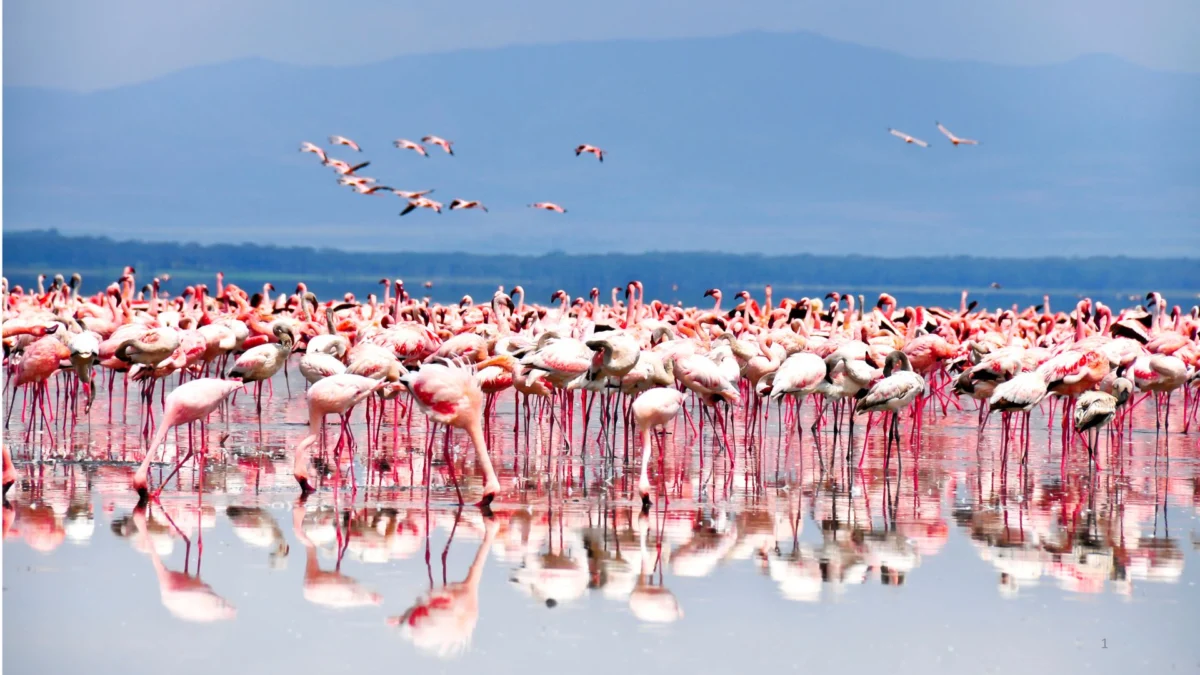
JAIPUR/HYDERABAD – For centuries, the Sambhar Salt Lake in Rajasthan has been a theater of natural wonders. Every year, as the monsoon recedes, the horizon turns a vibrant shade of pink, not from the desert sun, but from the arrival of tens of thousands of migratory flamingos. However, this iconic landscape—India’s largest inland saline wetland and a designated Ramsar site of international importance—is currently facing an existential crisis.
A comprehensive new study, leveraging four decades of satellite surveillance, has sounded a dire alarm. Researchers from the National Remote Sensing Centre (NRSC) of the Indian Space Research Organisation (ISRO) and VIT-AP University have documented a catastrophic "death spiral" driven by illegal salt mining, dwindling water levels, and the rapid expansion of suffocating algal blooms. The findings, published after an exhaustive analysis of data spanning from 1984 to 2023, suggest that the delicate ecological equilibrium of Sambhar Lake is nearing a point of no return.
I. Main Facts: A Wetland Under Siege
The Sambhar Salt Lake, situated approximately 80 kilometers southwest of the "Pink City" of Jaipur, is a unique endorheic basin—a terminal lake with no outflow to the sea. It is fed by four main rivers: the Mendha, Rupangarh, Khandel, and Karian. Historically, these rivers brought the lifeblood of the lake, maintaining a salinity level that supported a specialized food chain of brine shrimp and blue-green algae, the primary diet of the Lesser and Greater Flamingos.
The ISRO-led study reveals that this natural cycle has been fractured. The core findings include:
- Shrinking Natural Expanse: The natural water-spread area of the lake is in a state of consistent decline, replaced by artificial structures.
- Encroachment by Salt Pans: Between 2022 and 2023 alone, artificial salt pans—areas partitioned for salt extraction—expanded by nearly two square kilometers, encroaching directly onto the lake’s natural bed.
- Algal Dominance: In 2022, massive algal blooms covered a staggering 43% of the lake’s natural water surface, a phenomenon linked to stagnant, nutrient-heavy waters.
- Human Interference: The proliferation of illegal borewells and the damming of feeder rivers have choked the lake’s water supply, leading to hyper-salinity and thermal instability.
II. Chronology: Forty Years of Ecological Decay (1984–2023)
To understand the current crisis, the research team utilized a longitudinal approach, reconstructing the lake’s history through the lens of the Landsat 8 satellite—a joint venture between NASA and the U.S. Geological Survey (USGS).

The 1980s to 1990s: The Era of Equilibrium
During the early years of the study’s timeframe, Sambhar Lake maintained a relatively stable rhythm. While salt extraction has existed for over a millennium, it was largely confined to traditional methods and regulated areas. The feeder rivers flowed relatively unimpeded, and the seasonal expansion and contraction of the lake followed predictable climatic patterns.
The 2000s: The Mining Boom
The turn of the century saw a surge in the demand for salt, leading to a proliferation of both legal and illegal mining operations. To maximize yield, miners began sinking thousands of illegal borewells around the lake’s periphery to extract sub-surface brine. This period marked the beginning of a significant drop in the local water table, forcing the lake to become shallower with each passing season.
2010–2020: The Infrastructure Chokehold
During this decade, the construction of small dams and check-dams on the Mendha and Rupangarh rivers intensified. While designed for local irrigation, these structures effectively "starved" the lake of its fresh water and sediment inflow. The result was a lake that was not only smaller but chemically imbalanced.
2022–2023: The Modern Crisis
The most recent data analyzed by the NRSC and VIT-AP researchers shows an acceleration of these trends. The transition from 2022 to 2023 saw a rapid conversion of the lake bed into salt-crusted grids. The study highlights that the "natural" water area is no longer a contiguous body but a fragmented series of shallow pools, vulnerable to rapid evaporation and biological contamination.
III. Supporting Data: The Science of Remote Sensing
The strength of this study lies in its sophisticated methodology. The researchers did not merely look at photos; they employed advanced computational tools to "read" the landscape’s health.

Machine Learning and the Random Forest Algorithm
The team utilized a machine-learning algorithm known as Random Forest. This tool was "trained" to recognize specific spectral signatures of different land covers. By processing decades of satellite data, the algorithm could automatically categorize pixels into "scrubland," "barren earth," "salt pans," or "open water" with high precision. This allowed the researchers to quantify exactly how many hectares of natural wetland were lost to industrial encroachment year over year.
The Spectral Indices: NDWI and SABI
To differentiate between healthy water and degraded environments, two mathematical tools were employed:
- Normalized Difference Water Index (NDWI): By analyzing how the surface absorbs and reflects near-infrared energy, the team could map clear water depth. They found that the lake’s depth has reached "alarmingly shallow" levels across most of its basin.
- Surface Algal Bloom Index (SABI): This was the "smoking gun" for the biological crisis. SABI detects the unique light signatures reflected by chlorophyll-a in floating green algae. The data revealed that as water levels hit their annual lows just before the monsoon, the concentration of agricultural runoff and heat creates a "bloom explosion."
The "Chain Reaction" Statistics
The researchers found a direct correlation between human activity and biological decay. As groundwater is pumped out for salt mining, the remaining water becomes stagnant. Combined with high temperatures, these waters become breeding grounds for algae. In 2022, the peak of the bloom saw 43% of the water surface covered in a thick green carpet, which blocks sunlight and depletes dissolved oxygen—a process known as eutrophication.
IV. Implications: A Threat to Biodiversity and Beyond
The degradation of Sambhar Lake is not merely a local environmental issue; it is a loss of global heritage with severe biological and economic consequences.
The Flamingo Crisis
Flamingos are highly sensitive to water chemistry. The algal blooms documented by the study disrupt the microscopic brine life that flamingos feed on. Furthermore, oxygen depletion in the water can lead to the proliferation of anaerobic bacteria. While the study focuses on habitat loss, conservationists recall the 2019 tragedy where over 20,000 migratory birds died at Sambhar due to avian botulism—a disaster many experts link to the same stagnant, shallow-water conditions identified in this recent research.

The Economic Paradox
While salt mining provides a livelihood for thousands, the "illegal" and unregulated nature of current operations is self-defeating. By destroying the lake’s natural hydrological cycle, miners are effectively depleting the very brine reserves they rely on. The study suggests that without sustainable management, the salt industry in Sambhar may face a collapse as the groundwater table vanishes entirely.
Climate Change Sensitivity
Rajasthan is on the front lines of climate change. Rising temperatures increase the evaporation rate of an already shallow lake. The ISRO study emphasizes that the combination of "anthropogenic pressure" (human activity) and "climatic variability" has created a pincer movement that the wetland cannot survive on its own.
V. Official Responses and the Roadmap for Restoration
The research conducted by the NRSC-ISRO and VIT-AP University serves as a "clear roadmap for action" for the Rajasthan state government and the Ministry of Environment, Forest and Climate Change.
The Need for Enforcement
The study’s authors and environmental advocates are calling for an immediate crackdown on illegal borewells. Satellite imagery now provides the government with "pinpoint accuracy" to identify where salt pans are encroaching on protected wetland zones.
Hydrological Restoration
One of the most urgent recommendations is the restoration of river inflows. By managing the dams on the Mendha and Rupangarh rivers to allow "environmental flows"—minimum water levels required to maintain the lake’s health—the salinity and temperature of the lake could be stabilized.

A Balanced Management Plan
The study does not call for an end to salt production but rather a "balancing of economic value with ecological conservation." This involves:
- Zoning: Strictly defining areas where salt extraction is permitted and creating "no-go" buffer zones for wildlife.
- Monitoring: Using the SABI and NDWI indices as an early-warning system to trigger water releases or mining halts when algal blooms reach critical levels.
- Community Involvement: Engaging local salt workers in conservation efforts, ensuring they understand that the lake’s health is synonymous with their economic future.
Conclusion
The satellite data is unequivocal: Sambhar Lake is gasping for air. The expansion of salt pans and the thickening of algal blooms are visible scars on a landscape that once belonged to the birds. As the researchers from ISRO and VIT-AP have demonstrated, we now have the technology to see the crisis in high definition. The question that remains is whether the policy-making apparatus will act with the same precision to save this unique natural wonder before the pink horizon fades forever.
