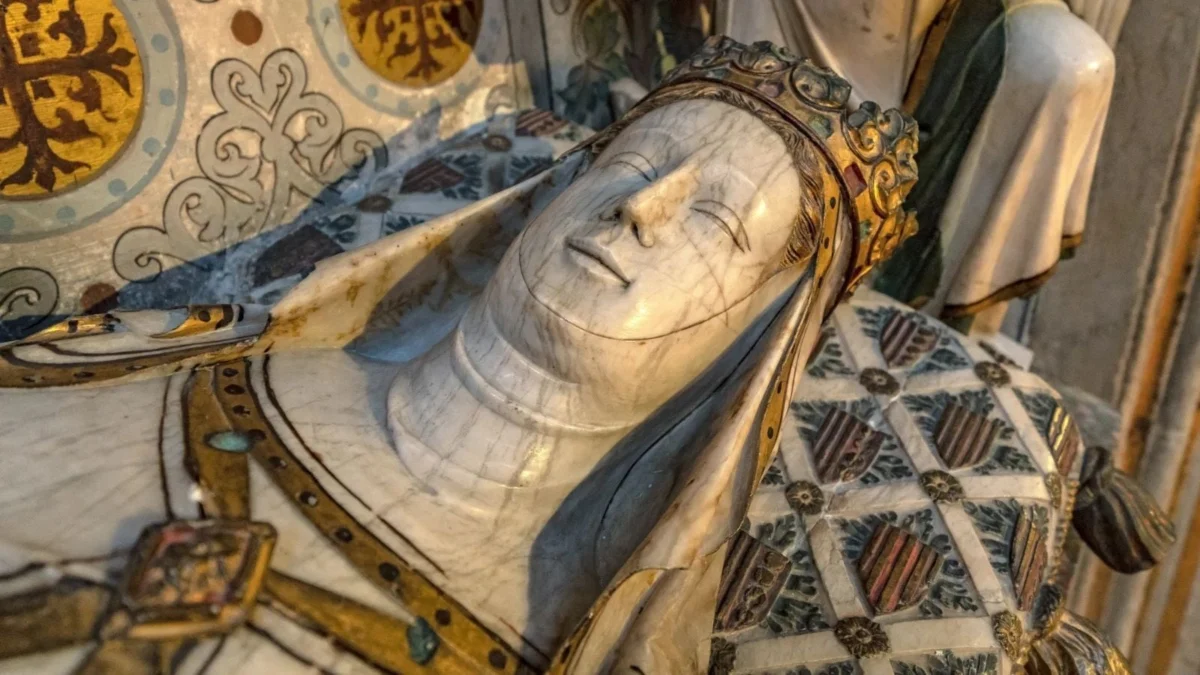
BARCELONA — In the heart of Catalonia, where the Gothic arches of the Royal Monastery of Santa Maria de Pedralbes have stood for seven centuries, a profound silence has finally been broken. What began as a commemorative project to mark the 700th anniversary of the monastery’s founding has transformed into one of the most significant archaeological and forensic investigations in modern Spanish history.
Researchers have successfully uncovered and identified the skeletal remains of Queen Elisenda of Montcada, the monastery’s founder and one of medieval Europe’s most formidable political figures. However, the discovery of the Queen was only the beginning. The excavation has pulled back the veil on a series of "puzzling and violent" burials, including mummified remains and victims of brutal trauma, challenging our understanding of life—and death—within the cloistered walls of 14th-century Barcelona.
Main Facts: A Royal Discovery Amidst Macabre Mysteries
The investigation, spearheaded by the Culture Institute of Barcelona in collaboration with a multidisciplinary team of forensic pathologists, DNA specialists, and historians, has focused on eight primary tombs within the monastery. To date, the remains of 25 individuals have been exhumed, offering a rare cross-section of medieval society, from royalty and high-ranking clergy to mysterious outsiders whose presence in a sacred female space remains unexplained.
The Queen’s Final Rest
The focal point of the study was the tomb of Queen Elisenda of Montcada (c. 1292–1364). As the fourth wife of King James II of Aragon, Elisenda was a woman of immense influence. Upon opening her burial chamber, researchers found her remains housed in a small wooden box, placed within a larger, two-sectioned stone sarcophagus.
Forensic analysis suggests that Elisenda lived to the remarkable age of 70—an exceptional feat for the 14th century. The bones show clear signs of advanced osteoarthritis, a condition consistent with her age and lifestyle. Despite her royal status, she was buried in the humble, coarse robes of a Clarist nun. However, the discovery of fragments of high-quality golden-embroidered silk and the presence of aromatic herbs like rosemary and myrtle indicate that her transition from sovereign to "pious lady" was marked by a lingering royal dignity.
The Enigma of the Stabbed Skulls
While the Queen’s discovery provided historical closure, other tombs yielded disturbing evidence of medieval violence. In the tomb associated with Francesca Saportella—the monastery’s second abbess and Elisenda’s niece—archaeologists found a commingled burial of nine individuals. Among these were the skulls of four men, all showing clear evidence of perimortem stab wounds.
The presence of male remains in a strictly enclosed female monastery is a significant historical anomaly. The nature of the injuries—sharp-force trauma to the cranium—suggests a violent end, raising questions about whether these men were casualties of local conflicts, victims of a political purge, or perhaps individuals granted sanctuary in death for reasons yet unknown.
The Mummified Mother and the "Knight’s" Secret
One of the most poignant finds was the partially mummified torso of a young woman. Upon closer inspection via radiological imaging, researchers discovered the remains of a fetus, estimated to be between 20 and 23 weeks old, still within her womb. This discovery provides a rare, tragic glimpse into the risks of pregnancy in the Middle Ages and the compassionate (or perhaps secretive) burial practices of the time.
In another unexpected twist, a grave long believed to belong to a medieval knight—based on its exterior heraldry and location—was found to contain the remains of two women and three children. One of the women was remarkably well-preserved, with a long, braided ponytail still attached to her skull, offering a hauntingly personal connection to a woman who lived 700 years ago.
Chronology: Seven Centuries of History
The timeline of the Royal Monastery of Santa Maria de Pedralbes is inextricably linked to the rise and fall of the Crown of Aragon.
- 1322: Elisenda of Montcada marries James II of Aragon. She becomes a key advisor to the King, wielding significant diplomatic power.
- 1326: With the support of the King, Elisenda founds the Monastery of Pedralbes for the Order of Saint Clare (the Poor Clares). The location, then on the outskirts of Barcelona, was chosen for its serenity and defensive position.
- 1327: King James II dies. Elisenda, choosing not to remarry or return to the royal court, moves into a small palace built adjacent to the monastery. She spends the next 37 years there, governing the monastery’s interests and influencing Catalan politics.
- 1364: Queen Elisenda dies. Her will dictates a dual burial—one side of her tomb facing the church (showing her as a queen) and the other facing the cloister (showing her as a nun).
- 14th – 17th Century: The monastery becomes a site of interment for the Montcada family and high-ranking abbesses. The "mysterious" burials of the stabbed men and the pregnant woman likely occur during periods of social upheaval or plague.
- 2024–2026: The 700th-anniversary project commences, leading to the current archaeological intervention.
- 2027 (Projected): Final DNA and forensic reports are scheduled for release, promising to solve the remaining identities of the "unknown" inhabitants.
Supporting Data: Forensic and Archaeological Evidence
The researchers are utilizing a suite of modern technologies to reconstruct the lives of the Pedralbes residents. The data gathered so far has provided a granular look at medieval life:
| Category | Findings | Significance |
|---|---|---|
| Pathology | Osteoarthritis (Elisenda), Sharp-force trauma (Male skulls), Facial knife wounds (Abbess Sobirana). | Highlights the contrast between the "natural" deaths of the elite and the violent reality of the era. |
| Textiles | Golden-embroidered silk fragments, coarse wool monastic robes. | Confirms the "double identity" of the Queen as both royal and religious. |
| Botanicals | Rosemary, myrtle, and lavender remnants. | Indicates sophisticated embalming or funerary rituals intended to mask odor and honor the deceased. |
| Paleography | Fragments of sheet music and parchment found in tombs. | Suggests that the deceased were buried with items of personal or liturgical importance, potentially identifying them as choir members. |
| Taphonomy | Partial mummification of the pregnant woman. | Likely caused by the specific microclimate of the stone sarcophagus, preserving soft tissue and the fetus. |
Official Responses: A Multidisciplinary Effort
The "Pedralbes Project" has drawn praise from both the scientific community and Catalan cultural authorities.
"This is not just an archaeological dig; it is an act of historical justice," said a spokesperson for the Culture Institute of Barcelona. "For centuries, these women—and the mysterious men buried with them—were just names in a ledger or figures on a stone slab. Now, through DNA and forensic science, we are giving them back their biographies."
Lead archaeologists noted that the discovery of the stabbed men and the pregnant woman has forced a re-evaluation of the monastery’s "closed" nature. "The monastery was a sanctuary," noted one researcher. "But these remains suggest that the sanctuary was sometimes a place of last resort for the victims of the world outside its walls."
The team is currently working with the University of Barcelona to conduct carbon-14 dating and stable isotope analysis. These tests will determine the geographic origins of the individuals, revealing whether they were local Catalans or travelers who died in Barcelona.
Implications: Rewriting the Medieval Narrative
The findings at the Monastery of Pedralbes carry significant implications for several fields of study:
1. The Role of Women in Medieval Power
Queen Elisenda’s burial confirms her unique status. Most medieval queens were buried alongside their husbands in royal pantheons (like Poblet). Elisenda’s choice to be buried in her own foundation, in a tomb that highlights her individual piety rather than just her marital status, underscores the agency of high-ranking women in the 14th century.
2. Forensic Mystery and Social Unrest
The presence of the four men with head wounds in an abbess’s tomb suggests a period of intense conflict. Historians are now looking into the "War of the Pedros" or local factional violence in Barcelona to see if these men were political allies of the Montcada family who required a "hidden" burial to avoid desecration.
3. Bioarchaeology of Pregnancy
The mummified pregnant woman is an incredibly rare find. It provides bioarchaeologists with a unique opportunity to study maternal health and fetal development in the medieval period, offering data that skeletal remains alone cannot provide.
4. The Future of Genomic History
As DNA analysis continues through 2027, the project hopes to map the genealogical tree of the Montcada family and the early abbesses. This could reveal hereditary diseases, dietary habits, and even the presence of pathogens like the Black Death, which ravaged Barcelona during Elisenda’s lifetime.
As the 700th-anniversary celebrations continue, the Royal Monastery of Santa Maria de Pedralbes stands no longer just as a monument of Gothic beauty, but as a complex archive of human experience. The Queen has been found, but the stories of the 24 others lying in the shadows of her monastery are only just beginning to be told.