

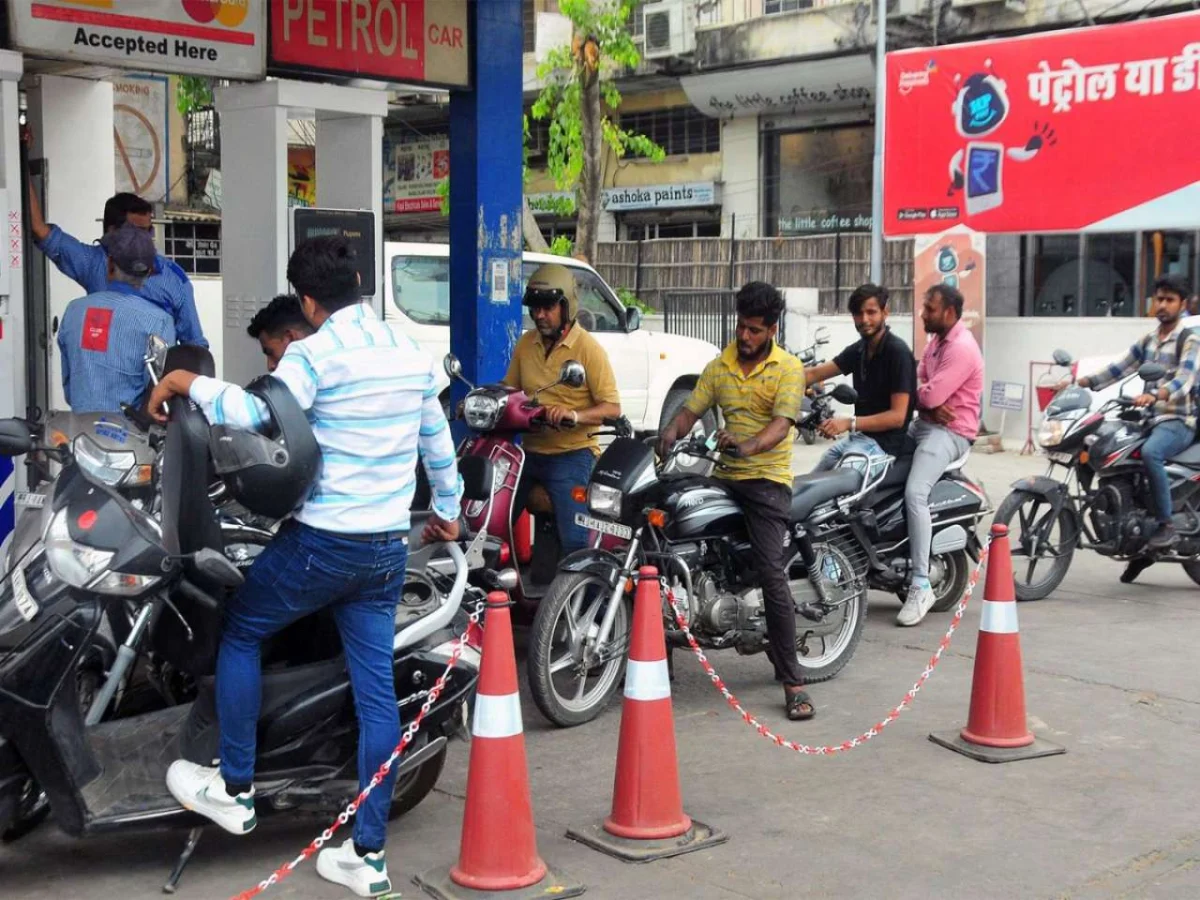
NEW DELHI, India – May 31, 2024 – Indian consumers woke up to a rare moment of respite on Sunday, May 31, as fuel prices across the nation remained stable. This pause follows a period of intense upward revisions by state-owned oil marketing companies (OMCs), which had seen petrol and diesel rates surge significantly in the preceding weeks. The last notable hike, reported on Monday, May 25, pushed prices up by over Rs 2.50 per litre, marking the culmination of a series of increases that have collectively added nearly Rs 7.5 per litre to the cost of fuel since May 15.
The current stability, while welcomed by commuters and businesses, comes against a backdrop of complex global energy dynamics and intricate domestic pricing mechanisms. Notably, the domestic hikes have largely occurred even as international crude oil prices have shown signs of softening, raising pertinent questions about the factors truly driving India’s fuel economy.
A Chronology of Recent Fuel Price Movements
The daily revision of petrol and diesel prices by OMCs, a practice initiated in June 2017, ensures that retail rates are theoretically aligned with international crude oil benchmarks and the Rupee-Dollar exchange rate. However, the application of this mechanism often involves strategic adjustments influenced by market conditions, government policy, and the financial health of the OMCs.
The May 2024 Surge:
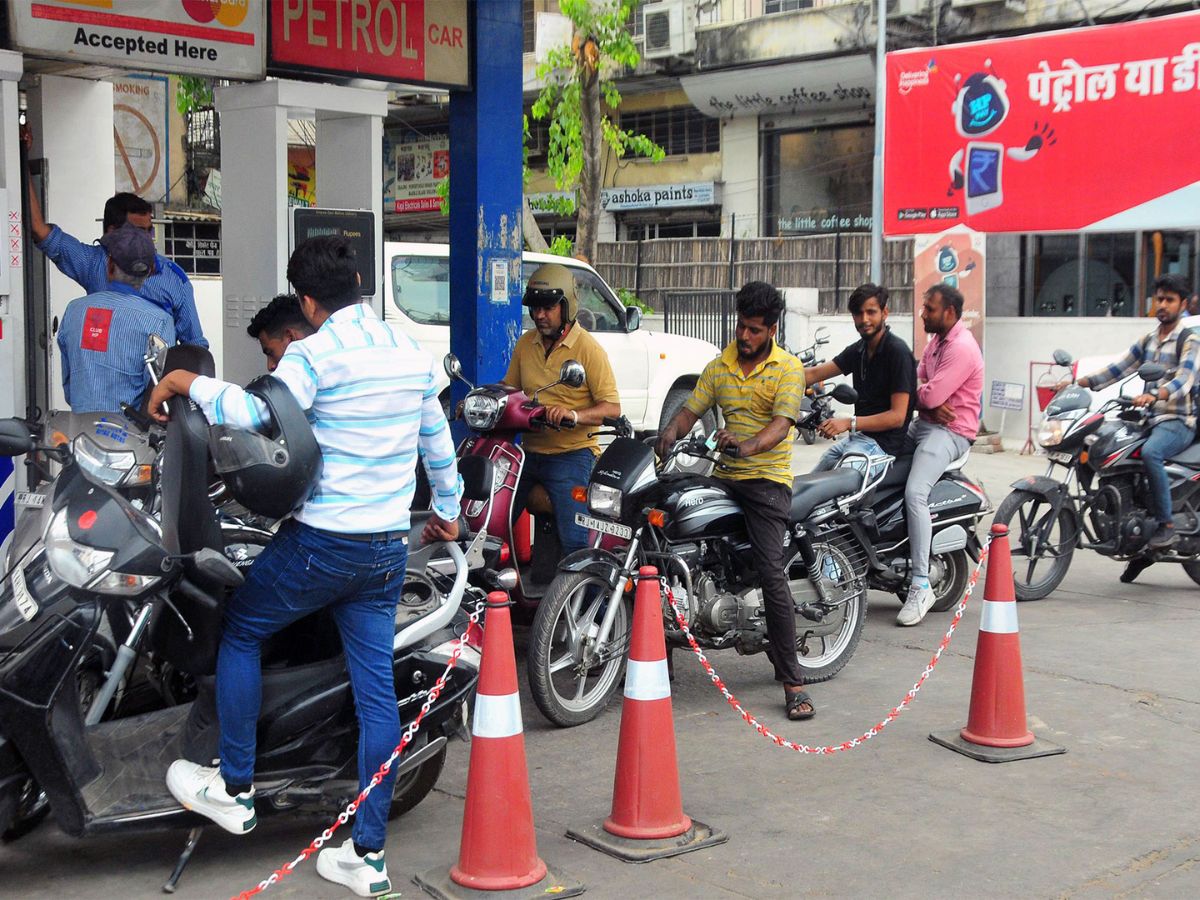
The period leading up to May 31 has been characterized by aggressive price adjustments. The latest round of hikes commenced around May 15, with incremental increases adding up rapidly. The most substantial single-day increase was observed on Monday, May 25, when petrol prices saw an increase of Rs 2.61 per litre and diesel by Rs 2.71 per litre in Delhi. This particular revision pushed petrol prices in the capital from Rs 99.51 to Rs 102.12 per litre, and diesel from Rs 92.49 to Rs 95.20 per litre. This was the fourth such hike within a span of less than two weeks, demonstrating a clear policy shift by the OMCs to pass on rising input costs, or to recoup previous losses, directly to the consumers. The cumulative impact of these successive increases since mid-May has translated into an additional burden of approximately Rs 7.5 per litre for motorists nationwide.
)
Pre-Election Cuts and Historical Context:
The recent hikes contrast sharply with the relative stability, and even a reduction, observed earlier in the year. Prior to the general elections, specifically in March 2024, the government had announced a Rs 2 per litre cut in both petrol and diesel prices. This move was widely perceived as an electoral incentive, providing temporary relief to consumers. Before this, fuel prices in India had largely remained unchanged since an excise duty cut implemented in May 2022. This pattern of price freezes or reductions ahead of significant political events, followed by subsequent increases, has become a recurring feature of India’s fuel pricing landscape, sparking debates about the transparency and fairness of the daily revision system.
Deconstructing the Price Tag: Supporting Data and Economic Impact
Understanding the final retail price of petrol and diesel involves peeling back several layers, each contributing significantly to the cost consumers bear at the pump. The composition of fuel prices in India is notoriously complex, encompassing the base crude oil cost, refining charges, freight, central excise duty, state Value Added Tax (VAT), and dealer commission.

Components of Fuel Price:
- Crude Oil Cost: This is the foundational element, dictated by international crude prices (like Brent or WTI) and the Rupee-Dollar exchange rate. India imports over 85% of its crude oil requirements, making it highly susceptible to global fluctuations.
- Freight & Refining Costs: After crude arrives, it incurs transportation costs and then undergoes refining to produce petrol and diesel. These costs, along with the refiner’s margin, are added.
- Central Excise Duty: Levied by the Union government, this is a fixed component (though it can be revised). It contributes significantly to the government’s revenue.
- State Value Added Tax (VAT): This is a state-specific tax, typically levied as a percentage of the base price plus excise duty. It varies widely across states, leading to significant price disparities. Some states also levy additional cesses or surcharges.
- Dealer Commission: This is the margin earned by petrol pump owners for their services.
The substantial role of central and state taxes means that roughly 40-50% of the retail price of fuel comprises taxes, making it a critical revenue generator for both levels of government.
)
City-Wise Price Overview (as of May 31, 2024):
| City | Petrol (Rs/Ltr) | Diesel (Rs/Ltr) |
|---|---|---|
| New Delhi | 94.72 | 87.62 |
| Mumbai | 104.21 | 92.15 |
| Kolkata | 103.94 | 90.76 |
| Chennai | 100.75 | 92.34 |
| Ahmedabad | 94.49 | 90.17 |
| Bengaluru | 102.92 | 89.02 |
| Hyderabad | 107.46 | 95.70 |
| Jaipur | 104.72 | 90.21 |
| Lucknow | 94.69 | 87.80 |
| Pune | 104.04 | 90.57 |
| Chandigarh | 94.30 | 82.45 |
| Indore | 106.48 | 91.88 |
| Patna | 105.58 | 93.80 |
| Surat | 95.00 | 89.00 |
| Nashik | 95.50 | 89.50 |
The data clearly illustrates the significant price variations across major Indian cities, primarily attributable to differing state VAT rates. Cities like Mumbai, Hyderabad, and Jaipur consistently record higher prices due to elevated state levies, impacting regional economies disproportionately.
)
The Ripple Effect: Broader Economic Implications:
Fuel is a fundamental input cost for almost every sector of the economy. Therefore, consistent increases in petrol and diesel prices trigger a cascading effect throughout the economic fabric:
- Inflationary Pressures: Higher fuel costs directly translate to increased transportation expenses for goods. This pushes up the prices of essential commodities, food items, and manufactured goods, fueling retail inflation. The Reserve Bank of India (RBI) often faces a dilemma in managing monetary policy when inflation is driven by supply-side shocks like fuel price hikes.
- Logistics and Transportation: The backbone of the economy, the logistics sector, is heavily reliant on diesel. Increased diesel prices directly impact freight charges, making supply chains more expensive and less efficient. Small and medium-sized transport businesses, often operating on thin margins, bear a significant brunt.
- Agriculture Sector: Farmers rely on diesel for tractors, irrigation pumps, and transporting produce to markets. Higher diesel costs escalate cultivation expenses, potentially impacting food security and rural incomes.
- Manufacturing and Services: Industries across the board face increased operational costs, which are eventually passed on to consumers, further dampening demand and economic growth.
- Common Man’s Burden: For daily commuters, the cost of personal transportation rises, squeezing household budgets and reducing discretionary spending. This can lead to a slowdown in consumption, a key driver of economic growth.
Navigating the Global Energy Landscape: A Paradox Unveiled
The recent domestic price hikes present a curious paradox when viewed against the backdrop of global crude oil markets. While India’s OMCs were aggressively raising prices, international crude benchmarks showed signs of easing.
)
The West Asia Conflict’s Shadow:
Geopolitical tensions, particularly the protracted conflict in West Asia involving the US, Israel, and Iran, have profoundly impacted global energy supplies. India, being a major energy importer, is highly vulnerable to these instabilities. The Gulf region is a critical source for India’s energy needs, supplying approximately 40% of its crude imports, 65% of its natural gas, and 90% of its LPG. Any disruption or perceived threat to shipping lanes, especially the Strait of Hormuz – a vital chokepoint for global oil transit – immediately sends jitters through the market, leading to price premiums due to supply uncertainty. The three-month-long conflict has undoubtedly kept a floor under crude prices, even during periods of apparent decline.
Global Crude Market Dynamics and Recent Downturn:
Despite the ongoing geopolitical risks, global crude oil prices had recently fallen to six-week lows. US West Texas Intermediate (WTI) for July delivery settled down 1.73 per cent at $87.36 a barrel, while the international benchmark Brent crude (August contract) fell 1.7 per cent to close at $91.12. This decline was largely attributed to reports of a tentative agreement between the United States and Iran to extend a ceasefire, coupled with the potential reopening of the Strait of Hormuz. Such developments typically signal increased supply security and reduced market anxiety, leading to a downward pressure on prices.
)
Explaining the Domestic-Global Disconnect:
The divergence between falling global crude prices and rising domestic fuel prices in India can be attributed to several factors:
- Lag Effect and Inventory Recoupment: OMCs often base their daily pricing on a 15-day rolling average of international crude prices and the Rupee-Dollar exchange rate. This means there’s a lag before global price changes fully reflect in domestic rates. Furthermore, during periods when domestic prices were kept stable despite rising global crude (e.g., during the pre-election phase), OMCs might have incurred significant under-recoveries (losses). The recent hikes could be an attempt to recoup these past losses and restore their financial health.
- Rupee Depreciation: A weaker Indian Rupee against the US Dollar makes crude oil imports more expensive, even if the dollar-denominated price of crude falls. This currency effect can negate some of the benefits of lower global crude prices.
- Government Revenue Imperatives: Fuel taxes are a substantial source of revenue for both central and state governments. After pre-election tax cuts, there might be pressure to increase prices to bolster fiscal coffers, especially given the ongoing need for developmental expenditures and managing the fiscal deficit.
- OPEC+ Decisions: The Organization of the Petroleum Exporting Countries and its allies (OPEC+) often manipulate supply to stabilize or boost prices. Their production cuts or increases significantly influence global crude availability and pricing, adding another layer of complexity.
Official Stances and Industry Perspectives
The perennial issue of fuel price volatility invariably draws responses from government bodies, OMCs, and economic experts, each offering a distinct perspective on the challenges and responsibilities.
)
Government’s Position:
The Ministry of Petroleum and Natural Gas, along with the Ministry of Finance, typically articulates the government’s stance. Official statements often emphasize the necessity of balancing consumer welfare with the nation’s fiscal stability. A common narrative points to the inherent volatility of global crude oil prices, over which India, as a net importer, has limited control. Officials might highlight efforts to diversify energy sources and promote renewable energy to reduce import dependence in the long run. Regarding taxes, the government usually defends the levies by stating that the revenue generated is crucial for funding infrastructure projects, social welfare schemes, and other developmental initiatives essential for the nation’s growth. The recent hikes, from this perspective, would be presented as a necessary adjustment to align with international market realities and ensure the OMCs’ financial viability.
Oil Marketing Companies (OMCs) Statement:
Major OMCs like Indian Oil, HPCL, and BPCL maintain that their pricing decisions are guided by market dynamics and a commitment to transparency. They reiterate that daily price revisions are based on a scientific formula, taking into account the average international crude oil price over a specific period (e.g., 15 days) and the Rupee-Dollar exchange rate. OMCs often assert that they operate on thin margins and must periodically adjust prices to cover their procurement costs, refining charges, and maintain operational efficiency. They might also point out that they absorb significant losses when domestic prices are frozen or reduced despite rising global crude costs, making subsequent price increases unavoidable to ensure their long-term sustainability and ability to invest in infrastructure.
)
Expert Analysis and Economist Views:
Economists and energy experts often call for greater transparency in India’s fuel pricing mechanism. Many advocate for bringing petrol and diesel under the ambit of the Goods and Services Tax (GST), which would lead to uniform pricing across states and potentially lower overall tax burdens. This move, however, faces significant hurdles due to states’ reluctance to forgo a substantial source of independent revenue. Experts also highlight the regressive nature of fuel taxes, which disproportionately affect lower and middle-income groups. They often suggest that the government should look for alternative revenue streams and implement long-term energy policies focused on reducing import dependence, increasing domestic production, and promoting energy efficiency to insulate the economy from global price shocks.
The Road Ahead: Implications and Outlook
The current stability in fuel prices offers a temporary psychological reprieve, but the underlying challenges persist. The trajectory of fuel prices in India remains highly susceptible to a confluence of global geopolitical events, international crude oil price movements, and domestic policy decisions.
)
Consumer Sentiment:
For the average Indian consumer, the series of hikes has led to growing frustration and a tangible impact on household budgets. High fuel prices erode purchasing power, especially for those reliant on personal vehicles or public transport, directly affecting their quality of life and discretionary spending capabilities. This sentiment often translates into broader public dissatisfaction and political pressure on the government.
Policy Challenges:
The government faces a delicate balancing act: managing inflation, ensuring robust economic growth, and maintaining fiscal health. High fuel taxes, while revenue-generating, contribute to inflationary pressures. Conversely, reducing taxes significantly can strain government finances. The debate around long-term energy security, diversification of crude sources, and the transition to cleaner energy alternatives will continue to dominate policy discussions.
)
Future Outlook:
The immediate future of fuel prices in India will largely hinge on the stability of the West Asian region and the global supply-demand dynamics for crude oil. Any escalation in conflicts or unexpected supply disruptions could quickly reverse the current trend of stable global prices. Furthermore, the Rupee’s performance against the US Dollar will continue to play a crucial role. Domestically, while the pre-election cuts have been reversed, the government’s willingness to absorb future shocks versus passing them on to consumers will be a critical determinant. The ongoing discussion about integrating fuel into GST remains a long-term aspiration that could bring structural changes to pricing.
In conclusion, the momentary stability in India’s fuel prices on May 31, 2024, provides a brief interlude in an otherwise volatile journey. It underscores the complex interplay of global geopolitics, international market forces, and intricate domestic taxation policies that dictate the cost of mobility for millions. As India continues its growth trajectory, navigating these energy challenges effectively will be paramount to sustaining economic progress and ensuring the well-being of its citizens.
