Bengaluru, India – In an era defined by rapid advancements in artificial intelligence, a candid admission from Alphabet CEO Sundar Pichai reverberated across the tech world: Google is "falling a little behind" in AI coding tools. This frank assessment, shared during a New York Times podcast, set a clear mandate for the company’s vast AI operations. Intriguingly, much of the crucial work to address this challenge and propel Google forward is now being spearheaded from an unexpected, yet strategically vital, location: India.
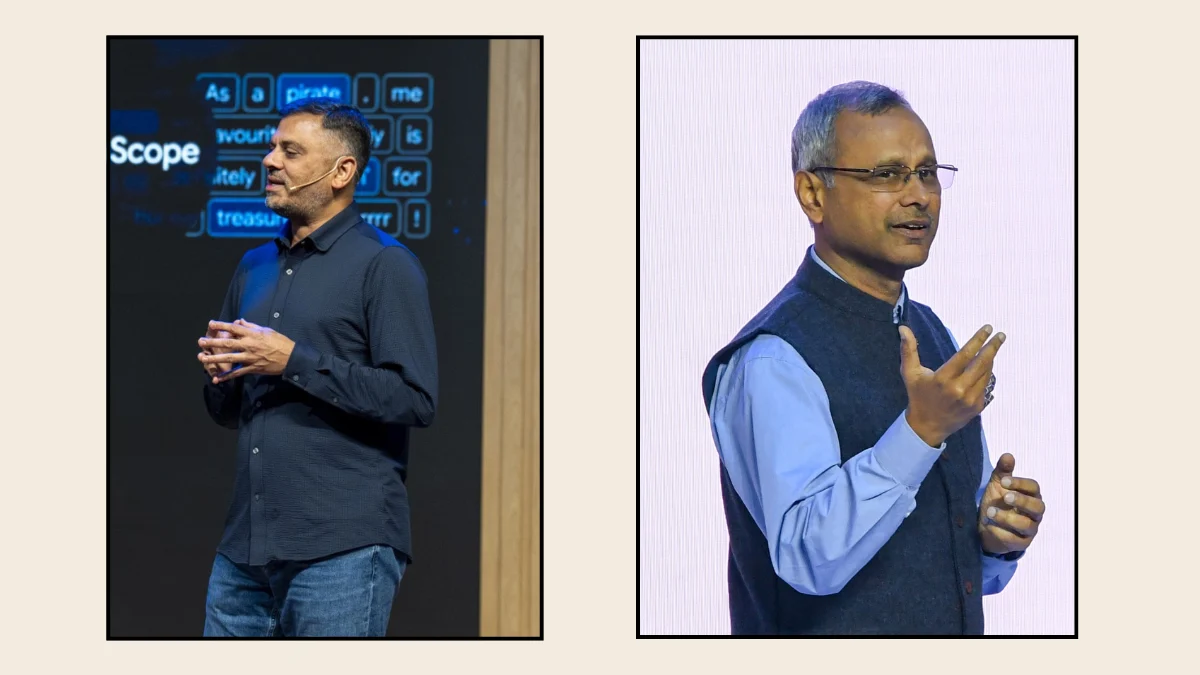
Google DeepMind’s operations in India, increasingly positioned as a critical proving ground for making its Gemini models cheaper, faster, and more adaptable for developers, are taking Pichai’s words to heart. Manish Gupta, who leads research for Google DeepMind India, and Seshu Ajjarapu, head of applied AI for the unit, have confirmed that closing the AI coding gap is not merely a priority; it is a top-tier imperative, designated with the highest internal urgency codes.
Main Facts: India’s Pivotal Role in Google’s AI Catch-Up
Sundar Pichai’s recent acknowledgment of Google’s lag in AI coding tools has placed an intense spotlight on the company’s global AI strategy. DeepMind India, a key research and development hub, is now at the epicentre of efforts to overcome this deficit. Executives Manish Gupta and Seshu Ajjarapu affirm that improving AI’s coding capabilities is a "P0, P1, P2" priority – Google’s internal shorthand for projects of paramount importance. This focus stems from the understanding that proficiency in coding offers verifiable, logical outputs, and significantly enhances a model’s broader performance.
The India unit is not only focused on coding but also on an "efficiency obsession" born from the unique market conditions of the subcontinent. Techniques developed here, such as the "Matryoshka-inspired transformer," which nests smaller AI models within larger ones to optimize resource consumption, are now being deployed globally, from Pixel phones to server-side applications. This approach, rooted in India’s vast population and price sensitivity, directly contributes to making Gemini models among the most efficient in the industry.
Furthermore, DeepMind India is exploring novel economic models for AI, suggesting a shift from token-based pricing to charging for completed tasks, especially for complex, non-deterministic "agentic" use cases. The team is also addressing critical enterprise concerns around data privacy and intellectual property, asserting that customer data remains proprietary and is never used for model training. Beyond foundational research, the India lab is actively developing AI solutions tailored for local needs in agriculture, healthcare, and multilingual communication, underscoring its "India first, but not India only" mandate.
Chronology: Google’s AI Journey and India’s Evolving Significance
Google’s foray into artificial intelligence dates back decades, evolving from early search algorithms to sophisticated machine learning systems. The acquisition of DeepMind in 2014 marked a significant turning point, bringing world-class expertise in deep learning and reinforcement learning into the Google fold. DeepMind quickly gained renown for breakthroughs in games like Go and protein folding with AlphaFold, establishing itself as a leading AI research powerhouse.
The development of Large Language Models (LLMs) like Google’s LaMDA and eventually the multimodal Gemini family represents the culmination of years of intense research and massive investment. However, the AI landscape has become fiercely competitive, particularly with the emergence of powerful coding assistants and generative AI tools from rivals like OpenAI (backed by Microsoft) and Meta. OpenAI’s ChatGPT and GitHub Copilot, in particular, demonstrated impressive capabilities in generating and assisting with code, prompting Pichai’s recent admission about Google’s position.
Google’s strategic decision to establish and expand DeepMind’s presence in India reflects a broader recognition of the country’s burgeoning tech talent pool, its vast and diverse user base, and its unique market dynamics. Over the past decade, India has transformed into a global hub for software development and technological innovation, making it an ideal environment for testing and refining AI models designed for scale and efficiency. The "Matryoshka-inspired transformer" technique, for instance, first deployed on the Nano 3 model for Pixel phones, emerged from the Bengaluru team. This innovative approach, which allows applications to summon only the necessary model size for a given task, was a direct response to the need for extending battery life on devices – a critical consideration in a market where mobile computing dominates. This local innovation, born from Indian market conditions, has now become a global asset for Google, illustrating the increasingly export-oriented nature of the India lab’s work.
The emphasis on cost-effectiveness and efficiency, frequently highlighted by Gupta and Ajjarapu, is not an afterthought but a foundational principle deeply rooted in India’s economic realities. With a population of over 1.4 billion and a significant portion of users being price-sensitive, developing AI models that are inherently efficient in terms of compute resources and energy consumption becomes paramount. This pressure to optimize has, in turn, fed back into the core development of Gemini models, pushing them to be among the most efficient in the industry, a competitive advantage that transcends geographical boundaries.
Supporting Data: The Pillars of DeepMind India’s Strategy
The strategic thrust from Google DeepMind India is multifaceted, underpinned by a deep understanding of both technological imperatives and market realities.
The Crucial "Coding Gap" and Its Implications
Pichai’s concern about falling behind in AI coding tools is not unfounded. The market for AI-powered coding assistants is booming, with products like GitHub Copilot rapidly gaining traction among developers. These tools leverage LLMs to suggest code, complete functions, debug, and even generate entire blocks of code from natural language prompts. Their success has demonstrated a clear demand for AI that can augment human programmers, accelerate development cycles, and reduce errors.
Manish Gupta and Seshu Ajjarapu’s declaration of coding as a "P0, P1, P2" priority underscores its fundamental importance. "Code is a top priority," Mr. Ajjarapu stated, indicating the highest levels of internal resource allocation and focus. The reasoning is sound: coding tasks demand structured logical reasoning and offer easily verifiable outputs. When an AI model generates code, its correctness can be objectively tested and measured. This makes coding an ideal benchmark for evaluating and improving an AI model’s foundational reasoning capabilities. Enhanced coding proficiency, therefore, has "knock-on benefits" for a model’s performance across a wider range of tasks, improving its ability to understand complex instructions, generate precise responses, and exhibit more reliable reasoning.
Efficiency through Innovation: The Matryoshka Principle
The "Matryoshka-inspired transformer" technique, developed by the Bengaluru team, exemplifies Google’s commitment to efficiency. Named after the Russian nesting dolls, this technique involves designing models such that smaller, less computationally intensive versions are nested within a larger, more powerful one. This allows an application to dynamically call upon only the amount of model complexity required for a specific task.
For instance, on a Pixel phone running the Nano 3 model, a simple query might only activate a tiny, efficient subset of the model, conserving battery life. A more complex task would then seamlessly engage a larger portion. This adaptive scaling is a game-changer for edge devices, where computational resources and battery life are constrained.
The brilliance of this innovation lies in its portability. Google is now working to extend this nesting principle to server-side workloads. The payoff here isn’t battery savings but significantly lower compute costs. In a world where AI models are consuming vast amounts of energy and processing power, any technique that reduces this footprint translates directly into operational savings and a more sustainable AI infrastructure. This efficiency obsession, as both executives pointed out, is directly "rooted in India’s market conditions." The immense scale of India’s population combined with its price sensitivity creates an inherent demand for resource-optimized solutions, pushing the boundaries of AI efficiency for global benefit. Mr. Gupta further detailed research into finding "the right amount of thinking" a model should apply to a problem, balancing performance on hard tasks with avoiding wasted compute on simple ones.

The Economics of AI: Beyond Tokens
Sundar Pichai himself recently highlighted the sheer scale of token consumption in the current AI race, a significant cost factor for companies. Seshu Ajjarapu framed this issue in terms of "economic value," articulating Google’s mission to "lower the cost per token while raising the quality of what each token produces." This is particularly challenging for "agentic use cases," where AI models perform sequences of actions, often interacting with external tools, and whose outputs are non-deterministic, making them difficult to price accurately under a token-based model.
Mr. Ajjarapu suggested that the industry’s pricing model may need to evolve, eventually shifting away from charging per token and towards charging for completed tasks. This would represent a fundamental change, moving from a raw resource consumption model to a value-based one. For enterprises, this could offer greater predictability and cost control, making AI adoption more appealing and transparent.
Enterprise Trust and Data Sovereignty
A critical barrier to enterprise AI adoption is trust, particularly concerning data privacy and intellectual property. Mr. Ajjarapu highlighted a crucial distinction for customers deploying foundation models: "public data," on which models are pre-trained, versus "private data," which the model itself never sees. This distinction is paramount for enterprises safeguarding sensitive information.
Manish Gupta reinforced Google’s "unambiguous" contractual position: customer data remains the customer’s property, models do not learn from it, and all training occurs solely on the original pre-training corpus. This commitment to data separation and non-learning from private customer data is a cornerstone for building enterprise confidence, ensuring that a company’s unique context, workflows, tools, and domain expertise – which Google believes forms the new "competitive moat" – remain secure and proprietary.
Official Responses: Leadership’s Vision and Commitment
The remarks from Sundar Pichai, followed by the detailed explanations from Manish Gupta and Seshu Ajjarapu, paint a clear picture of Google’s strategic response to the evolving AI landscape. Pichai’s public admission, while a rare moment of vulnerability from a tech giant, served as a powerful call to action, signaling the seriousness with which Google views the competitive challenge in AI coding tools.
Gupta and Ajjarapu’s responses from the DeepMind India hub are not just reiterations of corporate directives but offer profound insights into the execution of Google’s AI strategy. Their emphasis on coding as a "P0, P1, P2" priority reveals the internal mobilization underway. This isn’t just about catching up; it’s about fundamentally improving the reasoning capabilities of AI models. Their perspective highlights that the benefits extend far beyond merely generating code, impacting the core intelligence of the Gemini family.
Furthermore, their articulation of India as a critical "proving ground" is a significant official statement. It elevates India from a mere development center to a strategic innovation hub whose unique market pressures drive global advancements. The "efficiency obsession" rooted in India’s population size and price sensitivity is an official recognition that local challenges can inspire universal solutions. This ethos is directly shaping the development of Gemini models to be more efficient, a characteristic that benefits all users, regardless of geography.
The executives’ willingness to discuss future pricing models, moving away from tokens to task-based charges, signals an official acknowledgment of current industry limitations and a proactive stance toward shaping the economic future of AI. This forward-thinking approach, coupled with explicit assurances on enterprise data privacy and IP protection, demonstrates Google’s commitment to building a trustworthy and economically viable AI ecosystem. Their statements confirm that Google is not only focused on technological breakthroughs but also on the practical, ethical, and economic implications of widespread AI adoption.
Implications: Reshaping AI for Global Impact
The work being done at Google DeepMind India carries significant implications, not just for Google but for the broader AI industry and societies worldwide.
For Google: Reasserting AI Leadership
By prioritizing the "coding gap" and channeling significant resources through its India operations, Google aims to reassert its leadership in generative AI. Success in developing highly capable and efficient AI coding tools would not only strengthen Google’s developer ecosystem but also enhance the overall intelligence and utility of its Gemini models. This strategic focus is crucial for maintaining competitiveness against rivals like Microsoft/OpenAI and Meta, securing its position at the forefront of the AI revolution. The efficiency gains achieved through techniques like the Matryoshka-inspired transformer also translate into a significant competitive advantage, reducing operational costs and potentially allowing Google to offer more affordable AI services.
For India: A Catalyst for Technological and Social Advancement
India’s role as a "proving ground" for AI models designed for efficiency and scale positions the country as a vital global innovation hub. This fosters the growth of local talent, strengthens the domestic tech ecosystem, and attracts further investment.
Beyond foundational research, the India team is actively applying AI to address pressing local challenges, with potential for global replication:
- Agriculture: The development of an agricultural landscape model using satellite imagery, capable of identifying farm boundaries and crop types at the individual field level, has profound implications. This data, made available via API to Indian startups, can revolutionize crop insurance, credit assessment, and precision farming, offering critical support to millions of farmers.
- Healthcare: Applications built on MedGemma for leprosy detection and reproductive health, with the intent to open-source them, promise to significantly improve public health outcomes in underserved communities. These tools can democratize access to diagnostics and information, particularly in regions with limited medical infrastructure.
- Multilingual Search and Digital Inclusion: The push to extend Gemini’s language capabilities to 25 Indian languages, including Sanskrit, is a monumental step towards digital inclusion. India’s linguistic diversity often creates barriers to technology adoption. By making AI accessible in local languages, Google can unlock vast new user bases, from small merchants in Surat using it for daily operations to large enterprises like Tata Steel leveraging it for customer care and shop-floor safety. This initiative has the potential to bridge the digital divide and foster economic participation across diverse communities.
For the AI Industry: New Paradigms for Development and Economics
DeepMind India’s work on efficiency and novel economic models could reshape industry standards. The shift from token-based pricing to task-based charging, if widely adopted, could make AI more accessible and predictable for enterprises, accelerating broader adoption and fostering innovation in agentic AI. The emphasis on data privacy and IP safeguarding also sets a high bar for responsible AI deployment, influencing how other companies approach enterprise trust.
The "India first, but not India only" mandate articulated by Mr. Gupta clarifies the lab’s dual purpose: to solve India-specific problems with AI, while simultaneously developing techniques and models that have universal applicability. This approach underscores a global trend where localized innovation, driven by unique regional needs, increasingly contributes to advancements that benefit the entire world. While Google DeepMind’s robotics ambitions may remain centered elsewhere, the India lab’s focus on foundational model efficiency, ethical deployment, and tailored applications ensures its critical role in shaping the future of AI.
The cautious approach to monetizing AI Overviews and AI Mode in Search, with Mr. Ajjarapu stating, "If we create user value, we will figure out the rest," signifies a long-term vision focused on user utility over short-term revenue gains. This philosophy, driven from the front lines of Google’s AI development in India, is central to building sustainable and impactful AI technologies that truly serve humanity.