

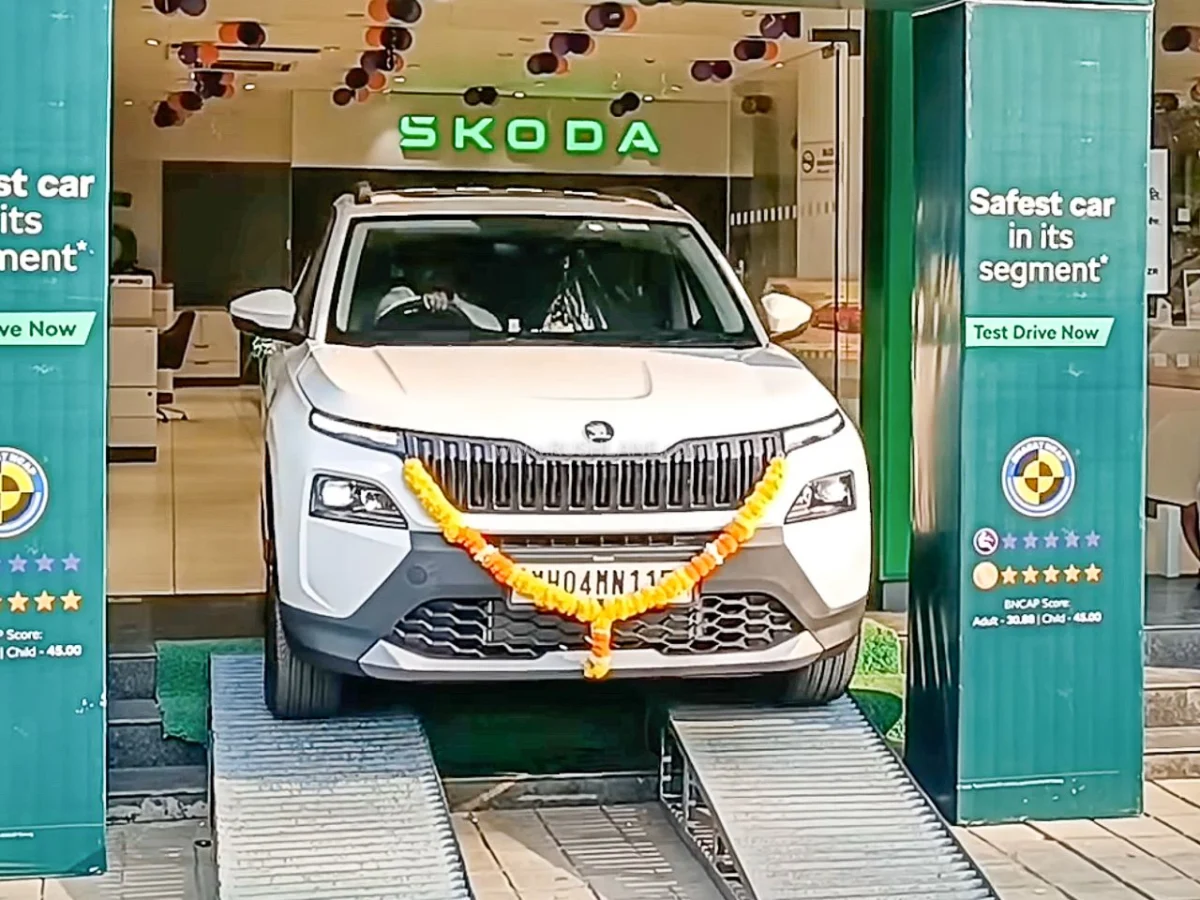
The Indian automotive sector is on the precipice of one of its most significant structural transformations in decades. Volkswagen Group, the German automotive titan that has maintained a presence in India for over twenty years, is reportedly in advanced negotiations with the JSW Group, led by billionaire Sajjan Jindal. The crux of these discussions involves a potential divestment of a majority stake in Skoda Auto Volkswagen India Pvt Ltd (SAVWIPL) to the Indian conglomerate.
This move, if finalized, would represent a radical departure from Volkswagen’s long-standing strategy of maintaining independent control over its global subsidiaries. It signals a pragmatic pivot toward a "local-first" partnership model, aimed at navigating the unique complexities of the Indian market while mitigating the financial risks of an increasingly expensive global transition to electrification.
The Potential Deal: Breaking Down the JSW-Volkswagen Negotiation
According to reports initially surfaced by Bloomberg, the discussions between Volkswagen AG and the JSW Group have reached a critical "advanced" stage. While a definitive agreement has not yet been inked, insiders suggest that a framework could take shape within the coming weeks.
Valuation and Investment Hurdles
The primary sticking points remaining in the negotiation are the valuation of SAVWIPL’s Indian assets and the specific capital commitments required from both parties. Volkswagen’s Indian operations include two sophisticated manufacturing facilities—one in Chhatrapati Sambhajinagar (formerly Aurangabad) and a high-volume plant in Chakan, Pune. These assets, combined with a robust R&D infrastructure developed under the "India 2.0" strategy, represent billions of euros in historical investment.
For JSW, the acquisition of a majority stake would grant them immediate access to:
- Volkswagen’s Vehicle Architectures: Specifically the MQB-A0-IN platform, which currently underpins the Skoda Kushaq, Skoda Slavia, Volkswagen Taigun, and Volkswagen Virtus.
- Engineering Expertise: Decades of German precision engineering and safety standards.
- Manufacturing Ecosystem: A well-established supply chain and a network of hundreds of dealerships across the country.
The Statistical Reality: Why Volkswagen Group is Seeking a Partner
The timing of these negotiations is not coincidental. Despite the launch of several India-specific products and a heavy emphasis on localization, Volkswagen Group’s performance in the Indian market has hit a plateau, contrasting sharply with the explosive growth of its competitors.
Q2 2026 Sales Analysis: A Tale of Two Realities
The second quarter of 2026 served as a sobering reminder of the challenges facing European brands in India. While the overall passenger vehicle (PV) market in India witnessed a staggering growth of 25.60% year-on-year (YoY), Skoda and Volkswagen found themselves swimming against the tide.
| Brand | Q2 2025 Sales | Q2 2026 Sales | YoY Growth/Decline |
|---|---|---|---|
| Skoda | 19,056 | 18,866 | -1.00% |
| Volkswagen | 8,788 | 7,914 | -9.95% |
| Combined SAVWIPL | 27,844 | 26,780 | -3.82% |
During this same period, domestic and other Asian manufacturers posted record-breaking numbers:
- Tata Motors: Recorded a massive 45.48% growth.
- Maruti Suzuki: Grew by 33.45%.
- Mahindra & Mahindra: Saw a 19.80% uptick.
- Kia India: Increased volumes by 19.32%.
Combined, Skoda and Volkswagen accounted for only 2.1% of the 1,274,497 passenger vehicles sold in India during Q2 2026. This marginal market share is particularly concerning given that the group has invested over €1 billion into its India 2.0 strategy since 2018.

The Localization Paradox: From India 2.0 to the Skoda Kylaq
Volkswagen Group’s struggle in India is not due to a lack of effort. The "India 2.0" project was designed specifically to address the high costs associated with European platforms. By localizing the MQB-A0-IN platform to nearly 95%, the group was able to price its SUVs and sedans competitively.
However, the "sweet spot" of the Indian market—the sub-4-meter compact SUV segment—remained elusive until recently. The introduction of the Skoda Kylaq was intended to be the volume driver the group desperately needed. While the Kylaq has garnered positive reviews for its driving dynamics and safety, it has yet to achieve the "scale" required to challenge the dominance of the Maruti Brezza, Tata Nexon, or Hyundai Venue.
The Cost of Competition
The Indian market is notoriously price-sensitive, yet consumers demand premium features and high fuel efficiency. Volkswagen’s TSI (Turbocharged Stratified Injection) engines, while acclaimed for performance, face stiff competition from the hybrid offerings of Maruti/Toyota and the aggressive EV portfolios of Tata and Mahindra. A partnership with JSW could provide the necessary financial cushion to experiment with alternative powertrains, including more affordable electric vehicles (EVs).
JSW’s Ambition: Building an Automotive Empire
For the JSW Group, a deal with Volkswagen would be the latest move in a blitzkrieg-style entry into the automotive sector. Under the leadership of Sajjan Jindal, JSW has made it clear that it intends to be a top-tier player in the Indian mobility space.
- The MG Motor Joint Venture: JSW recently acquired a 35% stake in MG Motor India (owned by China’s SAIC), rebranding it as JSW MG Motor India. This gave them access to EV technology and a ready-made manufacturing plant in Halol, Gujarat.
- The JSW Motors Brand: Beyond joint ventures, JSW is reportedly developing its own line of vehicles under the "JSW Motors" banner, including potential collaborations with Chinese firm Chery for the Jaecoo brand.
- The Volkswagen Connection: By taking a majority stake in SAVWIPL, JSW would effectively control two major automotive entities in India, positioning itself as a formidable rival to Tata Motors and Mahindra. JSW could leverage its strengths in steel production and energy to optimize the supply chain costs for Volkswagen’s premium vehicles.
Chronology of a Three-Year Courtship
The potential partnership between JSW and Volkswagen did not happen overnight. It is the result of a long-gestating dialogue that has evolved alongside the shifting global economic climate.
- 2023-2024: Initial discussions were centered on facility sharing. JSW explored utilizing Volkswagen’s underutilized production capacity in Maharashtra for its own upcoming automotive projects.
- Late 2024: Volkswagen Group began a global restructuring and cost-cutting exercise. The realization set in that maintaining a 100% owned subsidiary in a market as volatile as India required excessive capital expenditure.
- Early 2025: Volkswagen explored a partnership with Mahindra & Mahindra, specifically regarding the supply of MEB (Modular Electric Drive Matrix) components for Mahindra’s "Born Electric" SUVs. However, these talks remained limited to component supply rather than a full-scale equity partnership.
- Mid-2026: Discussions with JSW pivoted from "cooperation" to "equity transfer." JSW expressed interest in a majority stake, and a cash-strapped Volkswagen AG became more receptive to the idea of ceding control in exchange for local expertise and capital infusion.
Official Stance and Market Implications
When questioned about the potential deal, Volkswagen Group has maintained a characteristic degree of corporate caution. A spokesperson stated that the company "continuously evaluates business opportunities and options for its India strategy" to ensure sustainable growth, while declining to comment on "market rumors" regarding JSW.
Strategic Implications for the Indian Market
If this deal reaches fruition, the implications for the Indian automotive industry are profound:
- A New Power Center: The emergence of JSW as a "master brand" overseeing both MG and Volkswagen/Skoda operations would create a new powerhouse in the mid-to-premium segment.
- Accelerated EV Adoption: JSW is heavily focused on the green energy transition. Their influence could accelerate the "PEAK EV" project within SAVWIPL, potentially bringing more affordable VW-badged electric cars to India sooner than planned.
- The "Local" Advantage: Volkswagen has often been criticized for a "Euro-centric" approach to feature sets and maintenance costs. An Indian majority owner like JSW could force a more aggressive approach to service costs and localized feature sets (such as advanced infotainment and cabin cooling) that Indian buyers prioritize.
- Global Precedent: This move mirrors a broader trend where global OEMs are looking for local partners in complex markets. Just as Stellantis and Leapmotor have partnered, and SAIC partnered with JSW, Volkswagen is acknowledging that "going it alone" is no longer the most viable path to 5% market share in India.
Conclusion: The Road Ahead
The potential sale of a majority stake in SAVWIPL to JSW Group marks the end of an era for Volkswagen in India and the beginning of a potentially more lucrative, albeit shared, future. For the German giant, it is a retreat from ownership but a reinforcement of presence. For JSW, it is a giant leap toward becoming an automotive titan.
As the industry awaits a formal announcement, one thing is clear: the Indian automotive market is no longer a place where global brands can dictate terms from afar. Success now requires a deep, equity-based integration with local industrial powerhouses. Whether this partnership can finally push Skoda and Volkswagen past the elusive 5% market share remains to be seen, but the JSW-Volkswagen alliance certainly has the "steel" to try.
