

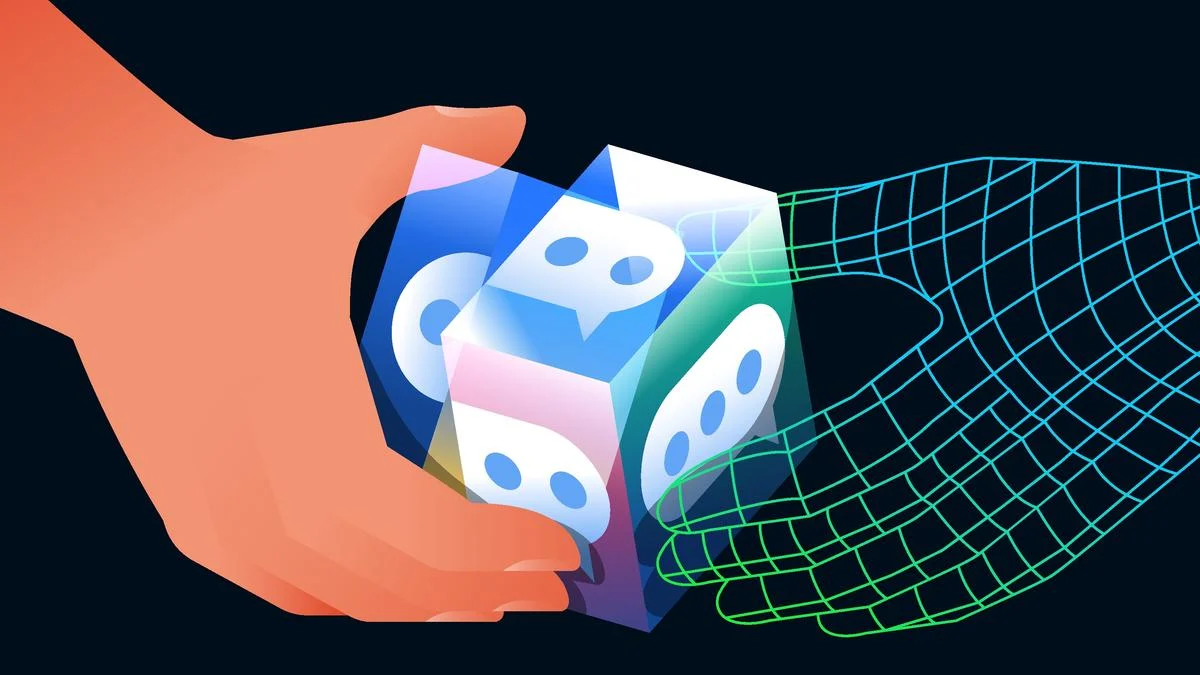
In an era where the boundary between human cognition and algorithmic processing is increasingly blurred, a singular, haunting question has begun to dominate the global discourse: “Will I matter anymore?” As generative artificial intelligence (AI) begins to outperform humans in data synthesis, coding, and even basic creative writing, the anxiety regarding human obsolescence is no longer confined to science fiction; it is a central concern of modern pedagogy and professional life.
In his latest work, Open Intelligence: Education Between Art and Artificial, author and academic Saikat Majumdar explores this existential crossroads. Through a series of inquiries into the nature of learning, Majumdar argues for the cultivation of the “truly personal” and the “stubbornly human.” He suggests that the only way to remain relevant in a world of “conjoint” intelligence is to lean into the qualities that machines find hardest to replicate: subjectivity, narrative intelligence, and the unpredictable fusion of the physical and the conceptual.
Main Facts: The Crisis of the "Patterned" Mind
The primary tension identified in Open Intelligence is the vulnerability of traditional education systems. For decades, global education has been anchored in "symbolic systems"—primarily languages and numbers. These are domains of logic, syntax, and patterns. Ironically, these are precisely the areas where AI, powered by Large Language Models (LLMs), has already matched or exceeded human potential.
Majumdar posits that the academic systems currently in place are inadvertently training humans to be second-rate robots. By focusing on hard-coded skills and predictable outcomes, we are preparing students for a job market that is being rapidly automated. The "main facts" of the current crisis, according to Majumdar, include:
- The Automation of the Conceptual: AI is highly efficient at any task built on regular patterns or algorithms, such as data gathering, legal research, or basic accounting.
- The Resilience of the Physical-Conceptual Fusion: Human aptitudes that combine physical dexterity with subjective decision-making (the "plumber’s problem") remain beyond AI’s current reach.
- The Obsolescence of Single-Track Expertise: The "specialist" who knows only one discipline is more vulnerable than the "contra-disciplinary" individual who can bridge disparate fields.
Chronology: From Rote Learning to the "Open Intelligence" Paradigm
The evolution of Majumdar’s argument follows a clear trajectory from the historical roots of education to the urgent needs of the 21st century.
The Historical Foundation
Historically, education—particularly in postcolonial contexts like India—was designed to produce efficient cogs for administrative and industrial machinery. This model prioritized rote learning and the mastery of specific, siloed disciplines. Majumdar notes that while this served a purpose in the industrial age, it is fundamentally ill-equipped for the digital age.
The Rise of Multiple Intelligences
The narrative then shifts toward the late 20th-century theories of holistic education. Majumdar draws upon the work of Howard Gardner, who proposed the "Theory of Multiple Intelligences," as well as the philosophies of Rabindranath Tagore, Jiddu Krishnamurti, and Rudolf Steiner. These thinkers championed an education that goes beyond the purely mental to include the bodily-kinaesthetic, the musical, the spatial, and the intra-personal.
The AI Inflection Point
The current moment represents an "inflection point." With the release of sophisticated AI tools, the theoretical need for holistic education has become a practical necessity for survival. Majumdar’s book serves as a contemporary manifesto for this shift, moving from the "what" of learning (content) to the "how" of being (subjectivity).
Supporting Data: The Case for Contra-Disciplinary Personalities
Majumdar’s thesis is supported by observations of the modern workforce and the changing nature of professional success. He introduces the concept of "contra-disciplinary personalities"—individuals who combine unlikely sets of abilities that do not traditionally "fit" together.
The Intersection of Unlikely Skills
Data from the liberal arts education model suggests that the most resilient professionals are those who operate at the intersections of fields. Majumdar cites examples such as:
- Computer Science + Music: Bridging the gap between mathematical logic and auditory aesthetics.
- Economics + Languages: Combining quantitative analysis with the nuances of cultural communication.
- Medicine + History/Narrative: Understanding that a patient is not just a biological data point but a story.
The "Hinton" Metric
Majumdar references Geoffrey Hinton, often called the "Godfather of AI," who observed that a plumber’s job is actually "safer" from AI than many white-collar roles. This is because a plumber must navigate a physical, unpredictable world while making conceptual decisions. This fusion of the "bodily and the conceptual" is a unique human data point that AI struggles to simulate.
Official Responses: Majumdar on Reclaiming Human Agency
In his detailed responses regarding the future of education, Majumdar emphasizes that the "real danger" to humanity does not come from machines, but from humans becoming machine-like.
On Subjectivity and the "I"
One of the most profound challenges Majumdar addresses is the role of the individual in a collectivist society. In many non-Western cultures, the "we" is prioritized over the "I." However, Majumdar argues that liberal education—premised on the "free individual"—is essential for reclaiming agency from machines. He suggests that an "individualistic education" does not have to result in the dismissal of community; rather, it can lead to the "reinvention of traditional structures." By sharpening personal critical thought, individuals can infuse democratic structures into traditional units like the family, moving away from hierarchies of age, gender, and caste.
The Imperative of Narrative Intelligence
Majumdar, a writer himself, places "narrative intelligence" at the center of human uniqueness. While AI can archive data and identify patterns, it cannot "create a story" in the way a human can. Narrative-making is a marker of personalized subjectivity.
"Arguments, pitches, proposals, reports—almost every form of persuasion and deliberation requires building and understanding narratives," Majumdar states. In the market and in politics, it is the narrative that holds power. Those who can craft and understand these stories will remain powerful even in the machine age.
The Ethical Disclosure
In a poignant "AI disclosure," Majumdar admits to being "far more interested in the artificial than shaped by it." He acknowledges using AI for research and data gathering but maintains that the core of his work—the fusion of personal and linguistic intelligence—remains "stubbornly human." He asserts that, for now, chatbots cannot match the depth of human-authored narrative.
Implications: Survival Through Social Consciousness
The final section of Majumdar’s discourse focuses on the broader implications for society and the survival of the planet. He argues against the "false binary" that separates technical fields from the humanities.
Breaking the Technical-Narrative Binary
The separation of technical education from social consciousness has, according to Majumdar, led to a "crisis of progress." When engineers, doctors, and lawyers are trained purely in "technical skills" without an understanding of human narrative or environmental impact, the results can be destructive.
- Environmental Degradation: Technical progress that ignores the narrative of the planet leads to ecological collapse.
- AI Ethics: If AI is trained on a "single track" of progress without being imbued with humane social consciousness, it may lead to the "swift elimination or destructive transformation of life."
The New Educational Mandate
The implication is clear: The re-centering of the "humane" in technical and professional fields is no longer an idealistic luxury; it is a prerequisite for survival.
Education must move toward a model where:
- Ethics are Innate: Technical fields must be taught through the lens of human struggle and social responsibility.
- Subjectivity is Encouraged: Students must be taught to find their "idiosyncratic voices" to resist becoming mere data-inputters for AI systems.
- Holism is Standard: The "multiple intelligences" model must replace the "symbolic system" model to ensure that human uniqueness is foregrounded.
Conclusion: The Future of the "Stubbornly Human"
Saikat Majumdar’s Open Intelligence does not advocate for a rejection of AI, but for a strategic "companionship" with it. By identifying what is "truly personal"—our ability to tell stories, our physical-conceptual fusion, and our contra-disciplinary curiosity—we can define a new space for human relevance.
As we move deeper into the 21st century, the most valuable "skill" may not be coding or data analysis, but the ability to remain "stubbornly human." In the end, the question "Will I matter anymore?" can only be answered by the degree to which we refuse to be defined by the very patterns that machines have now mastered. The future of education lies not in competing with the artificial, but in cultivating the art of being ourselves.
