

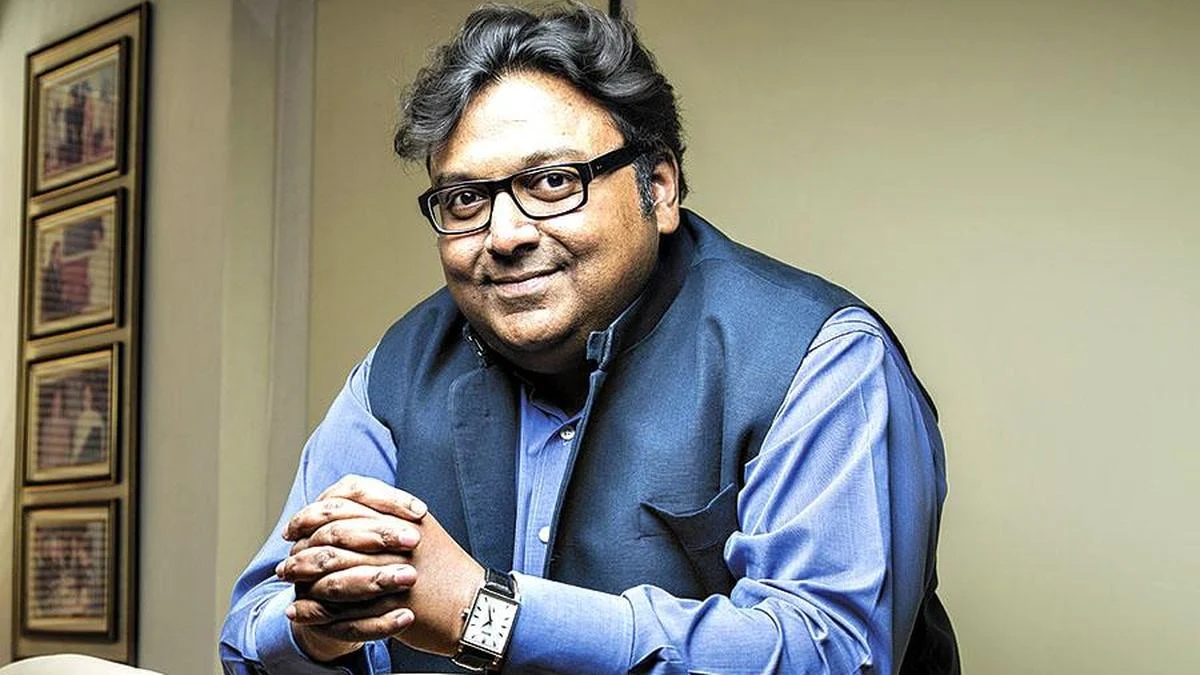
THIMPHU, BHUTAN — In a significant development for the South Asian literary landscape, celebrated Indian author Ashwin Sanghi has been named the inaugural recipient of the JSW Prize in Literature. The prestigious award, instituted by the Drukyul’s Literature and Arts Festival (widely known as Bhutan Echoes), marks a new chapter in recognizing intellectual and creative excellence in the region.
The announcement, made on July 17, 2026, places Sanghi—a master of the mythological thriller—at the center of a burgeoning cultural bridge between India and the Himalayan Kingdom. The prize will be formally conferred during the 15th edition of the festival, scheduled to take place in the Bhutanese capital, Thimphu, from August 1 to 3, 2026.
Main Facts: A Prize Rooted in Legacy and Creativity
The JSW Prize in Literature is not merely a literary citation; it is a commemorative initiative designed to honor the 70th birth anniversary of His Majesty Jigme Singye Wangchuck, the Fourth King of Bhutan. Known as the "Great Fourth," King Jigme Singye Wangchuck is globally renowned for his philosophy of Gross National Happiness (GNH), which prioritizes cultural preservation and psychological well-being over purely material growth.
The Inaugural Recipient: Ashwin Sanghi
Ashwin Sanghi, often referred to as the "Dan Brown of India," has redefined the Indian commercial fiction market. His selection as the first-ever recipient of the JSW Prize underscores the festival’s commitment to "The Art of Being Human"—the theme for its 2026 edition. Sanghi was chosen for his profound ability to interweave ancient Vedic scholarship with fast-paced contemporary narratives, making complex philosophical and historical concepts accessible to a global audience.
The Festival Context
Drukyul’s Literature and Arts Festival, or Bhutan Echoes, has evolved into one of the most anticipated cultural events in Asia. An annual gathering held in the serene valley of Thimphu, it serves as an international platform for writers, artists, and thinkers to engage in a cross-pollination of ideas. The 15th edition promises to be its most ambitious yet, with the JSW Prize serving as its crowning jewel.
Chronology: The Evolution of a Literary Titan and a Festival
To understand the significance of this award, one must look at the parallel journeys of the recipient and the institution conferring it.
2007–2012: The Rise of the Bharat Series
In 2007, Ashwin Sanghi self-published his first novel, The Rozabal Line, under the pseudonym Shawn Haigins. The book, which explored the provocative theory that Jesus Christ might have survived the crucifixion and lived in Kashmir, eventually found a mainstream publisher and became a sensation. This was followed by Chanakya’s Chant (2010), a dual-timeline narrative that juxtaposed ancient political strategist Chanakya with a modern-day kingmaker. By the time The Krishna Key was released in 2012, Sanghi had established himself as a pioneer of the "myth-thriller" genre in India.
2010: The Inception of Bhutan Echoes
The festival was born in 2010 (originally as "Mountain Echoes") as an initiative of the India-Bhutan Foundation. Over the next decade and a half, it transitioned into "Bhutan Echoes: Drukyul’s Literature and Arts Festival," gaining patronage from Her Majesty the Queen Mother Ashi Dorji Wangmo Wangchuck. It became a sanctuary for intellectual discourse, free from the commercial pressures of larger global lit-fests.
2020–2025: Expanding Horizons
While the world grappled with the pandemic, Sanghi continued to expand his "Bharat Series" with The Vault of Vishnu (2020) and The Magicians of Mazda (2022). Simultaneously, the festival organizers began conceptualizing a way to honor the Fourth King’s legacy. In 2025, the JSW Prizes were officially conceived, intended to launch in 2026 to coincide with the King’s 70th birth anniversary year.
July 2026: The Announcement
On July 17, 2026, the festival committee officially announced Sanghi as the first laureate, citing his "remarkable body of work" that bridges the ancient and the modern.
Supporting Data: The Sanghi Impact and Bhutanese Cultural Reach
The selection of Ashwin Sanghi is backed by a formidable track record of literary success and cultural influence.
Literary Footprint
- Sales and Reach: Sanghi’s books have consistently topped bestseller lists in India, with millions of copies in print. His works have been translated into multiple languages, including Tamil, Hindi, Marathi, and Gujarati, reflecting his broad appeal across linguistic divides.
- Genre Leadership: Sanghi is credited with being part of the "trinity" of Indian mythological fiction, alongside Amish Tripathi and Anand Neelakantan. However, Sanghi’s unique selling point remains his "theological research," where he often spends years documenting the historical and scientific basis of his plots.
- The Bharat Series: His bibliography includes:
- The Rozabal Line (Theology/History)
- Chanakya’s Chant (Politics)
- The Krishna Key (Mythology/Science)
- The Sialkot Saga (Business/History)
- Keepers of the Kalachakra (Quantum Physics/Spirituality)
- The Vault of Vishnu (History/Diplomacy)
- The Magicians of Mazda (Zoroastrianism/History)
Bhutan Echoes’ Growing Stature
The festival has historically hosted luminaries such as Vikram Seth, Pico Iyer, and various Bhutanese scholars like Lopen Karma Phuntsho. By instituting a prize of this magnitude, the festival is positioning itself as a major arbiter of literary merit in the Global South. The JSW Prize is expected to carry a significant purse and a citation, though the exact monetary value remains undisclosed to keep the focus on the "prestige of the craft."

Official Responses: Celebrating the Power of Ideas
The organizers of Bhutan Echoes expressed a clear vision for the prize, emphasizing that it is more than just a recognition of past work—it is a celebration of the human spirit.
In an official statement, the festival committee remarked:
"Through his remarkable body of work, Mr. Sanghi brings together history, mythology, culture, and contemporary thought, making complex ideas accessible to readers around the world. His ability to bridge the ancient and the modern, and scholarship with compelling storytelling, makes him a fitting first recipient of a Prize dedicated to celebrating the enduring power and significance of literature."
Organizers also highlighted the broader vision for the JSW Prizes. While literature is the starting point, there is an intention to expand the scope to other fields. "The initiative has the potential to expand its scope, eventually honoring exceptional individuals worldwide for lifetime achievements or extraordinary bodies of work that reflect the values of creativity and humanity," the statement added.
Ashwin Sanghi, known for his humility and deep respect for Himalayan traditions, has often spoken about the influence of Eastern philosophy on his writing. While his formal acceptance speech is reserved for the August ceremony, sources close to the author suggest he views this as a "deeply humbling recognition from a land that treats stories as sacred."
Implications: A New Era for Regional Literature
The institution of the JSW Prize and its conferral upon an Indian author carries several layers of significance for the literary and geopolitical landscape.
1. Strengthening Indo-Bhutanese Ties
Literature has long been a soft-power tool. By honoring an Indian author with a prize named after their revered Fourth King, Bhutan is signaling a deepening of cultural ties. It reinforces the shared civilizational heritage of the two nations, particularly the overlaps in Buddhist and Hindu philosophy that Sanghi often explores.
2. Validation of Commercial-Scholarship
For years, the literary establishment often drew a hard line between "literary fiction" and "commercial thrillers." The JSW Prize blurs this line. By awarding Sanghi, the committee is acknowledging that storytelling which engages the masses while maintaining a high degree of scholarly research is a vital "Art of Being Human."
3. Boosting Bhutan as a Cultural Hub
Thimphu is increasingly becoming a destination for "intellectual tourism." The JSW Prize gives the Bhutan Echoes festival a permanent place in the international awards calendar, potentially attracting more global writers and thinkers to the kingdom, further stimulating the local economy and cultural exchange.
4. Future Expansion of the JSW Brand
The "JSW" prefix—associated with King Jigme Singye Wangchuck—suggests that this prize could eventually rival the Nobel or the Booker in terms of regional prestige. If the prize expands into the arts, sciences, or environmental conservation (areas dear to the Fourth King), it could become the premier recognition for work that aligns with the principles of Gross National Happiness.
Conclusion
As Ashwin Sanghi prepares to travel to Thimphu this August, the literary world watches with keen interest. The inaugural JSW Prize in Literature is more than an accolade for a bestselling author; it is a testament to the enduring relevance of history and myth in a rapidly modernizing world. In the shadows of the Himalayas, under the theme of "The Art of Being Human," this award recognizes that while technology may change, the human hunger for a well-told story—one that connects us to our ancestors and our future—remains eternal.
