

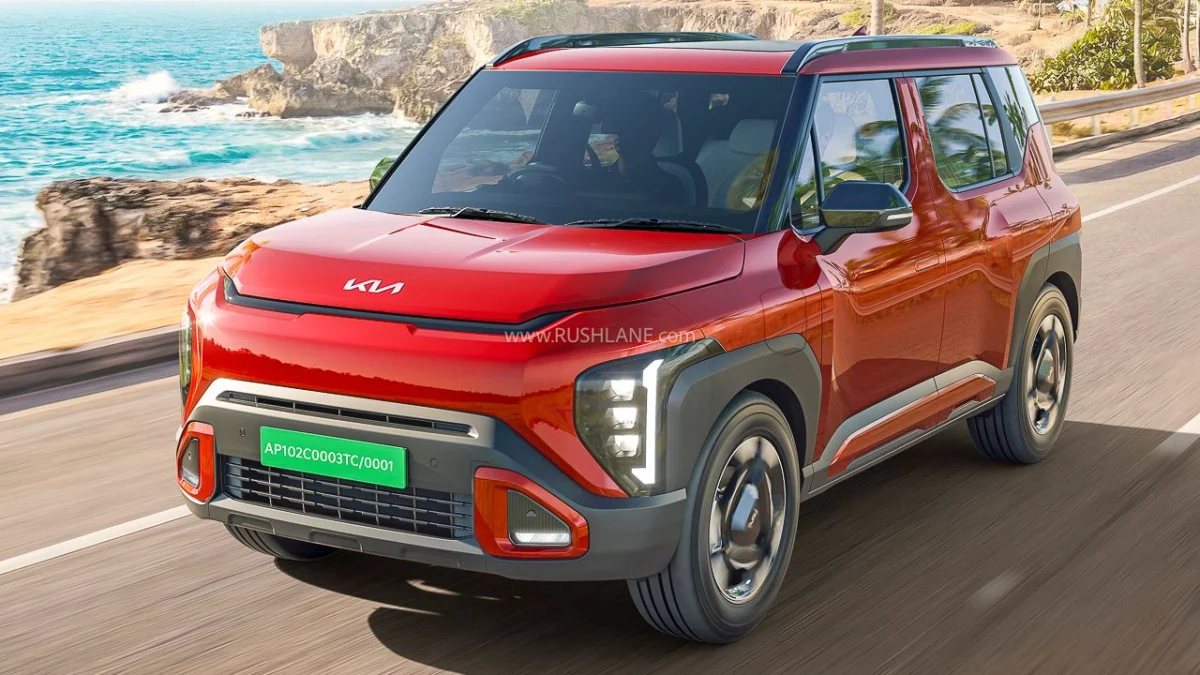
The Indian automotive landscape is currently undergoing a seismic shift toward electrification, and Kia India is positioning itself at the epicenter of this transformation. With the official unveiling of the Kia Syros EV, the South Korean automaker has signaled its intent to dominate the mainstream electric vehicle (EV) segment. As the brand’s second major electric offering in India—following the premium EV6 and alongside the flagship EV9—the Syros EV is designed to bridge the gap between aspirational luxury and practical, mass-market mobility.
Expected to be priced competitively starting at approximately Rs 15 lakh, the Syros EV is not merely a battery-powered version of a combustion engine car; it is a sophisticated, tech-laden SUV aimed squarely at the heart of the Indian market. By targeting rivals such as the Tata Nexon EV and the Mahindra XUV 3XO EV, Kia is entering the most contested sub-4-meter and mid-size electric crossover space with a product that promises best-in-class range and a feature set usually reserved for higher segments.
Strategic Chronology: From Concept to the Syros Era
The journey of the Kia Syros EV began as a strategic response to the evolving "Green" mandates and shifting consumer preferences in India. While Kia initially entered the Indian EV market with the EV6—a high-end CBU (Completely Built Unit) meant to showcase technological prowess—the company recognized that long-term volume growth required localized, mainstream products.
The Syros was originally developed under internal codenames that suggested a "compact yet tall-boy" SUV design, aimed at maximizing interior space within a constrained footprint. Throughout 2024 and 2025, various test mules were spotted across Indian terrains, hinting at a vehicle that shared its DNA with the internal combustion engine (ICE) Syros but featured unique EV-specific styling cues.

The development of the Syros EV coincided with Kia’s broader "Plan S" global strategy, which emphasizes a rapid transition to electric propulsion. In India, this meant utilizing the versatile K1 platform. While this platform supports ICE powertrains, it was engineered with enough flexibility to house substantial battery packs without compromising floor height or luggage capacity. The reveal of the Syros EV marks a pivotal moment in Kia’s Indian timeline, transitioning the brand from a premium EV niche player to a high-volume electric contender.
The Technical Foundation: Performance, Battery, and Range
At the core of the Kia Syros EV’s appeal is its dual-battery strategy, designed to cater to both urban commuters and long-distance travelers. Kia has opted for two distinct Lithium-ion battery configurations: a 42 kWh pack for the standard range and a 51.4 kWh pack for the "Extended Range" (ER) versions.
Power and Torque
The Syros EV utilizes a front-mounted permanent magnet synchronous motor. The output is differentiated by the battery size:
- 42 kWh Variants: These models produce a respectable 135 hp, making them ideal for spirited city driving and effortless highway cruising.
- 51.4 kWh Variants: The output is bumped up to a potent 171 hp. This allows the Syros EV to achieve a 0 to 100 km/h sprint in just 8.1 seconds, placing it among the quickest vehicles in its price bracket.
- Torque: Regardless of the battery choice, the motor generates a peak torque of 255 Nm, ensuring instantaneous throttle response—a hallmark of the electric driving experience.
Range and Efficiency
Range anxiety remains a primary concern for Indian buyers, and Kia has addressed this with impressive ARAI-certified figures. The 42 kWh battery variants offer a range of 443 km on a full charge. Meanwhile, the 51.4 kWh Extended Range variants push this boundary to 526 km. These figures are not just competitive; they are designed to set a new "gold standard" in the mainstream segment, potentially outperforming the current market leaders in real-world efficiency.

Charging Capabilities
To support these large batteries, Kia has equipped the Syros EV with high-speed charging architecture. The vehicle supports DC fast charging up to 100 kW. When connected to a compatible fast charger, all variants can replenish their battery from 10% to 80% in approximately 39 minutes. For home or office charging, an 11 kW AC charger is provided. The 42 kWh pack takes about 4 hours for a 10-80% charge via AC, while the larger 51.4 kWh pack requires roughly 4 hours and 50 minutes.
Comprehensive Variant Analysis: Tailoring Tech to the Consumer
Kia’s variant strategy for the Syros EV is meticulous, ensuring that even the base-level buyers feel they are driving a premium product. The lineup consists of seven primary configurations spread across five trim levels: HTK, HTK+, HTX, HTX+, and the range-topping X-Line.
The Entry Point: HTK
The HTK variant, available exclusively with the 42 kWh battery, redefines what a "base" model looks like. It features Kia’s "Star Map" LED DRLs and "Ice Cube" LED MFR headlamps, ensuring the EV’s visual identity is consistent across the range. Inside, the "Trinity Display" makes its debut, featuring dual 12.3-inch screens for infotainment and instrumentation, complemented by a 5-inch dedicated AC control panel. Standard inclusions like wireless Android Auto/Apple CarPlay, paddle shifters for regenerative braking levels, and an electric parking brake (EPB) with auto-hold set a high bar for competitors.
The Mid-Range: HTK+ and HTX
The HTK+ and HTX variants serve as the volume drivers, offered with both battery sizes.

- HTK+: Adds a rearview camera with dynamic guidelines, cruise control, and a high-speed 100W Type-C USB charger.
- HTX: Introduces the luxury of a dual-pane panoramic sunroof, a feature highly coveted by Indian consumers. It also adds functional aesthetics like LED rear turn signals and all-door power windows.
The Premium Tiers: HTX+ ER and X-Line ER
These variants are exclusively paired with the 51.4 kWh Extended Range battery and represent the pinnacle of Kia’s small-car technology.
- HTX+ ER: This trim focuses on comfort and audio excellence. It features leatherette upholstery, an 8-speaker Harman Kardon premium sound system, and ventilated seats for both front and rear passengers (a segment-first for rear ventilation). It also includes a factory-fitted dual-camera dashcam and over 95 connected car features via Kia Connect 2.0.
- X-Line ER: The flagship variant is a showcase of safety and futuristic tech. It is the only variant to offer the Level 2 ADAS suite, which includes 16 autonomous functions such as forward collision avoidance, lane-keep assist, and adaptive cruise control. It also introduces V2L (Vehicle-to-Load) capability, allowing the car to power external appliances, essentially acting as a giant power bank.
Safety and Technology: A Holistic Approach
Kia has made a strategic decision to standardize safety across the Syros EV lineup. Every variant, from the HTK to the X-Line, comes equipped with 25 standard safety features. This "safety-first" philosophy includes:
- Six airbags.
- Electronic Stability Control (ESC).
- Hill Start Assist Control (HAC).
- Tyre Pressure Monitoring System (TPMS).
- Virtual Engine Sound System (VESS) to alert pedestrians at low speeds.
- Rollover sensors and disc brakes on all four wheels.
The inclusion of a 360-degree camera system and Blind Spot View Monitor in the higher trims further enhances the urban driving experience, making the Syros EV one of the most maneuverable and safe SUVs in its class.
Competitive Landscape: Challenging the Status Quo
The arrival of the Syros EV creates a formidable "Trinity" of competition in the Indian EV market.

- Vs. Tata Nexon EV: The Nexon EV has long been the king of the segment. However, the Syros EV’s 526 km range and more modern "Trinity Display" interior put significant pressure on Tata Motors to innovate. Kia’s 171 hp motor also edges out the Nexon’s performance figures.
- Vs. Mahindra XUV 3XO EV: While Mahindra offers a rugged build and strong performance, Kia’s Syros EV counters with a more sophisticated software ecosystem and a broader range of "lifestyle" features like the Harman Kardon audio and dual-pane sunroof.
- The Price War: If Kia manages to price the base HTK variant at Rs 15 lakh, it will undercut several mid-range variants of its competitors while offering more screen real estate and standard safety features, potentially triggering a price war that benefits the end consumer.
Official Outlook and Market Implications
While official pricing is yet to be announced, Kia India executives have hinted that the Syros EV is a "foundational product" for their 2.0 electrification strategy in the subcontinent. By utilizing the K1 platform, Kia has optimized production costs, which allows them to offer high-capacity batteries (up to 51.4 kWh) at a price point previously occupied by 30-40 kWh batteries.
The implications for the Indian market are profound. The Syros EV effectively moves the "usable range" of a mainstream EV from 300 km to over 500 km. This shift is expected to accelerate EV adoption among buyers who were previously hesitant to consider an electric car as their primary vehicle for inter-city travel.
Furthermore, the introduction of V2L technology in a mainstream SUV democratizes a feature that was previously exclusive to luxury EVs like the Ioniq 5 or EV6. This adds a layer of utility that appeals to India’s growing community of outdoor enthusiasts and "digital nomads."
Conclusion
The Kia Syros EV represents more than just a new model; it is a statement of intent. With its blend of high-performance electric powertrains, segment-leading range, and a tech-heavy interior, it addresses the specific demands of the Indian consumer: value, status, and reliability. As Kia prepares to open bookings and announce final pricing, the Syros EV stands poised to not only challenge the leaders of the electric SUV segment but to potentially redefine the expectations of what a mainstream electric vehicle should be in 2026 and beyond.
