

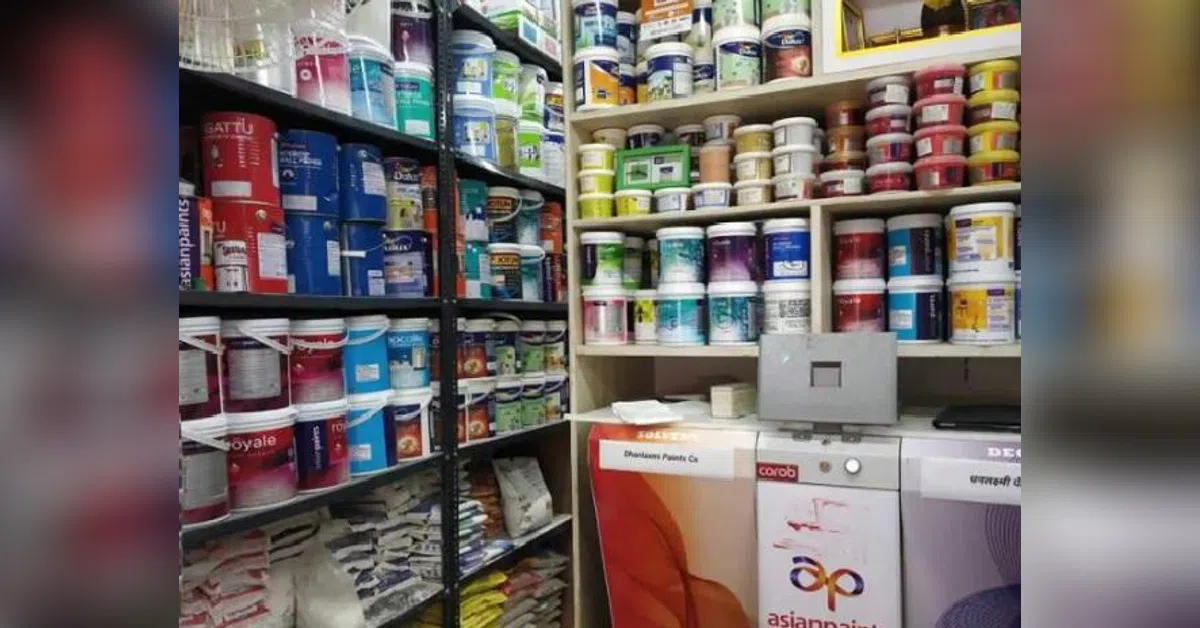
MUMBAI – Asian Paints, India’s undisputed leader in the decorative and industrial coatings industry, has announced a formidable set of financial results for the fourth quarter of the 2025-26 fiscal year (Q4FY26). Bolstered by a combination of resilient domestic demand, strategic cost management, and a favorable base effect, the company reported a staggering 69.3% year-on-year increase in net profit attributable to the owners.
The performance underscores the company’s ability to navigate a complex global macroeconomic environment while maintaining its dominant market share in the Indian subcontinent. Despite geopolitical tensions in West Asia and a shifting competitive landscape at home, Asian Paints has demonstrated why it remains the bellwether for India’s consumption and infrastructure sectors.
Main Facts: A Quarter of High-Octane Growth
The headline figure for the quarter ended March 31, 2026, was a consolidated net profit of ₹1,172.1 crore. This represents a 69.3% climb from the corresponding period in the previous fiscal year. It is important to note, however, that the previous year’s Q4 results were impacted by an exceptional item amounting to ₹183 crore, which created a lower base for comparison. Even accounting for this adjustment, the underlying operational growth remains significant.
Revenue from operations also saw a healthy trajectory, with net sales reaching ₹9,246.7 crore, marking a 10.6% increase over the previous year. This growth was driven primarily by the decorative business in India, which continues to be the primary engine of the company’s financial health.
Perhaps the most impressive metric from the report was the Profit Before Interest, Depreciation, and Tax (PBIDT), which stood at ₹1,983.2 crore. This reflects a 44.1% increase year-on-year, indicating a sharp expansion in operating margins. This expansion is attributed to a "sweet spot" in the commodity cycle, where raw material prices—largely derivatives of crude oil—experienced deflation, coupled with the company’s internal operational efficiencies.
Chronology: The Road to Q4 FY26
The 2025-26 fiscal year began under a cloud of uncertainty regarding global supply chains and fluctuating oil prices. However, as the year progressed, Asian Paints executed a multi-pronged strategy to fortify its leadership.
- Q1 & Q2 FY26: The first half of the fiscal year saw the company focusing on premiumization and expanding its "Beautiful Homes" service network. While inflation initially squeezed margins, the company began implementing cost-discipline measures that would pay dividends later in the year.
- Q3 FY26: The festive season provided a significant boost to volume growth. During this period, the company also ramped up its industrial coatings segment, anticipating a surge in automotive and infrastructure demand.
- Q4 FY26 (The Current Reporting Period): The final quarter saw the culmination of these efforts. Material deflation became a tailwind, allowing the company to pass on some benefits to consumers while retaining a significant portion for margin expansion. The quarter was characterized by "all-round performance," as described by management, bridging the gap between high-volume mass-market products and high-value premium offerings.
Supporting Data: Segmental Deep Dive
To understand the scale of Asian Paints’ dominance, one must look at the granular data across its various business verticals.
1. The Decorative Business (India)
The domestic decorative segment remains the crown jewel of the organization. In Q4FY26, this division recorded:
- Volume Growth: 12.4%
- Value Growth: 10.2%
The gap between volume and value growth suggests a strategic push into higher-volume, mid-tier segments, as well as some price adjustments to remain competitive in a market seeing new entrants.
2. Industrial Coatings
The industrial segment, often overshadowed by the consumer-facing decorative business, emerged as a high-growth pillar this quarter. The company reported that strong demand in the automotive and powder coatings sectors helped the overall coatings business achieve:
- Total Coatings Volume Growth: 12.7%
- Total Coatings Value Growth: 11%
3. International Operations
Despite global volatility, the international portfolio remained resilient. Total international sales grew by 11% to reach ₹888.1 crore. The growth was led by:
- Sri Lanka: Showing a remarkable recovery following previous years of economic instability.
- Egypt: Maintaining growth despite currency fluctuations.
- UAE: Benefiting from a robust real estate market and infrastructure projects.
4. Home Décor
The Home Décor business, which includes furniture, furnishings, and lighting, reported "muted" growth but remains a critical part of the company’s long-term pivot from being a "paint maker" to a "home décor provider." The "Beautiful Homes" store network now spans 20 states in India, providing an integrated shopping experience that the company believes will be a key differentiator in the coming years.
Official Responses: Management’s Vision
Amit Syngle, the Managing Director and CEO of Asian Paints, expressed confidence in the company’s trajectory during the earnings release. He highlighted the synergy between volume growth and profitability.
“Q4FY26 was a quarter of all-round performance, with double-digit volume and value growth and margin expansion,” Syngle stated. He emphasized that the company’s ability to deliver these results was not merely a result of market conditions but of deliberate "cost discipline" and "operational efficiencies."
Regarding the international business, Syngle noted, “The international portfolio continued to deliver resilient growth with improved profitability despite volatility in select markets. Our focus remains on navigating local challenges while maintaining a consistent brand experience globally.”
However, the CEO also struck a note of caution regarding the future. Pointing toward the ongoing West Asia conflict, he remarked, “The external environment remains fluid, with the West Asia conflict contributing to near-term uncertainty in demand. However, supported by strong fundamentals and execution discipline, we remain resilient to navigate this volatility and sustain our performance.”
Implications: Market Dynamics and Future Outlook
The Q4FY26 results carry several implications for the broader paint industry and the Indian economy.
1. Defensive Moat Against New Competition
The paint industry in India has recently seen the entry of deep-pocketed conglomerates like the Aditya Birla Group (Birla Opus) and JSW Paints. Asian Paints’ ability to grow volumes by over 12% in this environment suggests that its distribution network—the largest in the country—and its brand equity remain formidable barriers to entry. The company’s focus on "Integrated Home Décor" is a strategic move to move up the value chain where competition is less about price and more about service and design.
2. The Benefit of Material Deflation
The significant jump in PBIDT (44.1%) highlights the sensitivity of the paint industry to raw material costs. As a major consumer of titanium dioxide and various monomers, Asian Paints is highly leveraged to commodity prices. The Q4 results suggest that the company has successfully optimized its supply chain to maximize the benefits of the current deflationary cycle in these materials.
3. Real Estate and Infrastructure as Catalysts
The double-digit growth in both decorative and industrial segments mirrors the broader "India Growth Story." With the government’s continued push on infrastructure (Gati Shakti) and a steady recovery in the residential real estate sector, the demand for coatings—both for new constructions and repainting—is expected to remain structural rather than cyclical.
4. The Geopolitical Risk Factor
The management’s mention of the West Asia conflict is a reminder of the industry’s vulnerability to external shocks. Any escalation that impacts global oil prices could quickly reverse the margin gains seen in Q4FY26. Furthermore, supply chain disruptions in the Red Sea or surrounding regions could impact the international business, particularly in Egypt and the UAE.
5. Sustainability and Innovation
Looking ahead, the company is expected to invest more heavily in eco-friendly, low-VOC (Volatile Organic Compound) products. As consumer awareness regarding indoor air quality and environmental impact grows, Asian Paints’ R&D investments will likely focus on sustainable "green" coatings, which often command higher margins.
Conclusion
Asian Paints’ performance in the final quarter of FY26 is a testament to the company’s operational excellence and strategic foresight. By balancing aggressive volume growth with rigorous cost control, the company has not only delivered a windfall for its shareholders but has also reinforced its position as a dominant player in the Asian market.
While the "fluid" external environment and new domestic competition present challenges, the company’s transition into a full-scale home décor player, combined with its robust international presence, provides a diversified cushion. As the company moves into FY27, investors and industry analysts will be watching closely to see if this momentum can be sustained in the face of evolving global and local headwinds. For now, Asian Paints remains the "Gold Standard" in the Indian manufacturing and consumer goods landscape.
