

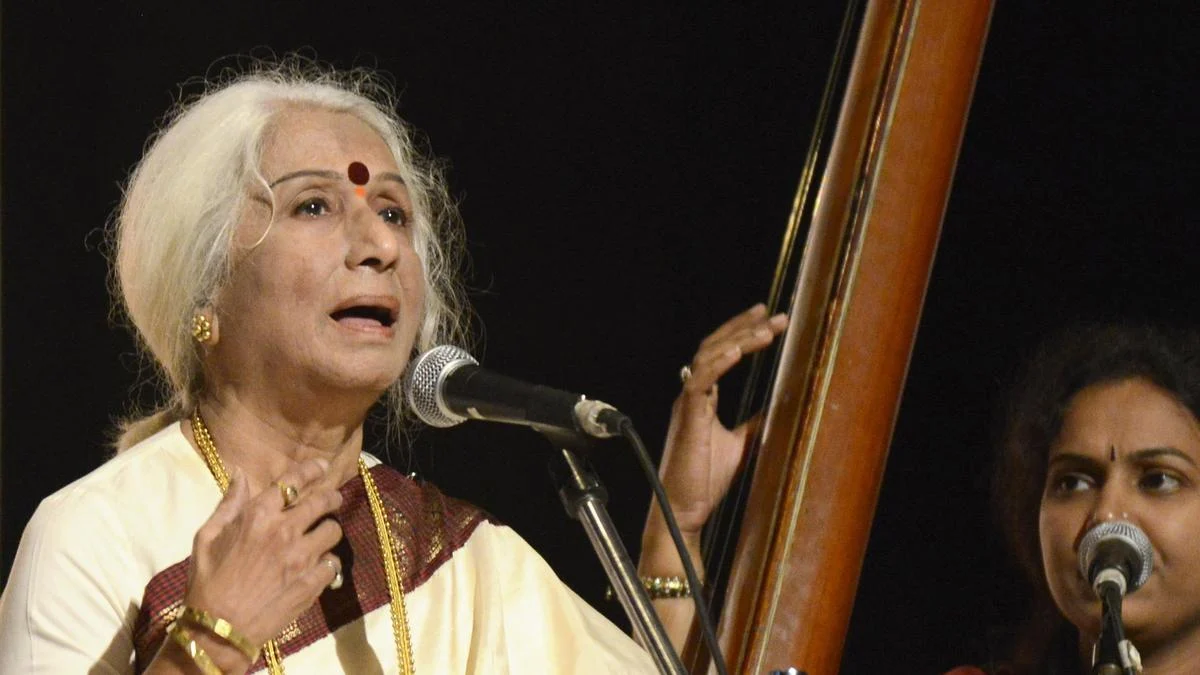
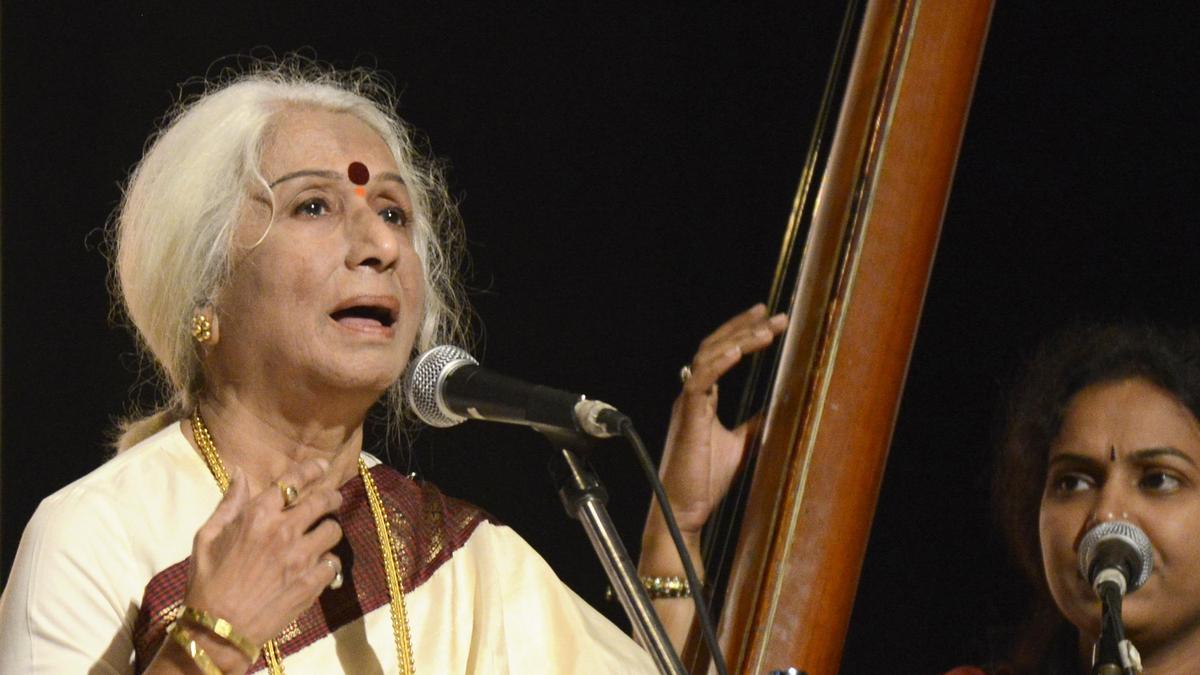
Pune, India – The echoes of melody, innovation, and profound mentorship resonated through Pune earlier this month as the Dr. Prabha Atre Foundation, established by the legendary Hindustani classical vocalist herself, presented "NavRaag Prabha." This two-day festival was more than a mere performance; it was a thoughtfully curated homage, a vibrant testament to the extraordinary artistry and pioneering spirit of Dr. Prabha Atre, a musician whose legacy transcends mere sound, shaping the very architecture of ragas and inspiring generations of artists. The event served as a poignant reminder of her distinctive interpretations, her meticulously crafted compositions that masterfully balanced lyrical depth with melodic exploration, and her fearless approach to conceiving new ragas. Beyond her creative genius, Dr. Atre stood as an empowering guru, a guiding force whose vision and voice continues to shape the landscape of Indian classical music.
The Genesis of NavRaag Prabha: A Tribute to Raga Creation
The festival, aptly titled "NavRaag Prabha," meaning "New Ragas of Prabha," was designed to showcase the remarkable breadth of Dr. Atre’s compositional prowess. The cornerstone of the event was the presentation of 17 ragas conceived and composed by her, brought to life by four of her senior disciples: Atindra Sarvadikar, Arati Thakur Kundalkar, Ashvini Modak, and Chetna Pathak. Each of these artists has a deep and abiding connection with Dr. Atre’s musical lineage, having trained under her tutelage for over two decades. This sustained mentorship ensured not only a deep understanding of the technical nuances of her creations but also an intimate grasp of the philosophical and emotional underpinnings that informed her work.
The selection of disciples was a deliberate choice, reflecting Dr. Atre’s belief in nurturing talent and ensuring the continuity of her musical legacy. Their performances were not simply renditions but living interpretations, breathing life into ragas that might otherwise have remained solely in the realm of theoretical composition. The very act of bringing these "new" ragas to a live audience demonstrated the enduring vitality of Dr. Atre’s creative spirit and the success of her foundation in carrying forward her artistic mission.
Deconstructing the Raga: Dr. Atre’s Innovative Approach to Melodic Architecture
Dr. Prabha Atre’s contribution to Hindustani classical music is marked by a profound and often revolutionary approach to raga development. Her compositions were not mere exercises in melodic permutation but rather thoughtful explorations that pushed the boundaries of traditional frameworks. The "NavRaag Prabha" festival provided a platform to highlight some of her most significant innovations, particularly her work with established raga families.
The Malhar Family: Weaving Rain and Emotion
A particularly striking aspect of Dr. Atre’s compositional output was her exploration of the Malhar scale, a raga traditionally associated with the monsoon season. She composed three distinct ragas using Malhar as a foundational element, each infused with unique melodic characteristics and emotional depth. These are:
- Patdeep Malhar: This raga, as presented by Atindra Sarvadikar, demonstrated a captivating fusion of Patdeep, an afternoon raga, with the rain-evoking essence of Malhar. The performance in the early evening was a testament to Dr. Atre’s belief that the mood of a raga could transcend strict temporal classifications. Sarvadikar’s rendition masterfully conveyed the melancholic yet serene atmosphere, a hallmark of rain-infused melodies, proving that the emotional resonance of a raga is paramount, irrespective of its traditional time slot.
- Kafi Malhar: While not explicitly detailed in the original report, the mention of Kafi Malhar suggests another fascinating blend, likely incorporating the characteristic notes of Kafi thaat with the monsoon elements of Malhar. This would have offered a distinct flavor, perhaps a more earthy or vibrant depiction of rain.
- Gara Malhar: The inclusion of Gara Malhar further underscores Dr. Atre’s ability to create nuanced variations. Gara, often associated with a more festive or spirited mood, when merged with Malhar, would have presented a unique juxtaposition, perhaps evoking the joyous exuberance of the monsoon after a period of heat.
Challenging Temporal Dogma: The Raga and the Clock
Dr. Atre was a vocal proponent of questioning the rigid adherence to time theory in presenting ragas. She argued that the socio-cultural and environmental conditions have evolved significantly over centuries, making the traditional time slots for ragas less relevant in contemporary contexts. Her rationale was insightful:
"She did not wholly subscribe to the time theory of presenting ragas, arguing that the conditions for rendering them have changed over the centuries. She also believed that listeners without musical training — who lack the pre-conditioned receptivity of listening — may not find ragas performed at the ‘wrong’ time unsettling. While a trained listener might be bewildered to hear a morning raga performed at night, many in the audience without such prior knowledge would simply connect with the music as it was presented."
This perspective reflects a profound understanding of the audience’s experience. For the uninitiated, the emotional impact of a raga can be immediate and visceral, independent of learned associations with specific times of day. Dr. Atre’s approach encouraged performers to focus on creating the rasa (essence or emotion) of the raga, allowing the music to speak directly to the listener’s soul, rather than adhering to a prescriptive temporal framework. This was particularly evident in studio recordings where performers are compelled to evoke the raga’s mood without the external cues of time and environment.
The Kauns Family: Exploring Depth and Complexity
Another significant area of Dr. Atre’s compositional innovation was her work with the Malkauns scale, known for its deep, introspective quality. She developed three distinct ragas rooted in this parent scale:
-
Madhurkauns: Arati Thakur Kundalkar’s presentation of Madhurkauns offered a glimpse into Dr. Atre’s meticulous approach to melodic detail. Kundalkar shared a personal anecdote that illuminated Dr. Atre’s pedagogical style:
“Tai (Prabha Atre) was a gentle soul who brought that same softness into her music. In Madhurkauns, which I presented, she was particular about how the two gandhars in the raga were to be rendered. They should not be sung as one note following another in a staccato manner; instead, they must flow with a meend, seamlessly moving from one note to the next without any jarring effect.”
This emphasis on meend (gliding between notes) highlights Dr. Atre’s focus on fluidity and expressiveness, ensuring that even within the framework of a newly conceived raga, the inherent aesthetic principles of Hindustani music were upheld. The "sweetness" implied by "Madhur" in the raga’s name was clearly conveyed through this delicate handling of the gandhars. -
Bhinnakauns: The name "Bhinnakauns" suggests a departure from the typical Malkauns structure, perhaps introducing elements that create a distinct, differentiated character. This could involve altered note placements, new melodic phrases, or a different emotional trajectory.
-
Darbari Kauns: While "Darbari" often implies grandeur and courtliness, its combination with Kauns suggests a potential exploration of regal melancholy or a sophisticated introspection. The specific melodic contours and emotional landscape of this raga would have been unique to Dr. Atre’s vision.
The Kalyan Tapestry: Subtle Blends and Nuanced Expressions
The Kalyan thaat, known for its use of the sharp Tivra Madhyam, provided another fertile ground for Dr. Atre’s creativity. She composed two ragas based on this scale:
-
Apurva Kalyan: This raga is described as a subtle blend of Purvi and Kalyan. Purvi itself is a raga with a complex melodic character, often associated with late afternoon. The fusion with Kalyan would have created a raga with a distinct chromatic flavor, potentially offering a richer emotional palette. The report notes that some listeners felt it resembled Puriya Kalyan more closely, with a strongly emphasized shuddha madhyam. This points to the nuanced nature of Dr. Atre’s creations, where the merging of notes is so delicate and open to interpretation that it can evoke echoes of existing structures while remaining uniquely original.
-
Bhoop Kalyan: The inclusion of "Bhoop" (referring to the raga Bhopali, known for its pentatonic structure) in conjunction with Kalyan suggests a fascinating exercise in melodic architecture. Bhopali is characterized by the absence of rishabh and pancham. Combining its core structure with the characteristic Tivra Madhyam of Kalyan would have resulted in a raga with a unique melodic profile, offering a different expressive quality than traditional Kalyan-based ragas.
The Bhairav Realm: Infusing Depth and Devotion
The ancient and profound Bhairav scale, with its characteristic flat rishabh and dhaivat, was another scale that captivated Dr. Atre. She explored its potential in three new compositions:
-
Tilang Bhairav: Arati Kundalkar’s reflection on this raga provided deep insight into Dr. Atre’s compositional philosophy:
"Since I sing compositions of many other composers, I realise the uniqueness of tai’s approach. She chose words with great care, fitting them neatly into the framework of the composition. In Tilang Bhairav, the piece is dedicated to Shiva, the presiding deity of Bhairav: ‘Hey Shivashankar, karunakar, tu hai aadhar, paap uttaro bhavsagar, hey shambho gangadhar, tu hai aadhar’."
This quote beautifully illustrates how Dr. Atre’s compositions were holistic creations, where the lyrical content was not an afterthought but an integral part of the raga’s emotional and thematic expression. The devotional lyrics dedicated to Lord Shiva in Tilang Bhairav perfectly complement the somber and powerful nature of the Bhairav scale, demonstrating a profound understanding of devotional music. -
Kaushik Bhairav: The prefix "Kaushik" could refer to various mythological or philosophical connotations, suggesting a raga with a potentially complex or multifaceted character, perhaps exploring themes of cosmic order or transformation, intertwined with the foundational essence of Bhairav.
-
Ravi Bhairav: The inclusion of "Ravi," the sun, in this context is intriguing. It could suggest a Bhairav-based raga intended for morning performance, or one that evokes the radiant energy of the sun, perhaps a less common, more vibrant manifestation of the scale.
The Guru and the Legacy: Shaping Minds and Voices
Beyond her groundbreaking work as a composer, Dr. Prabha Atre was revered as an exceptional guru. Her teaching philosophy was deeply rooted in imparting not just technique but also a profound understanding of musical integrity and artistic openness. The fact that her senior disciples have not only mastered her compositions but also imbibe her spirit of innovation speaks volumes about her pedagogical approach.
Interestingly, Dr. Atre’s own training was remarkably concise. She studied under the esteemed gurus of the Kirana gharana, Pt. Suresh Babu Mane and Vidushi Hirabai Barodekar, for what she often described as "no more than five years." Yet, the assimilation and internalization of knowledge during this period were so profound that she felt no need to seek further tutelage. This self-sufficiency and deep internal processing of musical ideas became a hallmark of her own artistic journey. She often shared:
"She often shared that she never felt the need to approach another guru; the material she had assimilated during that brief period took a lifetime to process, absorb, and build upon."
This anecdote is crucial as it highlights Dr. Atre’s emphasis on introspection, deep learning, and the development of a personal musical voice. Her disciples seem to have inherited this philosophy, demonstrating a similar intellectual curiosity and integrity in their own musical presentations. The "NavRaag Prabha" festival was, therefore, a double celebration: a tribute to her compositional genius and a testament to the enduring power of her mentorship, ensuring that her innovative spirit continues to flourish through the next generation of artists.
The Enduring Impact and Future of Dr. Atre’s Musical Vision
The "NavRaag Prabha" festival served as a powerful reminder of Dr. Prabha Atre’s indelible mark on Hindustani classical music. Her ability to conceive new ragas, infuse them with emotional depth, and balance lyrical and melodic elements with such finesse is a rare gift. The meticulous curation of the event by her foundation ensured that her legacy is not just preserved but actively celebrated and disseminated.
The implication of such an event extends far beyond the confines of the concert hall. It encourages a re-evaluation of traditional norms and inspires future generations of musicians to explore their own creative boundaries. Dr. Atre’s approach to raga composition and her philosophy on performance time offer valuable lessons for contemporary artists navigating the evolving landscape of classical music.
As the music world continues to engage with the rich tapestry of Dr. Prabha Atre’s creations, the "NavRaag Prabha" festival stands as a beacon, illuminating the path of innovation, mentorship, and profound artistic expression. Her legacy is not merely a collection of compositions; it is a living, breathing testament to the boundless potential of human creativity within the hallowed traditions of Indian classical music. The thoughtfully curated tribute served as a powerful affirmation of her unique interpretations of ragas and her enduring influence as a visionary artist and an empowering guru.
