

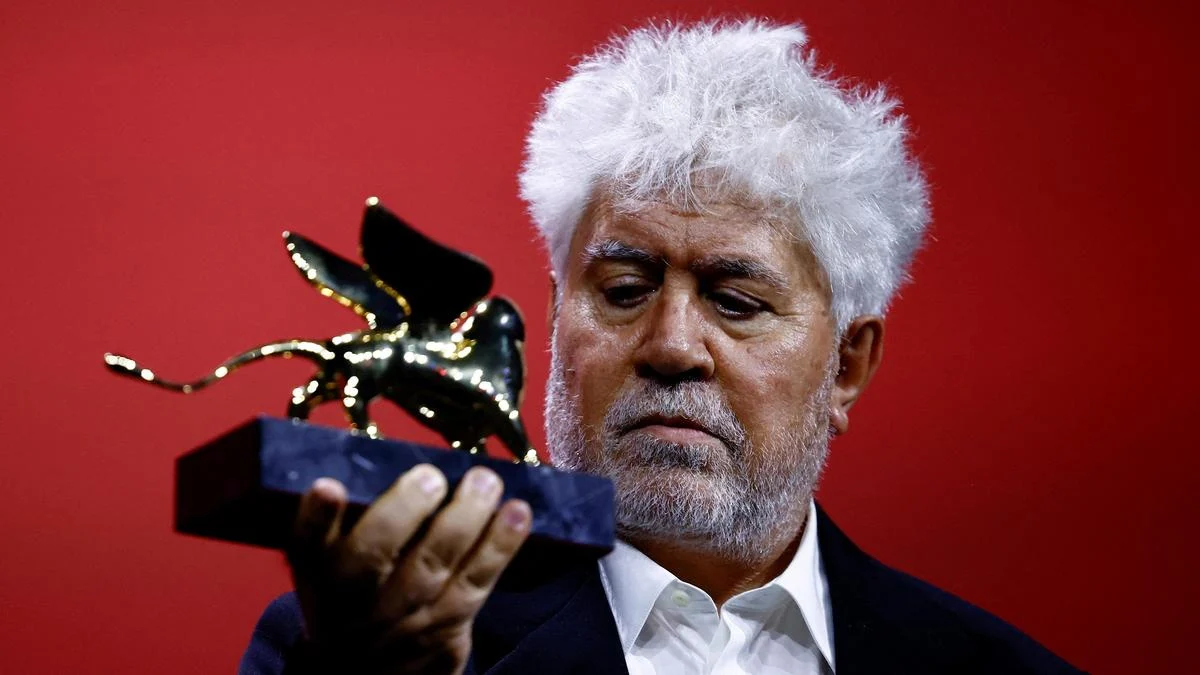
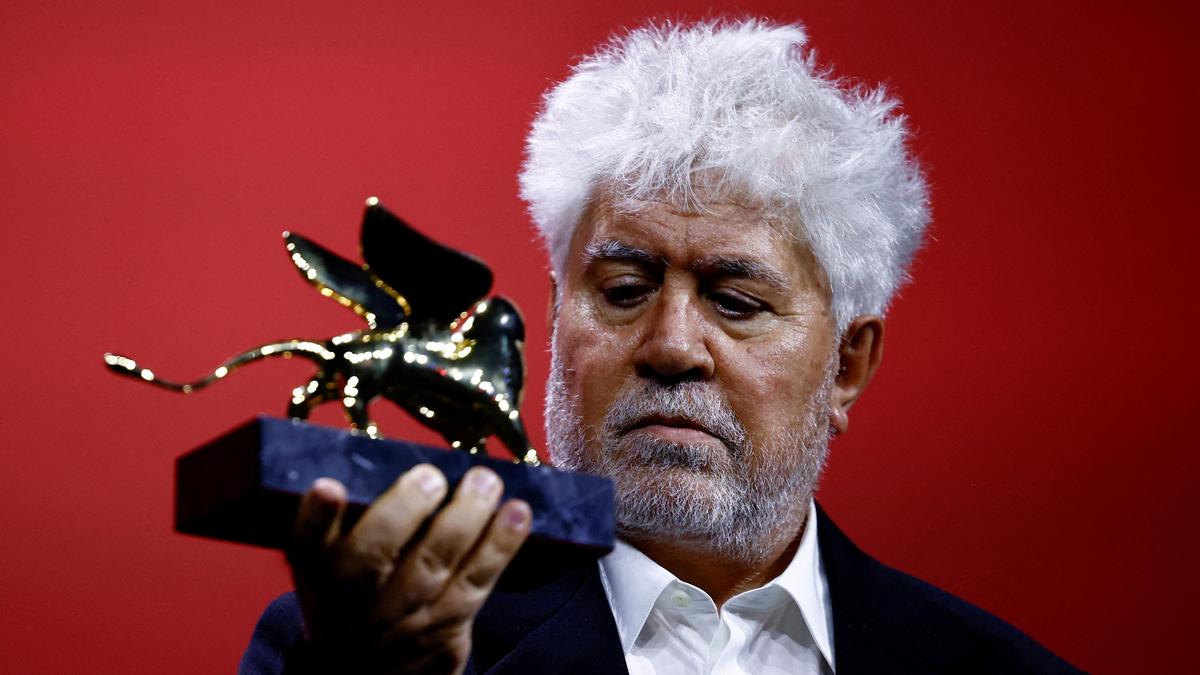
Veteran Spanish filmmaker Pedro Almodóvar has sharply criticized the 2026 Academy Awards ceremony, decrying what he perceives as a profound absence of political engagement and a concerning retreat into silence from Hollywood amidst escalating global crises and heightened political tensions. In a candid interview with the Los Angeles Times, Almodóvar expressed his dismay at the muted response from the film industry’s elite regarding pressing issues such as the ongoing conflict in Gaza and the resurgent political landscape shaped by former U.S. President Donald Trump.
The acclaimed director, speaking to journalists ahead of the Cannes premiere of his latest cinematic offering, Bitter Christmas, articulated a sentiment of surprise and disappointment at the lack of vocal dissent during this year’s Oscar telecast. "You know, I’m not really blaming anyone in particular, but it was quite notable watching the Oscar telecast where there were not many protests against the war or against Trump," Almodóvar stated, his voice tinged with concern. He singled out the sole, albeit powerful, exception: fellow Spanish actor Javier Bardem, who unequivocally declared "Free Palestine" during the ceremony, a moment Almodóvar recalled as a stark and memorable act of solidarity.
The Chilling Effect of Fear: A Hollywood Under Siege?
Almodóvar’s critique extends beyond a simple observation of the ceremony’s proceedings. He posits that a palpable atmosphere of fear now pervades the American film industry, stifling open discourse and discouraging artists from taking a stand on critical global events. "People are obviously very frightened," he remarked, his assessment extending to a grim conclusion about the state of American democracy itself. In a bold and controversial statement, Almodóvar declared that he no longer considers the United States to be a functioning democracy, a sentiment underscored by the perceived timidity of its most influential cultural institutions.
This assessment directly links the ceremony’s cautious tone to the broader political climate, particularly the potential return of Donald Trump to power. Almodóvar characterized this situation as both a "paradox" and "incredibly sad," highlighting the stark contrast between the industry’s past activism and its current perceived reticence. The filmmaker’s outspoken criticism of Trump is not new; he previously referred to the former president as a "catastrophe" during his acceptance speech for the Chaplin Award in 2025, underscoring his long-held convictions.
A Personal Perspective: The Freedom of the Outsider
When questioned about the potential repercussions of his outspoken political stances on his own career, Almodóvar dismissed the concern with characteristic aplomb. He attributed his greater freedom to speak openly to his identity as a Spanish filmmaker working largely outside the direct orbit of Hollywood’s influence. This geographical and professional distance, he explained, allows him to maintain a perspective unburdened by the immediate pressures and potential career ramifications faced by those more deeply embedded within the American studio system.
Furthermore, Almodóvar pointed to the official stance of his home country, Spain, which has publicly characterized the situation in Gaza as a genocide. This official recognition by his government provides a contextual backdrop for his own outspokenness, suggesting a divergence in geopolitical perspectives and a greater willingness in some European nations to confront sensitive issues directly.
The Unfolding Narrative: From Red Carpet to Global Stage
The 2026 Academy Awards, intended to celebrate cinematic achievement, instead became a focal point for discussions about the role of art and artists in times of crisis. While the ceremony typically navigates a delicate balance between glamour and social commentary, this year’s event, according to Almodóvar, leaned heavily towards the former, leaving a void where critical dialogue should have been.
A Chronology of Silence and Subdued Voices:
The lead-up to the 2026 Oscars was marked by an increasingly volatile global landscape. The protracted conflict in Gaza had already sparked widespread international protests and humanitarian concerns, while the political climate in the United States was dominated by discussions surrounding the upcoming presidential election and the potential re-election of Donald Trump.
- Pre-Ceremony Buzz: Anticipation for the Oscars was high, with discussions often veering towards potential political statements, particularly given the charged atmosphere. Many observers speculated whether the ceremony would mirror the activism seen in other cultural events.
- The Oscar Telecast: As the awards unfolded, a noticeable lack of direct commentary on the war in Gaza or the political situation in the U.S. became apparent. While some films nominated addressed social issues, the acceptance speeches and overall tone remained largely apolitical.
- Javier Bardem’s Declaration: The most prominent exception to this trend was Javier Bardem’s heartfelt "Free Palestine" statement during his acceptance speech for Best Supporting Actor. This moment, while brief, resonated as a powerful act of conscience for many.
- Almodóvar’s Post-Ceremony Critique: In the days following the ceremony, Pedro Almodóvar’s interview with the Los Angeles Times brought his criticisms to the forefront, articulating a sentiment shared by many who felt the industry had failed to live up to its potential as a platform for meaningful dialogue.
Supporting Data: The Unseen Pressures
While specific internal polling or directives from the Academy are not publicly available, Almodóvar’s assertion of a pervasive fear within Hollywood is supported by several contextual factors:
- Fear of Backlash: The highly polarized political environment in the United States can lead to significant backlash against public figures and organizations perceived to take sides. This fear of alienating a portion of the audience, or facing organized boycotts, can exert a powerful chilling effect.
- Economic Imperatives: The film industry is a massive economic engine. Major studios and production companies are acutely aware of their financial stakes and may discourage public statements that could jeopardize box office performance or investor confidence.
- The "Oscars So White" Precedent: Past controversies, such as the "Oscars So White" movement, demonstrate the intense scrutiny and pressure the Academy faces to navigate issues of representation and social relevance. This can lead to a cautious approach to avoid further controversy.
- Shifting Media Landscape: The proliferation of social media and the 24/7 news cycle mean that any political statement can be amplified and dissected instantaneously, potentially leading to unforeseen consequences.
Official Responses: A Wall of Silence?
As of the publication of this article, there have been no official statements from the Academy of Motion Picture Arts and Sciences or major Hollywood studios directly addressing Pedro Almodóvar’s criticisms. This lack of response, in itself, can be interpreted as a continuation of the "silent" approach Almodóvar decries. The Academy typically remains guarded on political matters, preferring to focus on the celebration of cinema. Individual actors and directors may choose to speak out, but a collective, institutional stance on such sensitive issues is rare.
Implications: The Future of Hollywood’s Social Conscience
Pedro Almodóvar’s sharp critique raises profound questions about the future of Hollywood’s role in societal discourse. His assertion that the industry is retreating into silence amidst global crises is a sobering indictment.
- Erosion of Influence: If Hollywood, a global cultural powerhouse, consistently shies away from addressing critical issues, its potential to influence public opinion and foster dialogue diminishes. This can lead to a perception of irrelevance or complicity in the face of suffering.
- The Rise of Independent Voices: Almodóvar’s own position as an international filmmaker highlights the potential for artists outside the Hollywood mainstream to continue pushing boundaries and sparking conversations. This could lead to a greater fragmentation of cultural influence.
- The Responsibility of Art: The interview implicitly argues that art, and by extension, the artists who create it, have a responsibility to engage with the world around them, particularly when that world is facing significant challenges. The perceived failure of the Oscars to uphold this responsibility is a point of concern for many.
- A Divided Industry: Almodóvar’s comments underscore a potential divide within the industry itself, between those who feel compelled to speak out and those who prioritize maintaining a more apolitical stance, perhaps due to fear or strategic calculation.
Ultimately, Pedro Almodóvar’s candid assessment serves as a powerful call to action, urging the film industry to reconsider its relationship with the pressing issues of our time. His words resonate as a stark reminder that silence, in the face of global crises, can be as potent a statement as any spoken word, and in this instance, it appears to be a statement that many, including Almodóvar, find deeply troubling. The continued unfolding of global events and the evolving role of cinema will undoubtedly shape whether Hollywood can find its voice once more.
