

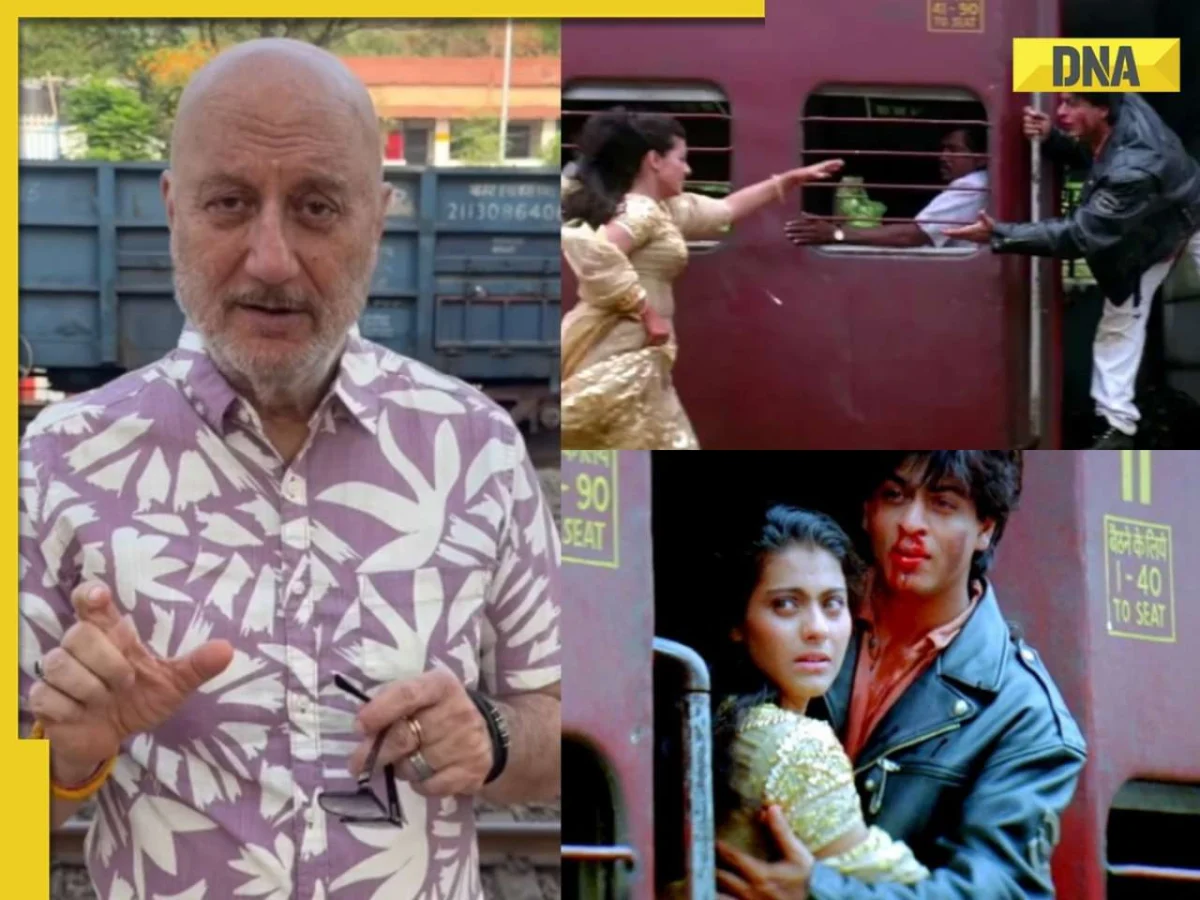
Mumbai, India – May 12, 2026 – Veteran actor Anupam Kher has reignited public discourse surrounding the preservation of India’s rich cinematic heritage with a deeply emotional return to Apta Station in Raigarh district, Maharashtra. This unassuming railway platform, forever etched in the annals of Bollywood history, served as the backdrop for one of the most iconic and enduring scenes in Indian cinema: the farewell between Raj and Simran in Aditya Chopra’s directorial debut, Dilwale Dulhania Le Jayenge (DDLJ). The actor’s poignant reflection, shared on social media, has not only evoked nostalgia for millions of fans but also spurred a crucial conversation about safeguarding the physical locations that bear witness to our cultural milestones.

A Nostalgic Pilgrimage to a Cinematic Landmark
Anupam Kher, who portrayed the doting father Choudhry Baldev Singh in DDLJ, took to Instagram to share his profound experience of returning to the very spot where he, along with lead actors Shah Rukh Khan and Kajol, filmed the legendary climax. The scene, where Simran’s father ultimately blesses her union with Raj, has become synonymous with the film’s overarching themes of love, family, and destiny.
)
"After 32 years, shooting at the same place was a deeply emotional and nostalgic experience where we filmed the iconic Raj and Simran scene from Dilwale Dulhania Le Jayenge with Shah Rukh Khan and Kajol," Kher wrote, his words resonating with the sentiment of countless individuals who have been touched by the film. He further elaborated on the surreal feeling of standing in the same location after so many years, remarking, "It didn’t feel like so many years had passed." This sentiment underscores the timeless power of DDLJ and its ability to transport audiences back to the magical moments it created.
)
Kher’s reflection extended beyond personal sentiment, delving into the serendipitous nature of cinematic magic. He confessed that during the filming of the 1995 blockbuster, neither the cast nor the crew could have possibly foreseen the monumental impact the film would have. "While shooting back then, I never imagined that Shah Rukh Khan and Kajol’s scene would become one of the most memorable moments in Indian cinema," he admitted. "But perhaps that is the beauty of life…you understand the greatness of a moment much later." This humility and recognition of unforeseen legacy highlight the organic growth of cultural touchstones.

The Unforeseen Legacy of DDLJ
Released on October 20, 1995, Dilwale Dulhania Le Jayenge was more than just a film; it was a cultural phenomenon that redefined Bollywood romance for a generation. Directed by a then-debutant Aditya Chopra, the film’s narrative, centered on the love story of Raj (Shah Rukh Khan) and Simran (Kajol), NRIs living in London, resonated deeply with audiences both in India and across the diaspora. Their journey, which began with a chance encounter on a European train and culminated in a battle against familial traditions and societal expectations, struck a chord with millions, offering a blend of modern sensibilities and traditional values.
)
The film’s commercial success was nothing short of historic. It garnered a staggering 10 Filmfare Awards, including Best Film, Best Director, Best Actor, and Best Actress, a testament to its widespread critical acclaim. More remarkably, DDLJ achieved an unparalleled feat in Indian cinema by completing a continuous theatrical run of over 30 years at Mumbai’s iconic Maratha Mandir cinema. This unprecedented longevity cemented its status as the longest-running film in Indian cinematic history, a record that stands unbroken to this day. The film’s enduring popularity is further evidenced by its iconic soundtrack, composed by Jatin-Lalit, and its unforgettable dialogues, none more so than Simran’s poignant farewell, "Jaa Simran jaa, jee le apni zindagi" (Go Simran, go, live your life).
)
A Call for Preservation: Protecting Cinematic Heritage
Anupam Kher’s visit to Apta Station transcended a simple act of remembrance. It served as a powerful catalyst for advocating the preservation of India’s cinematic landmarks. The actor explicitly urged the Maharashtra Government to officially recognize such sites as integral components of India’s cinematic heritage.
)
"Places linked to landmark films carry deep emotional value for audiences and should be protected for future generations," Kher emphasized. He posited that Apta Station, with its indelible connection to DDLJ, possesses not only historical significance for filmmaking but also a profound cultural and emotional resonance for millions of fans worldwide. The actor proposed that the station could be transformed into an official tourist destination, drawing parallels to similar heritage sites globally that celebrate artistic and cultural achievements. Such a designation would not only preserve the physical space but also foster a deeper appreciation for the art of filmmaking and its impact on society.
)
This call for preservation echoes a growing global sentiment to protect cultural assets. In many countries, iconic film locations are recognized and maintained as tourist attractions, contributing to local economies and cultural tourism. India, with its vast and rich cinematic history, stands to benefit immensely from a similar approach. By identifying and protecting these sites, the nation can create a tangible link to its cultural past, offering future generations a chance to connect with the stories and characters that have shaped its identity.
)
The Power of Place in Storytelling
The emotional impact of a story is often amplified by the settings in which it unfolds. Apta Station, in the context of DDLJ, is more than just a backdrop; it is a character in itself, imbued with the emotions of the scene it hosted. The desolate beauty of the station, the distant rumble of the approaching train, and the poignant farewell exchanged between father and daughter, all coalesce to create a moment of profound cinematic power. Kher’s return to this place allows him to reconnect with the raw emotion of that experience, a testament to how physical locations can hold enduring sentimental value.
)
The enduring appeal of DDLJ, and by extension, the significance of Apta Station, lies in its ability to tap into universal themes of love, family, and the pursuit of happiness. The film offered a vision of romance that was both aspirational and relatable, and the iconic train station scene perfectly encapsulated the bittersweet farewell that often precedes a new beginning. For many, visiting such a location can be a form of pilgrimage, a way to connect with the stories that have shaped their understanding of love and life.
)
Broader Implications for India’s Cultural Landscape
Anupam Kher’s initiative raises pertinent questions about how India approaches the preservation of its cultural assets, particularly those related to the vibrant and influential film industry. While some iconic film sets or locations might be maintained by production houses or private entities, a more concerted, government-led effort is needed to systematically identify, protect, and promote these sites.
)
The potential benefits are manifold:
)
- Cultural Tourism: Developing these locations into tourist destinations can attract both domestic and international visitors, boosting local economies and generating revenue. Imagine a "DDLJ Trail" that includes Apta Station and other significant filming locations.
- Educational Value: These sites can serve as living museums, offering insights into the history of filmmaking in India, the evolution of cinematic techniques, and the cultural context in which these films were made.
- National Pride: Recognizing and preserving these landmarks fosters a sense of national pride and acknowledges the significant contribution of Indian cinema to global culture.
- Inspiration for Future Filmmakers: Providing tangible links to cinematic history can inspire aspiring filmmakers and storytellers, encouraging them to draw from the rich tapestry of India’s cinematic past.
The Maharashtra Government, being the custodian of many of India’s prominent film studios and shooting locations, is uniquely positioned to lead this charge. By collaborating with film historians, industry professionals, and local communities, a comprehensive strategy can be developed to identify and protect these invaluable heritage sites. This might involve designating them as protected monuments, developing interpretive centers, or creating accessible pathways for the public.
)
A Tribute to the Golden Era and Beyond
In concluding his heartfelt tribute, Anupam Kher also paid homage to the late filmmaker Yash Chopra, a towering figure in Indian cinema and the father of Aditya Chopra. Kher’s mention of "the warmth and simplicity associated with the era in which DDLJ was created" evokes a sense of nostalgia for a time when storytelling often prioritized heartfelt emotions and relatable characters. This era, characterized by its enduring musical scores and optimistic narratives, continues to hold a special place in the hearts of many.
)
"Magic doesn’t exist only in movies… it also lives in certain places," Kher poignantly stated. This profound observation serves as a reminder that the magic of cinema is not confined to the silver screen but is deeply intertwined with the physical spaces that bear witness to its creation. Apta Station, through Anupam Kher’s evocative return, has once again become a focal point, not just for reliving a cherished cinematic memory, but for igniting a vital conversation about safeguarding the very fabric of India’s cultural legacy. The enduring power of DDLJ, amplified by Kher’s emotional plea, now rests on the collective will to ensure that these cinematic touchstones are preserved for generations to come.
