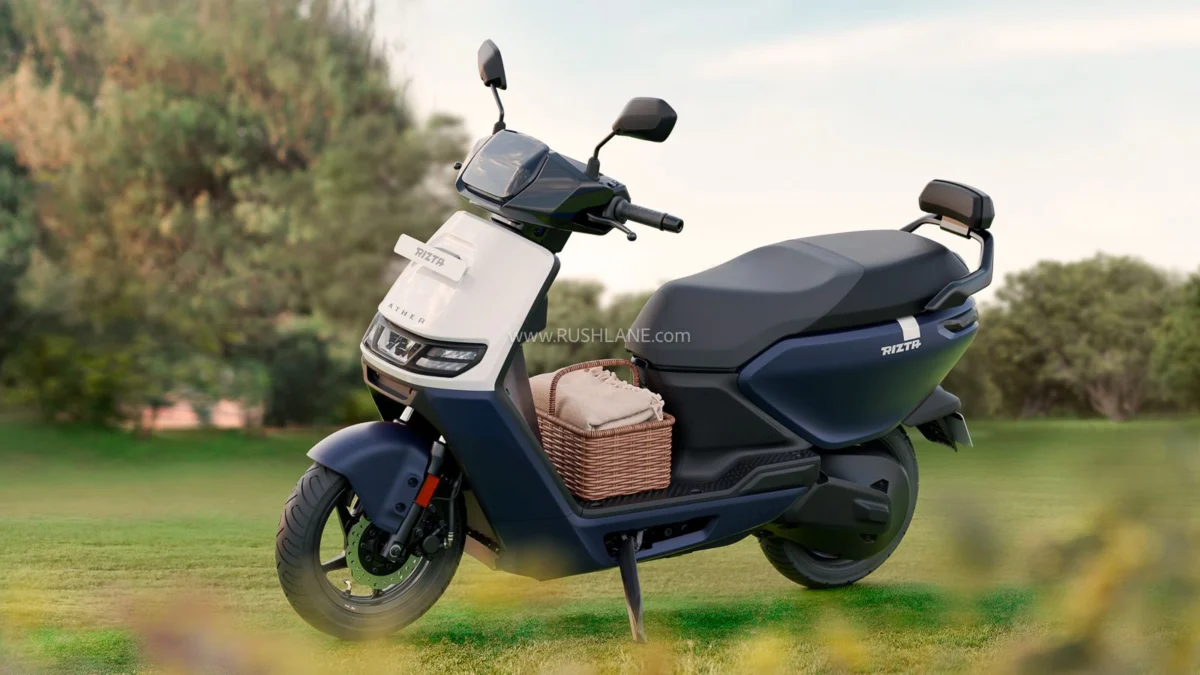
In an era where the electric vehicle (EV) landscape is shifting from early adoption to mass-market penetration, Ather Energy, India’s premier electric scooter manufacturer, has announced a significant strategic recalibration of its battery architecture. The Bengaluru-based startup has introduced a series of updates across its flagship 450 series and the newly launched Rizta family scooter. By integrating Lithium Iron Phosphate (LFP) chemistry alongside optimized Nickel Manganese Cobalt (NMC) packs, Ather is signaling a move toward greater supply chain resilience, cost efficiency, and technological refinement without compromising the performance metrics that have defined the brand.
The Core Transformation: LFP Meets the Rizta
The most pivotal update in Ather’s latest announcement is the introduction of a 2.7 kWh LFP battery pack for the Ather Rizta. Historically, Ather has been a staunch proponent of NMC chemistry, valued for its high energy density and lightweight properties—critical factors for the high-performance 450X. However, the Rizta, positioned as a comfort-oriented family scooter, provides a different use case where thermal stability and cost-effectiveness are paramount.
Previously, the Rizta was offered with two NMC options: a 2.9 kWh pack and a 3.7 kWh pack, delivering 123 km and 159 km of IDC (Indian Drive Cycle) range, respectively. The new update introduces a 2.7 kWh LFP unit as an alternative to the 2.9 kWh NMC pack.
The Engineering Paradox: Lower Capacity, Identical Range
One of the most striking aspects of this update is that the 2.7 kWh LFP battery delivers the exact same 123 km IDC range as the 2.9 kWh NMC unit. From a technical standpoint, LFP batteries typically possess lower gravimetric (weight-based) and volumetric (space-based) energy density compared to NMC.
Ather’s ability to extract the same range from a smaller capacity LFP pack suggests significant advancements in their Battery Management System (BMS) and powertrain efficiency. By optimizing how the energy is drawn and managed, Ather has ensured that the "entry-level" experience remains consistent, regardless of the chemistry under the floorboard.
Business-Driven Flexibility
Interestingly, Ather has stated that the 2.9 kWh NMC pack will continue to exist alongside the 2.7 kWh LFP unit. The decision of which pack a customer receives will be determined by Ather based on supply chain availability and production viability. For the end consumer, this transition is intended to be seamless; the performance, charging times, and warranty terms remain identical between the two chemistries. This move allows Ather to hedge against the volatile global pricing of minerals like Cobalt and Nickel by having a secondary, iron-based supply line ready.
Evolution of the 450 Series and High-Capacity Packs
While the Rizta explores LFP territory, the performance-centric 450 series (450S and 450X) and the top-tier Rizta variants are seeing an optimization of their NMC offerings. The previous 3.7 kWh NMC battery pack is being phased out in favor of a new 3.5 kWh NMC unit.
More Range from Less Mass
In a rare instance of "less is more," the new 3.5 kWh pack actually outperforms the outgoing 3.7 kWh unit in terms of range. On the Rizta, the range has increased from 159 km to 161 km. For the 450X, the range remains competitive with previous benchmarks.
This optimization reflects the iterative nature of EV technology. As cell chemistry improves and battery packaging becomes more efficient, manufacturers can reduce the physical size and weight of the battery while maintaining or even improving the energy output. For the rider, this translates to a slightly lighter vehicle, which can improve handling and efficiency without the "range anxiety" typically associated with smaller batteries.
Chronology of Ather’s Technological Milestones
To understand the significance of these battery updates, one must look at Ather’s trajectory over the last 24 months. The company has moved from being a niche enthusiast brand to a diversified manufacturer.

- April 2024: Launch of the Ather Rizta. This marked Ather’s entry into the "family scooter" segment, moving away from the sharp, aggressive styling of the 450 series to a more voluminous, practical design.
- Late 2024: Introduction of the 450X "Overtones" series. This brought new aesthetic choices and faster charging capabilities to the performance line.
- Early 2025: Software "Unlock." Ather enabled Voice Commands for the 450X, 450 Apex, and Rizta Z, enhancing the user interface via the AtherStack.
- Mid-2025 (Current): The Battery Diversification Strategy. The introduction of LFP cells and the optimization of NMC packs to streamline production and offer more competitive pricing through models like the Battery-as-a-Service (BaaS) program.
Supporting Data: Charging Infrastructure and Speed
A common pain point for EV owners is the time spent tethered to a wall. Recognizing this, Ather has bundled a significant hardware upgrade with its new battery configurations for the 450 series.
The 900W Portable Charger
Ather is replacing the older 700W portable charger with a new 900W unit for the 450S and 450X variants equipped with the larger battery packs. This 28% increase in power output results in a dramatic reduction in downtime:
- Old 700W Charger: 0% to 80% charge in approximately 4 hours and 30 minutes.
- New 900W Charger: 0% to 80% charge in just 3 hours and 12 minutes.
By shaving off nearly an hour and twenty minutes from the charging cycle, Ather is making the 450 series significantly more viable for users who do not have access to the "Ather Grid" fast-charging network daily and rely on home charging.
Comparative Battery Specifications
| Feature | Old Mid-Range (NMC) | New Mid-Range (LFP) | Old High-Range (NMC) | New High-Range (NMC) |
|---|---|---|---|---|
| Capacity | 2.9 kWh | 2.7 kWh | 3.7 kWh | 3.5 kWh |
| IDC Range (Rizta) | 123 km | 123 km | 159 km | 161 km |
| Chemistry | NMC | LFP | NMC | NMC |
| Charger Provided | 700W | 700W | 700W | 900W |
| 0-80% Charge Time | ~4h 30m | ~4h 30m | ~4h 30m | 3h 12m |
Official Context and Strategic Rationale
While Ather has not issued a singular "press release" for these specific tweaks, the moves are consistent with the public statements made by leadership regarding the company’s path to profitability and market share expansion.
The "business perspective" mentioned by industry analysts suggests that Ather is preparing for a post-subsidy era. As the Indian government’s FAME (Faster Adoption and Manufacturing of Hybrid and Electric Vehicles) and EMPS (Electric Mobility Promotion Scheme) incentives evolve, manufacturers must find ways to lower the Bill of Materials (BOM).
LFP cells are generally 20-30% cheaper to source than NMC cells. By validating LFP for the Rizta, Ather can maintain its premium build quality while offering a more aggressive entry price. Furthermore, the introduction of the Battery-as-a-Service (BaaS) model—where customers buy the scooter and subscribe to the battery—allows Ather to de-link the upfront cost of the vehicle from the expensive battery pack. The Rizta starting at an effective price of Rs 76,000 (under BaaS) is a direct result of this chemistry and business model flexibility.
Market Implications: The Competitive Landscape
Ather’s decision to adopt LFP is a direct response to the market reality dominated by competitors like Ola Electric and TVS Motor Company.
- Supply Chain Stability: By not being tethered to a single chemistry, Ather can pivot based on global mineral prices. If Cobalt prices spike, they can ramp up LFP production. If Nickel prices drop, they can lean back into NMC.
- Longevity and Safety: LFP batteries are known for having a longer cycle life (more charge/discharge cycles before degradation) and a higher thermal runaway temperature. For the Indian climate, where ambient temperatures can exceed 45°C, LFP offers an inherent safety margin that appeals to the conservative "family" buyer of the Rizta.
- The Charging War: By upgrading to a 900W charger, Ather is putting pressure on competitors whose portable chargers often linger in the 500W-600W range. Fast home charging is becoming a key differentiator as public infrastructure struggles to keep pace with EV sales.
Conclusion: Engineering a Sustainable Future
The update to Ather’s battery lineup is more than just a spec-sheet change; it is a sophisticated balancing act between chemistry, cost, and consumer expectation. By successfully implementing a smaller LFP pack that matches the range of a larger NMC pack, Ather has proven that software and thermal management are just as important as the raw cells themselves.
For the consumer, the message is clear: the "Ather experience"—characterized by smooth acceleration, a refined dashboard, and reliable range—remains unchanged, even as the "heart" of the machine evolves. As Ather continues to scale its production and expand its portfolio, this move toward chemical flexibility ensures that the company remains a formidable player in India’s journey toward total electrification. Whether it is the 450X for the enthusiast or the Rizta for the family, Ather’s new battery strategy ensures that efficiency and performance are no longer a zero-sum game.