

Main Facts: A Paradigm Shift in Chennai’s Literary Landscape
In February 2026, a significant chapter in Chennai’s cultural history drew to a close as the British Council Library (BCL) shuttered its iconic physical premises at 737 Anna Salai. For decades, this address served as a sanctuary for bibliophiles, a hub for high-stakes debates, and a cornerstone for the city’s intellectual life. However, far from being a story of decline, the closure marked the commencement of a radical digital-first strategy that has defied traditional expectations.
While the loss of the physical space was met with initial dismay by long-time members—many of whom cherished the "Young Readers" programmes and the quietude of "me time" among the stacks—the statistical reality tells a different story. According to Viji Thiyagarajan, Director of Libraries Global at the British Council, the transition to a fully digital model in Chennai has resulted in a staggering threefold increase in membership. Since the physical doors closed, the member base has surged from approximately 5,000 to over 15,000.

This metamorphosis is part of a broader national and global strategy. The British Council is reimagining the library not as a static repository of printed matter, but as a "hybrid public knowledge ecosystem." This model prioritizes digital accessibility and community engagement over the maintenance of expensive real estate. Today, within the British Council’s Indian network, only Delhi and Kolkata maintain physical libraries, both operating on a hybrid model that blends physical collections with robust digital platforms and cultural programming.
Chronology: From Physical Landmarks to Virtual Hubs
The transition of the British Council’s library network in India has been a decade-long journey, accelerated by the shifts in consumer behavior observed during the COVID-19 pandemic.

- The Early 2000s – 2010s: BCL outposts in cities like Bengaluru, Hyderabad, and Ahmedabad were central to the cultural fabric, hosting literary festivals, film screenings, and the much-coveted Booker Prize shortlists.
- The Pandemic Era: The global health crisis forced a temporary pivot to digital services. During this period, the Council observed a significant shift in how members consumed content, with a rising demand for e-books, audiobooks, and virtual sessions.
- February 2026: The Chennai branch at 737 Anna Salai officially closed its physical doors. The decision was catalyzed by the expiry of the building’s lease. Rather than seeking a new physical location, the Council redirected its energy and resources into its digital infrastructure.
- June 19, 2026: On National Reading Day, the British Council reflected on its new digital-first identity, highlighting the success of its partnership models in Karnataka and Sri Lanka.
- The 2026 Context: This shift coincides with the U.K. designating 2026 as the National Year of Reading, a response to alarming surveys indicating that only one-third of children aged 8-18 enjoy reading in their free time—the lowest level since 2005.
Supporting Data: The Changing Metrics of Literacy
The evolution of the library system is underscored by a mix of optimistic growth in digital engagement and concerning trends in traditional infrastructure.
The Shrinking Physical Footprint
Data indicates a sharp contraction in India’s public library infrastructure. A decade ago, India boasted approximately 75,000 public libraries across various States and Union Territories. Today, that number has dwindled to 46,746. This decline highlights the immense pressure on physical spaces to justify their costs in an age of rising real estate prices and digital ubiquity.

Regional Reading Trends
The British Council’s member database provides a fascinating glimpse into the diversifying interests of Indian readers across different geographies:
- South India: Approximately 4,000 young adult members show a distinct preference for academic and career-oriented materials, with a high interest in STEM (Science, Technology, Engineering, and Mathematics) subjects, research books, and daily newspapers.
- North India: With a base of 5,000 young members, the preference leans toward lifestyle and entertainment, with a high uptake of magazine reading, fiction, and non-academic audiobooks.
- East India: This region remains a bastion of classical interests, with its 2,000 young members remaining strongly literature-oriented.
Digital Reach and Demographics
The BCL’s digital library now reaches audiences in over 190 cities, currently engaging two million people across India. The Council has set an ambitious target to expand this reach to five million users. The core demographic remains the 10-to-25-year age group, who are increasingly engaged through "reading marathons" and digital "influencer" programs.

Official Responses: Insights from Viji Thiyagarajan
Viji Thiyagarajan, who has been with the British Council since 1998 and currently oversees physical library strategy globally and digital libraries across South Asia, argues that the survival of libraries depends on their ability to reinvent themselves.
On the "Hybrid" Future
"Libraries have to transform into a hybrid public knowledge ecosystem," Thiyagarajan asserts. She believes the library’s role has shifted from being a "custodian of knowledge" to a "guide for navigation." In her view, today’s readers are not just looking for books; they are seeking career guidance, current affairs, and "positive stories" that offer life impact, such as biographies and folklore.

On the Challenge of Artificial Intelligence
Addressing the dominance of AI, Thiyagarajan adopts a pragmatic stance. "We have to accept and live with AI. We can’t counter it, so collaborate with it." The BCL has integrated AI through platforms like MyLOFT, which uses algorithms to gauge reader interests and manage vast catalogues of e-resources. She suggests that the library’s new role is to curate the overwhelming amount of information AI generates, helping readers use these tools more effectively rather than being overwhelmed by them.
On Repositioning Public Spaces
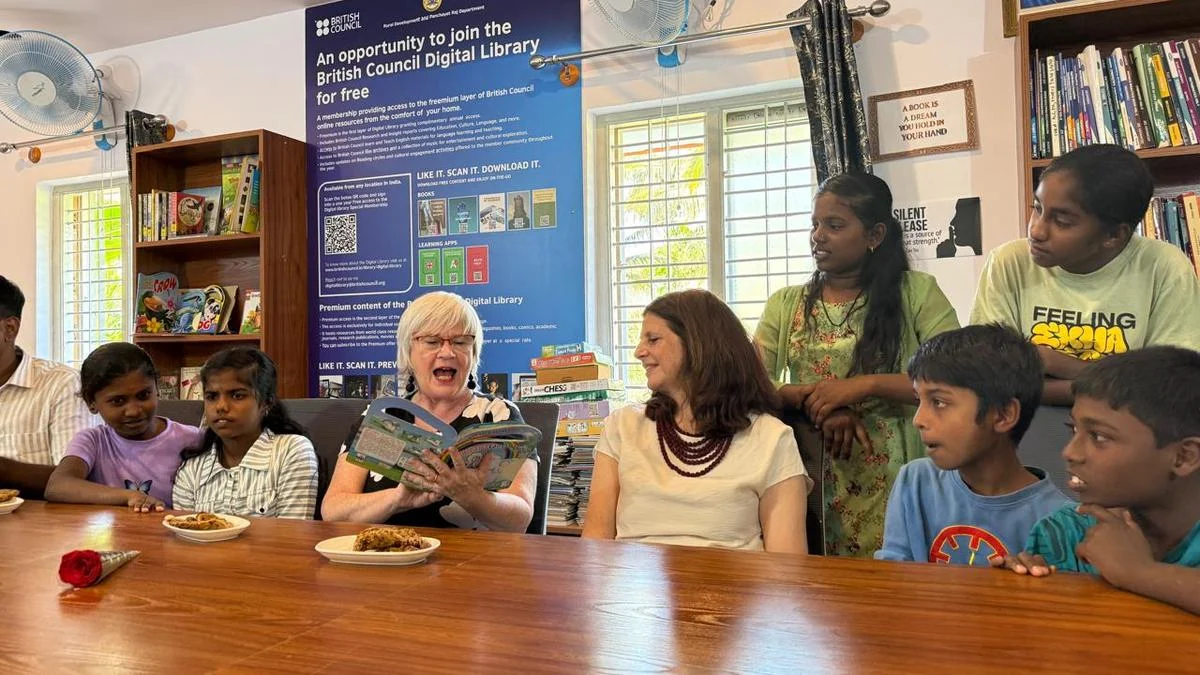
Thiyagarajan highlights the "Karnataka Model" as a blueprint for the future. By partnering with the Karnataka Rural Development Project, the BCL has expanded its reach into 70 Gram Panchayati Raj libraries. "We have provided digital access, trained the local language facilitators, and done bilingual orientation for the librarians," she explains. This model allows the Council to maintain a presence in tier-2 cities and rural areas where the "quest for English" is high, without the overhead of independent physical buildings.

Implications: The Psychological and Social Cost of Innovation
The transition to digital-first libraries brings with it a complex set of implications for cognitive development, community building, and the concept of "public space."
Serendipity vs. Search
Library science researchers in India have raised concerns about the loss of physical browsing. In-person browsing allows for "serendipitous discovery"—the act of finding a life-changing book one wasn’t looking for. While digital keyword searches are efficient, they often fail to capture the curiosity-driven exploration that occurs in physical aisles. Former BCL members have noted that the tactile process of using a library card and selecting a physical book often triggered a lifelong independence and love for reading that digital clicks may struggle to replicate.

The Battle Against "Endless Scrolling"
In an era of smartphones and "doomscrolling," libraries are being positioned as a counterweight to short-form, algorithmic content. By creating communities of "reading ambassadors" and hosting interactive book clubs online, the BCL is attempting to foster "deep reading" in a digital environment. However, the challenge remains whether a digital interface can provide the same level of focus and "solitude" that physical libraries once offered.
The Evolution of Public Architecture
The success of the Kalaignar Centenary Library in Madurai serves as a potential middle ground. This institution combines the traditional with the futuristic, featuring six floors that house everything from art galleries and science parks to e-libraries and 200-seater auditoriums. It suggests that if physical libraries are to survive, they must become multi-sensory community hubs rather than just quiet rooms for reading.

Conclusion: A New Chapter
The British Council’s move in Chennai is a bellwether for the future of information access in India. As physical repositories shrink, the "hybrid ecosystem" offers a way to democratize knowledge, reaching millions in 190 cities who previously had no access to BCL resources. Yet, the challenge for the coming decade will be to ensure that in the rush toward digital efficiency, the "soul" of the library—the community, the serendipity, and the tactile joy of discovery—is not lost in the cloud. For Viji Thiyagarajan and the British Council, the goal is clear: to ensure the library remains a relevant, inclusive, and vital platform for lifelong learning in an AI-driven world.
