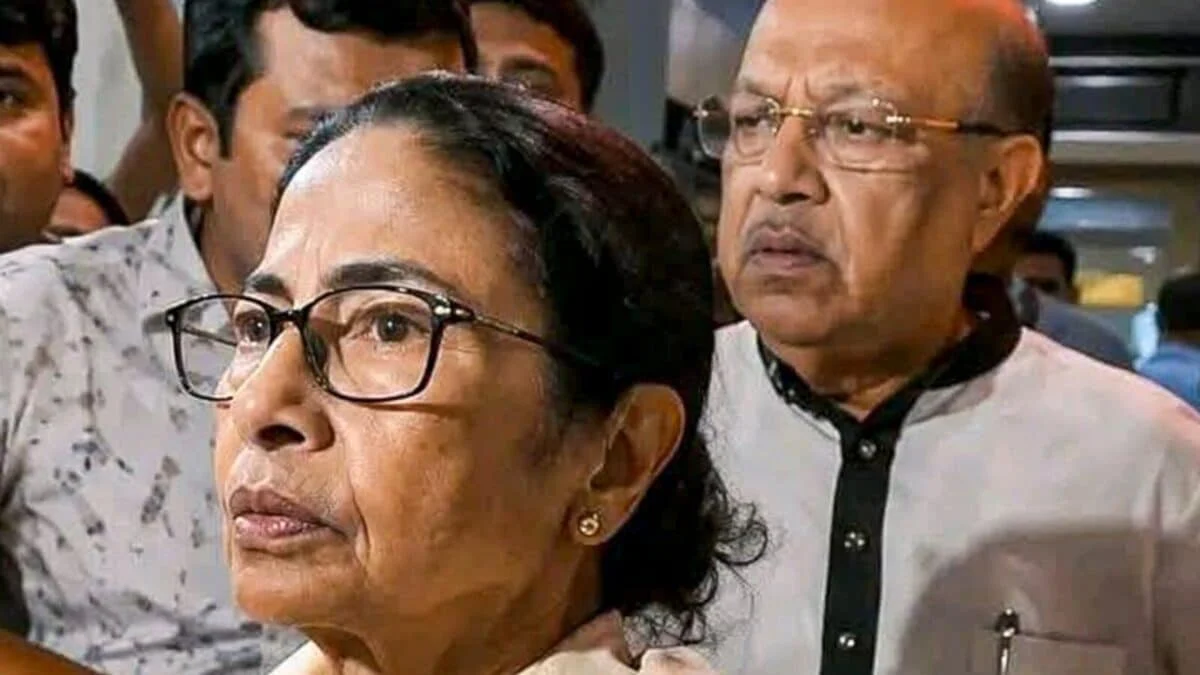
Kolkata, West Bengal – May 31, 2026 – In a dramatic and emotionally charged address from the courtyard of a private hospital, Trinamool Congress (TMC) chairperson Mamata Banerjee on Saturday unleashed a scathing indictment of the Bharatiya Janata Party (BJP), accusing the ruling party of orchestrating an act of "absolute brutality" against her nephew and TMC national general secretary, Abhishek Banerjee. The incident, a violent stone-pelting assault in Sonarpur, has plunged West Bengal into a fresh vortex of political acrimony, with Banerjee asserting that the sheer force of the attack could have resulted in Abhishek’s instantaneous death had it not been for the swift intervention of local residents who provided him with a protective helmet.
A visibly shaken Banerjee, her voice laced with outrage and profound shock, detailed the harrowing physical trauma endured by the Member of Parliament, revealing that the attack left him with multiple injury marks and a concerning accumulation of clotted blood near his chest. The incident has not only sparked a massive political confrontation but has also raised serious questions about law enforcement, security protocols for public figures, and the increasingly volatile political climate in West Bengal.
The Sonarpur Attack: A Chronology of Events
The day had begun with Abhishek Banerjee’s scheduled visit to Sonarpur, a region grappling with the aftermath of recent post-poll violence. As the National General Secretary of the TMC, Banerjee was on a mission to meet and console victims, offering support and assessing the ground reality. Such visits are routine for political leaders, especially in times of local unrest, and typically involve a robust security detail.
Sources close to the TMC indicate that Abhishek Banerjee’s convoy arrived in Sonarpur mid-morning, greeted by a mix of local supporters and curious onlookers. His itinerary included visiting several affected households and addressing a small gathering. It was during one such interaction, as he was engaging with residents, that the atmosphere reportedly turned hostile. Eyewitness accounts, corroborated by TMC statements, suggest a sudden surge of individuals from the periphery of the crowd, who began pelting stones and other projectiles towards Banerjee and his entourage.
The assault was described as swift and ferocious. Amidst the chaos, the primary target appeared to be Abhishek Banerjee. It was at this critical juncture that a group of local residents, displaying remarkable presence of mind and courage, reportedly rushed forward, managing to provide Banerjee with a helmet, shielding him from what could have been fatal blows to the head. The protective gear, though rudimentary, proved crucial in averting a more severe, potentially life-threatening head injury. The attack, which lasted several intense minutes, eventually saw security personnel regaining control and extricating Banerjee from the volatile situation. He was immediately moved to a safer location before being rushed for medical attention.
Initially, Banerjee was taken to Apollo Hospital in Kolkata for preliminary assessment, where his condition was stabilized. However, given the nature of his injuries and the political sensitivity of the situation, he was subsequently shifted to Belle Vue Hospital for more comprehensive medical evaluation and care.
Medical Ordeal and Mamata’s Controversial Intervention
Upon his admission to Belle Vue Hospital, medical professionals conducted a thorough examination of Abhishek Banerjee. Attending doctors confirmed the presence of multiple injury marks across his body, indicative of the severe impact of the stone-pelting. Of particular concern was the diagnosis of a significant accumulation of clotted blood near his chest, a finding that prompted immediate and serious medical advice.
Initial medical evaluations strongly recommended keeping the MP under intensive monitoring in the Intensive Therapy Unit (ITU) for an extended period. This protocol was deemed essential to facilitate further diagnostic tests, including advanced imaging, to fully ascertain the extent of internal injuries and to administer necessary saline and medication for pain management and recovery. The ITU setting would also allow for continuous observation of vital signs, crucial in cases of blunt force trauma.
However, a dramatic turn of events unfolded when Mamata Banerjee arrived at the hospital. After conferring with the medical team and assessing the situation, the TMC chairperson expressed profound dissatisfaction, not only with the perceived delays in medical handling but, more significantly, with the overall environment within the hospital premises. Speaking directly to the media, a visibly incensed Mamata Banerjee raised serious concerns regarding the medical handling and administrative delays immediately following the attack, questioning why the MP was kept inside the Intensive Therapy Unit (ITU) for over two hours before being moved.
More strikingly, she openly alleged that the medical facility itself was functioning under active "external intimidation and threats," implying political pressure was preventing healthcare staff from executing their duties seamlessly and impartially. "They kept him in ITU for two hours, but the atmosphere there was not conducive for his recovery," Banerjee declared, her voice firm despite the underlying distress. "There is pressure, there is intimidation. Even doctors are being threatened. How can we expect him to recover fully in such a situation?"
Disgusted by what she termed an institutional response compromised by external forces, the former West Bengal chief minister announced a stunning decision: she would discharge the MP from Belle Vue Hospital and transfer his medical care directly to her private residence. There, she declared, a "makeshift hospital setup" would be established, complete with medical equipment and a dedicated team of doctors, to oversee his recovery under her personal supervision.
This unprecedented move, while signaling Mamata Banerjee’s profound distrust of the prevailing administrative and political climate, also drew immediate scrutiny. Medical ethics dictate that critical patients, especially those with potential internal injuries, should remain in fully equipped hospital environments. However, Banerjee’s decision underscored her belief that her nephew’s safety and optimal recovery could only be guaranteed outside what she perceived as a politically tainted institutional framework. The "makeshift hospital" at her home, she asserted, would provide a secure, unpressured environment for his convalescence, albeit under highly unconventional circumstances. This decision, she maintained, was borne out of necessity and a complete lack of faith in the state’s capacity to provide unbiased care amidst the escalating political tensions.
Political Fallout and Accusations
The Sonarpur attack and Mamata Banerjee’s subsequent pronouncements have ignited a ferocious war of words between the ruling TMC and the Bharatiya Janata Party (BJP), transforming a localized incident into a national political flashpoint. The TMC, led by its firebrand chairperson, has left no ambiguity about its accusations. Mamata Banerjee, in her fiery address, branded the assault as an "absolute brutality" and a "pre-planned, murderous conspiracy" orchestrated by the BJP.
"This is not just an attack on Abhishek, this is an attack on democracy, an attack on the people of West Bengal," Banerjee thundered. "The BJP is desperate. They cannot defeat us politically, so they resort to violence, to attempting murder. They want to eliminate our leaders. This is a clear attempt to silence the voice of the Trinamool Congress." She further linked the incident to the broader narrative of post-poll violence, alleging that the BJP has consistently incited unrest and targeted TMC workers and leaders in an effort to destabilize the state government. The TMC leadership, including other senior members, has echoed these sentiments, demanding a high-level inquiry and immediate arrests of those responsible, not just the perpetrators but also the alleged masterminds. They argue that the nature of the attack, targeting a high-profile MP with such intensity, points to a sophisticated, premeditated plot rather than a spontaneous outburst.
The BJP, however, has vehemently denied any involvement. Bengal BJP president Samik Bhattacharya swiftly issued a statement condemning the violence but categorically rejecting TMC’s accusations. "Our party has absolutely no hand in this unfortunate incident," Bhattacharya asserted. Instead, he suggested an alternative explanation, attributing the attack to "public anger against the TMC." Bhattacharya posited that the incident could be a manifestation of widespread public discontent stemming from various issues, including alleged corruption, misgovernance, and perceived high-handedness of TMC cadres.
"The Trinamool Congress should introspect," Bhattacharya stated. "Why is there such anger against them? People are fed up. They are frustrated. Instead of blaming the BJP for every problem, the TMC should look within and address the grievances of the common people. This could very well be an outcome of their own actions and the resentment building up among the populace."
The BJP’s counter-narrative also subtly alluded to the "Bhaipo" (nephew) popularity reference, a term often used by the BJP to criticize Abhishek Banerjee’s rise within the TMC, suggesting that his popularity might not be as unblemished as the TMC portrays. While carefully avoiding direct endorsement of violence, this narrative attempts to shift the blame back onto the TMC for creating an environment of public dissatisfaction that could lead to such incidents.
This clash of narratives has intensified the already fraught political atmosphere in West Bengal. Both parties are now locked in a fierce battle for public perception, with the TMC portraying itself as the victim of a brutal authoritarian regime, and the BJP positioning itself as a defender of public sentiment against a allegedly corrupt and violent ruling party.
Historical Context and Precedents
Mamata Banerjee’s passionate condemnation of the Sonarpur attack also included a poignant historical parallel, drawing a sharp comparison to the tumultuous political landscape of West Bengal under the Communist Party of India (Marxist) regime. "Even during the 34-year-long tenure of the Communist Party of India (Marxist) regime, the state had never witnessed such a low point of political malice and physical targeted violence," she alleged. This statement carries significant weight, invoking a period in West Bengal’s history characterized by intense political rivalry and, at times, considerable political violence.
The CPI(M)’s three-decade-plus rule, from 1977 to 2011, was marked by its formidable grassroots organization and a strong-arm approach to maintaining political dominance. While the Left Front government often touted its commitment to social justice, its tenure was also punctuated by numerous allegations of political killings, suppression of dissent, and strong-arm tactics against opposition parties, particularly the Congress and later, the nascent Trinamool Congress. Cadre-based violence, especially during elections and local power struggles, was not uncommon. Incidents of clashes, intimidation, and even fatalities were regrettably part of the political lexicon of that era.
By invoking this historical parallel, Mamata Banerjee effectively escalated the gravity of the current situation. She implied that the level of targeted brutality witnessed in the Sonarpur attack surpassed even the darkest chapters of the Left Front era, suggesting a dangerous new low in West Bengal’s political culture. This comparison serves multiple purposes: it underscores the perceived severity of the BJP’s alleged actions, positions the TMC as a victim of unprecedented malice, and rallies her supporters by reminding them of past struggles against formidable political adversaries.
However, critics from the BJP and other opposition parties quickly countered this comparison, arguing that political violence has been a persistent feature of West Bengal’s landscape, regardless of the party in power. They point to numerous incidents of political clashes, particularly during and after elections, that have occurred under TMC rule, asserting that the state’s political culture remains deeply entrenched in confrontational and often violent practices. While the scale and nature of violence may vary, the underlying issues of political rivalry, control, and intimidation have, according to these critics, regrettably persisted.
Nonetheless, Mamata Banerjee’s powerful rhetorical link to the CPI(M) era effectively frames the Sonarpur attack as a watershed moment, demanding introspection and accountability from all political actors involved. It serves as a stark reminder of the deep-seated political rivalries and the unfortunate history of violence that has often marred the democratic process in West Bengal.
Security Lapses and Demands for Accountability
The violent assault on Abhishek Banerjee, a Member of Parliament and a Z-category protectee, has inevitably cast a harsh spotlight on the glaring security lapses that allowed such an incident to occur. An MP, by virtue of their public office and the security threats they often face, is typically afforded a high level of protection, involving multiple layers of security personnel and strict protocols for public engagements. The fact that a mob could approach so closely and successfully pelt stones, causing significant injury, points to a fundamental breakdown in these protective measures.
Security experts and opposition leaders alike have raised serious questions about the preparedness and effectiveness of the security detail assigned to Abhishek Banerjee. How was the crowd allowed to become so unruly? Were intelligence inputs regarding potential threats adequately assessed? Was there sufficient crowd control in place? These questions demand immediate and transparent answers.
Various political commentators and former law enforcement officials have weighed in, suggesting several potential points of failure. These could range from inadequate pre-event threat assessment and insufficient deployment of personnel to poor coordination between different security agencies and a lack of effective crowd management strategies. The ability of local residents to intervene with a helmet, while commendable, also highlights the vulnerability of the MP in that critical moment.
Demands for accountability have been swift and widespread. Opposition parties, while denying direct involvement in the attack, have called for a thorough and impartial investigation into the security breach. They argue that regardless of political affiliations, the safety of public representatives is paramount for the functioning of democracy. Calls have been made for a judicial inquiry or an investigation by an independent agency to identify the security personnel responsible for the lapse and to recommend measures to prevent future occurrences.
The unfolding crisis has left the state administration scrambling to handle the fallout. The Home Department, which is responsible for law and order in the state, is under immense pressure to provide a detailed explanation for the security failure. Chief Secretary and Director General of Police are expected to submit comprehensive reports on the incident, outlining the sequence of events, the actions taken by security forces, and the proposed corrective measures. The credibility of the state’s law enforcement apparatus is now under severe scrutiny, and its ability to conduct an unbiased investigation will be critical in restoring public confidence and addressing the profound concerns raised by this brutal attack.
Implications for West Bengal Politics
The Sonarpur attack on Abhishek Banerjee and the subsequent, highly charged reactions from Mamata Banerjee are poised to have far-reaching implications for the already turbulent political landscape of West Bengal. This incident has not only intensified the bitter rivalry between the TMC and the BJP but has also introduced new elements of volatility and distrust that could fundamentally reshape political dynamics in the state.
Firstly, the attack is likely to further polarize the electorate. Mamata Banerjee’s narrative of a "pre-planned murderous conspiracy" and her portrayal of the TMC as victims of state-sponsored violence will undoubtedly galvanize her party’s base. It reinforces the image of the TMC as a party constantly battling hostile forces, both internal and external. Conversely, the BJP will continue to leverage its counter-narrative of "public anger" and "TMC’s misgovernance" to rally its own supporters and discredit the ruling party. This deepening divide could make political dialogue and consensus-building even more challenging, leading to a more confrontational political environment.
Secondly, the incident will almost certainly escalate political tensions and rhetoric. With both parties feeling deeply aggrieved and accusing each other of foul play, the level of political discourse is expected to become even more aggressive. Public rallies, media statements, and social media campaigns are likely to be marked by increasingly inflammatory language, further exacerbating inter-party animosity. This could spill over into local administration and governance, as political vendettas might impact policy implementation and public service delivery.
Thirdly, the attack raises significant concerns about political campaigning and the safety of leaders in the run-up to future elections, particularly the upcoming municipal and panchayat polls. If an MP with Z-category security can be subjected to such a violent assault, it sends a chilling message to other political workers and candidates. Parties may become more cautious about public engagements, potentially limiting direct interaction with the electorate and relying more on virtual campaigns or highly controlled events. This could stifle democratic participation and the free exchange of ideas, fundamental to a healthy electoral process. The incident will force all political parties to re-evaluate their security strategies and demand greater protection from the state administration.
Fourthly, Mamata Banerjee’s decision to establish a "makeshift hospital" at her residence, while a powerful symbolic gesture of distrust in state institutions, also sets a precedent for unconventional responses to political crises. It underscores the deep breakdown of trust between the ruling party and segments of the state apparatus, which could have long-term implications for governance and administrative neutrality. Such actions, while demonstrating resolve, can also be perceived as undermining established institutional procedures.
Finally, the incident places immense pressure on the state administration to demonstrate its capacity for impartial law enforcement. The credibility of the police and investigative agencies will be under intense scrutiny. The outcome of the investigation, and whether it is perceived as fair and unbiased, will significantly impact public trust and the political legitimacy of the government. Failure to deliver justice and ensure accountability could further erode confidence in the rule of law.
In essence, the Sonarpur attack is not merely an isolated act of violence; it is a critical juncture that will likely define the trajectory of West Bengal politics in the coming months and possibly years. It has amplified existing fault lines, fueled partisan animosity, and raised fundamental questions about the nature of democratic engagement and political safety in the state.
Conclusion
The brutal assault on Abhishek Banerjee in Sonarpur has ripped through West Bengal’s already volatile political landscape, leaving a trail of outrage, accusations, and deep uncertainty. Mamata Banerjee’s stark declaration that her nephew "could have been spot dead" underscores the gravity of the incident, transforming it from a localized act of violence into a national debate on political ethics, law enforcement, and the safety of public figures.
With the TMC alleging a "pre-planned, murderous conspiracy" by the BJP, and the BJP countering with claims of "public anger" against the ruling party, West Bengal finds itself at a critical juncture. The medical ordeal of Abhishek Banerjee, coupled with Mamata Banerjee’s unprecedented decision to remove him from institutional care and establish a "makeshift hospital" at home, highlights a profound breakdown of trust in state mechanisms and a deepening of political animosity.
As top opposition leaders across the country condemn the breakdown of law enforcement and call for accountability, the incident has laid bare glaring security lapses and ignited urgent demands for a thorough, impartial investigation. The historical parallels drawn by Mamata Banerjee to the darkest chapters of West Bengal’s political past further emphasize the perceived severity of the situation, signaling a dangerous new low in the state’s political culture.
The implications for West Bengal politics are profound. The attack is poised to further polarize the electorate, escalate political rhetoric, and cast a long shadow over future electoral campaigns, raising serious concerns about the safety of leaders and the integrity of the democratic process. As Banerjee vows to personally supervise her nephew’s medical recovery from her residence, the state administration grapples with the fallout of what the TMC terms a pre-planned, murderous conspiracy, a situation that threatens to destabilize the political fabric of West Bengal for the foreseeable future. The coming days and weeks will be crucial in determining whether the state can navigate this crisis towards accountability and de-escalation, or if it will be further plunged into an abyss of political confrontation and violence.