

Kolkata, West Bengal – In the labyrinthine alleys and storied streets of West Bengal, history often finds its most exquisite hiding places. For the erstwhile French enclave of Chandannagar, this history is not etched in stone or whispered in forgotten manuscripts, but rather, delicately encased within a confection no larger than the palm of a hand: the Jalbhara Sandesh. This seemingly ordinary sweet, with its unassuming exterior, harbors a magician’s trick – a pocket of fragrant, unyielding syrup that has captivated connoisseurs and bewildered first-time tasters for nearly two centuries. On June 26, 2026, this culinary marvel officially received the coveted Geographical Indication (GI) tag, cementing its inextricable link to the town where it was first conceived, an testament to its enduring appeal and unique heritage.
The Jalbhara Sandesh, a creation attributed to the ingenuity of Surjya Modak and his son Siddheshwar Modak, has transcended empires, outlived colonial powers, and navigated the ebbs and flows of socio-economic change. It has witnessed the departure of the French, the decline of the zamindars, periods of sugar scarcity, evolving palates, the advent of refrigeration, express couriers, and global migration. Yet, it has persevered, traveling folded in luggage, carefully packed into tin boxes, nestled amongst clothes on journeys to Kolkata, Delhi, and ultimately, across the globe. For generations, the Jalbhara has posed a persistent enigma: how can a solid sweet ingeniously contain a liquid core without a single drop escaping?

Unraveling the Mystery: A Journey to the Birthplace
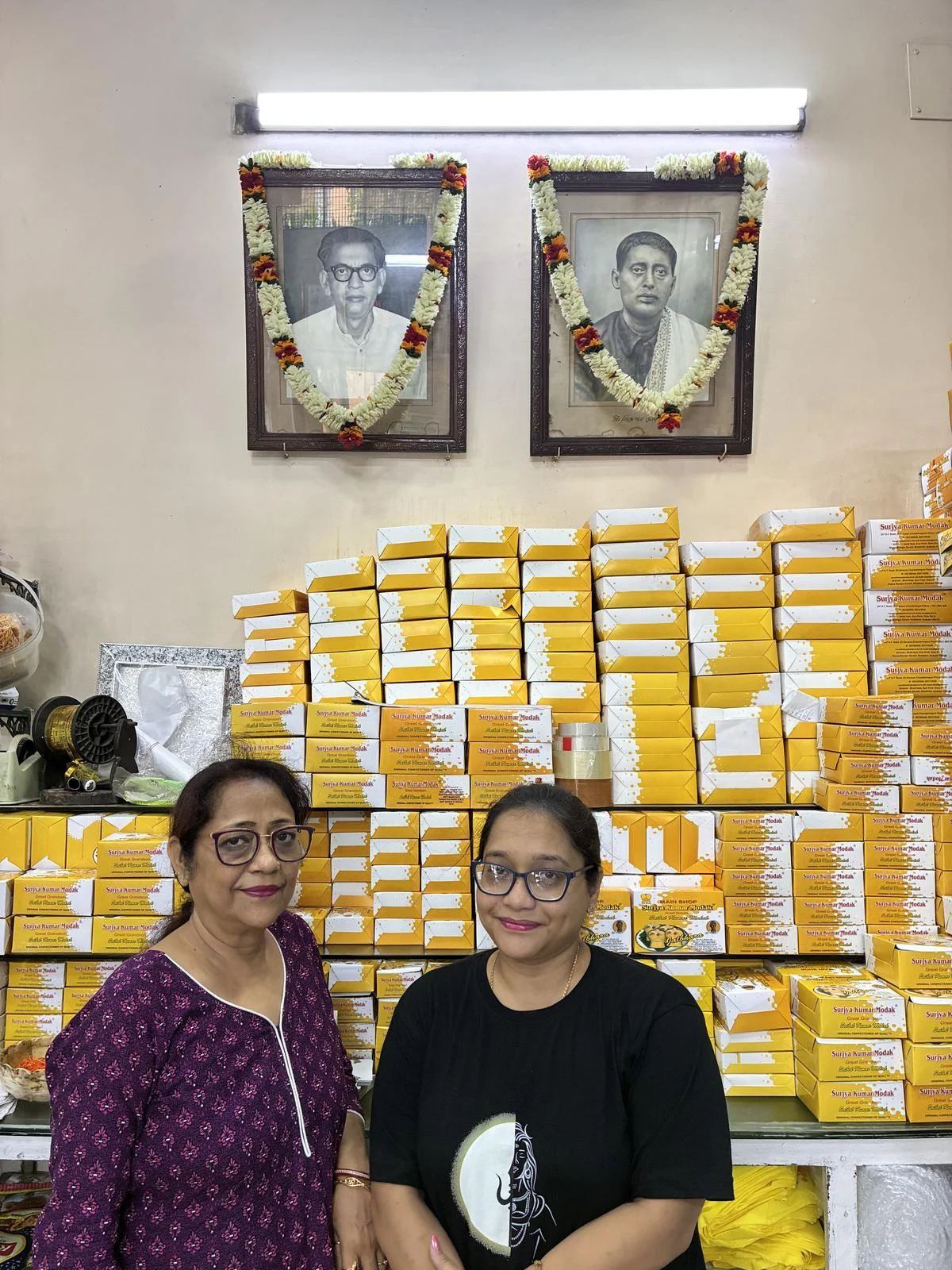
To unravel this culinary riddle, a journey of approximately 45 kilometers from Kolkata leads to Chandannagar, the hallowed ground where the Jalbhara Sandesh first saw the light of day. In this historic river town, a town once graced by French colonial architecture and now a vibrant hub of Bengali culture, the name "Surjya Modak" resonates with deep familial pride. While the proliferation of the sweet has led to several establishments bearing similar names, the authentic lineage traces back to the original shop located at 247, Grand Trunk Road East, Barasat Chandannagar, in the Hooghly district. Adjacent to the bustling new shop stands the venerable old establishment, the very place where Surjya Modak, alongside his son Siddheshwar, meticulously crafted this extraordinary sweet around the years 1843-1844. Their singular authorized branch in Kolkata can be found at Misti Hub, Gate Number 3, in New Town Eco Park, a testament to their expanding reach.
The Genesis of a Sweet Surprise: A Zamindar’s Whim
The genesis of the Jalbhara Sandesh is rooted in a delightful anecdote from the year 1250 of the Bengali calendar, which roughly translates to 1843-1844. In the Telinipara neighborhood of Chandernagore, Surjya Modak received an unusual summons from the grihini (wife) of the local zamindar. Her request was ambitious: to create a sweet that was utterly novel, something that would astonish the newlywed groom and elicit a playful surprise upon his first bite.

In response to this intriguing challenge, Surjya and his son Siddheshwar applied their considerable culinary acumen. They ingeniously crafted a mold that mimicked the translucent pulp of the ice apple, known locally as talshansh. Into this mold, they carefully placed chhena, the fresh cottage cheese derived from curdled cow’s milk. At the very heart of this chhena core, they concealed a secret: a mixture of aromatic rose extract and jaggery, reduced to a thick, paste-like consistency called dolo. They christened this groundbreaking creation "Jalbhara," meaning "water-filled," and dispatched it to the Telinipara household.
The moment of truth arrived when the unsuspecting groom, eager to savor the sweet, took his first bite. As anticipated, the hidden syrup burst forth, cascading down his panjabi (a traditional kurta worn by men). The women of the household, privy to the playful prank, erupted in peals of joyous laughter. The ruse had been a resounding success, marking the birth of a culinary legend and the dawn of a new era for the Modak family. The fame of the Jalbhara Sandesh began to spread like wildfire, far beyond the confines of the zamindar’s estate.

A Sweet Legacy: From French Influence to Tagore’s Admiration
The history of the Jalbhara Sandesh is inextricably woven into the broader tapestry of Bengal’s rich confectionery tradition. The arrival of the Portuguese in the nearby port of Bandel in the 16th century had a profound impact, introducing the widespread use of curdled milk in dessert-making. This innovation fundamentally reshaped the landscape of Bengali sweets, and local moiras (sweet makers) embraced this technique with remarkable adaptability and creativity. Among these artisans, Surjya Kumar Modak stood out, transforming a relatively new ingredient into one of Bengal’s most enduring and celebrated culinary inventions.
However, Surjya Modak was more than just a master confectioner; he was also a man of letters. His collection of poetry, Geet Gobindo, is a poignant reminder of the intellectual vibrancy of 19th-century Bengal, where artistic and culinary pursuits were often intertwined. The survival of his poetic works in the French Museum in Chandannagar serves as a testament to this era, where a sweet maker could also be a poet, and a sweet shop a repository of culture and literature.

This rich legacy is now meticulously carried forward by the fifth-generation owner, Saibal Kumar Modak. His wife, Madhuri Modak, and their two daughters, Bhagyasree Modak and Gitashree Modak – representing the sixth generation – are actively involved in preserving the age-old recipes and the 220-year-old legacy of Surjya Modak.
The family’s connection to literary giants extends to none other than Rabindranath Tagore, the Nobel laureate poet. Gitashree recounts how Tagore, a frequent visitor to Chandannagar, often stayed at the historic Patal Bari overlooking the Hooghly River. During one such sojourn, the poet sampled various sweets from the Modak household. While the Jalbhara deeply impressed him, another preparation particularly captured his imagination. Its delicate grains of chhena, reminiscent of tiny pearls, evoked the imagery of "moti" (pearls). Tagore, with his keen eye for descriptive nomenclature, christened this sweet "Motichur Sandesh," a name that has endured to this day, distinct from the more common Motichoor Ladoo.

The Art of Containment: The Jalbhara’s Enduring Secret
The enduring mystery of the Jalbhara Sandesh lies in its ingenious construction. Gitashree Modak elaborates on the secret behind its remarkable ability to hold liquid: "The outer shell has such a consistency that it never absorbs the liquid inside. Even during summer, it can remain intact for four or five days without refrigeration." This unique texture is achieved through a precise balance of ingredients and a meticulous crafting process. In the winter months, a special variation of the Jalbhara emerges, crafted entirely with fragrant nolen gur (date palm jaggery), imbuing both the filling and the shell with the rich, amber hues and deep flavors of this seasonal delicacy.
A Spectrum of Flavors: Evolution and Innovation
While the original Jalbhara remains a timeless classic, the Modak family has embraced innovation, expanding the flavor profile to cater to evolving tastes. Rows of tantalizing mango Jalbhara, filled with the luscious pulp of Alphonso mangoes, now sit alongside seasonal offerings like strawberry, black currant, green mango, and even contemporary creations inspired by popular brands like Cadbury. Despite the advent of these newer varieties, the mango Jalbhara continues to reign supreme as the favorite during the summer months. The original Jalbhara is priced at ₹65, while the more elaborate mango variant retails at ₹90, reflecting the premium ingredients and artistry involved.

Sourcing Purity and Global Reach
The commitment to quality and consistency remains paramount. Gitashree emphasizes that the milk, sugar, and chhena are meticulously sourced from trusted suppliers in the surrounding suburbs, ensuring that the authentic taste that generations of customers have come to expect is never compromised.
What has dramatically transformed is the geographical reach of these beloved sweets. Gitashri notes that weekly consignments of Jalbhara Sandesh now depart from Chandannagar, destined for major Indian cities such as Bengaluru, Hyderabad, Delhi, and Mumbai, ensuring delivery to customers within a single day. The demand for these artisanal sweets has also surged internationally, with a significant global clientele eager to experience this Bengali delicacy.

Exporting Tradition: Navigating International Markets
"We export through DHL, adhering to the regulations of each country," Gitashree explains. "There is especially strong demand in the United States, where one of our vendors distributes our products across America. In India, every week we send at least six or seven dispatches to Bengaluru, Delhi, Hyderabad, and Mumbai." This logistical prowess underscores the Modak family’s dedication to sharing their heritage with a global audience.
The Significance of the GI Tag: A Stamp of Authenticity
The recent Geographical Indication (GI) tag, awarded on June 26, 2026, is more than just an official recognition; it is a powerful affirmation of Chandannagar’s unique culinary heritage and the generations of craftsmanship that have defined the Jalbhara Sandesh. "For international business, we needed official recognition. Earlier, everyone knew it as Surjya Modak’s Jalbhara. Now it has become Chandannagar’s Jalbhara. It places Chandannagar on the global map, and that makes us very happy," Gitashree beams with pride.

While the GI tag may have arrived in 2026, the Jalbhara Sandesh had long ago transcended the need for official endorsement. Its intrinsic quality, its captivating mystery, and its deep cultural resonance had already secured its place in the hearts and minds of connoisseurs worldwide.
As another tray of these delicate sweets empties across the counter, the Jalbhara performs its age-old magic once more. A fragile shell yields to the gentle touch, releasing a cascade of sweetness where none seemed possible, eliciting gasps of delight and shared laughter from a new generation of astonished tasters. The Jalbhara Sandesh, a testament to ingenuity and tradition, continues its delicious journey, a liquid secret held within a perfect embrace, forever embodying the sweet history of Chandannagar.
