

New Delhi, August 14, 2026 – In an era increasingly defined by fleeting digital trends, a resurgence of interest in tangible narratives is reshaping how we connect with our past. This phenomenon is vividly illustrated by the enduring appeal of non-fiction books that meticulously explore the profound interplay between food and history. These literary works, far from being mere recipe collections, serve as portals into the very fabric of human civilization, revealing how what we eat has shaped societies, driven empires, and defined cultures across millennia. Recent viral phenomena and a steady demand in both physical and digital bookstores underscore a growing hunger for understanding the deep-rooted connections between our plates and our progress.
The past few years have witnessed a remarkable surge in the popularity of culinary history narratives, with specific titles experiencing unprecedented attention. This renewed fascination is not confined to academic circles; it has permeated popular culture, driven by social media trends and a general desire to contextualize our present through the lens of ancestral practices. These books offer more than just historical accounts; they provide a sensory journey, allowing readers to taste, smell, and feel the evolution of human ingenuity and adaptation through the medium of food.
A Salt-Driven World: The Unexpected Rise of a Humble Ingredient
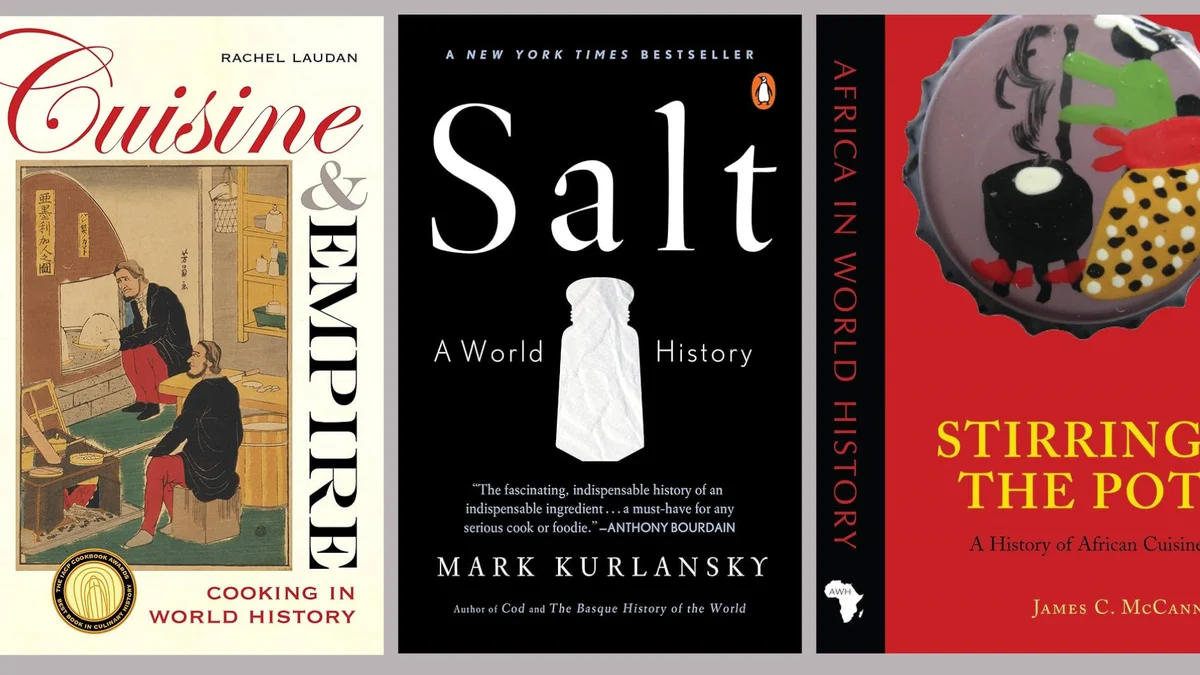
One of the most striking examples of this trend is the re-emergence of Mark Kurlansky’s seminal 2002 work, "Salt: A World History". In 2026, an Instagram Reel created by user Wyatt Derman, which articulated the profound impact of Kurlansky’s exploration of this seemingly simple mineral, garnered over eight million views. Derman’s heartfelt testimony about how the book revolutionized his perception of the world and the ubiquitous ingredient resonated deeply with a global audience, leading to a sudden and dramatic surge in demand. Bookstores and libraries across continents reported sell-outs, with copies being reordered and a palpable buzz surrounding the book’s renewed relevance.
Kurlansky, an accomplished American journalist and author, has built a distinguished career by dissecting the intricate relationships between food and historical events. His earlier works, such as "Cod: A Biography of the Fish That Changed the World" (1997) and "The Big Oyster" (2006), laid the groundwork for his unique approach, demonstrating a remarkable ability to weave compelling narratives around seemingly ordinary foodstuffs. In "Salt", Kurlansky embarks on an ambitious global odyssey, transporting readers from the sun-drenched shores of ancient Greece to the spice-laden markets of rural Sichuan, and even to the historic salt pans of British India, where Mahatma Gandhi’s iconic Dandi March became a potent symbol of resistance. The book meticulously illustrates how salt, a fundamental necessity for life, has been a silent yet powerful architect of human history, influencing trade routes, fueling economies, and even igniting conflicts. Its virality in 2026 serves as a powerful testament to the timeless allure of well-researched and engaging historical narratives that reveal the extraordinary within the ordinary.
Charting the Diverse Tapestry of African Cuisine
While the global narrative often focuses on Western culinary traditions, a crucial and often overlooked chapter in food history is being brought to light with renewed vigor. James C. McCann’s "Stirring the Pot: A History of African Cuisine", first published in 2009 by Ohio University Press, offers a comprehensive and nuanced exploration of the continent’s rich and remarkably diverse culinary landscape. In a world too often prone to viewing Africa through the prism of famine and food scarcity, McCann’s work provides a vital counter-narrative, tracing the chronological evolution of African cuisines from the sixteenth century to their present-day global integration.

McCann’s immersive approach takes readers on a sensory journey through bustling markets in Accra, Ghana, and sophisticated restaurants in Addis Ababa, Ethiopia, to the vibrant roadside bars of Zimbabwe. The book compellingly argues that African cuisines are not monolithic but are instead a complex mosaic shaped by geography, trade, migration, and adaptation. As the preface aptly states, "Cuisines in Africa, McCann shows, can be politicized as effectively as soul food or Nouvelle cuisine in Europe or the United States." This assertion highlights how food in Africa has always been intertwined with identity, power, and social commentary, mirroring global trends in culinary politicization. The renewed appreciation for McCann’s scholarship underscores a growing global awareness of the need to diversify historical perspectives and celebrate the rich culinary heritage of all continents.
Empires Forged by the Fork: The Grand Narrative of Global Cuisines
Rachel Laudan’s 2012 masterpiece, "Cuisine and Empire: Cooking in World History", stands as a monumental achievement in the field of culinary history. This meticulously researched tome, which earned her the prestigious IACP Cookbook Award for Best Book in Culinary History, posits a compelling thesis: that food, particularly staple grains and livestock, has been a primary engine behind the rise and fall of empires and the relentless march of colonialism. Laudan masterfully weaves together a sweeping narrative that traverses pivotal moments in human history, from the French Revolution to the expansion of the British and Spanish empires, and the profound impact of the Columbian Exchange between the New World and the Old World.
Laudan’s analysis goes beyond mere historical recounting; she delves into the intricate ways in which trends, nutritional science, religious beliefs, and political ideologies have converged to shape and redefine cuisines across the globe. Her work challenges simplistic notions of culinary evolution, demonstrating how the adoption and adaptation of specific foods and cooking techniques have been instrumental in consolidating power, facilitating conquest, and shaping the cultural identities of vast populations. The enduring relevance of "Cuisine and Empire" lies in its ability to connect seemingly disparate historical events through the universal language of food, offering a profound understanding of how our dietary choices have been intrinsically linked to the grand sweep of human civilization.
Following the Noodle Trail: A Transcontinental Culinary Quest
The enduring allure of staple foods and their global journeys is further illuminated by Jen Lin-liu’s captivating book, "On the Noodle Road: From Beijing to Rome, with Love and Pasta". This literary adventure is born from a simple yet profound question: who invented the noodle? Lin-liu’s quest to unravel this ancient culinary mystery takes readers on an extraordinary expedition along the historic Silk Route, traversing China, Central Asia, Iran, Turkey, and the Mediterranean. Along this fabled path, she uncovers a breathtaking array of noodle and dumpling traditions, each region boasting its own unique interpretations and historical narratives.
Beyond the fascinating culinary discoveries, Lin-liu’s narrative is also imbued with personal reflection. As a Chinese-American woman, her journey becomes a poignant exploration of identity, heritage, and the complex cultural connections that bind us. The book skillfully interweaves historical accounts with personal anecdotes, offering a rich and multifaceted perspective on the global migration of food and its profound impact on human culture. The popularity of "On the Noodle Road" highlights a growing appetite for narratives that blend culinary exploration with personal discovery, showcasing the universal appeal of tracing the origins of beloved dishes.

The Evolution of Utensils: How Technology Shaped Our Plates
Bee Wilson’s insightful work, "Consider the Fork: A History of How We Cook and Eat", offers a unique perspective on the evolution of human culinary practices by focusing on the often-overlooked role of technology. Subtitled "A History of How We Cook and Eat," Wilson’s book argues that the development of cooking and eating habits has been intrinsically linked to the innovations in culinary tools, from the most rudimentary implements to the most advanced modern appliances.
Wilson masterfully demonstrates that these technological advancements are not solely confined to contemporary gadgets like air fryers and sous-vide machines. She also sheds light on the historical significance of humble utensils such as the fork and chopsticks, revealing how their adoption and evolution have profoundly impacted how food is prepared, served, and consumed. By blending historical analysis with scientific understanding, Wilson provides a fascinating glimpse into the ingenuity and adaptability of human beings in their quest to nourish themselves. Her other notable works, including "Swindled: From Poison Sweets to Counterfeit Coffee" and "Sandwich: A Global History", further solidify her reputation as a leading voice in culinary history, consistently offering fresh and engaging perspectives on the subject.
The Rich Tapestry of Indian Culinary Heritage
In the realm of South Asian culinary history, KT Achaya’s monumental 1997 publication, "Indian Food: A Historical Companion", remains an indispensable resource. This comprehensive volume offers an unparalleled exploration of the subcontinent’s vast and multifaceted culinary legacy. Achaya, a distinguished chemist and food scientist, dedicated years to meticulous research, drawing upon an impressive array of sources including ancient literary works, archaeological findings, genetic studies, and epigraphic records.
His exhaustive research illuminates the evolution of Indian cuisine through different eras, examining the dietary practices of ancient Indian civilizations as documented in the works of scholars like Sushrutha and Bhagvata. The tome also delves into the regional variations of Indian food, the customs of various castes and communities, and the insightful observations of foreign travelers such as Al Biruni, providing a rich and nuanced understanding of India’s culinary journey. The enduring significance of Achaya’s work lies in its comprehensive scope and its rigorous scholarly approach, making it an essential reference for anyone seeking to understand the historical depth of Indian food.
Reclaiming Indigenous Flavors: The Culinary Legacy of Turtle Island
Sean Sherman’s groundbreaking book, "Turtle Island: Foods and Traditions of the Indigenous Peoples of North America", co-authored with Kate Nelson and Kristin Donnelly, is a crucial contribution to the ongoing dialogue surrounding indigenous foodways. Often marginalized in mainstream discussions of "American food," native American cuisine is finally receiving the recognition it deserves through Sherman’s dedicated scholarship. As a chef belonging to the Oglala Lakota tribe, Sherman brings an authentic and deeply personal perspective to his exploration of the rich culinary heritage of indigenous communities.

The book powerfully articulates the intrinsic connection between indigenous cultures and the land they inhabit, demonstrating how their ancestral recipes are inextricably linked to the animals and plants native to their environments. Sherman’s work not only offers a historical account of these traditions but also provides a wealth of authentic recipes, inviting readers to experience the flavors and culinary wisdom of North America’s original inhabitants. "Turtle Island" serves as a vital reminder of the importance of preserving and celebrating indigenous knowledge systems, particularly in the realm of food, which holds profound cultural and historical significance.
Conclusion: A Culinary Mirror to Our Past and Future
The widespread appeal of these diverse culinary history books signifies more than just a passing trend; it reflects a profound human desire to understand our origins and the forces that have shaped our present. From the humble mineral that preserved empires to the complex tapestry of global cuisines, food has consistently been a catalyst for change, a symbol of identity, and a fundamental driver of human civilization. As these narratives continue to captivate readers worldwide, they not only enrich our understanding of the past but also offer invaluable insights into the future of food, sustainability, and cultural exchange. The availability of these essential works on online shopping platforms ensures that these vital stories of our culinary heritage are accessible to a global audience, fostering a deeper appreciation for the profound and enduring connection between what we eat and who we are.
