

Chennai, a city steeped in tradition and pulsating with a dynamic contemporary spirit, is once again celebrating its rich artistic heritage. The ongoing "Contemporary Now – Edition III" exhibition serves as a vibrant testament to this enduring legacy, bringing together 66 artists, seven prominent galleries, and a comprehensive program of events. This citywide showcase not only highlights the present vibrancy of Chennai’s art scene but also provides a crucial lens through which to examine its historical foundations, particularly the seminal Madras Movement of the 1960s. This article delves into the profound influence of Chennai on its artists, tracing the evolution of its artistic identity from its modernist roots to its current status as a hub of contemporary expression.
The Genesis of a Distinct Artistic Identity: The Madras Movement and Cholamandal
The roots of Chennai’s unique artistic trajectory can be firmly planted in the 1960s with the advent of the Madras Movement. Spearheaded by the visionary K.C.S. Paniker at the Government College of Arts and Crafts, this movement represented a radical departure from the prevailing artistic norms of the time. Instead of solely drawing inspiration from Western art traditions, Paniker and his contemporaries consciously turned inward, seeking to imbue their creations with a distinctly Indian sensibility. This involved a deep exploration of indigenous scripts, the vibrant tapestry of folk art forms prevalent across Tamil Nadu, and the abstract principles that underpin traditional Indian aesthetics.
The Madras Movement was not an isolated phenomenon. It found a fertile ground and a tangible manifestation in the establishment of the Cholamandal Artists’ Village. This unique artist commune, founded in 1966 by K.M. Adimoolam and a group of like-minded artists, provided a collaborative and nurturing environment where artists could live, work, and exchange ideas. Cholamandal became more than just a physical space; it evolved into an ethos, a collective spirit that fostered experimentation and innovation. Artists at Cholamandal were encouraged to break free from conventional artistic boundaries, leading to a rich output of paintings, sculptures, and graphics that explored new visual languages. The movement, through its emphasis on indigenous roots and abstract exploration, laid a robust foundation that would profoundly shape generations of artists and leave an indelible mark on the landscape of Indian modern and contemporary art.
Thematic Exploration and Artistic Philosophy
The core philosophy driving the Madras Movement was a conscious effort to reclaim and redefine Indian artistic identity in a post-colonial era. Artists were not merely replicating Western styles; they were engaging in a critical dialogue with their own cultural heritage. This manifested in several key thematic explorations:
- Indigenous Scripts as Visual Elements: The elegant and evocative forms of Tamil scripts, along with other Indian scripts, were not just used for text but were integrated as abstract visual elements within paintings and sculptures. This brought a unique calligraphic quality and a sense of cultural continuity to their art.
- Reinterpreting Folk Art: The vibrant colors, bold lines, and narrative richness of Tamil folk art traditions, such as Kolam, Tanjore paintings, and folk murals, were reinterpreted through a modernist lens. This infused contemporary art with a sense of dynamism and a connection to the common people.
- Abstraction Rooted in Indian Philosophy: The movement embraced abstraction, but not in a purely formalist sense. It often drew inspiration from Indian philosophical concepts, meditative practices, and the spiritual essence of nature, aiming to evoke deeper emotional and contemplative responses in the viewer.
- Material Innovation: Artists experimented with a wide range of materials, often incorporating indigenous elements like handmade paper, natural dyes, and local clay, further emphasizing their connection to the land and its resources.
The success of the Madras Movement and the Cholamandal Artists’ Village lay in their ability to create a distinct artistic ecosystem that was both locally rooted and internationally relevant. They demonstrated that a powerful and innovative art practice could emerge from an engagement with one’s own cultural context.
Contemporary Now – Edition III: A Citywide Celebration of Artistic Evolution
"Contemporary Now – Edition III" is not merely an exhibition; it is a citywide immersion into the pulsating heart of Chennai’s art scene. Spanning 20 days, this ambitious undertaking showcases the works of 66 diverse artists, representing a broad spectrum of styles, mediums, and conceptual approaches. The involvement of seven leading galleries – institutions that have been instrumental in nurturing and promoting artistic talent – further amplifies the exhibition’s significance.
Beyond the display of artworks, "Contemporary Now" is designed as a comprehensive cultural experience. The program includes a series of engaging exhibitions, intellectually stimulating conversations, insightful artist walkthroughs led by the creators themselves, and welcoming open houses that invite the public to connect with the art and the artists. This multi-faceted approach ensures that the exhibition transcends the traditional gallery space, becoming a dynamic platform for dialogue, education, and community engagement.
The Curatorial Vision and its Significance
The curatorial vision behind "Contemporary Now – Edition III" appears to be one of bridging the past and the present, demonstrating how the foundational principles laid down by the Madras Movement continue to resonate and evolve within the contemporary art landscape. By bringing together artists with diverse backgrounds and artistic trajectories, the exhibition aims to:

- Highlight Continuity and Change: Showcase how contemporary artists are building upon the legacy of their predecessors, adapting and innovating while retaining a connection to their roots.
- Promote Dialogue and Exchange: Foster conversations between established and emerging artists, curators, critics, and the art-loving public, thereby enriching the discourse surrounding contemporary art.
- Elevate Chennai’s Artistic Profile: Reinforce Chennai’s position as a significant center for modern and contemporary art in India, attracting national and international attention to its vibrant creative ecosystem.
- Democratize Art Appreciation: Make art more accessible and engaging for a wider audience through interactive elements and diverse programming, encouraging a deeper understanding and appreciation of artistic endeavors.
The sheer scale of "Contemporary Now – Edition III," with its extensive roster of artists and participating galleries, underscores the depth and breadth of artistic talent that Chennai continues to nurture.
Artists’ Voices: Chennai’s Enduring Influence on Artistic Practice
The true measure of a city’s impact on its artists lies in their lived experiences and the ways in which their environment shapes their creative output. Speaking with artists who have deep roots in Madras (now Chennai) reveals a profound and multifaceted connection to the city’s unique cultural fabric. This connection manifests not only in their artistic style but also in their conceptual frameworks, their material choices, and their fundamental ways of perceiving the world.
The Poetics of Place and Memory
For many artists, Chennai is more than just a place of residence; it is a repository of memories, a source of sensory experiences, and a constant wellspring of inspiration. The city’s distinctive visual landscape – from the intricate patterns of Kolam drawn on thresholds to the weathered facades of colonial architecture, the vibrant chaos of its markets, and the serene expanse of its coastline – finds its way into their artistic vocabulary.
- Sensory Immersion: The sounds of temple bells, the aroma of jasmine and filter coffee, the cacophony of traffic, and the rhythmic crash of waves on Marina Beach are all sensory inputs that can translate into textures, colors, and emotional resonances within their artworks.
- Architectural Echoes: The juxtaposition of ancient Dravidian temples with British-era buildings and modern concrete structures creates a unique architectural dialogue that can inspire explorations of history, change, and urban evolution.
- Cultural Narratives: Chennai’s rich cultural tapestry, woven with threads of Carnatic music, Bharatanatyam, literature, and philosophy, provides a fertile ground for artists to explore narratives of tradition, spirituality, and human relationships.
The Evolution of Artistic Language
The influence of Chennai is not static; it evolves with the city and with the artists themselves. While the foundational elements of the Madras Movement might still resonate, contemporary artists are engaging with these influences in new and dynamic ways.
- Hybridity and Synthesis: Many artists skillfully blend traditional motifs with contemporary concerns, creating hybrid forms that reflect the complexities of modern Indian life. This can involve incorporating digital elements into traditional painting techniques or exploring abstract forms inspired by both classical Indian dance and urban street art.
- Social and Political Commentary: Chennai’s growing urban landscape, its social dynamics, and its political currents often find expression in the works of its artists. Themes of migration, identity, gender, and environmental concerns are increasingly explored through a distinctly Chennai-centric lens.
- The Influence of the Art Ecosystem: The presence of a thriving art community, including galleries, art schools, and fellow artists, fosters a spirit of critique, collaboration, and artistic dialogue. This supportive ecosystem encourages artists to push boundaries and refine their practice.
The "Red Line" and its Interpretations
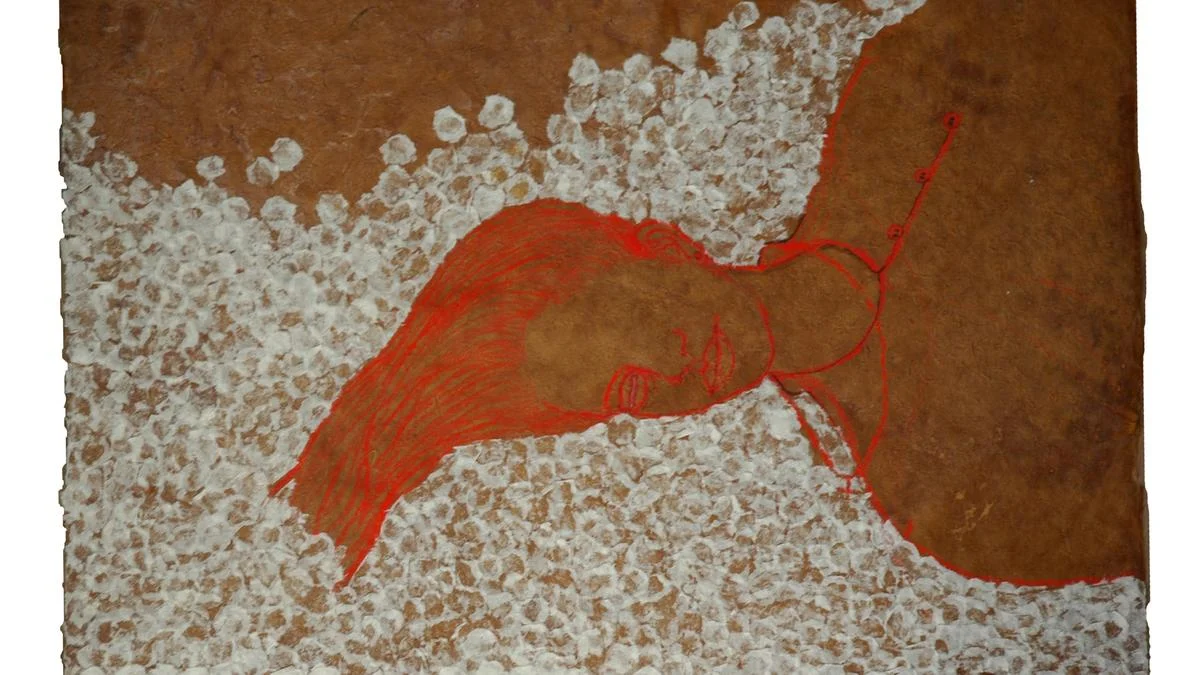
The artwork featured in the accompanying image, "A Red Line, Mixed Medium on Handmade Paper by K. Benitha Perciyal," offers a glimpse into the contemporary artistic dialogue. While the image itself is symbolic and open to interpretation, the very act of its inclusion in a discussion about Chennai’s art scene suggests its relevance. The "Red Line" could be interpreted in numerous ways:
- A Boundary or a Connection: It might represent a demarcation, a line drawn between past and present, or between different cultural influences. Conversely, it could symbolize a connection, a thread that binds different elements together, or a path forward.
- A Symbol of Assertion or Restraint: In some contexts, a red line signifies a limit or a prohibition, while in others, it can represent passion, energy, or a bold statement.
- A Minimalist Aesthetic: The simplicity of a single red line can be a powerful statement in itself, highlighting the artist’s focus on essential forms and conceptual depth.
The fact that this artwork is rendered on handmade paper further connects it to the material explorations championed by earlier generations of artists in Chennai. This suggests a conscious engagement with tradition, even as the artist explores contemporary themes and aesthetics.
The Enduring Legacy and Future Trajectory
The Madras Movement and the Cholamandal Artists’ Village were not just historical footnotes; they were pivotal moments that established a trajectory for artistic innovation in Chennai. This legacy continues to inform and inspire contemporary artists, ensuring that the city remains a vibrant crucible of artistic creation. "Contemporary Now – Edition III" serves as a powerful affirmation of this enduring spirit, showcasing how artists are adept at drawing strength from their past while fearlessly forging new artistic frontiers.
The ongoing exhibition, with its diverse array of artists and its comprehensive program, is poised to further enrich Chennai’s cultural landscape. It provides a platform for deeper engagement with the city’s art, encouraging dialogue and fostering a greater appreciation for the artistic contributions that emanate from this dynamic South Indian metropolis. As Chennai continues to evolve, so too will its artistic expressions, a testament to the city’s ability to inspire, nurture, and propel art forward. The "Contemporary Now" exhibition is not just a celebration of what is, but a promising glimpse into the future of art in Chennai.
