

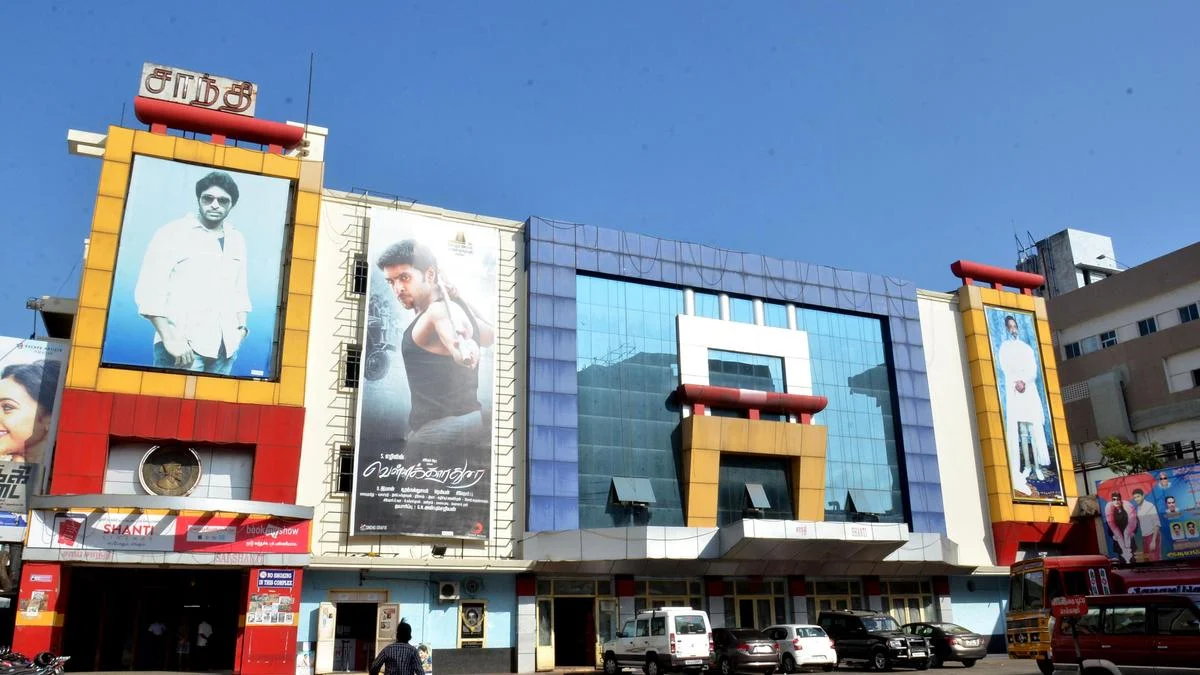
Chennai, August 26, 2026 – For decades, Anna Salai, Chennai’s arterial road, has been synonymous with the relentless pulse of urban life – a thoroughfare characterized by bustling traffic, looming deadlines, and the ceaseless rush of daily commutes. Yet, for a significant chapter of the city’s history, this very road held a different allure, a beacon of entertainment and cultural significance that drew generations of Chennai residents: the iconic Shanti Theatre. More than just a cinema hall, Shanti became an indelible landmark, its name resonating beyond its screens and walls, even lending its identity to a prominent bus stop in its vicinity, a testament to its profound impact on the urban fabric. The recent transformation of this hallowed ground into a modern office complex marks the final curtain call for a beloved institution, prompting a look back at its glorious past and its enduring place in Chennai’s collective memory.
A Grand Inauguration and a Vision for Cinema
The genesis of Shanti Theatre can be traced back to the vision of its founders, G. Umapathy and D. Shanmuga Raja, the erstwhile Raja of Sivaganga. Their ambitious project culminated in its grand opening in January 1961, an event graced by the presence of the then Chief Minister of Tamil Nadu, K. Kamaraj. The inaugural screening was the devotional epic Srinivasa Kalyanam, a fitting choice for a venue poised to become a cornerstone of cultural life. However, the distinction of being the first film to captivate audiences within Shanti’s opulent interiors belongs to Thooya Ullam, a cinematic offering that starred the legendary Akkineni Nageswara Rao and the iconic Savitri.
A report from The Hindu dated January 13, 1961, details the considerable investment made in Shanti Theatre, with the project costing ₹20 lakh. The theatre boasted an impressive seating capacity of 1,200, positioning it as one of the premier single-screen venues of its time. During the inauguration ceremony, C. Subramaniam, the then Finance Minister, who presided over the proceedings, articulated a forward-looking perspective on the role of such cultural establishments. He emphasized that the mere construction of a modern theatre was insufficient. True success, he asserted, lay in the production of films that not only entertained but also educated the populace, fostering a discerning audience without compromising their moral compass. This sentiment underscored the prevailing belief in cinema as a powerful medium for both amusement and societal upliftment.
The Reign of a Tamil Cinema Icon: Sivaji Ganesan’s Acquisition
The narrative of Shanti Theatre took a significant turn when it transitioned into the ownership of the legendary Tamil actor, Sivaji Ganesan. This pivotal acquisition was driven by the financial needs of the theatre’s original promoters. As explained by actor and writer Mohan Raman, the founders sought additional capital. Their approach to Sivaji Ganesan proved instrumental, leading to his investment and subsequent full acquisition of the theatre’s shares. This move not only infused new life into Shanti but also cemented its association with one of the most revered figures in South Indian cinema.
Film industry analyst Sreedhar Pillai fondly recalls the theatre’s architectural and experiential grandeur. "When it opened, it was the largest single-screen theatre," Pillai notes. "It had the biggest balcony at the time, with nearly 400 seats. It was fully air-conditioned, and the car parking facility was very good. I would say it had a lavish car park. Everything about this theatre was good." This description paints a vivid picture of Shanti as a venue that prioritized audience comfort and offered a premium cinematic experience, setting a benchmark for entertainment establishments of its era.

Under Sivaji Ganesan’s stewardship, Shanti Theatre became a veritable showcase for his own prolific career. A remarkable tally of over 80 films starring the veteran actor graced its screens, with many achieving the coveted 100-day run, a significant feat in the film industry. The theatre’s programming, however, was not solely dedicated to Tamil cinema. It also hosted screenings of acclaimed international films, including classics like Gone with the Wind, Ivanhoe, and Drums of Destiny, demonstrating its commitment to offering a diverse cinematic diet to its patrons.
A Record-Breaking Run and a New Chapter
The year 2005 marked a significant milestone for Shanti Theatre with a comprehensive renovation. This revitalization ushered in a new era, commencing with the screening of the blockbuster film Chandramukhi. Starring the inimitable Rajinikanth and Prabhu, the youngest son of Sivaji Ganesan, the film’s run at Shanti Theatre was nothing short of extraordinary. It achieved a phenomenal 888-day screening, a record that stood testament to the theatre’s renewed appeal and the enduring popularity of its star-studded cast. This accomplishment underscored Shanti’s ability to adapt and continue to be a powerhouse of cinematic success.
Ramkumar Ganesan, the eldest son of Sivaji Ganesan, reminisces with deep affection about his personal connection to the theatre. "I remember attending the premiere of Karnan (starring his father)," he shares. "And whenever a Sivaji Ganesan film was released, I used to be among the first to buy tickets, often choosing seats in A row seat numbers 1-10." His memories extend beyond film screenings to encompass significant social and cultural events. "I also attended many celebrations there," he recalls. "There is one photograph from the time a South East Asian delegation visited the theatre. All the popular actors of the time, including M.G. Ramachandran, attended the event." These anecdotes highlight Shanti Theatre’s role as a vibrant hub for the film fraternity and a venue for notable gatherings.
The Inevitable Transformation and the Echoes of the Past
Despite its rich history and periods of immense success, the landscape of cinema exhibition began to evolve, and the economics of single-screen theatres faced mounting challenges. The digital revolution, coupled with the rise of multiplexes, gradually altered audience preferences and viewing habits. Ultimately, the curtains came down on Shanti Theatre, marking the end of an era. The prime location on Anna Salai, once alive with the sounds of whistles, applause, and the melodies of film songs, was redeveloped into a modern office complex. This transformation, while indicative of urban progress and economic shifts, also signifies the poignant disappearance of a cherished landmark.
The story of Shanti Theatre is more than just the history of a building; it is a narrative woven into the cultural tapestry of Chennai. It represents a time when cinema halls were not just places of entertainment but significant social spaces, gathering points that fostered shared experiences and collective memories. While the physical structure may have given way to the demands of contemporary urban development, the legacy of Shanti Theatre endures in the hearts and minds of those who experienced its magic. Its name continues to evoke a sense of nostalgia, a reminder of a bygone era when a grand theatre on Anna Salai stood as a testament to the power of cinema and its enduring place in the heart of the city. The transformation serves as a poignant reminder of the transient nature of physical landmarks and the enduring power of memory in preserving cultural heritage.
