

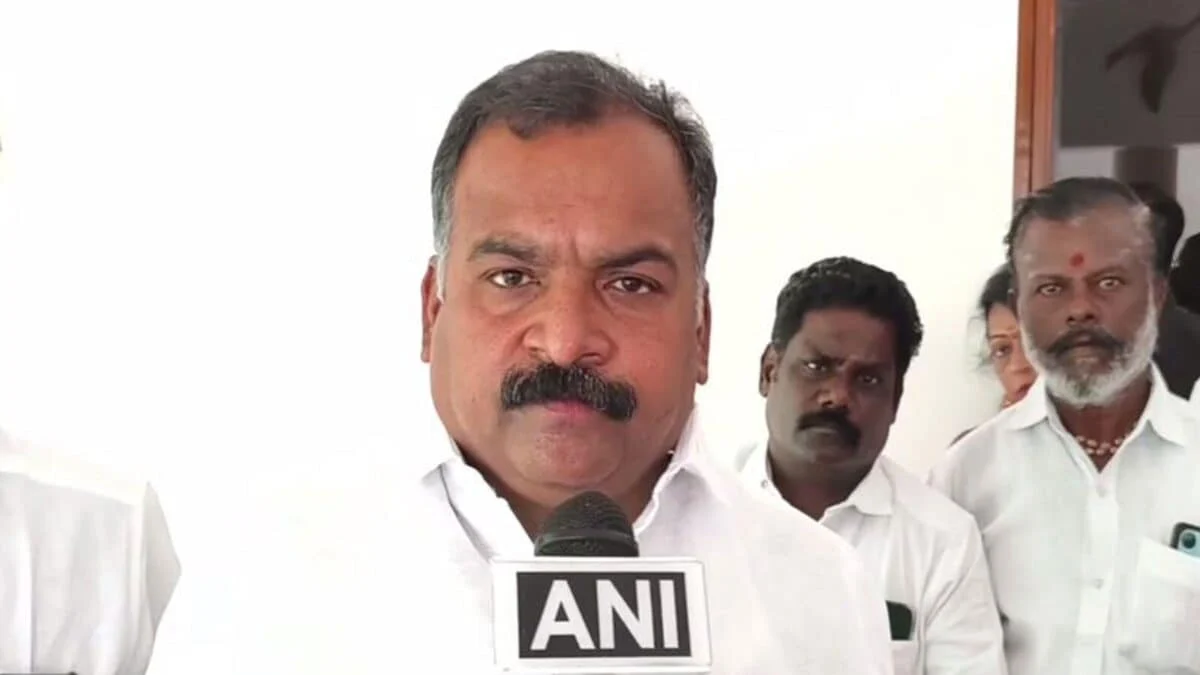
CHENNAI, India – The long-simmering Cauvery water dispute has once again erupted into a fierce political and legal battle, this time marked by an unusual internal rift within the Congress party. Manickam Tagore, a prominent Congress Member of Parliament from Tamil Nadu, has vehemently condemned the Congress-led Karnataka government’s accelerated efforts to implement the controversial Mekedatu balancing reservoir project. Tagore’s sharp criticism, labelling the move a "direct assault" on Tamil Nadu’s vital riparian rights, underscores the profound complexities and sensitivities embedded in India’s inter-state water conflicts.
The project, envisioned by Karnataka to address Bengaluru’s burgeoning drinking water needs and generate hydro-power, has consistently been met with unwavering opposition from Tamil Nadu, which fears it will drastically curtail the already precarious water flow to its agrarian delta region. This latest escalation sees the Congress party grappling with conflicting interests between its state units, spotlighting the challenges of federalism and resource allocation in a nation where water is increasingly a flashpoint.
Main Facts: A Brewing Storm Over Cauvery
The immediate catalyst for the renewed controversy was Karnataka Deputy Chief Minister D.K. Shivakumar’s recent announcement regarding the expedited submission of the Detailed Project Report (DPR) for the Mekedatu project to the Union government. Shivakumar, who also holds the Water Resources portfolio, expressed confidence in securing Union approval and indicated plans for a groundbreaking ceremony shortly thereafter. This declaration, however, sent ripples of alarm across the border in Tamil Nadu.
Congress MP Manickam Tagore swiftly took to social media platform X (formerly Twitter) to voice his strong disapproval, directly challenging his own party’s government in Karnataka. He asserted that Karnataka’s push for the dam constituted a "direct assault on Tamil Nadu’s riparian rights and the livelihoods of its farmers." Tagore further reminded all stakeholders of the Supreme Court’s clear directives and the Cauvery Water Management Authority’s (CWMA) stipulations, which unequivocally state that no new dam can be constructed across the Cauvery River without the explicit consent of Tamil Nadu. He accused Shivakumar of issuing "provocative statements, disregarding judicial orders and federal principles."
Tagore’s intervention highlights the delicate balance the Congress party must maintain, as it governs both states, albeit with differing priorities. For Tamil Nadu, the Cauvery River is not merely a water source but the lifeblood of its agricultural economy, sustaining millions of farmers in its delta districts. Any perceived threat to this flow, especially from an upstream state, immediately galvanises a bipartisan political consensus in defence of the state’s interests. This internal party discord, therefore, elevates the Mekedatu issue from a routine inter-state dispute to a critical test of political cohesion and federal governance.
Chronology: A River’s Journey Through Decades of Dispute
The Cauvery River, revered as ‘Ponni’ (the golden one) in Tamil literature, has been at the heart of an enduring and often acrimonious dispute between Karnataka and Tamil Nadu for over a century. Its history is a complex tapestry woven with colonial agreements, post-independence federal challenges, and numerous judicial interventions.
Early Agreements and Post-Independence Tensions
The genesis of the dispute can be traced back to the pre-independence era, with two significant agreements signed between the erstwhile princely state of Mysore and the Madras Presidency: the Agreements of 1892 and 1924. These agreements laid down the principles of water sharing and regulated the construction of reservoirs by either party. The 1924 agreement, in particular, was designed to be in force for 50 years, expiring in 1974.
Post-independence, as states were reorganised on linguistic lines, the old agreements became contentious. Karnataka (then Mysore) argued that the agreements were unfair and imposed by the colonial power, hindering its developmental aspirations. Tamil Nadu, on the other hand, insisted on the sanctity of these agreements and its historical rights to the established water flows.
The Cauvery Water Disputes Tribunal (CWDT)
With bilateral negotiations repeatedly failing, the Union government constituted the Cauvery Water Disputes Tribunal (CWDT) in 1990 under the Inter-State Water Disputes Act, 1956. The Tribunal was tasked with adjudicating the dispute and determining the equitable share of water for all basin states, including Kerala and Puducherry.
- Interim Award (1991): After intense deliberations and protests, the CWDT delivered an interim award in 1991, directing Karnataka to release 205 TMC (thousand million cubic feet) of water to Tamil Nadu annually. This award sparked widespread agitation in Karnataka, leading to violence and further straining inter-state relations.
- Final Award (2007): Sixteen years later, in February 2007, the CWDT pronounced its final award. It allocated 419 TMC to Tamil Nadu, 270 TMC to Karnataka, 30 TMC to Kerala, and 7 TMC to Puducherry. The award also stipulated the monthly and weekly release schedules and the formation of a monitoring committee. While hailed as a landmark decision, neither state was fully satisfied, leading to further appeals.
Supreme Court Interventions and the Formation of CWMA/CWRC
The final award of the CWDT was challenged by both Karnataka and Tamil Nadu in the Supreme Court. After years of hearings, the Supreme Court delivered a crucial verdict in February 2018.
- 2018 Supreme Court Verdict: The apex court largely upheld the CWDT’s final award but made some modifications. It slightly increased Karnataka’s share by 14.75 TMC (citing Bengaluru’s drinking water needs), bringing its total to 284.75 TMC, and consequently reduced Tamil Nadu’s share to 404.25 TMC. Crucially, the Supreme Court declared the Cauvery River a "national asset" and mandated the formation of the "Cauvery Water Management Scheme."
- CWMA and CWRC: As a result of the 2018 verdict, the Union government established the Cauvery Water Management Authority (CWMA) and the Cauvery Water Regulation Committee (CWRC). These bodies were empowered to implement the Supreme Court’s final order, regulate water releases, and resolve any disputes arising from its implementation, effectively replacing the earlier supervisory committee.
- Mekedatu’s Entry into the Fray: The Mekedatu project, a balancing reservoir proposed by Karnataka, gained prominence in the context of these allocations. Karnataka has been advocating for the project since the mid-2010s, with its primary objectives being to store water for Bengaluru’s drinking water supply and generate approximately 400 MW of hydro-power. Tamil Nadu immediately opposed it, arguing that any storage structure upstream without its consent would violate the principles of the CWDT award and the Supreme Court’s directives, jeopardising its already allocated share.
Recent Developments
- Karnataka’s Renewed Push: In December last year (2025), the Karnataka government issued an order to constitute a dedicated team specifically to ensure the swift implementation of the Mekedatu project, signaling its intent to fast-track the controversial venture.
- Deputy CM Shivakumar’s Statement: The recent statement by D.K. Shivakumar about expediting the DPR submission and seeking Union clearance further solidified Karnataka’s commitment, triggering the latest round of protests and political condemnations from Tamil Nadu.
- Supreme Court’s Nuanced Stance: It is important to note the nuance in past Supreme Court rulings. While the Court has rejected a plea by the Tamil Nadu government against the construction of the Mekedatu Balancing Reservoir Project, it did so with significant caveats. A bench comprising then-Chief Justice of India B.R. Gavai, Justices K. Vinod Chandran, and N.V. Anjaria stated that the plan would be approved only after considering the objections of the State (Tamil Nadu) as well as the opinion of the expert bodies, Cauvery Water Regulation Committee (CWRC) and the Cauvery Water Management Authority (CWMA). This condition is precisely what Tamil Nadu and Manickam Tagore are now invoking.
Supporting Data: The Lifeline and the Looming Threat
The Cauvery basin is one of India’s most densely populated and agriculturally significant regions. Understanding the core data points helps illuminate the depth of the dispute.
Geographical and Hydrological Context
The Cauvery River originates in Talakaveri, Kodagu district of Karnataka, and flows southeast through Karnataka and Tamil Nadu, emptying into the Bay of Bengal. It covers a basin area of approximately 81,155 square kilometres. The river’s total length is about 800 km, making it a critical source of water for both states. Karnataka controls the upper reaches, while Tamil Nadu is the major lower riparian state.
Agricultural Dependency in Tamil Nadu
For Tamil Nadu, the Cauvery is truly a lifeline. The river irrigates approximately 2.8 million acres of agricultural land in the state, primarily in the delta districts of Thanjavur, Tiruvarur, Nagapattinam, Mayiladuthurai, and parts of Cuddalore and Tiruchirappalli. These regions are often referred to as the "rice bowl" of Tamil Nadu, producing significant quantities of paddy, sugarcane, and other food crops. Millions of farmers and their families directly depend on the Cauvery’s waters for their sustenance and livelihood.
Tamil Nadu’s agricultural calendar, particularly the Kuruvai (short-term) and Samba (long-term) paddy cultivation seasons, is intricately linked to the timely release of water from Karnataka’s upstream reservoirs. Any disruption or delay in these flows due to upstream storage, such as that proposed by Mekedatu, can lead to crop failure, severe economic distress for farmers, and food insecurity for the state. Farmers’ associations in Tamil Nadu have historically led massive agitations whenever water flows are perceived to be inadequate.
Karnataka’s Stated Objectives
Karnataka proposes the Mekedatu project to serve a dual purpose:
- Drinking Water for Bengaluru: The rapidly expanding metropolis of Bengaluru faces chronic water scarcity, especially during dry spells. Karnataka argues that Mekedatu would provide a crucial source of drinking water for the city’s growing population, fulfilling a basic human need.
- Hydro-power Generation: The project is also designed to generate approximately 400 MW of hydro-electric power, contributing to the state’s energy security and economic development.
The proposed dam site is located at the confluence of the Cauvery and Arkavathi rivers, near the Mekedatu gorge in Karnataka, close to the Tamil Nadu border. The project is estimated to have a reservoir capacity of around 67 TMC.
Legal and Environmental Concerns
- Riparian Rights and Federal Principles: Tamil Nadu’s opposition is rooted in the principle of riparian rights, which dictates that all states along a river have a right to its equitable use. It also invokes federal principles, arguing that a unilateral project by an upstream state without the consent of a downstream state, especially when adjudicated water allocations are in place, undermines the spirit of cooperation and the authority of federal institutions like the CWMA.
- Supreme Court’s Mandate: As highlighted by Tagore, the Supreme Court’s ruling explicitly requires Tamil Nadu’s consent and the approval of expert bodies for any new dam. Karnataka’s argument that it is building the dam within its own territory and using its allocated share for drinking water and power is challenged by Tamil Nadu, which believes it would give Karnataka undue control over water releases, potentially impacting agreed-upon flows.
- Environmental Impact: Beyond the water dispute, environmental activists and experts have raised concerns about the potential ecological impact of constructing a large reservoir in the Western Ghats region. These concerns include deforestation, submergence of forest land, displacement of wildlife, and changes to the riverine ecosystem, which could have long-term consequences for biodiversity and local communities. The project would require extensive environmental clearances, which often involve detailed impact assessments and public hearings.
Official Responses: A Cacophony of Voices
The Mekedatu project has consistently drawn sharp reactions from political leaders and governments in both states, with the Union government often caught in the difficult position of mediator.
Manickam Tagore’s Intra-Party Dissent
Manickam Tagore’s critique is particularly significant due to his affiliation with the ruling Congress party, both at the national level and in Karnataka. His statements on X are not merely an individual’s opinion but reflect a deeper anxiety within the Tamil Nadu Congress unit regarding the party’s stance on an issue that unites all political factions in the state. His call for the Centre to "immediately reject the proposal" and his warning against sacrificing "the rights of Tamil Nadu’s farmers for political expediency" put direct pressure on the Union government and indirectly on the Congress high command. This dissent highlights the precarious balance leaders must strike between party loyalty and regional interests, especially on emotive issues like water.
Karnataka’s Assertive Stance
Deputy Chief Minister D.K. Shivakumar has been the most vocal proponent of the Mekedatu project from Karnataka. His statements emphasize Karnataka’s right to utilize its allocated share of Cauvery water, particularly for drinking water purposes, which he considers a fundamental necessity for Bengaluru. Shivakumar’s alleged assertion that Tamil Nadu has "no right to oppose the project" reflects Karnataka’s long-held position that the project is permissible as it does not infringe on Tamil Nadu’s rightful share and is located within its territorial boundaries. Karnataka views Mekedatu as a balancing reservoir that would help manage its allocated water efficiently, rather than a new diversion scheme. The state government has repeatedly asserted that the project is aimed at storing excess water that would otherwise flow unused to the sea, and for supplying water to Bengaluru, a purpose specifically acknowledged by the Supreme Court in its 2018 verdict.
Tamil Nadu’s United Front
In Tamil Nadu, the opposition to Mekedatu transcends party lines, uniting the ruling Dravida Munnetra Kazhagam (DMK) and the principal opposition All India Anna Dravida Munnetra Kazhagam (AIADMK), alongside other regional parties. Leaders across the political spectrum have condemned Karnataka’s move, accusing Shivakumar of "arrogance" and a disregard for judicial pronouncements.
- DMK’s Position: The DMK-led state government has consistently maintained that the project is illegal without Tamil Nadu’s consent and would severely impact its farmers. It has urged the Union government not to grant any clearances and to direct Karnataka to halt all activities related to the project. The DMK views any construction that impedes the natural flow of the Cauvery as a direct violation of its riparian rights and the Supreme Court’s judgments.
- AIADMK’s Position: AIADMK General Secretary Edappadi K. Palaniswami has been equally critical, urging the Tamil Nadu government to take a firm and decisive stance. He has accused Karnataka of systematically undermining Tamil Nadu’s rights over the Cauvery and called for sustained pressure on the Union government to protect the state’s interests. This bipartisan condemnation underscores the deep-seated fear and unity in Tamil Nadu regarding the Cauvery issue.
The Union Government’s Balancing Act
The Union government, through its Ministry of Jal Shakti (Water Resources), finds itself in a precarious position. As the ultimate arbiter, it must navigate the competing claims of two politically significant states, one of which (Karnataka) is now governed by the opposition Congress, while the ruling BJP has a strong presence there. The Centre’s role involves reviewing the DPR, considering environmental clearances, and, crucially, adhering to the directives of the Supreme Court and the recommendations of the CWMA and CWRC. Granting approval to Mekedatu without Tamil Nadu’s consent or the explicit backing of the expert bodies would likely invite a fresh legal challenge from Tamil Nadu and could be seen as a violation of federal principles. Conversely, rejecting Karnataka’s proposal could lead to political backlash in that state. The Union government’s decision will inevitably be viewed through a political lens, impacting electoral dynamics in both states.
Implications: A Test of Federalism and Resource Management
The renewed push for the Mekedatu project and the ensuing political fallout carry significant implications for inter-state relations, federal governance, socio-economic stability, and environmental sustainability in India.
Political Implications
- Intra-Party Conflict: The most immediate political implication is the open dissent within the Congress party. Manickam Tagore’s criticism places the Congress high command in a difficult position, forcing it to reconcile the developmental aspirations of its Karnataka unit with the protective stance of its Tamil Nadu wing. This internal friction could weaken party cohesion and potentially impact its national standing.
- Federalism Under Strain: The dispute highlights the perennial strain on India’s federal structure when states have conflicting claims over shared natural resources. The Union government’s ability to mediate effectively, enforce judicial pronouncements, and foster cooperative federalism will be severely tested. A perception of bias or inaction could erode trust in central institutions.
- Electoral Impact: Water disputes are highly emotive and can significantly influence electoral outcomes. In both Karnataka and Tamil Nadu, political parties’ stances on the Cauvery issue are closely watched by voters, particularly farmers. Any decision perceived as detrimental to state interests could lead to electoral losses.
- Inter-State Tensions: Escalating rhetoric and unilateral actions can lead to increased animosity between states, potentially spilling over into social unrest and disrupting economic ties.
Socio-Economic Implications
- Farmers’ Livelihoods: For Tamil Nadu, the primary concern is the potential devastation of its agricultural sector. If Mekedatu leads to reduced or erratic water flows, farmers could face repeated crop failures, indebtedness, and even displacement. This would have a cascading effect on rural economies and potentially exacerbate urban migration.
- Water Security for Bengaluru: For Karnataka, the project is framed as essential for the drinking water security of Bengaluru, one of India’s fastest-growing mega-cities. Failure to secure this water source could lead to severe urban water crises, impacting public health and economic productivity.
- Infrastructure Investment and Development: The Mekedatu project represents a significant infrastructure investment for Karnataka, with potential benefits in power generation and water management. However, prolonged legal battles and political uncertainty can delay such projects, leading to cost overruns and hindering regional development.
Legal and Institutional Implications
- Authority of CWMA/CWRC: The Mekedatu dispute is a critical test for the authority and effectiveness of the Cauvery Water Management Authority and the Cauvery Water Regulation Committee. Their recommendations and the Union government’s adherence to them will set precedents for future inter-state water disputes.
- Interpretation of Supreme Court Verdicts: The legal battles will likely revolve around the precise interpretation of the Supreme Court’s 2018 verdict, particularly the conditions placed on new dam constructions and the definition of "drinking water" vs. "irrigation" uses in the context of allocated shares.
Environmental Implications
- Ecological Balance: The construction of a large dam in an ecologically sensitive region can have irreversible environmental consequences. Concerns about biodiversity loss, changes in river morphology, and the impact on downstream ecosystems (including the Cauvery delta’s unique wetlands and coastal areas) need thorough and independent scientific assessment.
- Climate Change Vulnerability: With climate change leading to more erratic rainfall patterns and extreme weather events, judicious water management becomes even more critical. Projects like Mekedatu must be evaluated not just on current needs but also on their long-term resilience and adaptability to future climate scenarios.
The Path Forward: Dialogue, Science, and Federal Spirit
The Mekedatu dispute, emblematic of India’s complex water challenges, demands a resolution rooted in dialogue, scientific assessment, and a genuine spirit of cooperative federalism. Unilateral actions and provocative statements only serve to escalate tensions.
The Union government, in consultation with the CWMA and CWRC, must facilitate a process that rigorously evaluates Karnataka’s DPR, thoroughly addresses Tamil Nadu’s objections, and ensures compliance with all judicial directives. Environmental impact assessments must be transparent and comprehensive. Ultimately, a sustainable solution will require both states to look beyond narrow political gains and work collaboratively towards equitable water management, acknowledging the shared nature of the Cauvery River and the interdependency of their populations. The future of millions of farmers and urban dwellers hinges on a judicious and timely resolution to this enduring river dispute.
