

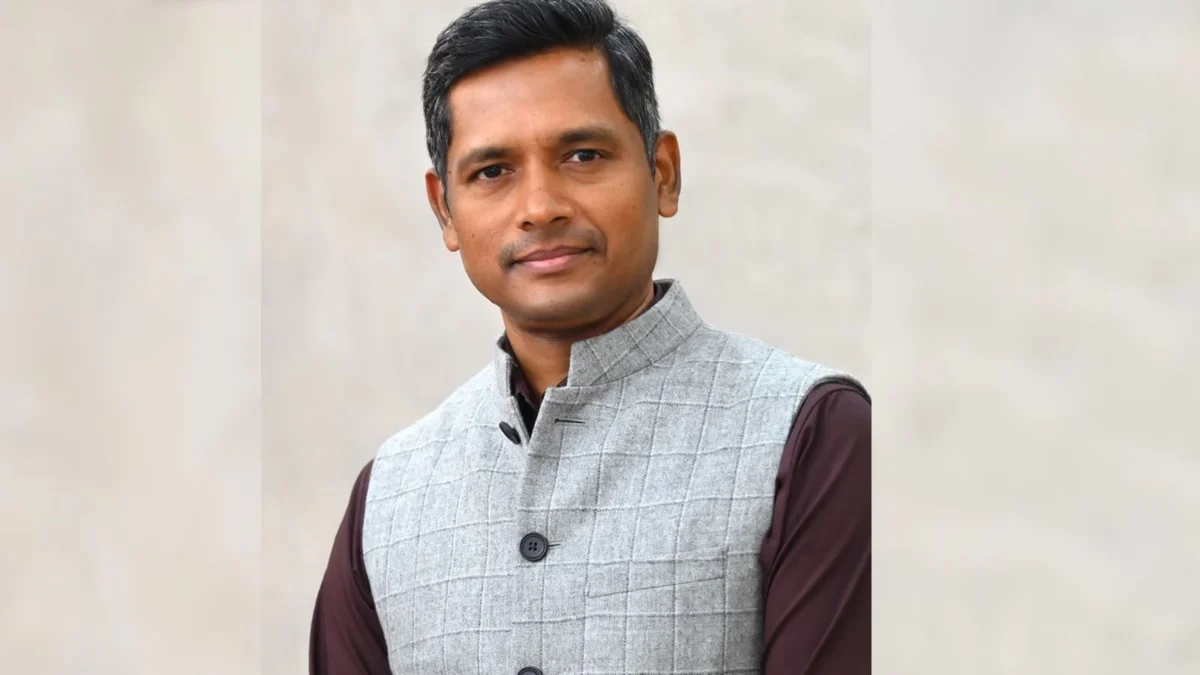
Thiruvananthapuram, Kerala – May 24, 2026 – Dr. Rathan U. Kelkar, the seasoned 2003-batch Kerala cadre IAS officer, formally assumed charge as Secretary to the Chief Minister on Sunday, a mere day after his appointment ignited a fierce political controversy across the state. His transition from the highly sensitive position of Kerala Chief Electoral Officer (CEO), which he held during the recently concluded Assembly elections, to a direct role in the Chief Minister’s Office (CMO) has drawn sharp criticism from the Opposition, raising pertinent questions about bureaucratic propriety and the perceived impartiality of electoral bodies.
The move comes at a time when similar appointments elsewhere in the country have fuelled debates about the post-retirement or post-tenure deployment of senior officials who have overseen critical democratic processes. Kelkar’s appointment, while lauded by the ruling front for his proven administrative acumen, has become a lightning rod for the Opposition, who are now demanding greater transparency and adherence to ethical guidelines in such high-profile transitions.
The Heart of the Controversy: A Question of Propriety
The immediate catalyst for the political uproar surrounding Dr. Kelkar’s appointment stems from the timing and the nature of his previous role. As Kerala’s Chief Electoral Officer, he was entrusted with the sanctity and impartiality of the electoral process, a cornerstone of democratic governance. His swift move to a politically sensitive position within the CMO, immediately following the conclusion of the elections he supervised, has prompted the Opposition to voice strong objections, citing potential conflicts of interest and a perceived erosion of institutional independence.
Echoes from West Bengal
The controversy in Kerala finds striking parallels with a recent incident in West Bengal, where the state’s Chief Electoral Officer, Manoj Agarwal, was appointed as the state chief secretary. That particular move had drawn a sharp rebuke from Congress leader Rahul Gandhi, who, in a widely circulated X post, had cynically remarked, "In the BJP-EC’s ‘chor bazaar’, the bigger the theft, the bigger the reward." This scathing comment, implying a quid pro quo for electoral facilitation, set a precedent for questioning such appointments.
In the wake of Kelkar’s new posting, both the ruling Communist Party of India (Marxist) [CPI(M)] in Kerala and the Bharatiya Janata Party (BJP) were quick to turn the tables on Rahul Gandhi. They demanded that he clarify whether his views on such appointments remained consistent now that a similar situation had unfolded in a state governed by an Opposition-led front. The CPI(M), in particular, highlighted the perceived hypocrisy, suggesting that the Opposition’s outrage was selective, depending on the political alignment of the state government involved. A senior CPI(M) spokesperson, preferring anonymity, commented, "If the principle is sacrosanct, it must apply universally. Is the integrity of an officer only questionable when the ruling party is not aligned with your national agenda?"
Opposition’s Stance: Erosion of Trust
The Congress-led United Democratic Front (UDF) in Kerala has vehemently questioned the propriety of Dr. Kelkar’s appointment. Ramesh Chennithala, a prominent UDF leader, stated in a press conference, "The swiftness of this transfer, from the guardian of our elections to a key aide of the Chief Minister, sends a troubling message. It creates an undeniable perception of compromise, undermining public faith in the neutrality of our electoral machinery." Opposition leaders argue that while an officer’s talent is not in dispute, the immediate transition raises ethical concerns about whether decisions made during their tenure as CEO could have been influenced by the prospect of future plum postings.
The argument put forth by the Opposition is multi-faceted. Firstly, they contend that such appointments, irrespective of the officer’s personal integrity, create a precedent that could potentially pressure future electoral officers. The implicit promise of a significant post-electoral reward, they argue, could subtly sway decisions or at least create an appearance of bias, thereby eroding the bedrock of democratic trust. Secondly, they emphasize the need for a cooling-off period for officials in sensitive roles like the CEO, suggesting that a mandatory interval before taking up government appointments would help dispel any doubts about impartiality.
Ruling Front’s Retort: Administrative Acumen and Precedent
The ruling Left Democratic Front (LDF) has, predictably, defended Dr. Kelkar’s appointment, portraying it as a recognition of his stellar administrative record and an exercise in leveraging talent for the state’s benefit. Senior LDF functionaries have highlighted Kelkar’s long and distinguished career, pointing to his various achievements across different departments. "Dr. Kelkar is an officer of impeccable credentials," asserted a spokesperson for the Chief Minister’s Office. "His appointment is purely based on merit and the state’s need for experienced administrators in crucial roles. To politicize every administrative decision is detrimental to governance."
The LDF also countered the Opposition’s criticisms by pointing to similar appointments made by various governments across India, regardless of political affiliation. They argued that denying a competent officer a significant role merely due to a recent electoral posting would be an arbitrary restriction on administrative flexibility and an unfair impediment to an officer’s career progression. Furthermore, they underscored that Dr. Kelkar’s tenure as CEO in Kerala was remarkably smooth, devoid of the significant controversies that plagued electoral processes in some other states. This, they suggest, attests to his impartiality and efficiency, rather than casting doubt upon it.
A Distinguished Career: Dr. Rathan U. Kelkar’s Trajectory
Dr. Rathan U. Kelkar’s appointment to the CMO is not merely a political flashpoint but also a testament to a career marked by significant responsibilities and notable achievements. His journey through the Indian Administrative Service has seen him tackle diverse challenges, from grassroots administration to state-level policy formulation, earning him a reputation as a diligent and effective bureaucrat.
Overseeing the Electoral Process with a Steady Hand
Prior to his current role, Kelkar’s tenure as Kerala Chief Electoral Officer, which commenced in December 2024, was largely perceived as efficient and controversy-free. He oversaw the crucial Special Intensive Revision (SIR) process of electoral rolls and the subsequent Assembly elections. Unlike many other states, Kerala did not experience major debates or disputes over electoral roll revisions under his leadership.
Kelkar adopted a proactive approach, regularly convening meetings with representatives of various political parties to address their concerns and ensure transparency. He undertook numerous ground-level assessments of the SIR process, personally verifying procedures and engaging with local electoral officials. This hands-on method, coupled with open communication, is credited with fostering confidence among political stakeholders and contributing to the smooth conduct of the elections, a stark contrast to the often-contentious electoral landscapes elsewhere. Political observers suggest that his calm and methodical handling of the electoral machinery is precisely what made him an attractive choice for a demanding role in the CMO.
Early Career and the Devikulam Evictions: A Legacy of Resolve
Dr. Kelkar first garnered significant public attention in 2007 during his challenging tenure as the sub-collector of Devikulam, a high-range region in the picturesque Idukki district. It was here that he spearheaded a resolute drive against illegal constructions and encroachments, a battle against powerful land mafias that had long plagued the ecologically fragile region. Operating under the Left Democratic Front (LDF) government led by then Chief Minister V. S. Achuthanandan, Kelkar’s actions were bold and uncompromising, targeting well-entrenched interests that had exploited the rich biodiversity and unique landscape of Idukki.
His decisive actions, which included demolishing illegal resorts and reclaiming government land, earned him both accolades from environmentalists and the general public, and fierce opposition from vested interests. The scale of the challenge was immense, involving complex legal battles and significant political pressure. Kelkar’s strong will and commitment to upholding the law laid the groundwork for a broader government initiative. His initial efforts against the encroachment mafia were later taken over and expanded by a three-member special task force, a clear indication of the systemic nature of the problem he dared to confront. This early display of administrative courage and integrity established his reputation as an officer who would not shy away from difficult decisions.
Contributions to Health and IT Sectors: Bridging Governance and Public Service
Over his two-decade-long career, Dr. Kelkar has spent a considerable portion of his time shaping policy and implementing projects in the critical Health and Information Technology sectors. His roles have consistently involved leveraging technology and administrative efficiency to improve public service delivery.
He served as the Director of the National Rural Health Mission (NRHM) in Kerala, where he played a crucial role in strengthening primary healthcare infrastructure and improving access to medical services in rural areas. Simultaneously, his leadership as the State IT Mission Director saw him at the forefront of Kerala’s digital transformation initiatives, promoting e-governance and improving connectivity across the state.
His administrative prowess was formally recognized in 2012 when, during his term as the Kannur District Collector, he was honoured as the best district collector in the state. This award underscored his ability to manage diverse administrative functions effectively, from law and order to development projects, at the grassroots level. Furthermore, as the Director of the Grand Kerala Shopping Festival, Kelkar demonstrated an innovative approach, transforming the event from a mere annual sale into a dynamic shopping brand, strategically promoting Kerala as a vibrant shopping destination and boosting local economies. These varied experiences showcased his adaptability and his capacity to drive change across different domains.
Leading the COVID-19 Response: A "Kerala Model" Architect
Perhaps one of Dr. Kelkar’s most impactful roles came during the unprecedented global health crisis of the Covid-19 pandemic. As the State Director of the National Health Mission (NHM) in Kerala, he was an integral part of the core team responsible for formulating and executing the state’s strategic response. This team was instrumental in developing what later became widely recognized as the "Kerala Model" in fighting Covid-19 – an approach characterized by early detection, robust contact tracing, community engagement, strong public health infrastructure, and transparent communication.
Kelkar’s leadership was critical in coordinating efforts among various stakeholders, including government departments, healthcare professionals, local self-governments, and volunteer organizations. He played a pivotal role in operationalizing large-scale testing facilities, ensuring adequate supplies of medical equipment, and managing resource allocation during the crisis. Specifically, as the mission director, he was in charge of the Kerala Covid Brigade, a massive volunteer network formed to assist health workers and local authorities in containing the spread of the virus. His ability to mobilize resources and people under immense pressure was a defining feature of Kerala’s successful, albeit challenging, battle against the pandemic. This experience solidified his reputation as a crisis manager par excellence.
Karnataka Deputation and National Initiatives: Expanding Horizons
Between 2016 and 2019, Dr. Kelkar served on deputation in Karnataka, further broadening his administrative experience beyond his home cadre. His innings in Karnataka began as the Director of the National Health Mission in the state, where he applied his expertise in public health administration to address the unique challenges of a different socio-economic context.
Later, as the Executive Director of the Suvarna Arogya Suraksha Trust, Kelkar played a crucial role in streamlining various healthcare projects and successfully integrating state-specific health schemes with central government initiatives. This involved complex policy formulation and meticulous execution to ensure seamless delivery of healthcare services to a larger population. His experience in Karnataka also included serving as the Executive Director of the Kerala State Health Agency upon his return, which is responsible for implementing universal healthcare schemes such as the Karunya Arogya Suraksha Padhathi in alliance with the central government’s flagship Ayushman Bharat Pradhan Mantri Jan Arogya Yojana. These roles underscore his deep understanding of healthcare policy and his ability to navigate the complexities of federal health initiatives.
Pioneering E-Governance in Kerala: A Digital Transformation Leader
From 2022 until his appointment as CEO in 2024, Dr. Kelkar served as the Secretary of the Electronics and IT Department under then Chief Minister Pinarayi Vijayan. This period was marked by an ambitious push towards e-governance, a key priority for the state government. Under his leadership, Kerala witnessed a significant acceleration in its digital transformation journey.
Several key government services were digitised, making them more accessible and efficient for citizens. This included initiatives to streamline public services, enhance digital literacy, and foster a robust IT ecosystem within the state. Kelkar’s tenure saw the successful implementation of various online platforms and digital infrastructure projects aimed at improving transparency, reducing red tape, and bringing governance closer to the people. His work in this sector laid critical groundwork for Kerala’s continued evolution into a digitally empowered state, showcasing his vision for leveraging technology for public good.
Broader Implications and Future Outlook
Dr. Kelkar’s appointment, while a standard administrative transfer on the surface, carries significant broader implications for bureaucratic culture, the perception of institutional independence, and future political dynamics within Kerala.
Bureaucratic Morale and Precedent
The immediate transition of a Chief Electoral Officer to a high-ranking post in the Chief Minister’s Office, particularly one as pivotal as Secretary, could have a dual impact on bureaucratic morale. On one hand, it might be seen as a swift recognition of an officer’s proven competence and efficiency, potentially motivating other bureaucrats to excel. On the other hand, it might also fuel cynicism among sections of the bureaucracy, raising concerns about political patronage and the blurring of lines between independent regulatory roles and executive functions. The establishment of such a precedent could inadvertently create an environment where officers in sensitive posts might feel pressured, consciously or subconsciously, to align their actions with the perceived interests of the ruling dispensation, in anticipation of future rewards. This is precisely the fear voiced by the Opposition, and it represents a genuine challenge to the ideal of an impartial civil service.
Perception of Electoral Impartiality
Perhaps the most significant implication lies in the realm of public trust in democratic institutions. The Election Commission of India and its state counterparts are envisioned as independent guardians of the electoral process. Any action that casts even a shadow of doubt on this independence, however unintentional, can erode public confidence. While Dr. Kelkar’s impeccable record as CEO in Kerala is widely acknowledged, the optics of his immediate appointment to the CMO are what the Opposition has seized upon. This perception, whether entirely fair or not, contributes to a larger narrative about the politicization of independent bodies, a narrative that has gained traction nationally in recent years. The challenge for the government will be to convincingly demonstrate that such appointments are purely merit-based and do not undermine the sanctity of the electoral process, now or in the future.
The Road Ahead for Kelkar: Navigating a Politically Charged Role
For Dr. Rathan U. Kelkar, his new role as Secretary to the Chief Minister places him directly at the nerve centre of state administration and policy-making. It is a position that demands not only exceptional administrative skill but also a keen understanding of political nuances and public sentiment. He will be instrumental in advising the Chief Minister on critical policy matters, coordinating between various government departments, and ensuring the efficient implementation of the state’s agenda.
His extensive experience in public health, IT, and grassroots administration will undoubtedly be an asset. However, he will also need to navigate the political storm that his appointment has stirred, potentially facing increased scrutiny from the Opposition and the media. His ability to maintain his reputation for integrity and efficiency while operating in a highly politicized environment will be a testament to his administrative acumen and resilience. The coming months will reveal how Dr. Kelkar steers the ship in his new, challenging, and intensely watched role, and how the political narrative around his appointment evolves.
