

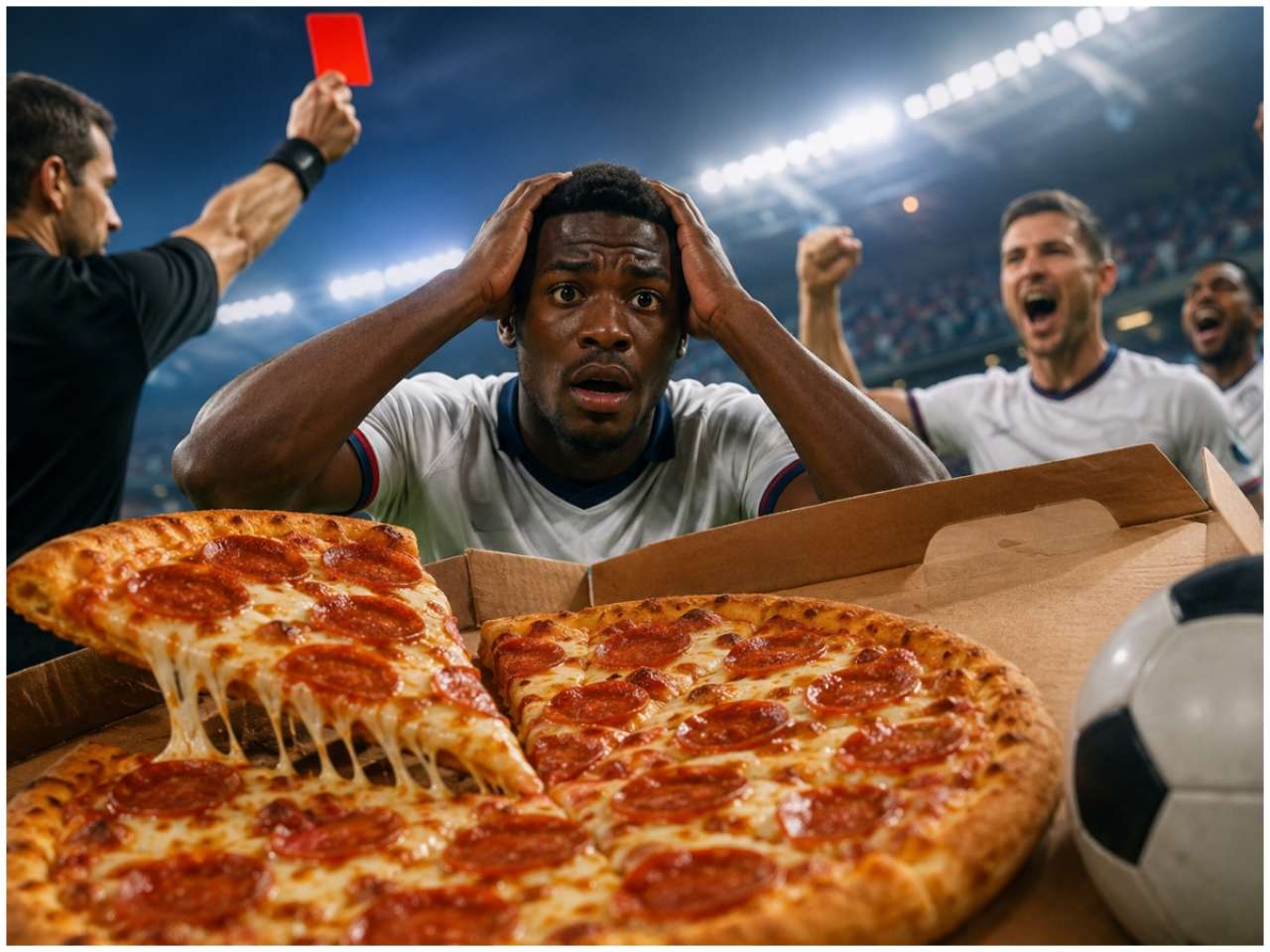
SPORTS – A moment of on-field fury, a referee’s decisive whistle, and a flash of red have ignited an unexpected culinary windfall for football fans across the United States. In a stunning turn of events during the FIFA World Cup 2026 Round of 32 clash, a controversial red card issued to USA striker Folarin Bolagun has triggered a pre-tournament pledge by popular pizza chain Domino’s, committing the company to distribute a staggering $1 million worth of free pizzas. This unprecedented giveaway, expected to account for over 60,000 medium-sized pizzas, has sent ripples of excitement and debate through both the sporting and gastronomic worlds.
The incident, which unfolded on Wednesday, July 2, 2026, during the high-stakes encounter between the United States and Bosnia and Herzegovina, saw the fate of a crucial match – and a significant pizza promotion – hinge on a single, contentious decision. As the world watches the drama of the World Cup unfold, the intersection of intense athletic competition and audacious corporate marketing has delivered a truly surprising outcome.
Main Facts: A Red Card, A Million Pizzas
The core of this unfolding story revolves around two pivotal elements: a disciplinary action on the football pitch and an ambitious marketing campaign. During the fiercely contested Round of 32 match, USA’s promising striker, Folarin Bolagun, found himself at the center of controversy when he was shown a red card. The dismissal came after an incident involving Bosnian defender Tarik Muharemovic, where Bolagun was adjudged to have dangerously planted his boot into the opponent’s ankle. This decision, immediately questioned by US players and fans alike, drastically altered the complexion of the match and, as it turns out, activated a unique promotional offer from Domino’s.
Prior to the commencement of the FIFA World Cup 2026, Domino’s had announced its "Emergency Pizzas" campaign. This bold initiative promised a $1 million pizza giveaway should any player from the US men’s national team receive a red card during the tournament. The stated aim was to "soften the blow" for disappointed fans, transforming a moment of on-field despair into an unexpected culinary treat. With Bolagun’s sending off, Domino’s is now obliged to fulfill this promise, gearing up to deliver an estimated 60,000+ medium pizzas to eligible, pre-registered fans. This remarkable intersection of sports drama and corporate commitment has captivated public attention, creating a buzz that extends far beyond the confines of the football stadium.
The Unfolding Drama on the Pitch: A Game-Changing Moment
The FIFA World Cup 2026 Round of 32 match between the United States and Bosnia and Herzegovina was already simmering with tension. Both teams were vying for a coveted spot in the quarterfinals, with national pride and sporting glory on the line. The atmosphere in the stadium was electric, a palpable mix of anticipation and anxiety from the thousands of supporters present.
The Incident in Detail: Bolagun’s Ill-Fated Challenge
Approximately midway through the second half, with the scoreline delicately balanced and the match hanging in the balance, the incident occurred. Folarin Bolagun, known for his attacking prowess and aggressive play, was involved in a challenge for a loose ball near the touchline in the Bosnian half. As he stretched to gain possession, his follow-through saw his boot make contact with the ankle of Bosnian defender Tarik Muharemovic, who had also committed to the tackle. Muharemovic immediately went down, clutching his ankle in apparent agony, prompting an immediate halt to play.
The referee, a seasoned official known for his strict interpretation of the rules, was quick to assess the situation. After a brief consultation with the Video Assistant Referee (VAR) system, which confirmed the point of contact and the perceived force, the official made his decision. With a flourish, he brandished the red card, signaling Bolagun’s immediate expulsion from the game. Replays shown on the stadium’s big screens and broadcast globally highlighted the contact, but also sparked immediate debate among pundits and fans regarding the intent and severity. While some argued it was a reckless, dangerous tackle warranting a red card, others contended it was an unfortunate consequence of a committed challenge, perhaps deserving only a yellow. The "controversial" label was cemented instantly, fueling discussions across social media platforms and sports commentary channels.
Impact on the Match: A U.S. Team Undermined
Bolagun’s red card had an immediate and profound impact on the match. Playing with ten men for the remaining portion of the second half, the U.S. team was forced to reorganize, sacrificing offensive ambition for defensive solidity. The tactical shift, while necessary, visibly sapped the team’s momentum and attacking threat. Bosnia and Herzegovina, invigorated by the numerical advantage, pressed harder, exploiting the wider spaces left open by the depleted American side.
While the outcome of the match is still unfolding or would have been reported alongside this news, the immediate psychological blow to the U.S. team was undeniable. The loss of a key striker, especially in a knockout stage fixture, is a significant handicap. For fans, the red card represented a moment of profound disappointment, a potential turning point that could derail their nation’s World Cup dreams. It was precisely this "blow" that Domino’s had aimed to mitigate with their pre-tournament promise, creating a peculiar silver lining to an otherwise frustrating sporting moment.
Player’s Perspective: The Weight of the World Stage
For Folarin Bolagun, the red card would undoubtedly be a moment of deep regret and frustration. To be sent off on the global stage of the FIFA World Cup, particularly in a critical knockout match, carries immense personal and professional weight. The pressure on players representing their nation in such a prestigious tournament is immense, and a split-second decision or an unfortunate misjudgment can have far-reaching consequences. Bolagun will likely reflect on the incident with a mixture of remorse for potentially letting his team down and perhaps a sense of injustice regarding the referee’s final decision. His individual moment of controversy has, however, inadvertently become the catalyst for widespread pizza-fueled cheer for American football enthusiasts.
Domino’s Bold Pre-Tournament Pledge: The "Emergency Pizza" Initiative
The story of the $1 million pizza giveaway begins long before the whistle blew for the USA vs. Bosnia and Herzegovina match. It stems from a calculated and audacious marketing strategy devised by Domino’s ahead of the FIFA World Cup 2026. Recognizing the immense national fervor and emotional investment associated with the tournament, especially for the host nation’s team, Domino’s sought a unique way to engage with fans and cement its brand presence during the quadrennial event.
The Genesis of the "Emergency Pizza" Campaign: A Risky Bet
Domino’s marketing team understood the highs and lows of supporting a national team in a major tournament. Victories bring elation, but defeats and controversial moments can lead to widespread disappointment. The "Emergency Pizza" campaign was conceived as a way to "soften the blow" of such negative moments. By specifically targeting a red card incident – a rare, dramatic, and often controversial occurrence – Domino’s tapped into the unpredictable nature of football. It was a risky bet, as a red card could theoretically never happen to a US player, or it could happen early, forcing a massive payout. However, the potential for viral marketing and significant brand goodwill was deemed worth the gamble.
The campaign’s premise was simple yet effective: associate Domino’s with comfort and relief during moments of sporting despair. The idea of an "Emergency Pizza" implied a quick, comforting solution to a frustrating situation, directly aligning with the brand’s image as a convenient and satisfying food option. This strategic move aimed to foster a deeper, more empathetic connection with consumers, positioning Domino’s not just as a pizza provider, but as a supporter of the fan experience, even in adversity.
Specifics of the Campaign: "$1 Million Worth of Emergency Pizzas"
Domino’s officially announced the promotion via a press release ahead of the tournament’s commencement. The statement clearly outlined the terms: "If any player from the U.S. team receives a red card in the soccer tournament, Domino’s is here to help soften the blow by giving away $1 million worth of Emergency Pizzas." This commitment was not vague; it was a concrete, financial pledge tied directly to a specific, high-drama event. The press release further highlighted the estimated scale of the giveaway, mentioning "over 60,000 medium-size pizza," translating the monetary value into a tangible product for consumers.
Beyond the pizza giveaway, the campaign also included a limited-edition line of co-branded merchandise from Saturdays Football. This collection, featuring jerseys, a cap, and slides, was made available at [saturdaysfootball.com/dominos], further integrating Domino’s into the football fan culture. This multi-faceted approach demonstrated a comprehensive strategy to maximize brand visibility and engagement throughout the World Cup period, regardless of whether the red card condition was met.
Marketing During Major Sporting Events: A Broader Context
Domino’s "Emergency Pizza" campaign is a prime example of how brands leverage global sporting spectacles like the FIFA World Cup. These events offer unparalleled viewership and emotional engagement, making them fertile ground for innovative marketing strategies. Companies often engage in sponsorships, create limited-edition products, or launch themed promotions to capitalize on the heightened public interest. The goal is to associate the brand with the excitement, passion, and national pride that define such tournaments.
From beverage companies creating special edition cans featuring national flags to sportswear brands launching new kits, the World Cup is a marketing bonanza. Domino’s approach, however, stood out for its high-stakes, event-triggered nature. It moved beyond passive advertising to an active, interactive promise that directly involved the performance of the national team. This kind of "if-then" promotion generates immense buzz because it creates a direct, tangible link between the unpredictable world of sports and a consumer reward, turning every potential red card into a potential win for pizza lovers.
The Mechanics of the Giveaway: How to Claim Your Slice
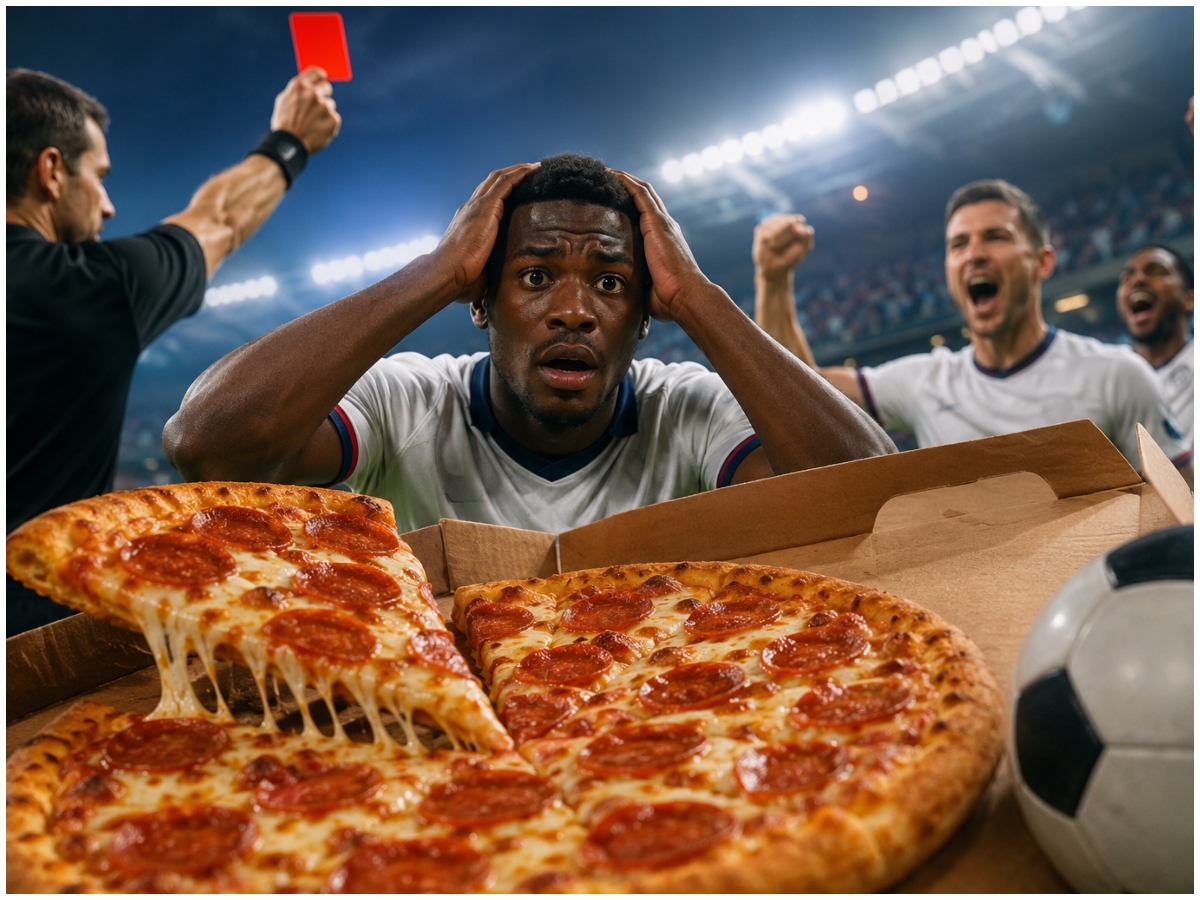
With Folarin Bolagun’s red card now a reality, the focus shifts to how exactly Domino’s will fulfill its $1 million promise and how eligible fans can claim their free "Emergency Pizza." The process, as outlined by the company, emphasizes pre-registration and a randomized selection system to manage the massive anticipated demand.
)
Eligibility and Registration: The Crucial Deadline
To be eligible for a free pizza, fans were required to register themselves on the Domino’s Pizza website before a specific deadline: midnight ET on June 10, 2026. This pre-registration was critical, serving two main purposes. Firstly, it allowed Domino’s to gauge potential interest and prepare for the logistical challenges of a large-scale giveaway. Secondly, it created a sense of exclusivity and urgency, encouraging fans to sign up early to be part of the "Domino’s Rewards program," which was a prerequisite for participation. Only those who had successfully completed this registration process and were members of the rewards program by the cut-off date are now in contention for a free pizza. This means that new registrations post-red card incident will not qualify for this particular offer, reinforcing the forward-looking nature of the original promotion.
Selection Process: Random Winners
Given the estimated 60,000+ pizzas to be distributed and likely a much larger pool of eligible registrants, Domino’s has indicated that the winners will be selected randomly from the pool of pre-registered and eligible users. This randomized selection process is standard for large-scale giveaways, ensuring fairness and managing expectations. While the exact notification method was not detailed in the initial announcement, it is highly probable that selected winners will receive an email notification or a direct message through their Domino’s Rewards account or the Domino’s app, informing them of their prize and providing instructions on how to redeem it. This system allows Domino’s to distribute the pizzas in a controlled manner, preventing a sudden, overwhelming surge in orders that could strain their operational capacity.
Redemption Details: A Limited Window
Those fortunate enough to be selected for a free "Emergency Pizza" will have a specific window to claim their reward. The deadline for redemption is set for August 2, 2026. This timeframe provides winners with ample opportunity to place their order while also ensuring that the giveaway concludes in a timely manner. Redemption will likely involve a unique code or coupon loaded directly into the winner’s Domino’s Rewards account, which can then be applied to an online order or potentially used for in-store pickup. The "medium-size pizza" stipulation ensures consistency in the prize, making the logistics more manageable for the chain.
Logistical Challenges: Scaling for Success
Distributing over 60,000 medium pizzas is no small feat. For Domino’s, this giveaway presents significant logistical challenges. It requires careful coordination across its numerous franchises and delivery networks. Factors such as ingredient availability, staffing levels, and delivery capacity will all need to be meticulously managed to ensure a smooth and positive customer experience. The staggered redemption window (until August 2) helps to mitigate a sudden overwhelming demand, allowing individual stores to manage the influx of free pizza orders alongside their regular business. The success of the giveaway will depend not just on the excitement generated, but also on Domino’s ability to execute this large-scale operation efficiently and without significant hiccups.
Reactions and Public Sentiment: A Mixed Bag
The news of the red card and the subsequent pizza giveaway has predictably elicited a wide range of reactions from the public, intertwining disappointment for the U.S. team with sheer delight for the unexpected free food.
Fan Reactions: From Frustration to Feast
On social media platforms, the immediate aftermath of Bolagun’s red card was a flurry of activity. US football fans expressed a mix of anger, frustration, and dismay over the referee’s decision, many labeling it "harsh" or "unjust." Hashtags debating the fairness of the call trended, reflecting the deep emotional investment in the World Cup. However, this sentiment quickly intertwined with an almost comical shift to excitement as news of Domino’s activation spread. Tweets and posts rapidly transitioned from "Can’t believe that red card!" to "Wait, so free pizza?!" The prospect of free food provided a tangible, if minor, consolation for the sporting setback. Many pre-registered users eagerly checked their Domino’s Rewards accounts, hoping to be among the lucky winners, while others lamented missing the registration deadline. The overall sentiment became a peculiar blend of sporting grievance and consumer gratification.
Domino’s Response: Embracing the Moment
Domino’s has been quick to embrace the moment, leveraging the viral nature of the event. While an official statement post-red card might reiterate their commitment, their social media channels are likely buzzing with witty posts acknowledging the activation of their campaign. This incident presents a unique opportunity for Domino’s to reinforce its brand image as fun, engaging, and customer-focused. The company’s prompt fulfillment of its pledge will undoubtedly generate significant goodwill and positive publicity, proving that their bold marketing gamble has paid off in terms of public awareness and appreciation. The "soften the blow" message takes on a literal meaning, as fans can literally eat away their sorrows with a complimentary pizza.
Expert Commentary: Marketing Masterstroke?
Marketing analysts are already weighing in on the campaign, largely hailing it as a masterstroke. The sheer virality and organic media coverage generated by the incident far outweigh the $1 million cost of the giveaway. "This is a brilliant example of reactive marketing," commented one industry expert. "Domino’s tapped into a core emotion of sports fans – the agony of defeat – and offered a tangible, immediate comfort. The risk was high, but the payoff in terms of brand visibility, positive sentiment, and customer engagement is immense. It’s the kind of campaign that will be studied for years." Football pundits, while focused on the implications for the US team, also couldn’t help but acknowledge the unique intersection of the sporting drama with the Domino’s promotion, adding another layer to the post-match discussions.
Broader Implications: Beyond the Pizza Box
The Domino’s "Emergency Pizza" giveaway, triggered by a controversial World Cup red card, carries implications that extend beyond just free food and temporary fan excitement. It delves into the dynamics of modern sports marketing, the unpredictable nature of major tournaments, and the ever-evolving relationship between brands and consumers.

Marketing Success or Cautionary Tale?
For Domino’s, this campaign is poised to be a significant marketing success. The brand has achieved massive visibility and generated considerable positive sentiment by honoring its promise. The story of the "red card pizza" will likely be recounted for some time, embedding Domino’s more deeply in the collective memory of this World Cup. However, such high-stakes promotions also come with potential pitfalls. Should the distribution process falter, or if the customer experience is poor, the goodwill generated could quickly erode. Therefore, the execution of the giveaway in the coming weeks will be crucial to solidify its status as an unequivocal success rather than a cautionary tale. Brands considering similar campaigns in the future will closely observe Domino’s operational delivery.
Precedent for Future Promotions: The "If-Then" Model
The success of Domino’s "Emergency Pizza" campaign could set a precedent for future brand promotions during major sporting events. The "if-then" model, where a specific, high-drama event triggers a significant consumer reward, offers a compelling framework for engagement. We might see more brands tying giveaways to unlikely outcomes: a no-hitter in baseball, a specific type of goal in hockey, or a rare foul in basketball. The key lies in identifying events that are both dramatic enough to capture attention and rare enough to be financially manageable, yet plausible enough to generate genuine anticipation. This approach moves beyond traditional sponsorships to create a more dynamic and interactive relationship between the brand, the sport, and the consumer.
The Spirit of the World Cup: Unpredictability and Drama
The entire incident serves as a poignant reminder of the inherent unpredictability and raw drama that defines the FIFA World Cup. From moments of sublime skill to controversial refereeing decisions, the tournament consistently delivers narratives that transcend the sport itself. Bolagun’s red card, whether deemed fair or unfair, added another layer of unexpected twists to the tournament’s tapestry. It underscored the fine line between glory and despair, triumph and controversy, that makes the World Cup such a compelling global spectacle. The fact that this sporting drama spilled over into a massive pizza giveaway only amplifies the unique cultural footprint of the event.
Fair Play and Refereeing Debates: An Enduring Conversation
Finally, the controversy surrounding Bolagun’s red card inevitably reignites ongoing debates about refereeing standards, the role of VAR, and the subjective nature of disciplinary decisions in football. Every major tournament sees its share of contentious calls, and the 2026 World Cup is proving no different. These discussions are integral to the sport, shaping fan perceptions and influencing the narrative of individual matches and the tournament as a whole. While Domino’s provides a temporary distraction with free pizza, the underlying conversation about fair play and the integrity of the game will undoubtedly continue throughout the World Cup and beyond.
Conclusion: A Slice of Unexpected History
The FIFA World Cup 2026 has already delivered its first major marketing coup, courtesy of a controversial red card and Domino’s audacious pre-tournament pledge. Folarin Bolagun’s dismissal against Bosnia and Herzegovina has transformed a moment of on-field frustration for US fans into an unexpected culinary celebration. Domino’s commitment to delivering $1 million worth of "Emergency Pizzas" is a testament to the power of innovative marketing, the emotional pull of international football, and the unpredictable nature of both.
As football fans continue to dissect the referee’s decision and ponder the U.S. team’s World Cup fate, thousands across the nation will soon be enjoying a tangible silver lining in the form of a complimentary pizza. This unique intersection of high-stakes sports drama and ingenious corporate strategy has not only generated immense buzz but has also created a peculiar, delicious piece of World Cup history. As the tournament progresses, one thing is clear: in the world of football, sometimes, a red card can indeed lead to a million-dollar treat.
