

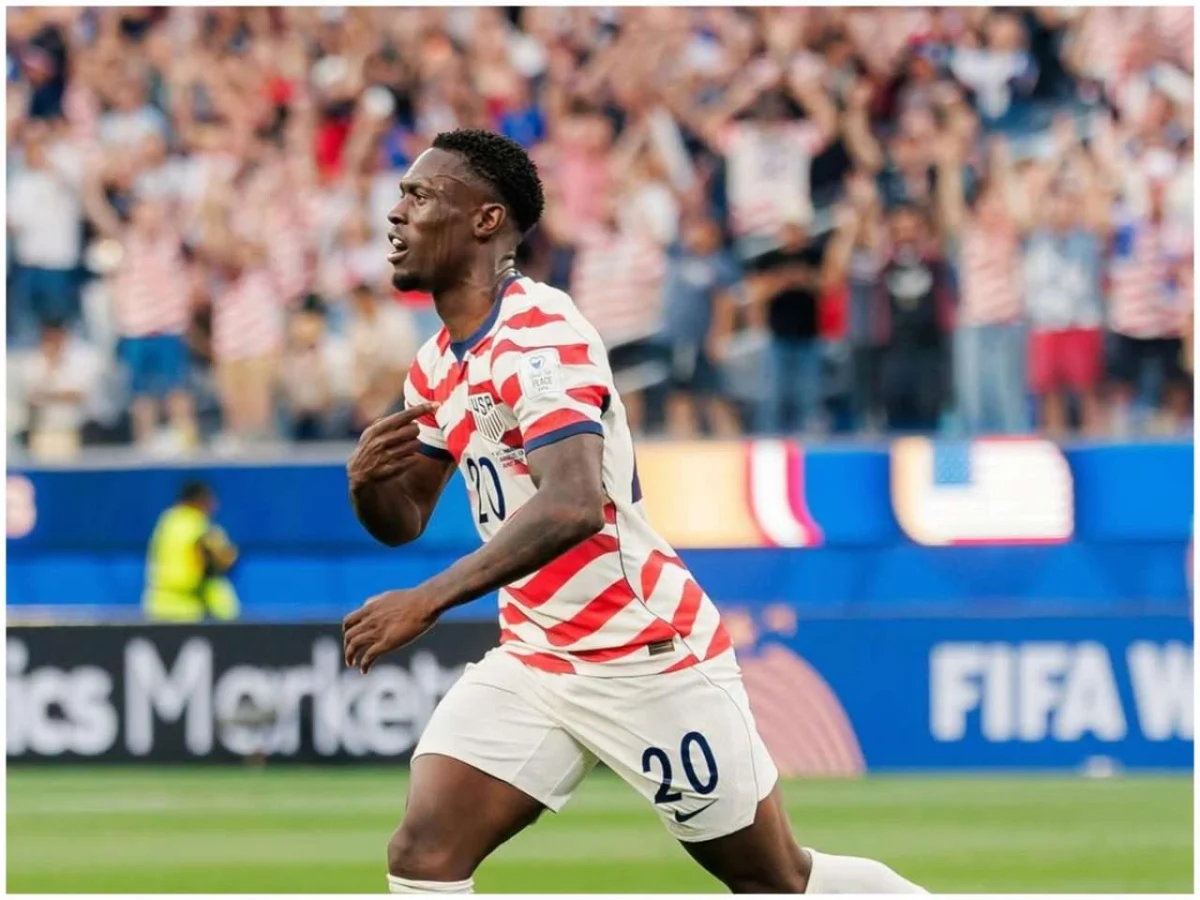
SEATTLE, USA – A contentious red card issued to star USA striker Folarin Balogun during the FIFA World Cup 2026 Round of 32 clash against Bosnia and Herzegovina has ignited a fierce debate across the football world. The decision, which saw Balogun ejected for a challenge on Bosnian defender Tarik Muharemovic, has drawn sharp criticism from former US international Alexi Lalas, who provocatively suggested that a player of Lionel Messi’s stature would have escaped similar punishment. This incident has once again brought the consistency of refereeing and the perceived preferential treatment of football’s biggest names under intense scrutiny, casting a shadow over what has otherwise been a thrilling tournament.
Main Facts: A Controversial Dismissal and a Pundit’s Outcry
The pivotal moment occurred during the USA’s Round of 32 encounter with Bosnia and Herzegovina on Wednesday, July 2, 2026, when Folarin Balogun, a key figure in the US attacking line, was shown a straight red card. The dismissal came after Balogun’s boot made contact with the ankle of Bosnian defender Tarik Muharemovic during a challenge. While the initial reaction on the pitch was one of surprise from the US camp, the referee’s decision, confirmed after a brief VAR check, stood. The USA ultimately prevailed in the match, securing their spot in the Round of 16, but Balogun’s absence from the upcoming fixture against Belgium looms large.
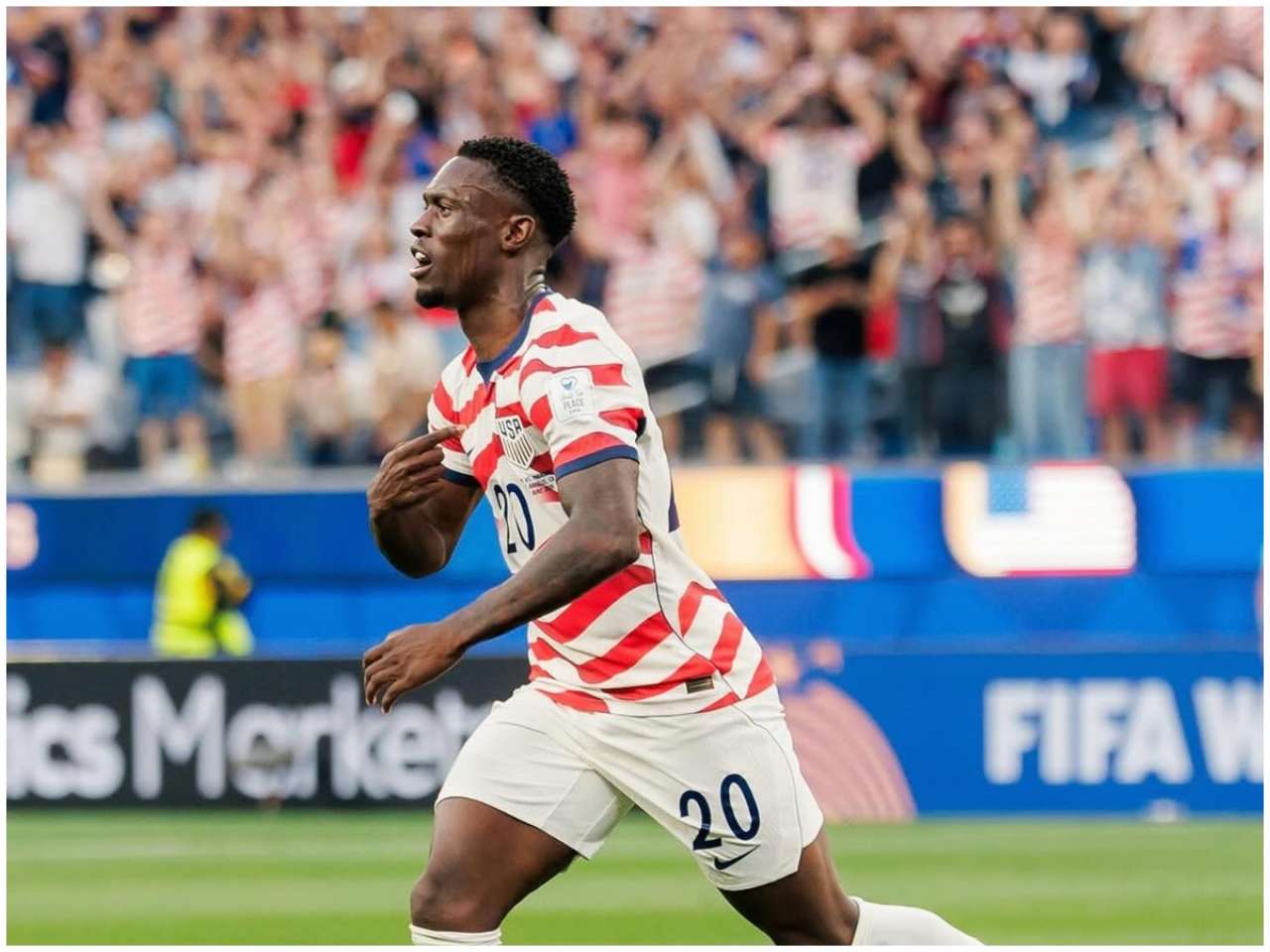
The most vocal critic of the decision has been Alexi Lalas, the former US national team defender and now a prominent football analyst. Immediately following the match, Lalas took to social media, sharing a clip of what he claimed was a remarkably similar incident involving Argentine superstar Lionel Messi during the FIFA World Cup 2026 opener against Algeria. In his post and subsequent comments on the "State of the Union Podcast," Lalas asserted that Messi had avoided any punishment for a studs-up challenge, drawing a direct parallel to Balogun’s dismissal. "This is not a red card. I understand that in the moment it looks bad, and when you see it on video, it looks bad. But you have to have a feel and understanding of what’s going on. I thought it was a crap call," Lalas stated, adding the pointed remark: "If his name was Messi, he would still be on the field."
The accusation of a double standard in officiating, where high-profile players are afforded leniency that others are not, has resonated widely, sparking discussions among fans, pundits, and former players alike. The incident not only impacts Balogun’s immediate tournament participation but also reignites long-standing debates about fairness, interpretation of the laws of the game, and the influence of a player’s reputation on crucial refereeing decisions at the highest level of international football.
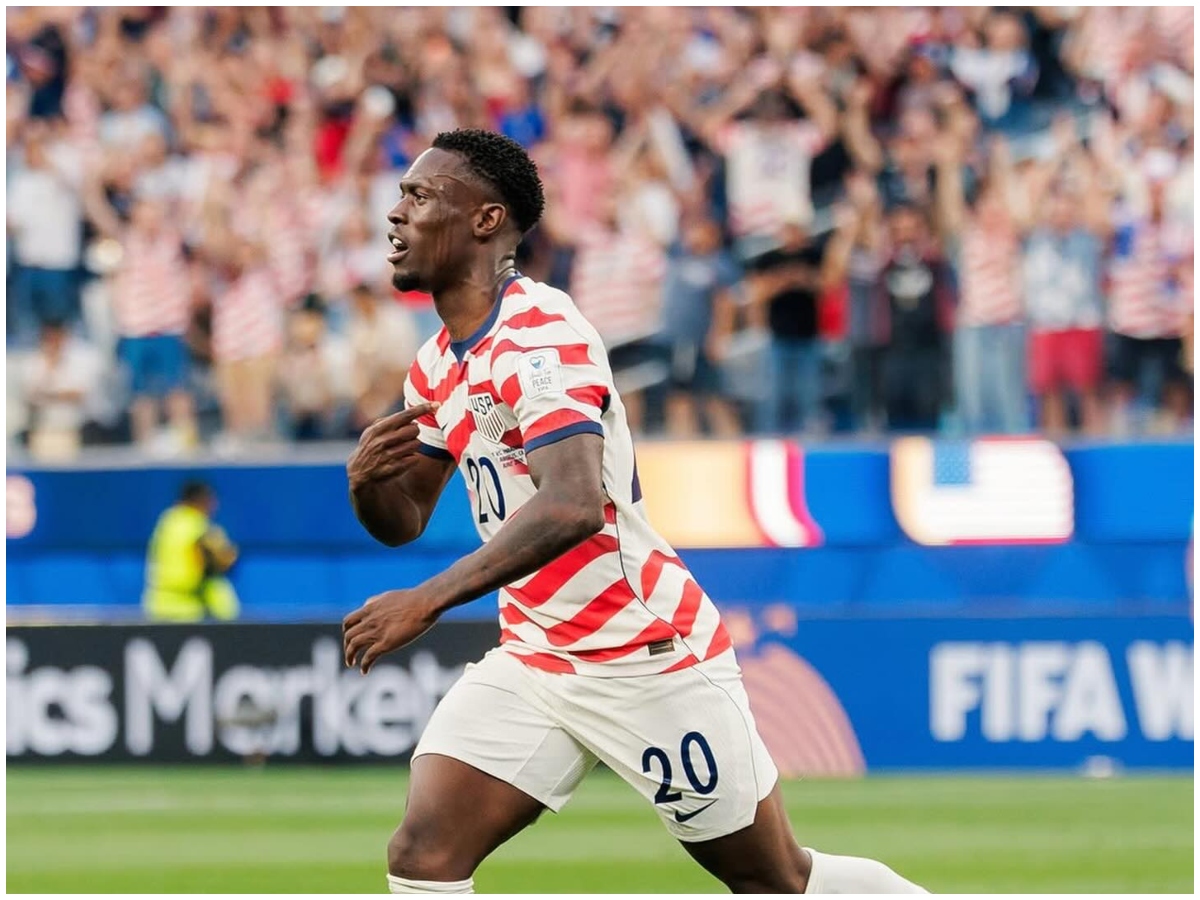)
Chronology of Events: From Clinical Finish to Controversial Exit
The narrative surrounding Folarin Balogun’s eventful night against Bosnia and Herzegovina is one of both individual brilliance and collective frustration, culminating in a decision that has dominated post-match analyses.
USA’s Path to the Round of 32
The United States Men’s National Team entered the FIFA World Cup 2026 Round of 32 with considerable momentum, having navigated a challenging group stage. Balogun, leading the line, had been instrumental in their progression, showcasing his predatory instincts and clinical finishing. His form had made him one of the tournament’s breakout stars, and expectations were high for his performance in the knockout rounds. The clash against Bosnia and Herzegovina, a team known for its defensive resilience and tactical discipline, was anticipated to be a stern test for the young American squad.

The Defining Moment: Balogun’s Challenge
The match itself saw Balogun continue his impressive run of form. He opened the scoring for the USA, netting his third goal of the tournament – a testament to his crucial role in the team’s attacking strategy. However, the celebratory mood was abruptly halted in the 68th minute. As Balogun contested a loose ball in the midfield, he went into a challenge with Bosnian defender Tarik Muharemovic. Replays showed Balogun’s right foot, with studs showing, making direct contact with Muharemovic’s ankle. The impact sent Muharemovic to the ground, writhing in pain.
The referee, having a clear view of the incident, immediately blew his whistle and brandished a straight red card. Despite protests from Balogun and his teammates, the decision was upheld after a quick consultation with the Video Assistant Referee (VAR). The on-field referee was seen reviewing the incident on the pitchside monitor, confirming his initial assessment of serious foul play. The USA was forced to play the remainder of the match with ten men, adding immense pressure to their quest for a Round of 16 berth, a challenge they ultimately overcame with grit and determination.
)
Lalas’s Immediate Reaction and Messi Comparison
No sooner had the red card been shown than social media began to buzz. Alexi Lalas, known for his outspoken commentary, wasted no time in weighing in. Within minutes of the decision, Lalas posted a tweet that quickly went viral. The tweet included a short video clip juxtaposing Balogun’s challenge with an incident from the tournament’s opening match, Argentina versus Algeria. In the comparative clip, Lionel Messi was shown making a similar studs-up tackle, albeit one that appeared to have less direct impact, on an Algerian opponent. Crucially, Messi had received no card for his challenge, and play had continued without interruption.
Lalas’s accompanying text and subsequent remarks on his podcast were unequivocal. He branded the decision against Balogun a "crap call," emphasizing that while the optics of a studs-up challenge can be damning, the referee needed to possess a "feel and understanding" of the game’s tempo and context. His core argument revolved around the perceived double standard: if a player of Messi’s global stature were involved in a similar tackle, Lalas contended, the outcome would invariably be different, suggesting an inherent bias in officiating. This direct comparison immediately struck a chord, tapping into a long-held belief among many football observers that elite players often benefit from a different set of officiating rules.
)
Supporting Data and Analysis: Unpacking the Red Card Debate
The controversy surrounding Balogun’s red card is not an isolated incident but rather a microcosm of broader issues within football officiating, particularly at the highest levels. The debate encompasses the interpretation of rules, the impact of VAR, and the persistent question of star power influencing decisions.
The Laws of the Game: Serious Foul Play vs. Reckless Challenge
According to the Laws of the Game, specifically Law 12, "Fouls and Misconduct," a player is sent off for "serious foul play." This is defined as a tackle or challenge that endangers the safety of an opponent or uses excessive force or brutality. A tackle with studs showing that makes contact with an opponent’s ankle or shin is often deemed serious foul play due to the inherent danger. Conversely, a "reckless challenge" is one where a player acts with disregard to the danger to, or consequences for, an opponent and is usually punished with a yellow card. The fine line between these two interpretations often lies in the referee’s judgment of intent, force, and the precise point of contact.
)
In Balogun’s case, the referee and VAR likely determined that the studs-up contact with Muharemovic’s ankle constituted excessive force and endangered the opponent’s safety, thus warranting a red card. Lalas’s argument, however, suggests that while the action might look bad, it didn’t necessarily meet the threshold for "serious foul play" in its full context, implying it was more reckless than malicious or excessively forceful.
The Role of VAR: A Double-Edged Sword
The introduction of Video Assistant Referee (VAR) was intended to reduce "clear and obvious errors" and enhance fairness. However, incidents like Balogun’s demonstrate that VAR, while providing an objective review, doesn’t eliminate subjective interpretation. The VAR system reviews the footage and advises the referee, who then makes the final decision, often after reviewing the incident on a pitchside monitor. In this instance, the VAR consultation seemingly confirmed the referee’s initial judgment.
)
Critics argue that VAR, by slowing down the game and replaying incidents in super slow motion, can sometimes make fouls appear worse than they were in real-time. This "slow-motion effect" can influence a referee’s perception, leading to harsher punishments. Conversely, proponents argue that VAR ensures dangerous play is not missed, protecting player safety. The Balogun incident reignites the debate over VAR’s application: is it truly leading to more consistent and fair outcomes, or merely shifting the point of contention from missed calls to contentious interpretations?
The "Messi Factor": Perceived Bias Towards Superstars
Alexi Lalas’s most potent critique revolves around the "Messi factor," highlighting a widespread belief that iconic players like Lionel Messi or Cristiano Ronaldo often receive preferential treatment from referees. This perceived bias can manifest in several ways:
)
- Leniency for fouls committed: As Lalas suggested, similar fouls by superstars might be overlooked or result in lesser punishment.
- Protection from fouls: Superstars often receive more free-kicks for seemingly minor contact, as referees are perceived to be protecting them from injury.
- Less severe disciplinary action: Arguments or dissent from star players might be tolerated more than from lesser-known individuals.
While there is no official acknowledgment from FIFA or refereeing bodies about such a bias, anecdotal evidence and statistical analyses (though often inconclusive) frequently fuel this perception among fans and pundits. The psychological pressure on referees officiating matches involving global icons is immense. The decision to send off a player like Messi could instantly dominate headlines and even influence the outcome of a major tournament, leading some to speculate that referees might subconsciously err on the side of caution when dealing with such figures. The comparison Lalas drew between Balogun’s red card and Messi’s unpunished challenge serves as a powerful illustration of this deeply ingrained suspicion.
Historical Context of Controversial World Cup Red Cards
The FIFA World Cup has a rich history of controversial red cards that have altered the course of tournaments. From David Beckham’s dismissal in 1998 to Zinedine Zidane’s headbutt in 2006, such incidents often become indelible parts of World Cup lore. These events underscore the immense pressure on referees and the high stakes involved in every decision. Balogun’s red card, by sparking a debate about fairness and consistency, adds another chapter to this ongoing narrative, ensuring that the officiating in FIFA World Cup 2026 will be scrutinized more intensely than ever before.
)
Expert Opinions and Media Commentary
Beyond Lalas, several other pundits and former referees have weighed in. Former English Premier League referee Mark Halsey, for instance, commented on a sports radio show, stating, "While it looks bad in real-time, the intent is key. If there’s no malice and it’s a genuine attempt for the ball, sometimes a yellow is sufficient. But player safety is paramount, and VAR is there to identify high-risk challenges." This nuanced view reflects the complexity of the decision. Meanwhile, various football news outlets and fan forums have been awash with discussions, with some agreeing with Lalas, decrying a double standard, and others defending the referee’s decision as a necessary measure to protect players from dangerous tackles. The sheer volume of commentary highlights the deeply divisive nature of the incident.
Official Responses: Silence and Standard Protocols
In the immediate aftermath of such a high-profile and controversial decision, official bodies typically maintain a position of non-commentary on specific incidents, preferring to uphold the authority and integrity of the match officials.
)
FIFA and Refereeing Committees
FIFA, through its refereeing committee, rarely comments directly on individual refereeing decisions during a tournament. Their standard protocol is to support the officials and the VAR system, emphasizing that all decisions are made based on the Laws of the Game and the interpretation by the appointed referee team. Any official statement would likely reiterate commitment to fair play and player safety, without addressing Lalas’s specific claims of bias. Internally, referee performance is reviewed, but such evaluations are not usually made public during active competitions. The silence from FIFA, while expected, often frustrates those seeking clarification or acknowledgment of perceived inconsistencies.
USA Team and Coaching Staff
While understandably disappointed, the USA coaching staff and players generally maintained a professional stance after the match. Head Coach Gregg Berhalter, in his post-match press conference, acknowledged the difficulty of playing with ten men but chose to focus on his team’s resilience in securing the victory. "It was a tough call, a pivotal moment in the game," Berhalter stated. "But my players showed incredible character to adapt and fight for the win. We move forward as a unit." He refrained from directly criticizing the referee, likely to avoid potential disciplinary action from FIFA. Balogun himself was seen leaving the stadium looking dejected but offered no public comment, likely advised to let the incident settle. The team’s focus quickly shifted to preparing for the next challenge without their key striker.
)
Bosnia and Herzegovina Perspective
From the Bosnian camp, there was little dispute regarding the red card. Defender Tarik Muharemovic, while receiving treatment, did not publicly comment on the severity of the foul beyond confirming the impact. The Bosnian coach, in his post-match remarks, simply stated, "The referee made his decision. We accept it. It made the game different, but credit to the USA for winning." Their focus was more on their own performance and elimination from the tournament, rather than dwelling on the specifics of the disciplinary action.
Implications: A Crucial Absence and Lingering Questions
The red card shown to Folarin Balogun carries immediate and far-reaching implications, not just for the USA national team but also for the broader discussion surrounding fairness and consistency in international football.
)
Immediate Impact on USA’s Tournament Journey
The most direct consequence of the red card was Balogun’s immediate ejection from the Round of 32 match against Bosnia and Herzegovina. This forced the USA to play with ten men for a significant portion of the game. Despite the numerical disadvantage, the team displayed remarkable resilience, ultimately securing a hard-fought victory to advance to the Round of 16. However, the energy expended and the tactical adjustments required undoubtedly took a toll, potentially impacting their preparation for the next stage.
Balogun’s Suspension for the Round of 16
The red card automatically triggers a one-match suspension, meaning Folarin Balogun will be unavailable for the USA’s crucial Round of 16 clash against Belgium. This is a significant blow for the American squad. Balogun has been a revelation in the tournament, leading the line effectively and scoring three vital goals, making him the third USA player to score three or more goals in a single edition of the World Cup. His absence will necessitate a tactical reshuffle, with Coach Berhalter needing to find a suitable replacement and potentially adjust the team’s attacking strategy. Options like Ricardo Pepi or Haji Wright may be called upon to fill the void, but none possess Balogun’s unique blend of pace, power, and clinical finishing that has been so effective. This suspension dramatically alters the USA’s prospects against a formidable Belgian side.
)
Team Dynamics and Strategy Against Belgium
Facing Belgium, a team known for its strong defense and potent attack, without their primary striker will be a monumental challenge for the USA. The absence of Balogun not only removes a goal threat but also impacts the team’s ability to hold up the ball, stretch defenses, and create space for wingers and midfielders. Berhalter will likely need to adopt a more conservative approach, focusing on defensive solidity and exploiting counter-attacking opportunities, potentially sacrificing some offensive impetus. The mental impact on the team, losing a key player under such controversial circumstances, also cannot be underestimated.
Broader Debate on Referee Consistency and VAR’s Role
Beyond the immediate sporting consequences, Balogun’s red card has reignited the long-standing debate about refereeing consistency and the efficacy of VAR. Alexi Lalas’s comparison to Lionel Messi’s unpunished challenge has brought the issue of perceived bias towards superstar players to the forefront. This incident will undoubtedly fuel discussions among fans, media, and football governing bodies about how to ensure more uniform application of the Laws of the Game, regardless of a player’s reputation or the magnitude of the match. The incident serves as a stark reminder that while technology aims to enhance fairness, the human element of interpretation remains a critical, and often controversial, component of football officiating.
)
Fan and Media Reaction
The controversy has dominated social media platforms and sports news cycles globally. Fans are passionately divided, with many echoing Lalas’s sentiments about unfairness, while others staunchly defend the referee’s decision as necessary for player safety. The incident adds another layer of drama and intrigue to an already captivating FIFA World Cup 2026, ensuring that refereeing decisions will be scrutinized with even greater intensity as the tournament progresses. The debate will likely continue to rage, leaving lingering questions about equity on the pitch long after the final whistle of this World Cup.
The USA will now prepare to face Belgium on Tuesday, July 7, in the Round of 16 clash at the Seattle Stadium, acutely aware of the challenge ahead without their in-form striker.
)
How to Watch and Stream FIFA World Cup 2026 in India?
For football enthusiasts in India, multiple group-stage matches and knockout rounds of the FIFA World Cup 2026 will be aired across the ZEE5 app and website.
Link: https://www.zee5.com/
Find your daily dose of All Latest News including Sports News, Entertainment News, Lifestyle News, explainers & more. Stay updated, Stay informed- Follow DNA on WhatsApp.
